A knock to the mouth
Say when it happened, whether the tooth's position looks different, and how your teeth now meet. Mention a cut lip, swelling or a sore jaw. Teeth next to the injured one can be affected and will usually be examined too.


How do you brush a tooth that moves? What can you eat? Until it's examined, a loose permanent tooth changes small parts of your day. For adults in Erin and Hillsburgh, our dentist checks the tooth and its gum and bone support, explains the cause, and shows you how to care for it at home.
The everyday questions arrive before the clinical ones. Should you still floss beside it? Is toast a bad idea? Will it get worse overnight? A permanent tooth that has started to move unsettles the small routines of the day, and it's natural to want to know how to handle it while you wait to be seen.
The short version is to be gentle and to get it examined. Why it moved shapes everything else. A blow can loosen a healthy tooth. Slow change in the gums and bone around a root is another common reason, and other dental conditions or a crown that has come away can feel much the same. A tooth may move without any pain, so comfort isn't a sign that all is well.
Calling from Erin, tell the team when you noticed the movement, whether anything knocked the tooth, and whether your bite has changed. They'll advise how soon to come in. Meanwhile, brush softly, chew on the other side, and resist checking how loose it is.
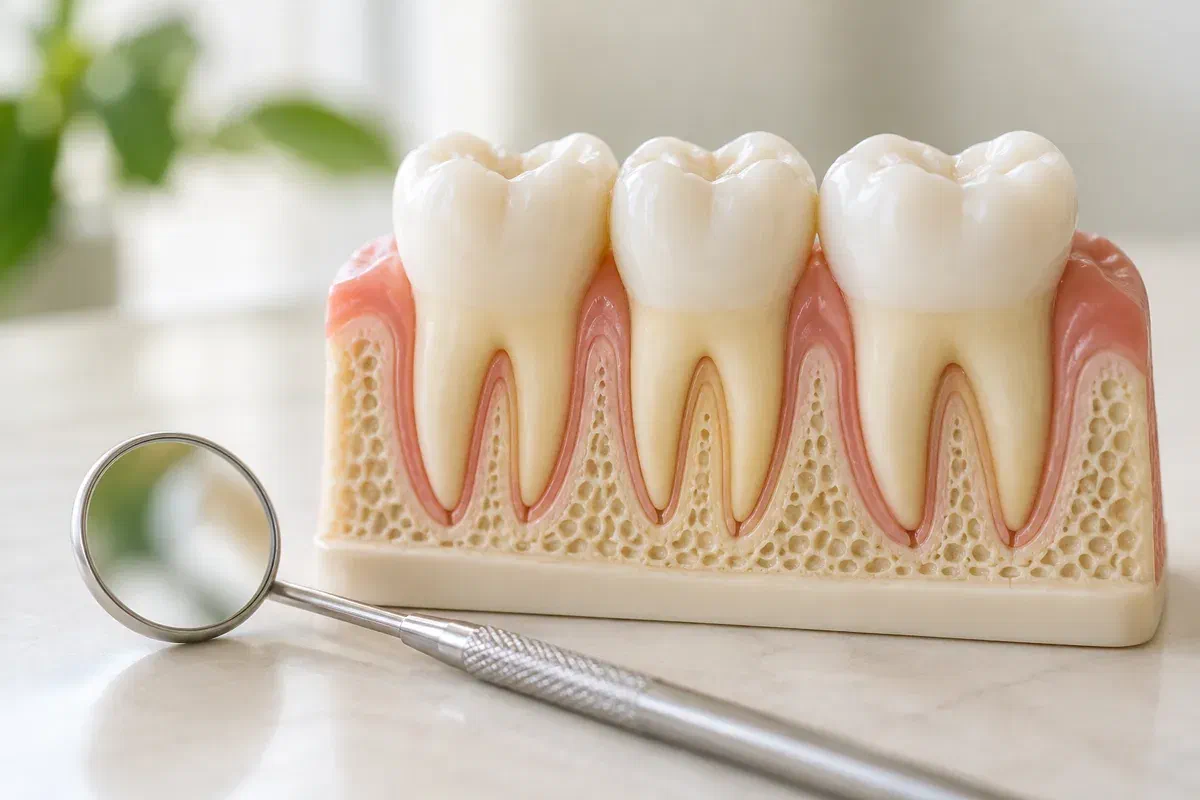
A tooth loosened by an accident is the one situation not to sit on. If a permanent tooth has been knocked loose or out of line, arrange an exam promptly rather than seeing whether soreness develops.
Say when it happened, whether the tooth's position looks different, and how your teeth now meet. Mention a cut lip, swelling or a sore jaw. Teeth next to the injured one can be affected and will usually be examined too.
Bleeding while brushing or flossing, gums that seem lower, new spaces, and food wedging in new spots are all worth mentioning, along with any past gum treatment. They help the dentist assess the tissue that keeps the root in place.
Let the team know about existing dental work there. Describe the feeling rather than wiggling it to investigate. If a piece falls off while you're brushing, rinse it, keep it in a container, and call. Leave the glue in the drawer.
A permanent tooth that's loose or displaced after an injury needs a prompt call. A tooth knocked fully out is a separate emergency where acting quickly matters. Call 911 for serious facial injuries, bleeding you can't stop, or any difficulty breathing.
Home care advice only makes sense once the reason for movement is understood. The dentist looks at the root, the gums and the bone before advising whether the tooth is likely to be kept, and what you can do to help. Ask which findings shape that advice and which remain uncertain. If more tests or a specialist are suggested, ask what they're meant to show.
It's also useful to know what treatment can achieve and what it can't. A splint may steady a tooth after some injuries, but it doesn't rebuild lost support or cure gum disease, and it changes how you'll need to clean. Ask what each step accomplishes and how your daily routine should change around it.
Patient information: NIDCR — assessment and treatment of gum disease
Expect the dentist to examine your gums and supporting tissues and take suitable images, as well as checking the tooth. Health history and past gum care help interpret the results. Ask whether the issue is limited to one area or part of a wider gum picture.
A loose crown and a mobile tooth need different care, and different cleaning. Ask which applies to you and whether the tooth beneath any crown is healthy, since that affects whether re-cementing would help.
Discuss benefits, limits, costs and the review schedule for each option. Keeping a tooth may mean continuing care at home and in the clinic, and outcomes can't be promised. Ask what might change the plan.
Tell the dentist if the tooth is tender or if you're anxious about it. Findings are explained as we go, and you'll leave with clear instructions for home.
We'll ask when the movement began, whether an injury or dental appointment came first, and about bleeding gums, symptoms, medicines and health conditions. Records from another dentist can help show changes over time.
The dentist checks the loose tooth and nearby structures that could explain it, with tests and images matched to the question. Ask what the results show about bone, root, and the nerve inside the tooth.
An injury may need prompt treatment; gum-related causes are often staged. If a splint is placed, ask how long it stays and how to clean it. If removal comes up, ask what makes keeping the tooth unlikely.
Confirm the purpose and timing of your next visit and any referral. Ask to be shown how to brush and clean between teeth around the area, and which changes mean calling early.
Injury-related looseness calls for a different routine from one affected by gum disease or a lifting crown. Follow the instructions given after your own exam rather than general tips.
Use a soft brush and gentle strokes around the loose tooth rather than avoiding it, since plaque left behind can irritate the gums. Don't push the tooth with your finger or tongue to check it, and avoid biting hard foods on it.
Leaving with a splint or new crown? Have the team show you the brushing angle that reaches around it and which aids suit the space, such as a small interdental brush or a floss threader. Mention anywhere you can't reach. The routine should protect both the device and your gums.
Call about increasing looseness, a shift in your bite, new soreness or swelling, or a splint that lifts. Don't remove a splint yourself, or try to pull, glue or tie the tooth. Keep injury reviews even when the tooth feels settled.
Your exam decides which advice applies. Call promptly about any new looseness, especially after an injury, and tell us if your bite has changed.
Reach our Bronte Street practice on (905) 876-4488 to describe the movement and arrange an assessment. If an injury caused it, say so first so the team can advise on urgency, and ask any home-care questions while you're on the line.
Keeping the tooth, the need for splinting or referral, and how it responds depend on what the exam finds. Use online forms only for questions that aren't urgent.
