

Illustrative patient discussing tooth support with a clinician and a dental teaching model
Specialized Care

Loose Adult Tooth Treatment in Etobicoke

Making the longer trip from Etobicoke for a loose permanent tooth? We help you plan well-organised visits, tell you when nearer urgent care makes more sense, and use each appointment to examine the tooth's support, explain the cause and map out treatment.

Planning care from a distance

Make each trip count.

Coming from Etobicoke, in Toronto's west end, a dental visit takes more of your day than it would for someone around the corner, especially once you add time off work and the return journey. That's a good reason to plan well, but not a reason to ignore an adult tooth that has begun to move. Unlike a baby tooth, a permanent one shouldn't loosen, and the question of why deserves a proper answer.

Possible causes range widely: a recent injury, slow changes in the gum and bone around the root, another dental problem, or a crown that has come loose and is fooling you into thinking the tooth itself is moving. A tooth can shift a fair amount without pain, so how it feels isn't a reliable sign of how urgent it is.

The first step is a call, not a drive. Describe when you noticed the change, whether there was an accident, and whether your bite feels different. That lets the team decide whether you should come in, how soon, and whether the situation calls for urgent care closer to home first. Meanwhile, leave the tooth alone.

Call to plan a loose tooth visit
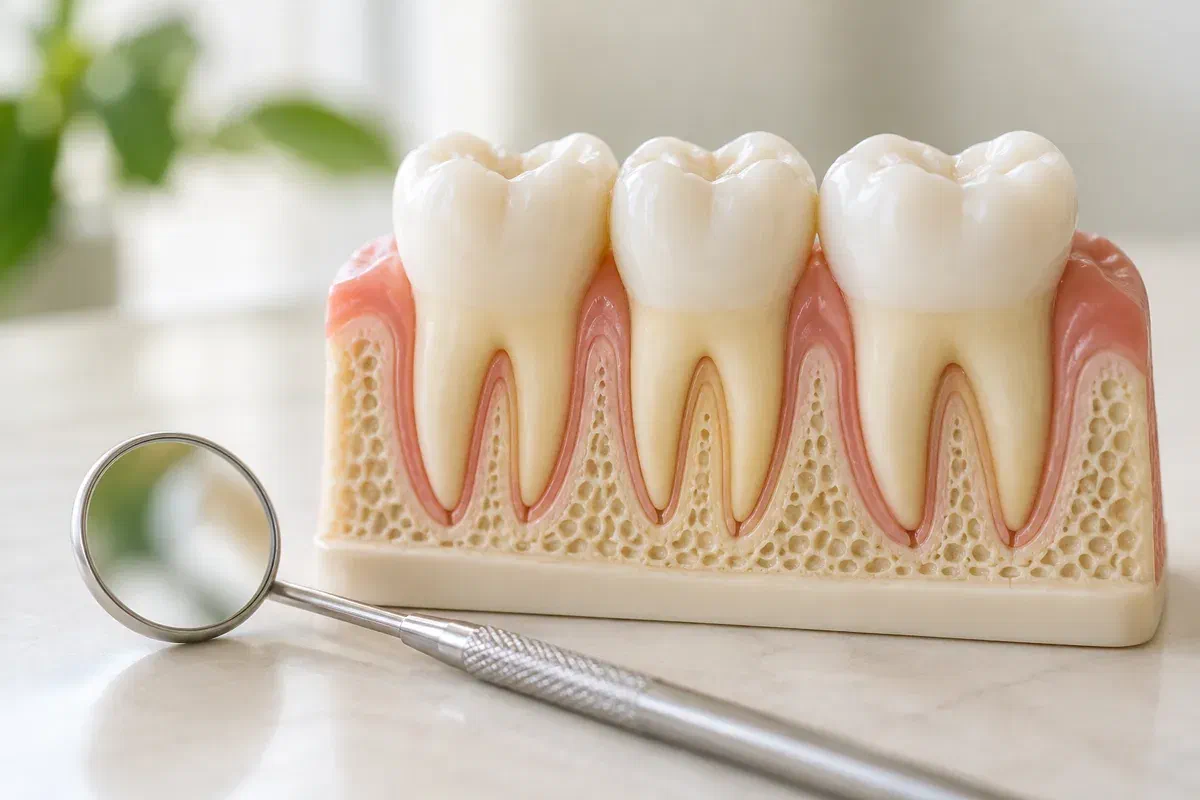
Illustrative cross-section teaching model showing teeth within gum and supporting bone
Deciding where to go first

When to come to us, and when to go somewhere nearer.

If a permanent tooth was knocked loose or out of place in an accident, it needs to be seen promptly. If reaching us quickly isn't practical, getting assessed sooner somewhere closer is the better choice.

A fresh injury

Call as soon as possible and say when it happened, whether the tooth looks out of line, and whether your teeth meet differently. Mention any facial or jaw injury. If prompt travel isn't realistic, the team can help you weigh seeking nearer urgent dental care.

Slow loosening with gum signs

This usually allows time to plan one well-prepared visit. Report bleeding gums, gum recession, new gaps and food trapping, plus any past gum treatment. These details help the dentist focus the exam on the root's support.

Unsure whether it's the tooth or a crown

List the dental work in the area, and describe the sensation without repeatedly pushing. If a crown or piece comes off, keep it clean and bring it. Don't glue it back, which can make a proper repair harder.

A loose or displaced adult tooth after trauma needs a prompt call. A tooth knocked fully out is a separate emergency, and nearer care may be the wiser first stop. For serious facial injury, heavy bleeding that won't stop or difficulty breathing, call 911 or go to the nearest emergency department.

What one good visit can settle

Leave knowing the cause, the support level and the plan.

When travel is part of the equation, it helps to come away with as much clarity as possible. The dentist assesses the root, gums and bone, not just the movement, before advising on the tooth's future. Ask which findings shape that advice and which questions are still open. If tests or a specialist are suggested, ask what they're meant to show and whether they can be coordinated with other visits.

Ask, too, about the gap between temporary relief and real treatment. A splint may steady a tooth in some situations, but it doesn't rebuild support or cure gum disease. Knowing what each step achieves helps you decide what's worth an extra trip.

Patient information: NIDCR — assessment and treatment of gum disease

The foundations examined

Gums, surrounding tissue and suitable images are reviewed alongside the tooth. Medical history and earlier gum treatment help interpret findings. Ask whether the problem is limited to this tooth or whether a wider gum check would be useful while you're in.

The moving part identified

A loose crown and a mobile tooth need different care. Ask which you're dealing with and whether the tooth underneath is healthy, since that decides whether a quick re-cement is enough.

A plan you can schedule

Go over benefits, limits, costs and the number of visits each option is likely to need. Keeping a tooth may mean ongoing care, and results can't be guaranteed. Ask what might change the plan, and how much notice you'd get.

The visit, organised

Prepared before you arrive, clear before you leave.

Mention soreness or worry about losing the tooth. We'll explain each finding so you can decide with confidence, and talk through how future visits could be grouped.

  1. Gather details by phone

    Before you travel, we talk through when the movement began, any injury or recent dental work, past gum care, medicines and health conditions. If another office has treated the tooth, ask them to send records ahead.

  2. Examine efficiently

    The dentist checks the tooth and the structures around it. Tests and images are chosen to answer the specific question, ideally in the same visit. Ask what they reveal about the bone, root or nerve.

  3. Sort what's needed now from what can wait

    An injury may need treatment promptly; other causes can often be staged so each trip covers more. Ask whether any splint is temporary and what follows. If extraction is discussed, ask what makes the tooth hard to save.

  4. Plan the follow-ups together

    Agree on the purpose and timing of reviews and any referral. Ask how to care for the area meanwhile and which changes mean calling sooner, and whether a nearer clinic should be your first stop for anything urgent.

Back home

Simple care between trips.

Instructions vary with the cause, whether injury, gum disease, restoration trouble or something else. Follow the guidance from your own visit rather than tips meant for other problems.

Don't test the tooth

Each push with a finger or tongue can disturb it. Keep hard foods away from the tooth. Never try to pull, glue or tie it in place at home.

Know how to clean around any device

If a splint or restoration is placed, ask for a hands-on demonstration before you leave so you aren't guessing at home. Mention any spot you can't reach. A device adds cleaning needs, and the advice should suit your gums too.

Call before driving in

If the tooth loosens further, your bite changes, pain or swelling starts or a splint comes loose, phone first. The team can advise whether to come in or seek nearer care. Don't remove a splint yourself, and keep injury reviews even when the tooth feels settled.

Choosing a route

Treatment that suits both the tooth and your calendar.

No one procedure fits all loose teeth. Ask how a recommendation answers your findings, what it aims to do, and how many visits it typically involves.

When periodontal disease is involved

Gum-focused care

Gum therapy and ongoing maintenance may be recommended when periodontal disease is behind the movement. Ask the dentist to explain the extent of support loss and what goals are reasonable. This care manages disease; it can't promise every tooth will firm up.

When the injury justifies a splint

Injury stabilization

A splint with scheduled reviews may suit some injuries. Ask what else is required and how long it stays, so you can plan visits. Root canal treatment depends on findings about the nerve, not on movement by itself.

When the loose part or outlook decides

Repair, or removal and replacement

Loose dental work may be redone if the tooth beneath is healthy. A tooth with a poor outlook may lead to discussing removal and later replacement. Ask for the reasoning, the alternatives, and the visits each route needs.

Questions about travelling for care

Planning ahead, without cutting corners.

Your exam decides what's relevant. Call promptly about a new loose tooth, particularly after an injury, and tell us whether it or your bite has shifted.

(905) 876-4488
I live in Etobicoke and my tooth loosened after a fall. Should I drive straight to you?
Call first. A tooth loosened by an injury needs prompt assessment, and the team can advise whether reaching us quickly is realistic or whether nearer urgent care is wiser. For serious injuries, go to emergency care.
Can my treatment be grouped into fewer appointments?
Often, some steps can be combined, though it depends on the cause and findings. Injury reviews and gum treatment may need set intervals. Ask the dentist which visits are essential and which can be grouped.
What should I bring to the first visit?
Bring a list of medicines, relevant health information, and any records or images from previous dentists, or ask those offices to send them ahead. If a crown or tooth piece came off, bring it in a clean container. A short note of when you first noticed the movement also helps.
Can my regular dentist closer to home handle the follow-up?
Sometimes care can be shared, depending on the treatment. Ask your dentists to coordinate and share records so everyone knows what’s planned and what’s being monitored.
Does painless movement mean I can delay the trip?
It doesn’t. A tooth can lose support without pain. Gradual movement may allow a planned visit rather than a rush, but it still needs examining. Describe it on the phone so the team can advise on timing.
Will I need a splint, and how many visits does that involve?
A splint is used only when the cause and findings suggest it would help. If one is placed, it usually needs reviews and later removal by the dentist. Ask how many visits to plan for.
Loose tooth care for Etobicoke adults

Phone first, and we'll help plan the trip.

The number is (905) 876-4488. Our Bronte Street team will listen to what's happened, advise on urgency, and arrange an assessment that makes the most of your visit. After an injury, say so right away; nearer urgent care may be the better first step.

What the exam shows will decide whether the tooth can be kept, whether a splint or referral is needed, and how it responds. Please keep the online forms for questions that can wait.

Visit Milton Dental Clinic
Unit 1, 342 Bronte St. S, Milton, ON L9T 5B7
Get directions Clinic hours
Monday–Thursday
11am–7pm
Friday–Sunday
By appointment only

Areas we serve

  • Milton
  • Oakville
  • Mississauga
  • Georgetown
  • Halton Hills
  • Acton
  • Campbellville
  • Brampton
  • Burlington
  • Puslinch
  • Rockwood
  • Erin
  • Caledon
  • Etobicoke
  • Old Milton
  • Bronte Meadows
  • Timberlea
  • Dorset Park
  • Dempsey
  • Clarke
  • Beaty
  • Coates
  • Harrison
  • Scott
  • Willmott
  • Ford
  • Bowes
  • Cobden
  • Walker
  • Mountain View
  • Milton Heights
  • Hawthorne Village
  • Valley View
  • Fallingbrook
  • Nassagaweya
  • Trafalgar
  • Esquesing
  • Nelson
  • Brookville
  • Moffat
  • Glen Williams
  • Norval
  • Limehouse
  • Stewarttown
  • Ashgrove
  • Hornby
  • Silver Creek
  • Speyside
  • Scotch Block
  • North Oakville
  • River Oaks
  • Glen Abbey
  • West Oak Trails
  • Palermo
  • Bronte Creek
  • College Park
  • Joshua Creek
  • Uptown Core
  • Preserve
  • Iroquois Ridge
  • Lisgar
  • Meadowvale
  • Meadowvale Village
  • Churchill Meadows
  • Erin Mills
  • Central Erin Mills
  • Streetsville
  • East Credit
  • Creditview
  • Heartland
  • Sheridan
  • Mount Pleasant
  • Credit Valley
  • Huttonville
  • Churchville
  • Springbrook
  • Northwest Brampton
  • Bram West
  • Fletcher's Meadow
  • Fletcher's Creek South
  • Alton Village
  • Orchard
  • Millcroft
  • Headon Forest
  • Tansley
  • Brant Hills
  • Tyandaga
  • Kilbride
  • Lowville
  • Aberfoyle
  • Morriston
  • Arkell
  • Hillsburgh
  • Freelton
  • Carlisle
  • Waterdown
  • Flamborough
  • Mountsberg

How can we help?

Milton Dental Clinic

Have a question about your smile? Choose the option that works best for you.

For urgent dental concerns, please call.
Messages are reviewed during clinic hours.