

Illustrative patient discussing tooth support with a clinician and a dental teaching model
Specialized Care

Loose Adult Tooth Treatment in Mississauga

A new gap, food catching where it never did, gums that bleed when you floss, and now a tooth that gives a little. For adults travelling from Mississauga, our dentist looks at the gum and bone behind the change, explains what is loosening the tooth, and outlines realistic care.

When gaps start to appear

The gap grew. Then the tooth moved.

Slow changes are easy to miss. A space opens between two teeth, floss snags in a new spot, a front tooth seems to have tipped forward in photos. Eventually one tooth feels loose when you bite. In adults, gradual movement like this often prompts questions about the gums and the bone that hold each root, and those questions deserve answers.

Gum health is only one possibility, though. Old injuries, other dental conditions, or a loosened crown can produce a similar feeling. The dentist's task is to separate these causes before suggesting any treatment. It's also worth knowing that a tooth with weakening support may not hurt, so comfort isn't proof that all is well.

Coming in from Mississauga, you can make the first visit count by bringing notes on what you've noticed and when. Skip the daily wiggle test. Mention bleeding, any shift in how your teeth meet, and whether you've had gum treatment before.

Book a gum and tooth support check
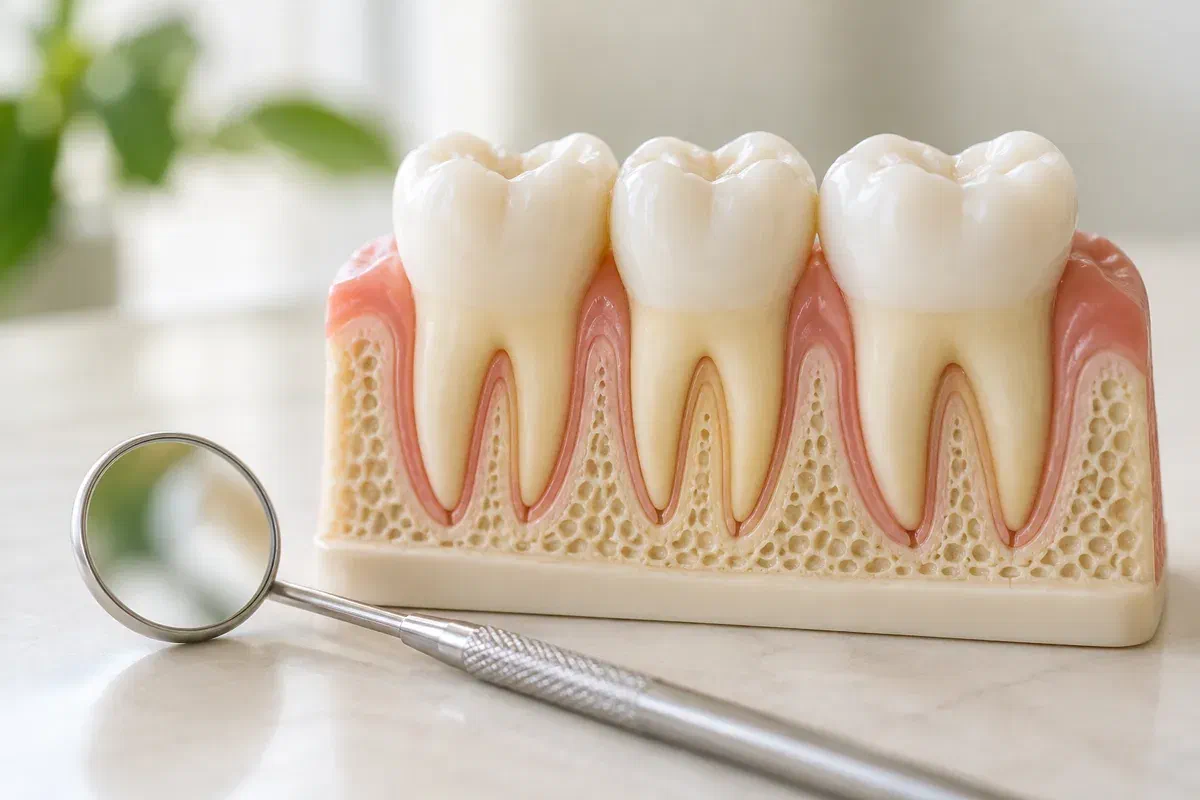
Illustrative cross-section teaching model showing teeth within gum and supporting bone
What you have noticed

Small details, big clues.

Gradual and sudden loosening raise different concerns. If an adult tooth was knocked loose or out of place in an accident, call for a prompt exam instead of waiting for pain to appear.

An accident or impact

Note when it happened, whether the tooth's position looks different, and whether your bite feels new. Mention lip injuries, facial swelling or a sore jaw. Teeth on either side can be affected by the same blow and are checked as well.

Bleeding, recession and new spaces

These are some of the most useful things to report. Tell us how long your gums have bled, whether they look shorter, where gaps have opened, and where food now catches. Past deep cleanings or gum surgery matter too. They steer the exam toward the support around the root.

Crowns and fillings in the area

Tell the team about dental work on or near the loose tooth. Describe the feeling rather than rocking it to find the moving part. If a piece detaches, keep it in a container and call; don't attempt to glue it.

If an adult tooth is loose or shifted after an injury, phone promptly. A tooth that is knocked completely out is a distinct emergency where speed matters. Severe facial injury, heavy bleeding that won't settle, or trouble breathing need emergency medical attention; call 911.

Getting to the cause

Find out how much support remains and what can protect it.

Movement alone can't tell the dentist whether a tooth has a good future. That judgement rests on the gums, the bone around the root, and the tooth itself. Ask which findings matter most for your outlook and which are still unclear. If a periodontist's opinion or more imaging is suggested, ask what that step will clarify.

There is a difference between making a tooth feel steadier and treating the disease or problem behind it. Holding a tooth more firmly can help in particular situations, but it doesn't rebuild bone or stop gum disease. Ask what each recommended step is likely to achieve, and over what time frame.

Patient information: NIDCR — assessment and treatment of gum disease

A thorough gum assessment

The dentist may measure and examine the gums, review supporting tissue, and take suitable images alongside checking the tooth. Medical history and past gum care help interpret results. Ask whether the concern is localized or part of a wider gum picture.

Tooth movement versus loose dental work

A loose restoration and a mobile tooth need different responses. Ask which is moving and whether the tooth beneath any crown is healthy. This explains whether re-cementing would address the real issue.

Expectations you can plan around

Discuss benefits, limits, costs and the maintenance each option requires. Keeping a tooth with reduced support often means ongoing care, and outcomes can't be promised from appearance. Ask what results along the way might change the plan.

How we approach it

A careful look before any recommendation.

Let us know about tenderness or any worry about losing the tooth. We'll walk you through the exam and what it shows, so you can help shape the plan rather than trying to diagnose the problem alone.

  1. Talk about the changes and your health

    We'll ask when the gaps or movement started and whether an injury or treatment came first. Previous gum therapy, symptoms, medicines and health conditions all help. Records from a dentist who treated you before can show how things have progressed.

  2. Examine the tooth, gums and bone

    The dentist checks the moving tooth and surrounding structures that might explain it. Gum measurements, tests and images are chosen to fit the question. Ask what they show about bone levels, the root, or the nerve inside the tooth.

  3. Separate today's needs from the longer plan

    Gum-related loosening is usually treated in stages, while an injury might need care sooner. If a splint is proposed, ask whether it's temporary and what treatment follows. Should extraction be mentioned, ask what in the findings argues against keeping the tooth.

  4. Set up maintenance and reviews

    Agree on what each review is for, when it happens, and whether a referral is planned. Ask how to clean between teeth and around the loose one in the meantime, and what changes mean calling earlier. Reviews work best when you know what's being measured.

Looking after your gums

Gentle, thorough cleaning and regular reviews.

What helps at home depends on whether the cause is gum disease, injury, failing dental work or something else. Use the routine set out after your own exam rather than one designed for a different problem.

Let the tooth be

Testing the tooth with your tongue or finger only disturbs it. Avoid biting hard foods with it until you've had advice. Never try to pull, glue, wire or splint it yourself.

Ask how to clean the tricky spots

If a splint, new restoration or gum treatment is part of the plan, ask the team to show you how to clean around it. Mention any area you can't reach well. Interdental brushes or other aids may be suggested to suit your gums and the device.

Report changes promptly

Contact the team about increasing looseness, a shifting bite, new pain or swelling, or a loose splint. Don't remove a splint yourself. Gum maintenance visits and injury reviews remain important even when the tooth feels better.

Options for a mobile tooth

Match the treatment to the findings.

Every loose tooth is different. Ask how the suggested care relates to what was found and whether it aims to protect the tooth now, treat gum disease, repair dental work, or plan for replacement.

When gum disease is driving the change

Periodontal treatment and maintenance

Treatment to control periodontal disease, followed by regular maintenance, may be recommended. Ask the dentist to show you where the bone level sits on your images and what the treatment is aiming for. Controlling disease protects what remains; it cannot guarantee every loose tooth will become firm.

When an injury suits splinting

Stabilizing a tooth after injury

A splint and set review schedule may be suggested for an appropriate injury. Ask what else is needed and how long the splint should stay. Root canal treatment depends on findings about the nerve, not movement alone.

When the moving part or outlook decides

Repair or removal

Dental work that has worked free can sometimes be replaced, as long as the tooth beneath it is sound. Where gum loss has left a tooth with a poor outlook, removal and later replacement may come up. Get the reasons behind that advice, and the alternatives, in writing or in detail before choosing.

Gum and loose tooth questions

Clearing up the common confusion.

The exam determines which options are relevant. Call promptly about new movement, especially after an injury, and tell us if your bite or the tooth's position has changed.

(905) 876-4488
Why are spaces opening up between my front teeth?
New spaces can have several causes, including changes in gum and bone support or bite forces. Sometimes they appear alongside a tooth that has started to move. An exam with suitable images helps find the reason.
Can bone lost around a tooth grow back?
Treatment of gum disease aims to control the disease and protect remaining support. In some selected cases, specialist procedures may be discussed, but regrowth cannot be assumed. Ask the dentist or periodontist what is realistic for your situation.
Will I be referred to a gum specialist?
Possibly. Referral to a periodontist may be suggested depending on the extent of gum disease and the treatment needed. Ask why a referral is recommended and what the specialist will assess.
Does health history, like diabetes, matter for loose teeth?
It can. Diabetes and some other conditions are linked with gum health and may affect how treatment is planned. Share your health history and medications. The dentist uses this information to interpret findings and plan safely.
If my tooth is loose but doesn't hurt, is it less serious?
Not necessarily. Gum-related loosening is often painless. How serious it is depends on the cause and the remaining support, which the exam assesses. Describe when you noticed the change and any gum symptoms.
Should I stop flossing near the loose tooth?
Don’t stop cleaning, but be gentle and avoid levering the tooth. Ask at your visit which cleaning aids suit the area. If cleaning causes the tooth to move more or hurts, mention it.
Coming from Mississauga

Let's look at what's holding that tooth.

To describe the change and arrange an assessment, phone (905) 876-4488 and speak with our Bronte Street team. If the movement followed an injury, mention it at the start of the call so they can advise how soon you should come in from Mississauga.

Keeping a tooth, the need for splinting or referral, and response to care depend on individual findings. Online forms suit non-urgent enquiries only.

Visit Milton Dental Clinic
Unit 1, 342 Bronte St. S, Milton, ON L9T 5B7
Get directions Clinic hours
Monday–Thursday
11am–7pm
Friday–Sunday
By appointment only

Areas we serve

  • Milton
  • Oakville
  • Mississauga
  • Georgetown
  • Halton Hills
  • Acton
  • Campbellville
  • Brampton
  • Burlington
  • Puslinch
  • Rockwood
  • Erin
  • Caledon
  • Etobicoke
  • Old Milton
  • Bronte Meadows
  • Timberlea
  • Dorset Park
  • Dempsey
  • Clarke
  • Beaty
  • Coates
  • Harrison
  • Scott
  • Willmott
  • Ford
  • Bowes
  • Cobden
  • Walker
  • Mountain View
  • Milton Heights
  • Hawthorne Village
  • Valley View
  • Fallingbrook
  • Nassagaweya
  • Trafalgar
  • Esquesing
  • Nelson
  • Brookville
  • Moffat
  • Glen Williams
  • Norval
  • Limehouse
  • Stewarttown
  • Ashgrove
  • Hornby
  • Silver Creek
  • Speyside
  • Scotch Block
  • North Oakville
  • River Oaks
  • Glen Abbey
  • West Oak Trails
  • Palermo
  • Bronte Creek
  • College Park
  • Joshua Creek
  • Uptown Core
  • Preserve
  • Iroquois Ridge
  • Lisgar
  • Meadowvale
  • Meadowvale Village
  • Churchill Meadows
  • Erin Mills
  • Central Erin Mills
  • Streetsville
  • East Credit
  • Creditview
  • Heartland
  • Sheridan
  • Mount Pleasant
  • Credit Valley
  • Huttonville
  • Churchville
  • Springbrook
  • Northwest Brampton
  • Bram West
  • Fletcher's Meadow
  • Fletcher's Creek South
  • Alton Village
  • Orchard
  • Millcroft
  • Headon Forest
  • Tansley
  • Brant Hills
  • Tyandaga
  • Kilbride
  • Lowville
  • Aberfoyle
  • Morriston
  • Arkell
  • Hillsburgh
  • Freelton
  • Carlisle
  • Waterdown
  • Flamborough
  • Mountsberg

How can we help?

Milton Dental Clinic

Have a question about your smile? Choose the option that works best for you.

For urgent dental concerns, please call.
Messages are reviewed during clinic hours.