

Illustrative patient discussing tooth support with a clinician and a dental teaching model
Specialized Care

Loose Adult Tooth Treatment in Old Milton

Years of fillings, crowns and bridges can make it hard to tell what has actually come loose. From Old Milton, a short visit to our team lets a dentist check the tooth, its gums and bone, and any older dental work, then explain what is moving and what can be done.

Old dental work, new movement

Crown, bridge or the root itself?

On the established streets around Milton's historic downtown, plenty of adults carry decades of dental history in their mouths. So when something starts to shift, the first puzzle is often what exactly has loosened. A crown that has lost its cement, a bridge that rocks, and a natural tooth with weakening support can all feel surprisingly alike from the inside.

Each has a different story behind it. Injury can loosen a tooth in a moment. Gum and bone changes around a root usually creep up over months or years, and other dental conditions sometimes contribute. Pain is a poor guide either way, because a tooth can move a good deal without hurting at all.

When you come in from Old Milton, our job at the first visit is to find out which part is moving and why, then talk plainly about comfort, chewing, and the tooth's prospects. Please don't rock it to test it beforehand. Simply tell us when you first noticed the change, whether something happened before it, and whether your teeth now meet in a new way.

Arrange a check of the loose tooth
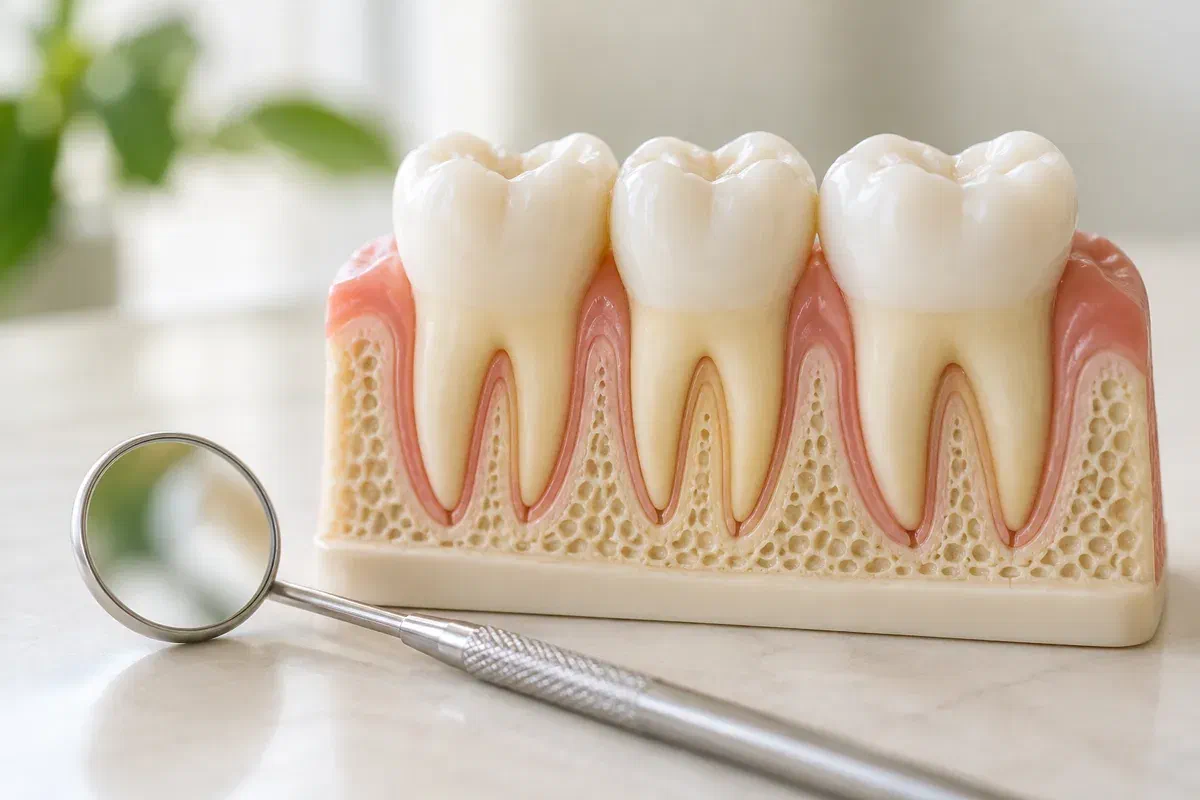
Illustrative cross-section teaching model showing teeth within gum and supporting bone
Clues worth sharing

Tell us how it began, and we'll know where to look.

Some details change how quickly you should be seen. An adult tooth that has become loose or moved out of line after a fall, blow, or accident needs a prompt dental exam, whether or not it hurts yet.

Something hit the tooth

Mention the date of the fall or blow, whether the tooth seems out of line, and whether your bite feels altered. Include any cut lip, facial swelling, or jaw pain. The teeth on either side are worth examining too, even when one tooth gets all the attention.

Gums that have changed over time

Bleeding, receding gumlines, new gaps between teeth, and food packing into fresh spots are all useful to report. So is any earlier gum treatment. These signs point the exam toward the bone and tissue holding the root, rather than only the crown of the tooth.

A crown, bridge or large filling on the tooth

List the dental work you know about in that area, even if it was done long ago or elsewhere. Describe the sensation instead of wiggling things to find the moving part. If a crown or piece falls out, save it in a small container and call us; skip the household glue.

An adult tooth that is loose or shifted after an injury warrants a prompt call. A tooth knocked fully out is a different and time-critical emergency. Serious injuries to the face, heavy bleeding that won't stop, or difficulty breathing need emergency medical care right away through 911.

Answers you can expect

Know what is loose, what is sound, and what that means.

A dentist can't judge a tooth's future just from how much it moves. The condition of the root, gum and bone, and of any dental work layered on top, all shape the advice. Feel free to ask which findings matter most and what is still uncertain. When extra tests or a specialist are suggested, ask what they should settle.

It also helps to hear the difference between quick relief and a real fix. Making a tooth steadier can be worthwhile in certain cases, but steadiness alone does not replace lost bone or treat gum disease. Ask what each suggested step is expected to achieve for your tooth in particular, and what it won't.

Patient information: NIDCR — assessment and treatment of gum disease

Support checked beneath the surface

The exam may include the gums, the surrounding tissues, and suitable images as well as the tooth. Your health history and any past gum care give context. You can ask whether this is a single trouble spot or a sign that your overall gum health deserves a closer look.

A clear answer on older dental work

Loose dental work and a loose natural tooth often need quite different treatment. Ask which you have, and whether the tooth under a crown or bridge is still healthy. That explains whether re-cementing will truly help or only cover the deeper issue.

Realistic expectations

Cover the benefits, drawbacks, costs, and follow-up that come with each choice. Keeping a tooth may mean continued maintenance, and its future can't be promised from appearance. Ask what you might discover during treatment that would lead to a different plan.

Step by step

From your first description to a plan you agree with.

Speak up if the area is tender or if the thought of losing the tooth worries you. We explain each part of the exam and what it shows, so you can weigh the choices yourself rather than guessing at the cause.

  1. Piece together the history

    We ask when the movement started and whether an injury or dental treatment came first. Previous gum care, symptoms, current medicines, and health conditions are part of the picture. If another dentist placed the crown or bridge years ago, any records you can obtain may help.

  2. Examine tooth, dental work and support

    The dentist looks at the loose area along with whatever else might explain the movement. Tests and images are chosen to answer that specific question. Ask what they show about the gum and bone, the root, the restoration, or the nerve when those come into it.

  3. Sort the urgent from the planned

    Damage from an injury may need treatment soon; other causes can often be tackled in stages. If a splint is offered, ask whether it is temporary, what it protects, and what follows it. Should removal come up, ask why the tooth may not be worth keeping.

  4. Agree on reviews and responsibilities

    Confirm what the next visit is for, when it should happen, and whether a referral is involved. Ask how to clean and chew around the area meanwhile, and which signs mean calling earlier. A review is only useful when you know what is being checked and why.

At home afterwards

Gentle habits, steady follow-through.

Home advice varies with the cause: injury, gum disease, failing dental work, or something else. Stick with the instructions from your own exam instead of borrowing a fix someone else used for a different problem.

Leave the wobble alone

Pressing the tooth with a finger or tongue won't speed healing and can disturb it. Don't bite hard things on that side while waiting for advice. Never try to pull, glue, wire, or brace the tooth yourself.

Get shown how to clean around a splint or new work

If the dentist places a splint or new restoration, ask for a quick demonstration of how to keep it clean. Mention any part that's hard to reach, especially around older bridges. New devices bring new cleaning needs, and the advice should suit both the device and your gums.

Report changes and keep the dates

Call if the tooth feels looser, your bite changes, pain or swelling appears, or a splint comes loose. Don't remove a splint yourself. After an injury, reviews still matter once things settle down, because later checks can reveal changes that affect what comes next.

The routes available

Different causes, different fixes.

No single treatment suits every loose tooth. Ask how the recommendation answers your findings, and whether its aim is short-term protection, disease control, repair of dental work, or planning for a replacement.

When periodontal disease is part of the picture

Gum and bone-focused care

Gum treatment followed by regular maintenance may be advised when periodontal disease is found. Ask how much support has been lost and what can realistically be achieved. The aim is to control the disease; it cannot promise every loose tooth will firm up.

When the injury and tooth make it suitable

Splinting or injury care

For the right kind of injury, a dentist may suggest a splint with set review dates. Ask what else is required and how long it will stay on. Root canal treatment is decided by the condition of the nerve, never by movement alone.

When older dental work or the outlook decides it

Repair, replacement or removal

A loose crown or bridge can sometimes be repaired or remade if the tooth beneath is sound. Where the outlook is poor, removal and later replacement options may be discussed. Ask for the reasoning and alternatives before you choose.

Old Milton questions

What people ask about older teeth that move.

Your exam determines which options fit. Call promptly about any new movement, especially after an injury, and tell us if the tooth or your bite has shifted.

(905) 876-4488
My crown was placed many years ago. Can it simply wear out?
Crowns and the cement holding them don’t last forever, and the tooth beneath can also develop problems over time. The dentist will check both the crown and the tooth. Bring any details you have about when and where it was made.
A tooth holding up my bridge feels loose. What does that mean?
It could mean the bridge has loosened on that tooth, or that the tooth itself has lost some support. These need different care, so avoid rocking the bridge. The exam and images help show which situation you’re dealing with.
Is it normal for teeth to loosen as we get older?
Ageing alone is not expected to make healthy teeth loose. Movement usually has a cause, such as gum disease, injury, or a dental problem, that is worth identifying. A check helps find the reason, whatever your age.
Do my medications or health conditions matter for a loose tooth?
They can. Some health conditions and medicines affect the gums or how treatment is planned. Bring a list of what you take and mention any recent changes in your health. The dentist uses this to interpret findings and plan care safely.
Does a loose tooth that doesn't hurt need a visit?
Yes. A tooth can move without discomfort while its support is changing. Tell us when you first felt it and about any gum bleeding or recent knock. The exam helps clarify the cause and how soon treatment is needed.
Should I try fixing a loose crown with an over-the-counter kit?
It’s better not to. Re-seating a crown at home can trap decay or seat it out of line, and it may hide a tooth problem underneath. Keep the crown safe if it comes off and call so the dentist can examine both.
Old Milton dental care

Come in and let us work out what's moving.

Call our Bronte Street practice, a short trip from Milton's historic downtown, at (905) 876-4488 to describe the change and book a suitable assessment. If the tooth loosened after a fall or blow, say so first so the team can advise how soon to come in.

Keeping the tooth, any need for a splint or referral, and how it responds to care all depend on what the exam finds. Online forms are intended for non-urgent requests.

Visit Milton Dental Clinic
Unit 1, 342 Bronte St. S, Milton, ON L9T 5B7
Get directions Clinic hours
Monday–Thursday
11am–7pm
Friday–Sunday
By appointment only

Areas we serve

  • Milton
  • Oakville
  • Mississauga
  • Georgetown
  • Halton Hills
  • Acton
  • Campbellville
  • Brampton
  • Burlington
  • Puslinch
  • Rockwood
  • Erin
  • Caledon
  • Etobicoke
  • Old Milton
  • Bronte Meadows
  • Timberlea
  • Dorset Park
  • Dempsey
  • Clarke
  • Beaty
  • Coates
  • Harrison
  • Scott
  • Willmott
  • Ford
  • Bowes
  • Cobden
  • Walker
  • Mountain View
  • Milton Heights
  • Hawthorne Village
  • Valley View
  • Fallingbrook
  • Nassagaweya
  • Trafalgar
  • Esquesing
  • Nelson
  • Brookville
  • Moffat
  • Glen Williams
  • Norval
  • Limehouse
  • Stewarttown
  • Ashgrove
  • Hornby
  • Silver Creek
  • Speyside
  • Scotch Block
  • North Oakville
  • River Oaks
  • Glen Abbey
  • West Oak Trails
  • Palermo
  • Bronte Creek
  • College Park
  • Joshua Creek
  • Uptown Core
  • Preserve
  • Iroquois Ridge
  • Lisgar
  • Meadowvale
  • Meadowvale Village
  • Churchill Meadows
  • Erin Mills
  • Central Erin Mills
  • Streetsville
  • East Credit
  • Creditview
  • Heartland
  • Sheridan
  • Mount Pleasant
  • Credit Valley
  • Huttonville
  • Churchville
  • Springbrook
  • Northwest Brampton
  • Bram West
  • Fletcher's Meadow
  • Fletcher's Creek South
  • Alton Village
  • Orchard
  • Millcroft
  • Headon Forest
  • Tansley
  • Brant Hills
  • Tyandaga
  • Kilbride
  • Lowville
  • Aberfoyle
  • Morriston
  • Arkell
  • Hillsburgh
  • Freelton
  • Carlisle
  • Waterdown
  • Flamborough
  • Mountsberg

How can we help?

Milton Dental Clinic

Have a question about your smile? Choose the option that works best for you.

For urgent dental concerns, please call.
Messages are reviewed during clinic hours.