

Illustrative patient discussing morning jaw discomfort with a dental clinician
Specialized Care

Morning Jaw Pain Treatment in Georgetown

Toast feels like work, the bagel stays on the plate, and you find yourself chewing on one side. When breakfast is the hardest meal of the day, a visit from Georgetown lets us examine your teeth and jaw, understand the pattern, and suggest care that fits what the examination shows.

When breakfast is the hard part

The first bite tells you something.

For a lot of people, the problem only becomes obvious at the table. The jaw feels slow to open, chewing is tiring, or one side protests when you bite into something firm. By lunch it may feel fine. How breakfast goes, which foods are difficult, and whether chewing helps or hurts are exactly the kind of details we want to hear, even though they do not settle the cause.

Night grinding often gets the blame. It may contribute, yet a jaw that is sore at breakfast does not prove it. Tired muscles, an irritated joint, a cracked or sensitive tooth, health factors, and sleep can each play a part. Sharp pain on one tooth, an opening that has become more limited, or snoring someone has mentioned would move the assessment in a different direction.

Your visit begins with a conversation and an examination, not a sales pitch for an appliance. If you have a guard, bring it and tell us whether breakfast is easier on the mornings you wear it. Every suggestion should come with a reason and a way to tell whether it is helping.

Talk to us about pain when you chew in the morning
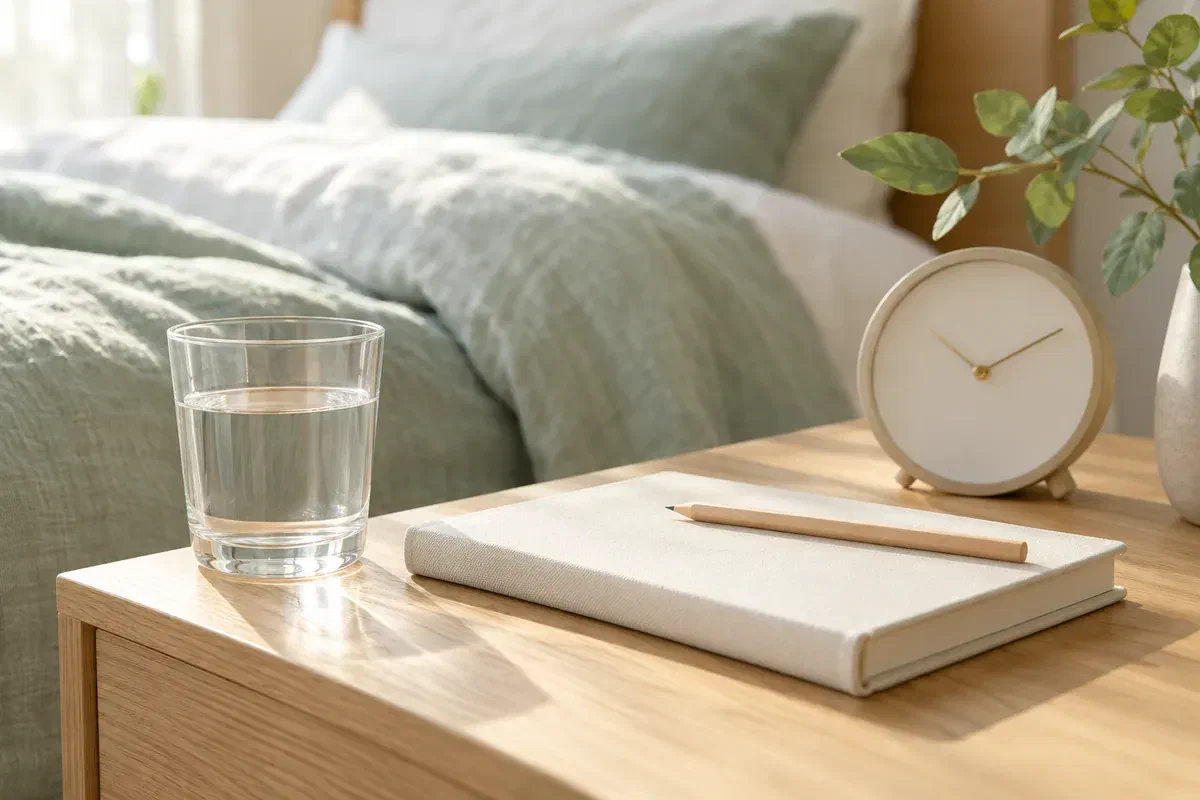
Illustrative morning bedside scene with water, a notebook, and a simple clock
At the breakfast table

Which foods, which side, and how long it lasts

A description of an ordinary breakfast is often more revealing than any theory. Point out symptoms involving sleep, the way your jaw moves, or one particular tooth instead of calling it all soreness.

Chewing that feels tiring or stiff

Tell us where the effort or ache is felt and whether it eases as you keep eating, stays the same, or builds. Mention whether you favour one side and whether opening wide for a sandwich is hard. We compare this with the examination, since similar complaints can have different sources.

A tooth that objects, or a guard that feels off

Pain when biting a particular spot, sensitivity to hot drinks, a chipped edge, or a filling that feels high can point toward a dental cause. For guard wearers, roughly how old it is and whether it still seats properly both help. Bring it untouched to the appointment.

Restless nights and sleep concerns

Loud snoring, someone noticing breathing pauses, waking with a gasp, or being very sleepy during the day should be raised with a medical provider. Jaw soreness at breakfast is not a test for a sleep disorder. Tell us about any previous sleep assessment so our advice fits.

Call promptly if your jaw locks for the first time, swelling appears, you develop a fever, or eating and drinking become difficult. Jaw pain with chest pressure, breathlessness, sweating, or sudden illness may be a medical emergency; call 911 rather than assuming it is about your teeth.

Getting past soft food and guesswork

Why not just switch to porridge and wait?

Avoiding chewy food can make mornings more bearable for a while, and it is understandable to adapt. Still, it does not tell you why the jaw is sore. An assessment checks whether the explanation you have in mind fits your history and examination, and you can ask what is certain, what is not, and whether anything else should be assessed.

Different problems need different responses. Protecting teeth, making chewing comfortable again, and looking into a possible sleep concern are separate goals with separate ways of measuring success. Decide which apply to you, rather than hoping one appliance or one change in diet will take care of all of them.

Patient information: NIDCR — bruxism history, symptoms, and examination · NIDCR — conservative care and limitations of jaw pain treatments

Examining both the teeth that chew and the jaw that moves them

The dentist checks for tooth damage that could be relevant, examines sore muscles and joints, and assesses movement. Ask whether a finding explains the breakfast pain or just needs watching. Long-standing wear may not explain a problem that is recent.

A reason for any appliance

If a guard comes up, ask whether its job is mainly protecting teeth and how comfort will be reviewed. Which kind, if any, depends on your examination. It will not treat sleep apnea, and no appliance can guarantee that chewing becomes comfortable again.

Breakfast as a measure of progress

Pick practical markers, such as which foods are manageable and how long stiffness lasts. Ask when to return and what should prompt an earlier call. How meals feel at home is reviewed together with clinical findings.

Your first appointment

Four parts, one conversation

A sleep recording is not needed to book. Telling us when chewing becomes difficult, what accompanies it, and what you have already tried is a practical way to start.

  1. Talking about meals, mornings, and health

    We ask when the soreness began, how long it lasts after waking, and which foods give trouble. Headaches, tooth pain, movement changes, sleep concerns, and appliances are also covered. We review medicines and recent changes; nothing prescribed should be stopped on your own.

  2. A careful examination

    Teeth, muscles, and joints are examined in turn, and you will be asked whether any movement or pressure recreates the breakfast ache. Images or tests are suggested only when they would answer a real question. Mention discomfort at any point.

  3. Explaining the likely contributors

    You hear what seems to be involved and whether another dental or medical concern needs investigating. If conservative muscle or joint care suits you, its reasoning is explained. Appliance advice should include its purpose, limits, fees, and review plan.

  4. A plan you can follow at home

    Go over the instructions, including any eating advice, and the signs that should send you to the phone. Settle a review date and which notes to keep. Should a physician need to be involved, check who is making that contact and what their findings could mean for dental treatment.

Back home in Georgetown

Small observations, steady routine

Follow the advice selected for you and keep it simple. Combining several new remedies at once makes it hard to see which one is helping or which might be adding to the soreness.

A quick note after breakfast

Write down roughly when the soreness began, how long it lasted, and whether eating or opening was harder. Add sleep or appliance notes as needed. There is no need to chew hard foods on purpose just to test the jaw.

Appliance use as instructed

Put in and clean a recommended guard the way you were shown, and pack it for the review. An appliance that hurts should come out, followed by a call to whoever made it. Home adjustments are off the table, and soreness from the guard is not a sign of success.

Linking health information

A fresh result from your doctor, a change of prescription, or new sleep care is worth mentioning at the next visit. Carry on with prescribed therapy and medication regardless. When two clinicians seem to be saying different things, check what each intends before altering your routine.

Where the findings lead

Tooth treatment, jaw care, or a wider look

Breakfast-time soreness can lead to several kinds of care. Ask how each recommendation connects to the examination and whether you are being offered dental treatment, help with symptoms, or a referral about another health issue.

When a dental problem is part of the picture

Fixing a tooth that hurts when you bite

A cracked, decayed, or otherwise damaged tooth may need treatment of its own. Ask which symptoms it should relieve and whether jaw discomfort would remain afterward. Wearing a guard is never a substitute for checking a painful tooth.

When reversible measures suit the examination

Conservative jaw care, with protection if indicated

Education and other appropriate conservative steps come first, with an appliance considered when the findings call for one. How you respond is reviewed, not assumed. Grinding down teeth or permanently changing the bite is not a routine first step for unexplained morning pain.

When your history raises a broader question

Another clinician's opinion

Sleep breathing symptoms or pain without a clear explanation may need a physician or specialist. Ask what the referral would investigate and who will coordinate care. A sleep condition is diagnosed through proper assessment, never from breakfast-time jaw pain alone.

Patient information: NHLBI — evaluation and diagnosis of sleep apnea

Questions from Georgetown

Chewing, eating, and sore mornings

Read these ahead of the appointment. They are general; what suits you will come from your own history, what the dentist finds, and whether teeth, jaw, or sleep need a closer look.

(905) 876-4488
Should I eat softer foods until my appointment?
Choosing easier foods for a while can make meals more comfortable, and that is a reasonable short-term choice. Mention what you have been avoiding. The dentist can give advice suited to your findings after the examination.
Why does my jaw feel better by lunchtime but sore again the next morning?
That pattern is common and worth describing exactly as it happens. It helps the dentist interpret the complaint, though it does not identify the cause alone. The examination checks which structures may be involved.
Could chewing on one side be making things worse?
Favouring one side is useful to mention, especially if it started because a tooth hurts. The dentist can check that tooth and the jaw on both sides and explain whether the habit seems relevant.
Is crunching ice or chewing hard objects relevant to morning jaw pain?
It is worth mentioning any habits like crunching ice, biting pens, or chewing gum for long periods. They may matter for some people and for tooth wear. The dentist will consider them as part of the full history.
Do I need to bring the guard I wear, even if it seems fine?
Yes. Seeing the appliance helps the dentist check its fit and condition, and whether symptoms changed after you started using it. Leave it as it is, and stop wearing it if it causes pain.
If my jaw is sore at breakfast, could the problem actually be a sleep disorder?
Jaw soreness alone cannot show that. If you also have loud snoring, breathing pauses, or heavy daytime sleepiness, talk to a physician. The dentist can coordinate with your medical care if a sleep concern is being assessed.
Morning jaw pain visits for Georgetown

Let breakfast be easy again.

Booking is by phone on (905) 876-4488, with appointments at our Bronte Street practice. Jot down which foods give you trouble and bring whatever guard you use, and we will walk you through the findings and a suitable next step.

The cause, whether a guard is suitable, how symptoms respond, and any need for medical or specialist assessment vary. Please use online forms and email for non-urgent enquiries only.

Visit Milton Dental Clinic
Unit 1, 342 Bronte St. S, Milton, ON L9T 5B7
Get directions Clinic hours
Monday–Thursday
11am–7pm
Friday–Sunday
By appointment only

Areas we serve

  • Milton
  • Oakville
  • Mississauga
  • Georgetown
  • Halton Hills
  • Acton
  • Campbellville
  • Brampton
  • Burlington
  • Puslinch
  • Rockwood
  • Erin
  • Caledon
  • Etobicoke
  • Old Milton
  • Bronte Meadows
  • Timberlea
  • Dorset Park
  • Dempsey
  • Clarke
  • Beaty
  • Coates
  • Harrison
  • Scott
  • Willmott
  • Ford
  • Bowes
  • Cobden
  • Walker
  • Mountain View
  • Milton Heights
  • Hawthorne Village
  • Valley View
  • Fallingbrook
  • Nassagaweya
  • Trafalgar
  • Esquesing
  • Nelson
  • Brookville
  • Moffat
  • Glen Williams
  • Norval
  • Limehouse
  • Stewarttown
  • Ashgrove
  • Hornby
  • Silver Creek
  • Speyside
  • Scotch Block
  • North Oakville
  • River Oaks
  • Glen Abbey
  • West Oak Trails
  • Palermo
  • Bronte Creek
  • College Park
  • Joshua Creek
  • Uptown Core
  • Preserve
  • Iroquois Ridge
  • Lisgar
  • Meadowvale
  • Meadowvale Village
  • Churchill Meadows
  • Erin Mills
  • Central Erin Mills
  • Streetsville
  • East Credit
  • Creditview
  • Heartland
  • Sheridan
  • Mount Pleasant
  • Credit Valley
  • Huttonville
  • Churchville
  • Springbrook
  • Northwest Brampton
  • Bram West
  • Fletcher's Meadow
  • Fletcher's Creek South
  • Alton Village
  • Orchard
  • Millcroft
  • Headon Forest
  • Tansley
  • Brant Hills
  • Tyandaga
  • Kilbride
  • Lowville
  • Aberfoyle
  • Morriston
  • Arkell
  • Hillsburgh
  • Freelton
  • Carlisle
  • Waterdown
  • Flamborough
  • Mountsberg

How can we help?

Milton Dental Clinic

Have a question about your smile? Choose the option that works best for you.

For urgent dental concerns, please call.
Messages are reviewed during clinic hours.