

Illustrative patient discussing a dental appliance with a clinician
Specialized Care

Nightguards for Teeth Grinding

A nightguard may help protect teeth when grinding or clenching is a concern. At our Milton clinic, discuss the evidence of wear, your symptoms, and whether a professionally assessed appliance has a useful role in your care.

A closer look at nightguards

Give tooth protection a clear purpose and a proper fit.

A nightguard is an appliance worn over the teeth, usually during sleep, when the assessment identifies a reason for protection. It creates a protective surface between the teeth. That purpose is different from promising to stop every grinding episode, eliminate jaw pain, or repair tooth structure that has already been lost.

The starting point is understanding why a guard is being considered. You may have noticed worn edges, damaged dental work, or tired jaw muscles, or someone may have heard grinding while you sleep. These observations are useful, but they need to be considered alongside your dental examination and history before choosing a device.

At Milton Dental Clinic, ask what a guard is expected to do for your situation and how the fit and response will be reviewed. Bring any appliance you already own, even if you stopped wearing it. Explaining what was comfortable, difficult, or ineffective helps make the next discussion more useful.

Discuss protection for grinding teeth
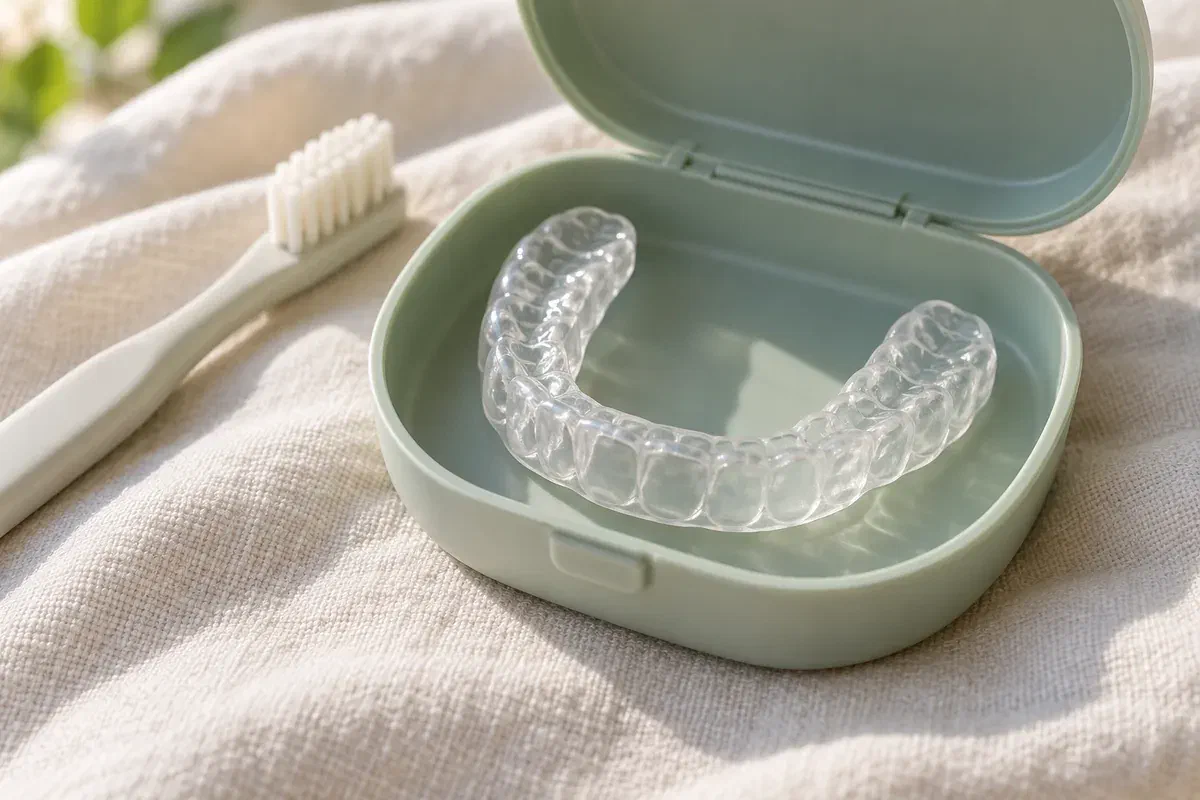
Illustrative translucent dental nightguard in an open storage case beside a toothbrush
Reasons to start the conversation

Look at the teeth, the symptoms, and the habits together.

A guard recommendation should have a clinical reason. Describe what you have noticed without assuming that every worn edge or morning ache has the same explanation or requires the same appliance.

Wear, chips, or repeated restoration concerns

Tell the dentist about changes to tooth edges, sensitivity, or dental work that has needed repeated attention. Ask whether the examination suggests current damage or an older pattern that needs monitoring. A protective plan should also account for any tooth that first needs investigation or repair.

Clenching awareness or reports of nighttime grinding

Mention whether you notice your teeth pressed together during the day or someone hears grinding at night. These are different parts of the history. A nightguard worn during sleep does not address every waking habit, so ask which concerns need separate advice or observation.

An existing appliance that feels wrong

Describe looseness, tightness, discomfort, or a change after recent dental treatment. Bring the guard for assessment instead of forcing it into place. A previously useful appliance may need review when a tooth is restored or the condition of your mouth changes.

A painful tooth, new swelling, significant locking, or difficulty eating needs assessment of that problem. Do not cover a new concern with an over-the-counter guard and assume protection alone will resolve the cause.

Setting realistic expectations

Know what the appliance is protecting and what still needs attention.

The most helpful conversation begins with a defined goal. Ask which teeth or restorations are at risk, what signs will be monitored, and whether other care is needed first. This gives the guard a place within your dental plan rather than making it a stand-alone answer to every symptom.

A custom appliance also involves fitting and review, not simply taking a record and handing over a device. Tell the team about anything that could make regular use difficult, including gagging, sensitivity, or problems managing small items. Practical concerns deserve attention before you commit to a plan that may be difficult to follow.

Patient information: NIDCR — limitations and review of intraoral appliances for jaw pain

An appliance assessed for your teeth and dental work

Discuss the proposed coverage, material, and fit in relation to your examination. Ask why that design has been selected and whether planned restorative treatment should happen first. A device that fits an earlier tooth shape may no longer be appropriate after a new filling or crown.

Clear limits on pain and sleep-related claims

Tooth protection does not guarantee relief from jaw pain or headache. A standard grinding guard is also different from an appliance prescribed within a sleep-apnea treatment plan. Tell the dentist about breathing concerns during sleep so the appropriate assessment can be discussed.

Ongoing checks rather than indefinite unreviewed wear

Ask how often to bring the appliance back and which changes should prompt an earlier visit. The team can review its condition, fit, and your experience. A useful protective device still needs maintenance and reassessment when symptoms or dental circumstances change.

From assessment to comfortable use

Choose the purpose first, then check the fit and instructions.

The number and timing of visits depend on your dental condition and the appliance being considered. Ask what is included in the plan, including fitting, review, and any work needed before records are taken.

  1. Review the concern and examine the teeth

    Discuss symptoms, observed grinding, existing dental work, and any previous appliance experience. The dentist examines relevant findings and considers whether another problem needs attention. Ask what supports the recommendation and whether monitoring or a different approach is reasonable before a guard is made.

  2. Discuss the design and collect appropriate records

    If an appliance is suitable, review the intended coverage and material, likely fees, and practical use. Records of your teeth and bite may be needed for its manufacture. Tell the team about planned treatment elsewhere so the timing can account for changes to tooth shape.

  3. Check seating, comfort, and safe handling

    At the fitting, ask the clinician to show you how to insert and remove the guard. Explain pressure, a sharp edge, or difficulty seating it. The appointment should include instructions for wear and care rather than leaving you to decide how much discomfort is acceptable.

  4. Arrange review of the appliance and its purpose

    Confirm when to return and which concerns require earlier advice. Bring the guard to relevant dental visits so it can be considered alongside your teeth. The review should address your experience and any change in symptoms as well as the physical condition of the device.

Caring for your nightguard

Make cleaning, storage, and review part of the routine.

Materials and designs differ, so follow the instructions supplied for your appliance. Ask for a demonstration or written guidance if you are unsure which cleaner, storage method, or wear schedule applies.

Clean with the recommended method

Clean your teeth before use and care for the guard as instructed after removal. Check which products are suitable for its material rather than assuming any denture cleaner or household product is appropriate. Avoid hot water that could distort a heat-sensitive appliance, and keep its case clean too.

Protect the device from damage or loss

Use the supplied storage case and keep it away from pets, heat, and places where it can be crushed. Do not wrap it in a tissue that could be thrown away. Ask how it should be stored when travelling or when you will not be wearing it for a while.

Report discomfort or a changed fit

Stop wearing an appliance that causes pain and contact the treating clinician. Do not trim, bend, heat, or glue it yourself. A crack, sharp area, persistent bite change, or difficulty seating the guard deserves review rather than an improvised repair.

Patient information: United Lincolnshire Hospitals — bite guard care instructions

Choosing the appropriate protection

A nightguard is one possible part of a broader dental plan.

Discuss the expected benefit and the alternatives in relation to your findings. The decision should reflect your teeth, symptoms, and ability to use the device rather than a universal recommendation for everyone.

When findings support observation

Monitoring and advice without an immediate appliance

Some situations may be suitable for review rather than immediate manufacture of a guard. Ask what will be monitored and which change would alter that advice. Observation should have a purpose and a review point, especially when you are concerned about ongoing wear or damage.

When tooth protection has a defined role

A professionally fitted protective guard

Discuss a suitable appliance, its limitations, and the follow-up needed to use it responsibly. The guard may protect surfaces while other contributing concerns are addressed. It does not replace needed tooth repair, routine cleaning, or assessment of new symptoms.

When another concern needs its own plan

Separate dental, jaw, or sleep-related assessment

A specific painful tooth, persistent jaw symptoms, or possible sleep-disordered breathing may require additional investigation. Ask which clinician should assess each issue. A protective guard should not delay another appropriate diagnosis or be presented as a substitute for prescribed medical sleep treatment.

Nightguard questions

Understand the fit, the purpose, and the follow-up before you begin.

Bring your questions and any existing device to the appointment. The advice should be specific to your teeth and the appliance under consideration, including what to do if wearing it becomes uncomfortable.

(905) 876-4488
Will a nightguard stop every episode of teeth grinding?
That cannot be promised. The protective role is different from eliminating all grinding activity. Ask what benefit is expected in your situation and whether other concerns need attention. Review should consider the teeth and your experience rather than assuming the habit has disappeared.
Can my sports mouthguard serve as my grinding nightguard?
Do not assume that it is suitable. Sports protection and a prescribed nighttime appliance have different purposes and designs. Bring the device to the dentist and ask what fits your needs instead of choosing a wear schedule or modifying it yourself.
Should a nightguard be remade after every new filling?
Not automatically, but its fit should be checked if treatment changes the tooth shape. Bring it to the appointment and explain any difference when seating it. The dentist can assess whether adjustment is possible or replacement is more appropriate.
Is visible wear on my guard a reason to replace it immediately?
It is a reason to have its condition reviewed, particularly if there is a crack, hole, rough edge, or changed fit. Replacement depends on the examination of the device and your teeth. Do not repair it with household glue or continue wearing a broken piece.
What if wearing my grinding guard makes my jaw hurt?
Stop using it and contact the prescribing clinician for assessment. Explain when the discomfort starts and whether your bite feels different afterward. Pain should not simply be accepted as proof that the guard is working or needs a longer unsupervised trial.
Does getting a nightguard mean damaged teeth no longer need repair?
No. A guard does not rebuild a chipped tooth or treat decay, a crack, or an inflamed pulp. Ask which existing problems need care and how protection fits around that treatment. The restorative plan and appliance plan should be coordinated.
Nightguards for teeth grinding in Milton

Talk about the wear you have noticed and the protection your teeth may need.

Contact our Bronte Street practice at (905) 876-4488 to arrange an assessment. Bring your current appliance and explain any planned dental work so we can discuss a practical approach to protection, fitting, and review.

Appliance suitability, design, lifespan, symptom response, and replacement needs vary. A grinding guard is not a substitute for diagnosis or prescribed treatment of a sleep-related breathing disorder.

Visit Milton Dental Clinic
Unit 1, 342 Bronte St. S, Milton, ON L9T 5B7
Get directions Clinic hours
Monday–Thursday
11am–7pm
Friday–Sunday
By appointment only

How can we help?

Milton Dental Clinic

Have a question about your smile? Choose the option that works best for you.

For urgent dental concerns, please call.
Messages are reviewed during clinic hours.