

Illustrative patient discussing a dental appliance with a clinician
Specialized Care

Nightguards for Teeth Grinding in Caledon

A guard that has been worn for years may show grooves, thin spots, or a crack along one edge. From Bolton or elsewhere in Caledon, bring it in so its condition and your teeth can be reviewed together before you decide what comes next.

When the guard shows the wear

Grooves in the plastic tell their own story.

Hold an older guard up to the light and you may see it: shiny worn patches, shallow grooves, a corner that has thinned or split. That wear is a sign the appliance has been taking forces that might otherwise have landed on your teeth. It is also a sign that it deserves a professional look.

A nightguard's purpose is protection. Worn over the teeth during sleep, it gives them a surface to grind against instead of each other. It was never meant to switch the habit off, guarantee that jaw aches go away, or rebuild worn enamel, and a damaged guard may no longer offer the protection it once did.

For households in Caledon, especially in the more rural parts of town, a visit is often planned rather than squeezed in, so bring everything relevant at once. That means the guard itself, its case, and any notes on changes in your teeth or bite. The dentist can then judge the appliance and your mouth together and talk through whether it needs review, replacement, or simply monitoring.

Have a worn guard assessed
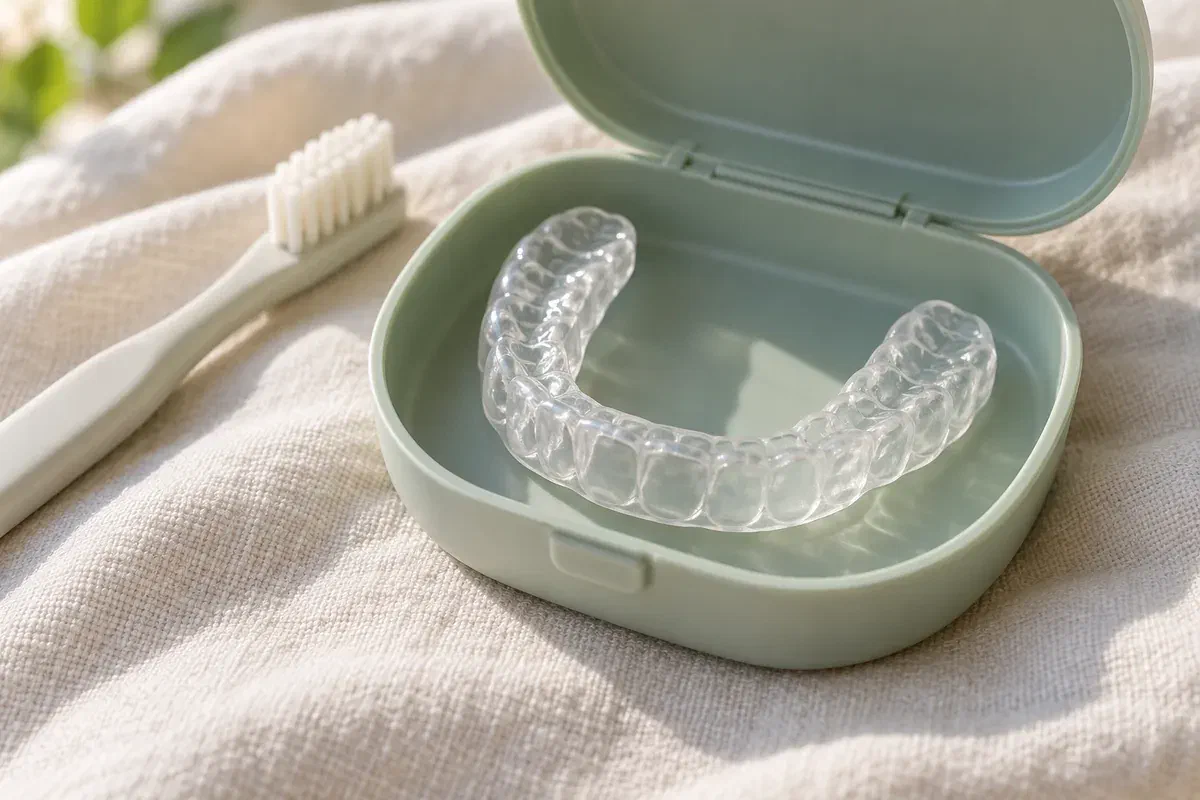
Illustrative translucent dental nightguard in an open storage case beside a toothbrush
What to bring up

Damage on the guard, changes in your mouth.

Replacing an appliance should depend on what the examination shows, not just how old it is. Describe what you have noticed on both the guard and your teeth.

New wear or damage on your teeth

Point out chips, flattened edges, sensitivity, or restorations that have needed repeated attention, including any that appeared while you were wearing the guard. Ask whether the findings suggest current wear or an older pattern. A tooth needing repair is treated on its own terms.

Changes in grinding or clenching

Let the dentist know if a partner reports more or less grinding at night, or if you notice clenching during the day. These are different habits. A sleep-time guard does not cover waking clenching, so ask whether that needs separate advice.

Cracks, holes, or a changed fit

Describe any crack, hole, rough patch, looseness, or tightness, along with changes since dental work. Do not keep wearing a broken guard or press a distorted one into place. Bring it in so its condition can be assessed.

A painful tooth, new swelling, a locking jaw, or difficulty eating needs assessment of that problem, near home if that is quicker. A worn or store-bought guard will not deal with the cause.

Reviewing an older appliance

Is it still doing its job?

Once an appliance has worn through or warped, it may no longer protect the surfaces it was designed for. Ask the dentist which teeth and restorations it should be shielding now, whether those needs have changed since it was made, and whether any treatment should happen before a replacement is considered.

If a new guard is suggested, it is worth reflecting on your experience with the old one. Was it comfortable? Did it cause gagging, soreness, or a dry mouth? Were cleaning or storage awkward? Sharing those details helps the team decide whether the same design still suits you.

Patient information: NIDCR — limitations and review of intraoral appliances for jaw pain

A design matched to your current teeth

Your teeth and dental work may differ from when the original guard was made. Discuss which areas a new appliance would cover and what material is proposed, and ask whether planned restorations should be done first.

Realistic about pain and breathing

A new or well-fitting guard does not guarantee that jaw pain or headaches will ease. It also is not the appliance used in sleep-apnea care. If snoring or interrupted breathing has been noticed, mention it so that assessment can be discussed separately.

Ongoing checks of the guard's condition

Agree on how often the appliance should be reviewed and which signs on it, such as cracks or thinning, mean booking sooner. Reviews consider the guard, its fit, and how you are finding it.

What a guard review involves

Look at the appliance, examine the teeth, choose a path.

The number of appointments depends on whether the guard can be kept, needs adjusting, or should be replaced. Ask what the plan involves before you begin.

  1. Inspect the guard and the teeth

    Bring the appliance and describe how long you have had it, what you have noticed, and any changes in symptoms. The dentist examines both the device and your teeth, considering whether another problem needs care first. Ask what the findings suggest.

  2. Keep, refine, or replace

    Depending on its condition, the guard may be fine for now, suitable for refinement, or due for replacement. If a new one is recommended, discuss coverage, material, expected fees, and how you will use it. Scans or impressions are then taken.

  3. Fitting a replacement

    At the fitting, the clinician checks how the new guard sits and has you practise placing and removing it. Raise any pressure, rough edges, or difficulty seating it. Leave with clear instructions for wear and care.

  4. Review over time

    Agree on a follow-up date and which changes would justify calling earlier. Bring the guard to routine visits so its condition is tracked along with your teeth. Reviews cover your experience and symptoms as well as the appliance.

Helping a guard last

Care that slows damage and catches problems sooner.

The instructions for your appliance's material should guide your routine. If you are uncertain about cleaning, storage, or wear, ask the team to show you or to give you written steps.

Clean gently and correctly

Brush your teeth before putting in the guard and clean it as directed after removing it. Harsh or unsuitable products can damage some materials, so confirm what is safe. Avoid hot water, which may warp it, and keep the case clean too.

Store and transport it safely

Keep the appliance in its case, away from heat and pets, and never wrapped in a tissue. If it travels with you in a vehicle or bag, keep it protected from heat and crushing. Ask how to store it during a break from wearing it.

Check it regularly yourself

Look over the guard from time to time for cracks, holes, or sharp edges. If you find damage or it starts to hurt, stop wearing it and call the clinic. Gluing, trimming, heating, or bending it at home can make things worse.

Patient information: United Lincolnshire Hospitals — bite guard care instructions

After the review

Keep watching, replace the guard, or look into something else.

Discuss what each option is expected to achieve given the condition of the guard and your teeth. Your symptoms and whether you will realistically wear an appliance should shape the decision.

When it is still in good condition

Keep the current guard and monitor

If the appliance is intact and fits well, continued use with regular review may be reasonable. Ask what the team will look for next time and which changes in the guard or your teeth would alter that advice.

When the old guard no longer protects well

A replacement fitted to your teeth now

If the guard is cracked, thin, or no longer fits, a new one may be recommended. Ask what it will and will not do, and how it will be reviewed. Repairs, routine cleanings, and assessment of new symptoms still go ahead separately.

When symptoms need their own plan

Assessment for another concern

Sometimes the guard is not the main issue. Jaw symptoms that persist, a tooth that aches, or possible breathing problems during sleep may need further investigation of their own. Ask which clinician should look at each one. Replacing a guard should not hold up a diagnosis or stand in for prescribed medical sleep treatment.

Worn guard questions

How to tell when an appliance has reached its limit.

Bring the guard and your questions. The answers should reflect its condition, your teeth, and what to do if it ever becomes uncomfortable.

(905) 876-4488
How long should a nightguard last?
There is no set lifespan. It depends on the material, how much you grind, how it is cared for, and changes in your teeth. Regular reviews help decide when replacement makes sense. Someone who grinds heavily may see wear sooner than someone whose habit is mild, so comparing yours with a friend’s or family member’s guard is not a reliable guide.
Are grooves on my guard a sign that it is working?
Marks can show that the guard is taking grinding forces, but they are also a reason to have it checked. Deep grooves or thinning may affect how well it protects your teeth. The pattern of marks can also be useful for the dentist to see, so avoid smoothing or polishing them away before your visit.
Can a cracked guard be repaired?
In most cases, a crack calls for assessment rather than a home repair. Stop wearing it, keep the pieces in the case, and bring everything to the clinic so the team can advise.
Should I replace my guard on a schedule even if it looks fine?
Not necessarily. Replacement should depend on the guard’s condition, its fit, and your examination, rather than a fixed date. Ask the dentist how often to have it reviewed.
My guard has turned yellow. Is that a problem?
Discolouration can have several causes, including cleaning methods and buildup. Mention it at your next visit and bring the guard. Avoid harsh products unless the team recommends them.
Can a guard review be combined with other Caledon errands or appointments?
Ask when you book. A review can often be timed with a routine dental visit so you make fewer separate trips. If the guard is damaged and hurting, though, call sooner rather than waiting for a convenient day.
Caledon nightguard reviews

Bring the old guard in. We'll look at it with you.

Call (905) 876-4488 to book with our Bronte Street practice. Bring the appliance and its case, mention any dental work done since it was made, and we will talk through whether to keep, refine, or replace it.

Suitability, design, lifespan, and symptom response vary from person to person. A grinding guard does not diagnose or treat sleep apnea or any other breathing disorder during sleep.

Visit Milton Dental Clinic
Unit 1, 342 Bronte St. S, Milton, ON L9T 5B7
Get directions Clinic hours
Monday–Thursday
11am–7pm
Friday–Sunday
By appointment only

Areas we serve

  • Milton
  • Oakville
  • Mississauga
  • Georgetown
  • Halton Hills
  • Acton
  • Campbellville
  • Brampton
  • Burlington
  • Puslinch
  • Rockwood
  • Erin
  • Caledon
  • Etobicoke
  • Old Milton
  • Bronte Meadows
  • Timberlea
  • Dorset Park
  • Dempsey
  • Clarke
  • Beaty
  • Coates
  • Harrison
  • Scott
  • Willmott
  • Ford
  • Bowes
  • Cobden
  • Walker
  • Mountain View
  • Milton Heights
  • Hawthorne Village
  • Valley View
  • Fallingbrook
  • Nassagaweya
  • Trafalgar
  • Esquesing
  • Nelson
  • Brookville
  • Moffat
  • Glen Williams
  • Norval
  • Limehouse
  • Stewarttown
  • Ashgrove
  • Hornby
  • Silver Creek
  • Speyside
  • Scotch Block
  • North Oakville
  • River Oaks
  • Glen Abbey
  • West Oak Trails
  • Palermo
  • Bronte Creek
  • College Park
  • Joshua Creek
  • Uptown Core
  • Preserve
  • Iroquois Ridge
  • Lisgar
  • Meadowvale
  • Meadowvale Village
  • Churchill Meadows
  • Erin Mills
  • Central Erin Mills
  • Streetsville
  • East Credit
  • Creditview
  • Heartland
  • Sheridan
  • Mount Pleasant
  • Credit Valley
  • Huttonville
  • Churchville
  • Springbrook
  • Northwest Brampton
  • Bram West
  • Fletcher's Meadow
  • Fletcher's Creek South
  • Alton Village
  • Orchard
  • Millcroft
  • Headon Forest
  • Tansley
  • Brant Hills
  • Tyandaga
  • Kilbride
  • Lowville
  • Aberfoyle
  • Morriston
  • Arkell
  • Hillsburgh
  • Freelton
  • Carlisle
  • Waterdown
  • Flamborough
  • Mountsberg

How can we help?

Milton Dental Clinic

Have a question about your smile? Choose the option that works best for you.

For urgent dental concerns, please call.
Messages are reviewed during clinic hours.