

Illustrative patient discussing a dental appliance with a clinician
Specialized Care

Nightguards for Teeth Grinding in Erin

The first few nights with a new guard can feel strange: extra saliva, an awareness of something in your mouth, a habit still forming. From Erin or Hillsburgh, learn what to expect, what is worth reporting, and how the fit is reviewed.

The first weeks

Building a bedtime habit around a new appliance.

Nobody grows up wearing something on their teeth at night, so a guard takes some getting used to. Most of that adjustment is about routine: remembering to put it in, finding a place for the case, and learning what normal awareness feels like compared with discomfort that needs a call.

Before any of that, the guard needs a reason. Your dentist decides, from your examination and history, whether protection during sleep makes sense for you. If it does, the appliance gives your teeth a protective surface to meet while you grind. It is not expected to stop the grinding, promise an end to jaw soreness, or replace worn enamel.

From Erin, where a dental visit often has to fit around a full day, a little preparation helps. Ask during the fitting what the first week or two may feel like, how to clean the appliance, and exactly which symptoms mean you should phone. If you have tried a guard before, bring it and explain what made it hard to keep wearing.

Ask about starting with a nightguard
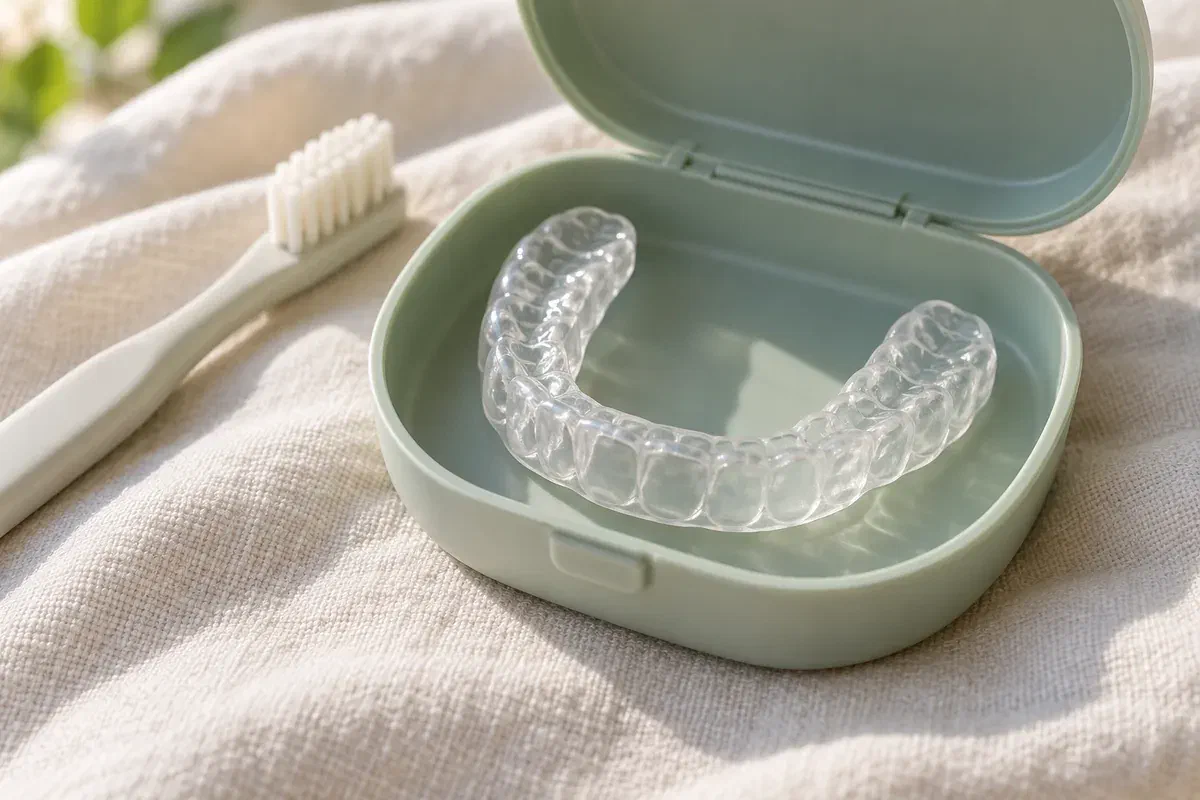
Illustrative translucent dental nightguard in an open storage case beside a toothbrush
Before a guard is made

Why the dentist asks about more than grinding.

An appliance should be prescribed for a reason the examination can support. Share what you notice and anything that might affect how easily you could wear one.

Wear, chips, or sensitive spots

Tell the dentist about teeth that look shorter, have chipped, or have become sensitive, and about fillings that keep failing. Ask whether the pattern looks current or older. A tooth that needs repair or further testing should receive that care, with protection planned afterward.

Night grinding, day clenching

If someone has heard you grind during sleep, mention it, and say whether you notice clenching while awake. They are separate habits, and a nighttime appliance does nothing for the daytime one, so ask what advice fits each.

Past trouble with an appliance

Gagging, soreness, a loose or tight feel, or a change after dental work are all worth describing. Bring the old guard rather than forcing it in. That history helps the dentist design something you are more likely to wear.

Tooth pain, swelling, a locking jaw, or difficulty eating needs to be assessed on its own. Covering a new symptom with an over-the-counter guard will not resolve the cause.

Comfort and purpose

A guard you can wear is worth more than a perfect one you cannot.

The best appliance is the one that actually gets worn. That is why practical comfort belongs in the conversation from the start. Ask which teeth or restorations need protecting, what the dentist will look for at review, and whether any treatment should be finished first.

Then raise anything that might get in the way: a sensitive gag reflex, a dry mouth, tender teeth, or trouble with fiddly items. These details can shape the design and instructions. If wearing a guard is likely to be very difficult, the dentist can also talk about whether another approach would suit you better.

Patient information: NIDCR — limitations and review of intraoral appliances for jaw pain

Designed with your comfort in mind

Discuss the guard's coverage and material and ask why they were chosen for you. If fillings or crowns are planned, ask whether they should be done first, because an appliance shaped to the earlier tooth may not fit afterward.

Honest about what comfort can and cannot mean

Wearing a guard comfortably does not promise that jaw pain or headaches will improve. A grinding guard is also not a sleep-apnea appliance. If snoring or breathing pauses have been noticed, mention them so the right assessment can be arranged.

Early review to catch problems

Ask when to bring the guard back after you start wearing it and which changes mean phoning sooner. Early feedback helps the team address pressure spots or other issues before they put you off wearing it.

From the exam to week two

What each stage is for.

The number of visits depends on your teeth and the appliance being considered. Ask what is included at the start, including the fitting and early follow-up.

  1. Start with your history and an exam

    Describe your symptoms, any grinding others have heard, your dental work, and past experience with appliances, including what made them hard to wear. The dentist examines the teeth and considers whether something else needs care first.

  2. Talk through design and take records

    Once an appliance is recommended, discuss the coverage, material, expected fees, and anything that could affect comfort. Scans or impressions are then taken. Let the team know about any treatment planned elsewhere so the timing makes sense.

  3. Fitting with time to practise

    At the fitting, the clinician checks how the guard seats and has you practise putting it in and removing it. Ask what normal awareness feels like and which kinds of discomfort mean calling. Point out pressure, rough edges, or trouble seating it before you leave.

  4. An early check-in and longer-term reviews

    Agree on when to return once you have worn it for a while and what would justify an earlier visit. Bring the appliance to routine appointments. Reviews look at comfort, symptoms, and the device's condition.

Settling into the routine

Small steps that help the habit stick.

Follow the specific instructions for your guard's material. If you are unsure about cleaning, storage, or how often to wear it, ask the team to show you before you go home.

Pair it with brushing

Putting the guard in right after you brush at night, and cleaning it as directed in the morning, can make it part of an existing routine. Check which products suit its material rather than guessing, avoid hot water, and keep the case clean.

Give the case a fixed spot

Leaving the closed case in the same place every day makes the guard easier to remember and harder to lose. Keep it away from heat and pets, and never wrap it in a tissue. Ask how to store it when you travel.

Know when awareness becomes a problem

Some early awareness is common, but pain, a bite that stays different, or persistent difficulty seating the guard is not something to push through. Stop wearing it and phone the clinic, and avoid trimming, heating, or gluing it yourself.

Patient information: United Lincolnshire Hospitals — bite guard care instructions

If a guard does not suit you

There is more than one way to approach grinding.

Discuss what each option is expected to achieve given your findings and your experience. The right choice reflects your teeth, symptoms, and whether you can realistically wear an appliance.

When wear looks stable

Monitoring with a scheduled review

If the examination suggests little active damage, a recheck may be reasonable instead of a guard. Ask which signs will be tracked and what would change the advice, so monitoring has a clear purpose and an end point.

When protection is worthwhile

A fitted guard designed for wearability

If protection makes sense, talk about a design you can live with, what it will not do, and how it will be reviewed. It shields surfaces while other factors are addressed, but repairs, cleanings, and new symptoms still need their own care.

When symptoms need separate attention

Assessment for other concerns

One painful tooth, lasting jaw symptoms, or possible breathing trouble during sleep may need its own investigation. The dentist can suggest who should assess each. Getting used to a guard should never take priority over a diagnosis, and it cannot take the place of medically prescribed treatment for sleep.

Getting-used-to-it questions

What new guard wearers often wonder about.

Bring your questions and any guard you have already tried. Answers should fit your teeth and the specific appliance, including what to do if it becomes uncomfortable.

(905) 876-4488
Why do I produce more saliva when I first wear my guard?
Some people notice this in the early days as the mouth responds to something new. Mention it at your check-in. If it continues or comes with other discomfort, the team can review the fit. Keeping a few notes on how each night goes during the first couple of weeks can make that conversation much easier.
What if I keep taking the guard out in my sleep?
Let the team know. It may relate to fit, comfort, or simply getting used to it. Bring the appliance to your review rather than changing it yourself. Mention roughly how often it happens and whether you find it in the bed, on the floor, or still loosely in place, since each detail can point to a different cause.
Is it normal to feel the guard pressing on my teeth?
A light sense of contact can be expected, but pressure that hurts or lasts after removal should be checked. Stop wearing it if it is painful and phone the clinic.
Can I do anything about gagging with a nightguard?
Describe exactly when it happens: while inserting the guard, while lying down, or through the night. Design changes or practical techniques may help in some cases, such as how and when you put the appliance in. If they do not, other options can be discussed honestly rather than leaving you to struggle.
How will I know if the guard is actually protecting my teeth?
The dentist can review your teeth and the appliance at follow-up visits. Ask what will be checked and how that will show whether wear is continuing. Marks on the appliance itself can sometimes add information, which is another reason to bring it to each visit.
Should I phone before driving in from Erin with a problem?
Yes, it is a good idea. The team can advise whether the issue needs an appointment, and what to bring, so the trip is worthwhile. For severe pain or swelling, seek prompt care rather than waiting for a convenient day.
Erin nightguard appointments

Start with an exam, and leave knowing what the first nights will feel like.

Call (905) 876-4488 to book with our Bronte Street practice. Bring any guard you have tried, mention planned dental work, and share what might make wearing one difficult, so we can talk through protection, comfort, and follow-up.

Suitability, design, lifespan, and symptom response vary between people. A grinding guard is not a diagnosis or treatment for a sleep-related breathing disorder.

Visit Milton Dental Clinic
Unit 1, 342 Bronte St. S, Milton, ON L9T 5B7
Get directions Clinic hours
Monday–Thursday
11am–7pm
Friday–Sunday
By appointment only

Areas we serve

  • Milton
  • Oakville
  • Mississauga
  • Georgetown
  • Halton Hills
  • Acton
  • Campbellville
  • Brampton
  • Burlington
  • Puslinch
  • Rockwood
  • Erin
  • Caledon
  • Etobicoke
  • Old Milton
  • Bronte Meadows
  • Timberlea
  • Dorset Park
  • Dempsey
  • Clarke
  • Beaty
  • Coates
  • Harrison
  • Scott
  • Willmott
  • Ford
  • Bowes
  • Cobden
  • Walker
  • Mountain View
  • Milton Heights
  • Hawthorne Village
  • Valley View
  • Fallingbrook
  • Nassagaweya
  • Trafalgar
  • Esquesing
  • Nelson
  • Brookville
  • Moffat
  • Glen Williams
  • Norval
  • Limehouse
  • Stewarttown
  • Ashgrove
  • Hornby
  • Silver Creek
  • Speyside
  • Scotch Block
  • North Oakville
  • River Oaks
  • Glen Abbey
  • West Oak Trails
  • Palermo
  • Bronte Creek
  • College Park
  • Joshua Creek
  • Uptown Core
  • Preserve
  • Iroquois Ridge
  • Lisgar
  • Meadowvale
  • Meadowvale Village
  • Churchill Meadows
  • Erin Mills
  • Central Erin Mills
  • Streetsville
  • East Credit
  • Creditview
  • Heartland
  • Sheridan
  • Mount Pleasant
  • Credit Valley
  • Huttonville
  • Churchville
  • Springbrook
  • Northwest Brampton
  • Bram West
  • Fletcher's Meadow
  • Fletcher's Creek South
  • Alton Village
  • Orchard
  • Millcroft
  • Headon Forest
  • Tansley
  • Brant Hills
  • Tyandaga
  • Kilbride
  • Lowville
  • Aberfoyle
  • Morriston
  • Arkell
  • Hillsburgh
  • Freelton
  • Carlisle
  • Waterdown
  • Flamborough
  • Mountsberg

How can we help?

Milton Dental Clinic

Have a question about your smile? Choose the option that works best for you.

For urgent dental concerns, please call.
Messages are reviewed during clinic hours.