

Illustrative patient discussing a dental appliance with a clinician
Specialized Care

Nightguards for Teeth Grinding in Georgetown

Grinding, snoring, and restless nights sometimes arrive together, and it is tempting to look for one appliance that handles them all. From Georgetown, an assessment helps separate tooth protection from sleep concerns that need their own care.

Grinding, snoring, or both

One noisy night can hold two different questions.

A partner might describe a scraping sound from your teeth and, a few minutes later, loud snoring or what seems like a pause in your breathing. It is natural to bundle these together. Clinically, though, they can be very different, and the appliance used for each is not the same.

A grinding nightguard is worn over the teeth during sleep to give them a protective surface. That is its purpose. It is not designed to treat snoring or sleep apnea, and it cannot promise to stop grinding, relieve jaw pain, or replace worn enamel. Breathing concerns during sleep need their own evaluation, often involving your family doctor.

So when you come in from Georgetown, tell the dentist everything that has been noticed at night, not only the grinding. Combined with an examination of your teeth and any appliance you already own, that full picture helps decide which concerns belong in the dental plan and which should be referred for separate assessment.

Talk about grinding and sleep concerns
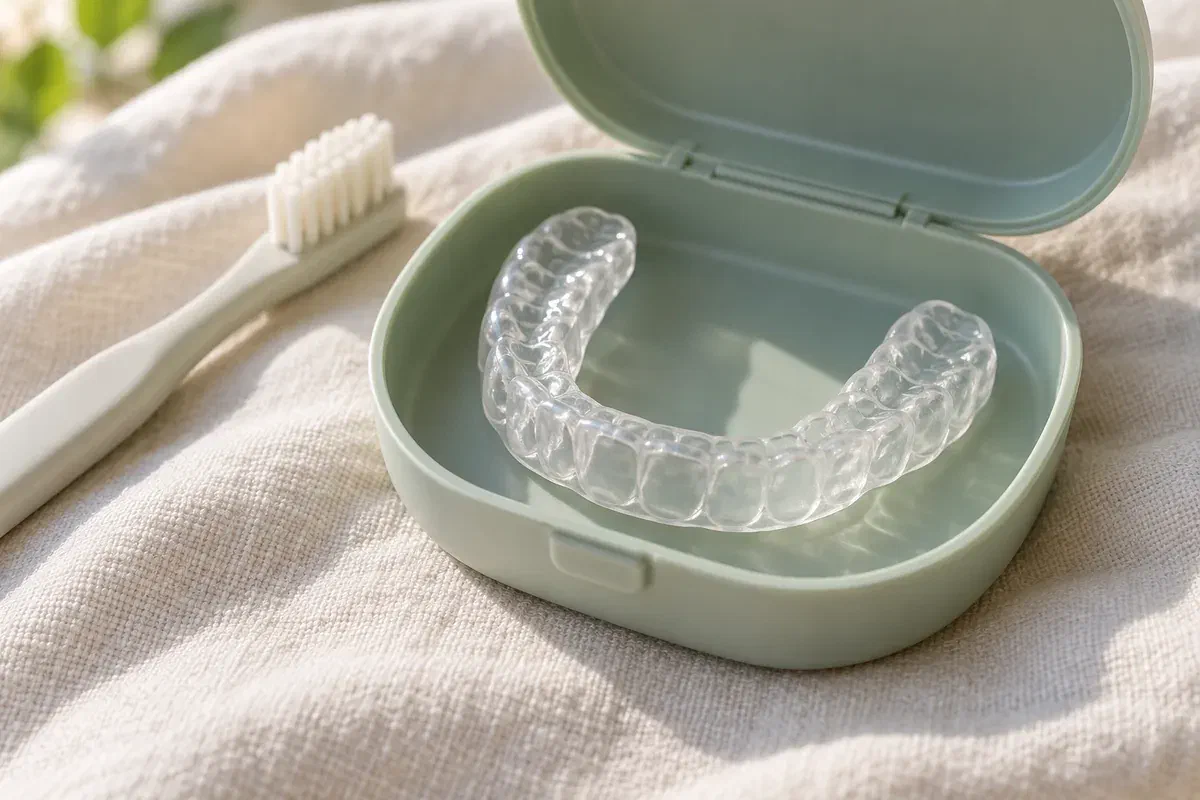
Illustrative translucent dental nightguard in an open storage case beside a toothbrush
What to report

Tooth signs, jaw habits, and anything about your breathing.

Protection should be recommended for a reason the examination supports. Share all of your night-time and daytime observations, and expect some of them to point beyond the teeth.

Wear and broken dental work

Describe teeth that look flatter or chipped, new sensitivity, or fillings that keep breaking. The dentist can judge whether this suggests current grinding damage or an older pattern. A tooth that needs testing or repair gets its own treatment, with any guard planned to fit around it.

Grinding heard at night, clenching felt by day

Reported grinding during sleep and jaw tension you notice while awake are separate clues. Mention both, along with snoring, gasping, or daytime sleepiness if they apply. A grinding guard does not address daytime habits or breathing problems.

An appliance that no longer feels right

A current guard that is loose, tight, painful, or changed after dental work should be brought in rather than forced into place. Fit can shift as teeth are restored. If you use any other oral appliance at night, bring that as well.

Tooth pain, swelling, a jaw that locks, or trouble eating needs assessment of that specific problem. Choking or gasping during sleep, or severe daytime sleepiness, should be discussed with your physician promptly.

Keeping the purposes separate

Protect the teeth here; assess the breathing properly.

Clarity about purpose prevents a common mix-up. A guard made to protect grinding teeth is designed around the teeth and restorations at risk, and it is reviewed for wear and fit. Ask which surfaces it is protecting, what will be checked later, and whether any dental treatment should come first.

An appliance used within sleep-apnea care is prescribed as part of a separate treatment plan after appropriate diagnosis. If your history suggests a breathing concern, the dentist can explain that difference and suggest you speak with your physician. Mention practical issues too, such as gagging, a dry mouth, or sensitive teeth, since they affect any appliance you wear.

Patient information: NIDCR — limitations and review of intraoral appliances for jaw pain

Designed for tooth protection

Talk with the dentist about how much of the arch the guard should cover, its material, and how it should fit. Ask why that design suits you and whether planned restorations should be finished first, so the guard does not need remaking afterward.

Not a sleep-apnea treatment

A grinding guard is not intended to treat snoring or obstructive sleep apnea and should not delay that assessment. It also cannot guarantee relief from jaw pain or headaches. Ask what benefit is realistic for your teeth specifically.

Reviewed as your situation evolves

Agree on how often to bring the guard back and which changes call for an earlier visit. If you begin treatment for a sleep condition, tell the team so both appliances or plans can be considered together.

The path through care

Sorting the concerns, then fitting the right appliance.

How many visits you need depends on your teeth, the appliance being considered, and whether another assessment is recommended. Ask what the dental plan includes at the outset.

  1. A full night-time history and an exam

    Share what has been heard or seen while you sleep, your symptoms, existing dental work, and past appliances. The dentist examines your teeth and considers whether another problem needs care. Ask what supports a grinding guard, and whether a breathing assessment should happen first.

  2. Decide on design and take records

    If a protective guard is suitable, go over which teeth it will cover, the material, expected fees, and how it will fit into your nightly routine. Scans or impressions are then taken. Mention any planned treatment elsewhere so the timing makes sense.

  3. Fitting and handling

    At the fitting, the clinician checks how the guard sits and shows you how to put it in and take it out. Mention pressure, rough edges, or difficulty seating it. You should leave knowing how often to wear it, how to clean it, and when to call.

  4. Follow-up across both concerns

    Agree on a review date. Bring the guard to routine dental visits, and update the team if you receive a sleep diagnosis or start other treatment. Reviews consider your experience, symptoms, and the appliance's condition.

Looking after your guard

Care routines for an appliance you wear every night.

Each material has its own needs, so follow the instructions supplied with your appliance. If cleaning, storage, or wear schedules are unclear, ask for a demonstration before you leave.

Cleaning that suits the material

Brush your teeth before bed and clean the guard as directed in the morning. Check which products are safe rather than using any denture tablet or household cleaner, and skip hot water that may warp it. The case needs regular cleaning too.

Safe storage during the day

Keep the appliance in its case, out of the sun or other heat and well away from pets. Never leave it wrapped in a tissue where it can be thrown out. If you travel, ask how best to pack it.

Call if comfort or fit changes

Stop wearing it if it causes pain, and contact the clinician who made it. Do not trim, bend, heat, or glue it yourself. A crack, sharp spot, a bite that stays different, or difficulty seating it needs professional review.

Patient information: United Lincolnshire Hospitals — bite guard care instructions

Mapping the options

Three possible directions after the assessment.

What makes sense depends on your teeth, symptoms, and sleep history, and on whether regular wear is realistic for you. Discuss the expected benefit of each option openly.

When wear looks stable

Monitor the teeth for now

If grinding seems to have caused little active damage, a planned review may come before any appliance. Ask what will be compared and which change would alter the advice, so monitoring has a defined purpose.

When grinding damage is the concern

A fitted guard for tooth protection

When the examination shows grinding damage worth guarding against, the dentist explains what a custom appliance can and cannot do and when it will be checked. It shields surfaces while other factors are looked at. Fillings, cleanings, and any new symptom still need their own attention.

When another concern needs its own plan

Sleep, jaw, or tooth assessment elsewhere

Snoring with breathing pauses, persistent jaw symptoms, or a single painful tooth may need further investigation. The dentist can suggest which professional to see. A grinding guard should never postpone a sleep assessment or be offered in place of prescribed medical treatment.

Grinding and sleep questions

Clearing up the overlap between teeth and breathing.

Bring your questions, anything your partner has noticed, and any appliance you already use. Answers should be specific to your teeth and the guard being considered, including steps to take if it becomes uncomfortable.

(905) 876-4488
Will a grinding guard stop me from snoring?
It is not designed for that. A grinding guard protects teeth. Snoring, particularly with gasping or breathing pauses, should be discussed with your physician so it can be properly assessed. Wearing a grinding guard and hoping the snoring settles could delay care you actually need, so it is worth raising both concerns rather than choosing one.
Is a sleep-apnea appliance the same as a nightguard?
No. An appliance used in sleep-apnea care is prescribed within a separate treatment plan after diagnosis. A grinding guard has a different purpose and design, and one should not be substituted for the other.
Could grinding and breathing problems be connected?
They are sometimes discussed together, but the connection is not straightforward. Describe your full night-time history to the dentist, and ask your physician about breathing concerns rather than assuming one explains the other.
Should I tell my doctor that I grind my teeth?
It can be helpful, particularly if you also have sleep or breathing concerns, or take medications. Let the dental team know about any medical advice you receive, and keep your medication list up to date at each visit. Sharing information in both directions helps each clinician see the parts of the picture that fall outside their own area.
What if the guard makes my mouth feel dry overnight?
Mention it at your review. Dryness can have several causes, and the dentist can consider the appliance, your medications, and other factors. Do not alter the guard yourself. Note whether the dryness is new since you started wearing it, and whether it eases after the appliance is removed.
How should I plan the visits from Georgetown?
Ask at the first appointment how many visits the dental part of the plan is likely to need. If a separate sleep assessment is recommended, that can run alongside, and the team can adjust timing as needed.
Georgetown nightguard visits

Tell us what happens at night, all of it.

Our Bronte Street team takes bookings at (905) 876-4488. Bring any appliance you use, a note of what has been observed while you sleep, and details of planned dental work, so we can talk about tooth protection and what may need separate care.

Guard suitability, design, lifespan, and symptom response vary. A grinding appliance is not a diagnosis or treatment for sleep apnea or another breathing disorder, which need assessment and prescribed care of their own.

Visit Milton Dental Clinic
Unit 1, 342 Bronte St. S, Milton, ON L9T 5B7
Get directions Clinic hours
Monday–Thursday
11am–7pm
Friday–Sunday
By appointment only

Areas we serve

  • Milton
  • Oakville
  • Mississauga
  • Georgetown
  • Halton Hills
  • Acton
  • Campbellville
  • Brampton
  • Burlington
  • Puslinch
  • Rockwood
  • Erin
  • Caledon
  • Etobicoke
  • Old Milton
  • Bronte Meadows
  • Timberlea
  • Dorset Park
  • Dempsey
  • Clarke
  • Beaty
  • Coates
  • Harrison
  • Scott
  • Willmott
  • Ford
  • Bowes
  • Cobden
  • Walker
  • Mountain View
  • Milton Heights
  • Hawthorne Village
  • Valley View
  • Fallingbrook
  • Nassagaweya
  • Trafalgar
  • Esquesing
  • Nelson
  • Brookville
  • Moffat
  • Glen Williams
  • Norval
  • Limehouse
  • Stewarttown
  • Ashgrove
  • Hornby
  • Silver Creek
  • Speyside
  • Scotch Block
  • North Oakville
  • River Oaks
  • Glen Abbey
  • West Oak Trails
  • Palermo
  • Bronte Creek
  • College Park
  • Joshua Creek
  • Uptown Core
  • Preserve
  • Iroquois Ridge
  • Lisgar
  • Meadowvale
  • Meadowvale Village
  • Churchill Meadows
  • Erin Mills
  • Central Erin Mills
  • Streetsville
  • East Credit
  • Creditview
  • Heartland
  • Sheridan
  • Mount Pleasant
  • Credit Valley
  • Huttonville
  • Churchville
  • Springbrook
  • Northwest Brampton
  • Bram West
  • Fletcher's Meadow
  • Fletcher's Creek South
  • Alton Village
  • Orchard
  • Millcroft
  • Headon Forest
  • Tansley
  • Brant Hills
  • Tyandaga
  • Kilbride
  • Lowville
  • Aberfoyle
  • Morriston
  • Arkell
  • Hillsburgh
  • Freelton
  • Carlisle
  • Waterdown
  • Flamborough
  • Mountsberg

How can we help?

Milton Dental Clinic

Have a question about your smile? Choose the option that works best for you.

For urgent dental concerns, please call.
Messages are reviewed during clinic hours.