

Illustrative patient discussing a dental appliance with a clinician
Specialized Care

Nightguards for Teeth Grinding in Puslinch

Mild wear does not always mean you need an appliance right away. From Puslinch, an examination can show whether your teeth call for a fitted nightguard now, a planned recheck, or attention to another problem first.

Now, later, or not at all

Do you need a guard yet?

Hearing that your teeth show some signs of grinding can feel like an instruction to buy something. It is not. Some wear is old and stable, some is active, and some has another cause entirely. The real question is whether protecting your teeth would make a meaningful difference at this point.

When a nightguard is the right call, it is worn over the teeth during sleep and gives them a protective surface to meet. Its role stops there. It cannot be relied on to end grinding, settle jaw aches, or restore enamel that is already gone, so it should be made for a reason the examination can explain.

For households in Puslinch, where a dental trip is often planned around farm, work, or school schedules, it helps to understand the options before committing. Ask what the dentist sees, how quickly it seems to be changing, and what would happen with each choice. If you have an old guard, bring it so its history can be part of the decision.

Ask for a clear recommendation
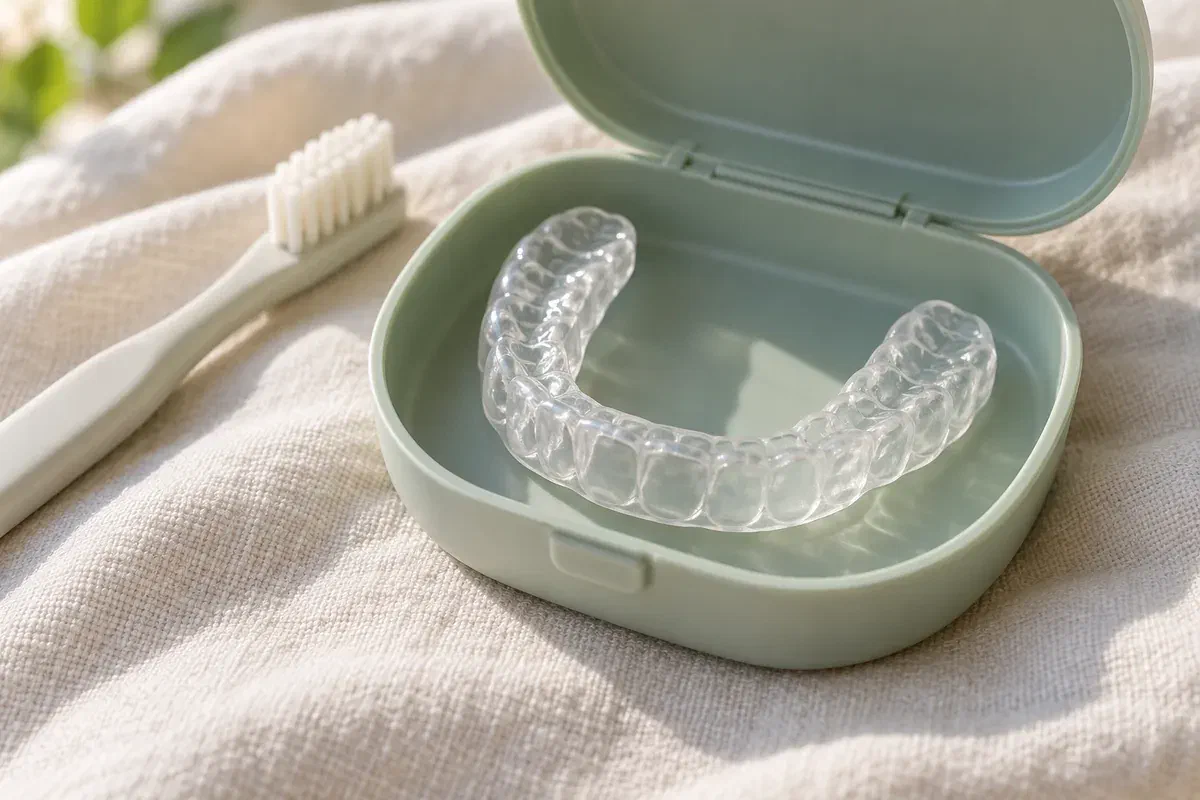
Illustrative translucent dental nightguard in an open storage case beside a toothbrush
Factors in the decision

What tips the balance toward protection or watching.

Neither choice should be automatic. Tell the dentist what you have noticed, and expect the recommendation to depend on how the findings fit together rather than on a single sign.

How much the teeth have changed

Flattened edges, chips, sensitivity, or dental work that keeps breaking are all relevant. Ask whether the pattern seems to be progressing or has been stable for some time. A tooth that needs testing or repair should be cared for in its own right, whatever is decided about protection.

Whether grinding or clenching is ongoing

Reports of grinding at night and clenching you notice during the day are separate observations. Mention both. An appliance worn during sleep has no effect on daytime habits, which may call for their own advice.

Your experience with any previous appliance

If an earlier guard was loose, tight, sore, or abandoned, that history matters. Bring it in rather than testing it at home by force. A guard that no longer fits after dental work or other changes needs review before you rely on it again.

A painful tooth, swelling, a jaw that locks, or trouble eating is a separate matter that needs prompt assessment. Neither monitoring nor an over-the-counter guard is the answer to a new symptom.

Weighing the benefit

A guard earns its place when the goal is specific.

The strongest case for protection names exactly what is at risk. Ask which teeth or restorations would benefit, what will be measured at the next review, and whether any repair should come first. If the answers are vague, that may be a sign that observation is the better place to start.

It is also fair to weigh the practical side. A custom guard involves records, a fitting, and ongoing review, and it only helps on the nights it is worn. Mention anything that would make nightly use hard, such as gagging, tender teeth, or difficulty with small items, so the recommendation reflects real life.

Patient information: NIDCR — limitations and review of intraoral appliances for jaw pain

Designed for your teeth if it goes ahead

If protection is recommended, discuss how much of the arch it will cover, the material, and why that design suits your examination. Ask whether planned fillings or crowns should be done first, since a guard shaped to the old tooth may need remaking.

No promise about pain or sleep

A guard shields tooth surfaces. It does not guarantee relief from jaw pain or headaches, and it is not a sleep-apnea appliance. If breathing concerns during sleep have come up, mention them so the correct assessment can be discussed.

A review date either way

Starting with a guard and starting with monitoring both need a next appointment. Agree on when your teeth will be checked again and which changes mean booking sooner. That way the decision can be revisited if the findings shift, and you are never left wondering whether the original choice still holds.

How the decision unfolds

Assess, choose, and keep checking.

Visit numbers depend on your findings and on which option you choose. Ask what each path would involve so you can compare them in practical terms before deciding.

  1. Examination and history

    Share your symptoms, any reports of grinding, your dental work, and past appliances. The dentist examines the teeth and considers whether another problem needs care first. Ask what the findings show and how confident the dentist is that wear is ongoing.

  2. Compare monitoring and protection

    Talk through what each option would mean for you, including timing, likely fees, and what will be checked. If a guard is chosen, records such as scans or impressions are taken. Mention planned treatment elsewhere so the timing works.

  3. Fitting, if a guard is made

    The clinician checks how the appliance seats and shows you how to put it in and take it out. Mention pressure, sharp spots, or trouble seating it, and leave with clear instructions for wear and care.

  4. Recheck on schedule

    Whichever path you take, confirm a review date and what would justify an earlier call. If you have a guard, bring it to routine visits. The review considers your teeth, symptoms, and any appliance together.

If you choose a guard

Care that keeps protection worthwhile.

Follow the instructions provided for your appliance's material. If anything about cleaning, storing, or wearing it is unclear, the team can show you at the fitting or give you written steps.

Clean with approved products only

Brush your teeth before wearing the guard and clean it as directed after use. Check which products are safe for its material rather than assuming any denture tablet or household cleaner will do. Avoid hot water, which can warp some designs, and keep the case clean.

Keep it safe between uses

Store the appliance in its case away from heat, pets, and anything that could crush it. A tissue is easily mistaken for rubbish, so avoid wrapping it. Ask how to store it while travelling or during a pause in use.

Treat pain as a signal

If the guard hurts, remove it and phone the clinic. Home fixes such as trimming, heating, bending, or gluing can make things worse. A crack, a sharp edge, a lasting change in your bite, or difficulty seating it should be reviewed.

Patient information: United Lincolnshire Hospitals — bite guard care instructions

The three paths

Each one has a reason, a plan, and a review point.

Discuss the expected benefit of each option given your findings. The decision should reflect your teeth, your symptoms, and whether a guard would realistically be worn.

When wear appears stable

Watchful monitoring

If changes are minor or seem to have stopped, a scheduled review may be the sensible start. Ask what will be recorded and compared, and which change would lead the dentist to recommend protection. Monitoring should never be open-ended.

When ongoing damage is likely

A fitted guard now

If the findings point to active wear or at-risk restorations, discuss a suitable design, its limits, and the follow-up it needs. It protects surfaces while other factors are managed, but repairs, cleanings, and assessment of new symptoms continue as needed.

When symptoms point elsewhere

Another kind of assessment first

Sometimes the more pressing issue is a single sore tooth, jaw symptoms that persist, or possible breathing trouble during sleep, and that may need investigation before any decision about a guard. The dentist can explain who should assess each. Protection should not delay a diagnosis or replace prescribed medical sleep treatment.

Decision questions

Helping you choose between waiting and protecting.

Bring your questions and any guard you already own. The answers should reflect your teeth and the options in front of you, including what to do if an appliance ever becomes uncomfortable.

(905) 876-4488
Is it safe to wait if my teeth only show mild wear?
For some people, a planned recheck is a reasonable choice. Ask the dentist what will be compared next time and which changes would mean starting protection, so waiting is a decision rather than a delay.
How will we know if the wear is getting worse?
The dentist may compare your teeth at future visits using examination notes, photos, or other records. Ask which method will be used and when the next comparison will take place. Your own observations count as well, so note any new rough edges, chips, or sensitivity you notice in the meantime.
What would make the dentist recommend a guard sooner?
Signs such as new chips, broken restorations, increasing sensitivity, or wear that seems to be progressing may change the advice. Mention any of these between visits rather than waiting for your scheduled review.
Can I start with monitoring and change my mind later?
Yes. A plan can be revisited at any time, and if you become more concerned about wear or symptoms, ask to talk through protection again. Starting with observation does not close the door on an appliance; it simply means the dentist has more information when the question comes back. Mention any new symptoms as soon as they appear.
Will a guard repair the wear that is already there?
No. A guard protects surfaces going forward but does not rebuild worn or chipped teeth. If restorative care is needed, ask how it would be timed with an appliance.
Can a recheck be booked alongside a routine visit from Puslinch?
Often, yes. Ask the team whether your monitoring review can be paired with a cleaning or check-up so you make fewer separate trips. If a guard is later recommended, the team can also tell you how many further appointments to expect.
Puslinch nightguard consultations

Get a clear answer on whether protection makes sense now.

Phone (905) 876-4488 to book an assessment with our Bronte Street team. Bring any appliance you have and notes on planned dental work, and we will talk through monitoring, protection, and what comes next.

Suitability, design, lifespan, and symptom response all vary. A grinding guard does not diagnose or treat a breathing disorder during sleep, which needs its own assessment and prescribed care.

Visit Milton Dental Clinic
Unit 1, 342 Bronte St. S, Milton, ON L9T 5B7
Get directions Clinic hours
Monday–Thursday
11am–7pm
Friday–Sunday
By appointment only

Areas we serve

  • Milton
  • Oakville
  • Mississauga
  • Georgetown
  • Halton Hills
  • Acton
  • Campbellville
  • Brampton
  • Burlington
  • Puslinch
  • Rockwood
  • Erin
  • Caledon
  • Etobicoke
  • Old Milton
  • Bronte Meadows
  • Timberlea
  • Dorset Park
  • Dempsey
  • Clarke
  • Beaty
  • Coates
  • Harrison
  • Scott
  • Willmott
  • Ford
  • Bowes
  • Cobden
  • Walker
  • Mountain View
  • Milton Heights
  • Hawthorne Village
  • Valley View
  • Fallingbrook
  • Nassagaweya
  • Trafalgar
  • Esquesing
  • Nelson
  • Brookville
  • Moffat
  • Glen Williams
  • Norval
  • Limehouse
  • Stewarttown
  • Ashgrove
  • Hornby
  • Silver Creek
  • Speyside
  • Scotch Block
  • North Oakville
  • River Oaks
  • Glen Abbey
  • West Oak Trails
  • Palermo
  • Bronte Creek
  • College Park
  • Joshua Creek
  • Uptown Core
  • Preserve
  • Iroquois Ridge
  • Lisgar
  • Meadowvale
  • Meadowvale Village
  • Churchill Meadows
  • Erin Mills
  • Central Erin Mills
  • Streetsville
  • East Credit
  • Creditview
  • Heartland
  • Sheridan
  • Mount Pleasant
  • Credit Valley
  • Huttonville
  • Churchville
  • Springbrook
  • Northwest Brampton
  • Bram West
  • Fletcher's Meadow
  • Fletcher's Creek South
  • Alton Village
  • Orchard
  • Millcroft
  • Headon Forest
  • Tansley
  • Brant Hills
  • Tyandaga
  • Kilbride
  • Lowville
  • Aberfoyle
  • Morriston
  • Arkell
  • Hillsburgh
  • Freelton
  • Carlisle
  • Waterdown
  • Flamborough
  • Mountsberg

How can we help?

Milton Dental Clinic

Have a question about your smile? Choose the option that works best for you.

For urgent dental concerns, please call.
Messages are reviewed during clinic hours.