

Illustrative patient discussing a dental appliance with a clinician
Specialized Care

Nightguards for Teeth Grinding in Rockwood

Cold water stings, an edge feels rough under your tongue, and you suspect grinding. For anyone in Rockwood, the order of care matters: sensitive or damaged teeth are assessed and treated, and a nightguard is planned around them.

Getting the sequence right

Treat the tooth first. Then think about protecting it.

Sensitivity on a cold morning or a sharp spot you keep touching with your tongue can make grinding feel like an urgent problem to solve with an appliance. Sometimes protection is part of the answer. But a sore or damaged tooth needs its own diagnosis, and a guard placed over it does nothing to fix what is going on underneath.

Here is what a nightguard actually does: worn over the teeth during sleep, it places a protective layer between them. It is not designed to stop grinding, guarantee an end to jaw discomfort, or restore enamel or tooth structure that has been lost. Those limits are why the dentist usually looks at repair needs before designing any appliance.

When you book from Rockwood, mention every tooth that bothers you, along with any reports of grinding and your dental history. The examination sets the order of care, and an appliance made after needed repairs is far more likely to fit well. Bring an older guard if you have one; it may need review once treatment changes the teeth it was made for.

Book an assessment for worn, sensitive teeth
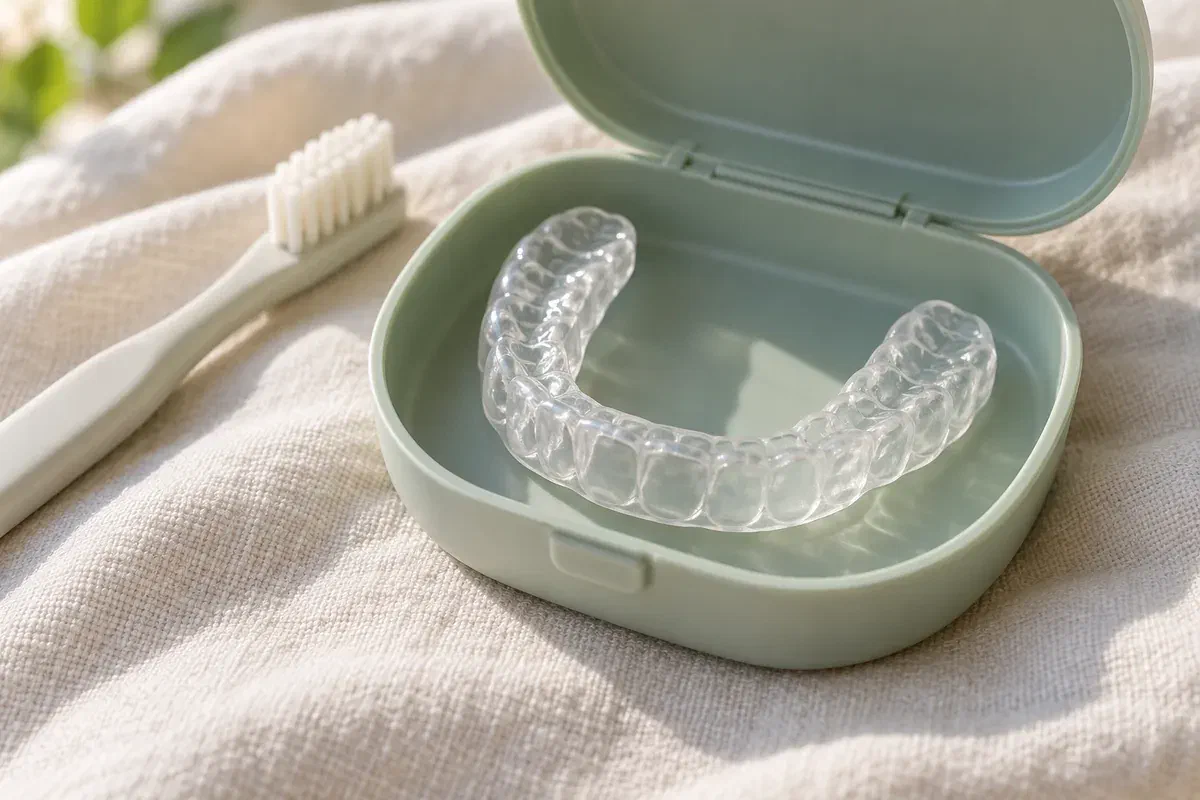
Illustrative translucent dental nightguard in an open storage case beside a toothbrush
Signs that need sorting out

Sensitivity, rough edges, and the habits behind them.

Before anything protective is made, the dentist needs to understand each finding. Describe what you feel and see, and let the examination decide whether those signs share a cause.

Teeth that sting, feel rough, or have chipped

Point out each tooth that reacts to cold, feels sharp, or has lost a piece. Ask whether the wear looks active or older and stable. A tooth that needs testing, a filling, or other repair should be looked after directly, with any guard planned around the result.

Grinding during sleep and clenching while awake

Reports from someone who hears you at night and moments when you notice your own jaw tight are different parts of the story. Share both. An appliance worn overnight has no effect on daytime habits, which may need separate advice.

An old guard that may not suit repaired teeth

Describe looseness, tightness, soreness, or a change since recent treatment, and bring the appliance in. Once teeth are restored, an older guard may no longer seat as it should, so it is safer to have it checked than to force it.

Throbbing pain, swelling, a tooth that keeps you awake, a jaw that locks, or difficulty eating needs prompt assessment of that problem. An over-the-counter guard will not deal with its cause and could delay care.

How repair and protection fit together

Two plans that work best when they are coordinated.

Restorative care and an appliance answer different questions. Repairs deal with damage that has already happened; a guard aims to protect surfaces from grinding forces afterward. Ask the dentist which teeth need treatment, which need protecting, what will be compared at future visits, and in what order things should happen.

Because a custom guard is designed from records of your teeth, timing matters. Making it before fillings or crowns are placed can mean making it again. Mention anything that might make regular use hard too, such as sensitivity, gagging, or difficulty handling small objects, so the design and instructions suit you.

Patient information: NIDCR — limitations and review of intraoral appliances for jaw pain

An appliance designed for the repaired teeth

Once restorative work is done or planned, discuss the guard's coverage and material and why they suit your mouth. Ask whether any further treatment is expected, since a tooth whose shape changes later can affect the fit.

No claims about pain or sleep

Protection does not guarantee that sensitivity, jaw pain, or headaches will ease. A grinding guard also differs from an oral appliance prescribed for sleep apnea. If snoring or interrupted breathing has been noticed, mention it so a proper assessment can be considered.

Follow-up for both the teeth and the guard

Ask how often the repaired teeth and the appliance should be checked, and which changes justify an earlier visit. Reviews look at the restorations, the guard's fit and condition, and how you are managing day to day.

The order of appointments

Diagnose, repair where needed, then protect.

Your treatment needs determine how many visits are involved and how they are spaced. Ask for the planned order at the start, including any repairs that should be finished before records.

  1. Examine each concern

    Describe sensitivity, rough or chipped teeth, any grinding others have heard, and past appliances. The dentist examines the teeth and considers whether any problem needs investigation or treatment first. Ask what the findings support and whether watching for change is reasonable.

  2. Complete or schedule repairs

    If fillings, bonding, or other restorative care are needed, the plan should say when they happen relative to the guard. Ask how long the sequence is likely to take and whether any interim advice applies while you wait.

  3. Records and design for the guard

    When the teeth are ready, discuss which areas the appliance will cover, its material, expected fees, and how you will use it. Scans or impressions are then taken. Mention any treatment planned with another provider so the timing still works.

  4. Fitting and review

    At the fitting, practise placing and removing the guard while the clinician checks how it sits. Report pressure on repaired teeth, sharp spots, or trouble seating it. Agree on a review date and which problems mean calling sooner.

Caring for the guard and your repairs

Habits that protect both the appliance and the teeth beneath it.

The instructions for your appliance's material come first. If you are not sure how to clean, store, or wear it, ask the team to walk you through it at the fitting.

Clean teeth, clean guard

Brush and floss before wearing the appliance, especially around new restorations, and clean the guard as directed after removal. Confirm which products are safe rather than using any denture or household cleaner, and keep hot water away from it. Wash the case too.

Store it where it cannot warp or break

Keep the guard in its case away from heat, pets, and heavy objects. Do not leave it in a tissue that could be thrown out. If you travel, ask how best to pack it.

Report soreness on a repaired tooth

If wearing the guard causes pain, particularly on a newly treated tooth, take it out and phone the clinic. Avoid filing, heating, bending, or gluing it. A crack, rough spot, lasting bite change, or trouble seating it needs a professional review.

Patient information: United Lincolnshire Hospitals — bite guard care instructions

Options after the examination

Repair, protect, observe, or refer?

Talk through what each approach is expected to achieve given your findings. The plan should reflect your teeth, your symptoms, and how realistic it is for you to wear an appliance.

When wear seems stable

Observe once repairs are complete

After any necessary treatment, the dentist may suggest monitoring rather than a guard straight away. Ask what will be compared next time and what change would alter that advice, so observation has a clear purpose.

When protection has a defined role

A guard planned around restored teeth

If grinding seems to be putting teeth or restorations at risk, the dentist can recommend a design and explain what it can and cannot achieve and how it will be followed up. Cleanings, further repairs, and any new symptom still need their own care.

When something else needs looking into

Further assessment for persistent symptoms

Sensitivity that continues after treatment, ongoing jaw symptoms, or signs of breathing problems during sleep may need more investigation. Ask which clinician is best placed for each. An appliance should never hold up a diagnosis or take the place of prescribed medical sleep care.

Sensitivity and sequencing questions

Answers on worn teeth, repairs, and when a guard fits in.

Bring your questions and any appliance you already own. Advice should be specific to your teeth, the treatment planned, and the guard being considered, including what to do if it causes discomfort.

(905) 876-4488
Can a nightguard stop my teeth from feeling sensitive?
It is not a treatment for sensitivity. Sensitivity has several possible causes and needs its own assessment. A guard may protect surfaces from further grinding wear, but the reason a tooth reacts to cold should be looked at directly.
Why would the dentist repair teeth before making a guard?
A guard is made to fit the shape of your teeth. If fillings or bonding change that shape afterward, the appliance may no longer seat properly. Completing needed repairs first usually leads to a better fit.
Is it okay to wear my old guard while I wait for repairs?
Ask the dentist. It depends on the condition of the guard and of the teeth involved. If it causes pain or presses on a damaged tooth, stop wearing it and mention it at your next visit.
Does a rough edge mean I need a crown?
Not necessarily. Depending on the examination, options might range from smoothing or bonding to other restorative care. Ask what the findings suggest and how any treatment would fit with protection.
My new filling feels high when I wear the guard. What should I do?
Stop wearing the appliance and contact the clinic. A restoration or guard that feels uneven should be checked rather than tolerated or adjusted at home.
Can repairs and the guard fitting be grouped for the trip from Rockwood?
Sometimes, depending on what is needed. Ask for the planned sequence early, and the team can let you know which appointments might be combined.
Rockwood nightguard and repair planning

Let's look at the sensitive teeth first.

Book by calling (905) 876-4488. Our Bronte Street practice will examine the teeth that are bothering you, talk about any grinding, and plan the order of repairs and protection. Bring any appliance you use and notes on dental work elsewhere.

Whether a guard suits you, its design and lifespan, and how symptoms respond will vary. A grinding appliance is not a diagnosis or treatment for sleep apnea or other breathing disorders during sleep.

Visit Milton Dental Clinic
Unit 1, 342 Bronte St. S, Milton, ON L9T 5B7
Get directions Clinic hours
Monday–Thursday
11am–7pm
Friday–Sunday
By appointment only

Areas we serve

  • Milton
  • Oakville
  • Mississauga
  • Georgetown
  • Halton Hills
  • Acton
  • Campbellville
  • Brampton
  • Burlington
  • Puslinch
  • Rockwood
  • Erin
  • Caledon
  • Etobicoke
  • Old Milton
  • Bronte Meadows
  • Timberlea
  • Dorset Park
  • Dempsey
  • Clarke
  • Beaty
  • Coates
  • Harrison
  • Scott
  • Willmott
  • Ford
  • Bowes
  • Cobden
  • Walker
  • Mountain View
  • Milton Heights
  • Hawthorne Village
  • Valley View
  • Fallingbrook
  • Nassagaweya
  • Trafalgar
  • Esquesing
  • Nelson
  • Brookville
  • Moffat
  • Glen Williams
  • Norval
  • Limehouse
  • Stewarttown
  • Ashgrove
  • Hornby
  • Silver Creek
  • Speyside
  • Scotch Block
  • North Oakville
  • River Oaks
  • Glen Abbey
  • West Oak Trails
  • Palermo
  • Bronte Creek
  • College Park
  • Joshua Creek
  • Uptown Core
  • Preserve
  • Iroquois Ridge
  • Lisgar
  • Meadowvale
  • Meadowvale Village
  • Churchill Meadows
  • Erin Mills
  • Central Erin Mills
  • Streetsville
  • East Credit
  • Creditview
  • Heartland
  • Sheridan
  • Mount Pleasant
  • Credit Valley
  • Huttonville
  • Churchville
  • Springbrook
  • Northwest Brampton
  • Bram West
  • Fletcher's Meadow
  • Fletcher's Creek South
  • Alton Village
  • Orchard
  • Millcroft
  • Headon Forest
  • Tansley
  • Brant Hills
  • Tyandaga
  • Kilbride
  • Lowville
  • Aberfoyle
  • Morriston
  • Arkell
  • Hillsburgh
  • Freelton
  • Carlisle
  • Waterdown
  • Flamborough
  • Mountsberg

How can we help?

Milton Dental Clinic

Have a question about your smile? Choose the option that works best for you.

For urgent dental concerns, please call.
Messages are reviewed during clinic hours.