

Illustrative patient discussing bite contacts with a clinician beside a dental cast
Specialized Care

Occlusal Adjustment in Georgetown

Polishing a filling and reshaping your own enamel are not the same decision. From Georgetown, you can book a bite assessment where the dentist explains exactly which surface is in question, what the examination found, and whether a limited adjustment or a different approach is the better fit.

Georgetown bite consultations

Filling or enamel: the question that comes first

Your bite, or occlusion, is the way your top and bottom teeth meet. An occlusal adjustment takes a small amount from one chosen contacting surface to change that meeting point, and the surface might be a restoration or a natural tooth. The dentist recommends it only when the examination identifies a specific reason. It is not a routine answer to any bite that feels uncomfortable, and every reduction has consequences.

That is why the first question many people should ask is simple: what exactly would be smoothed? A high spot on a new filling is one thing, because restoration material can be refined, repaired or even replaced. Natural enamel is another, because once it is gone it stays gone. Before either is touched, the tooth and its contacts are examined, since chewing pain can have causes that no adjustment would fix.

Feel free to ask the dentist to point to the surface, explain the finding and describe the expected benefit. Ask about alternatives and what happens if you decide to wait. Being clear about all of this is part of giving genuine consent.

Discuss a bite assessment
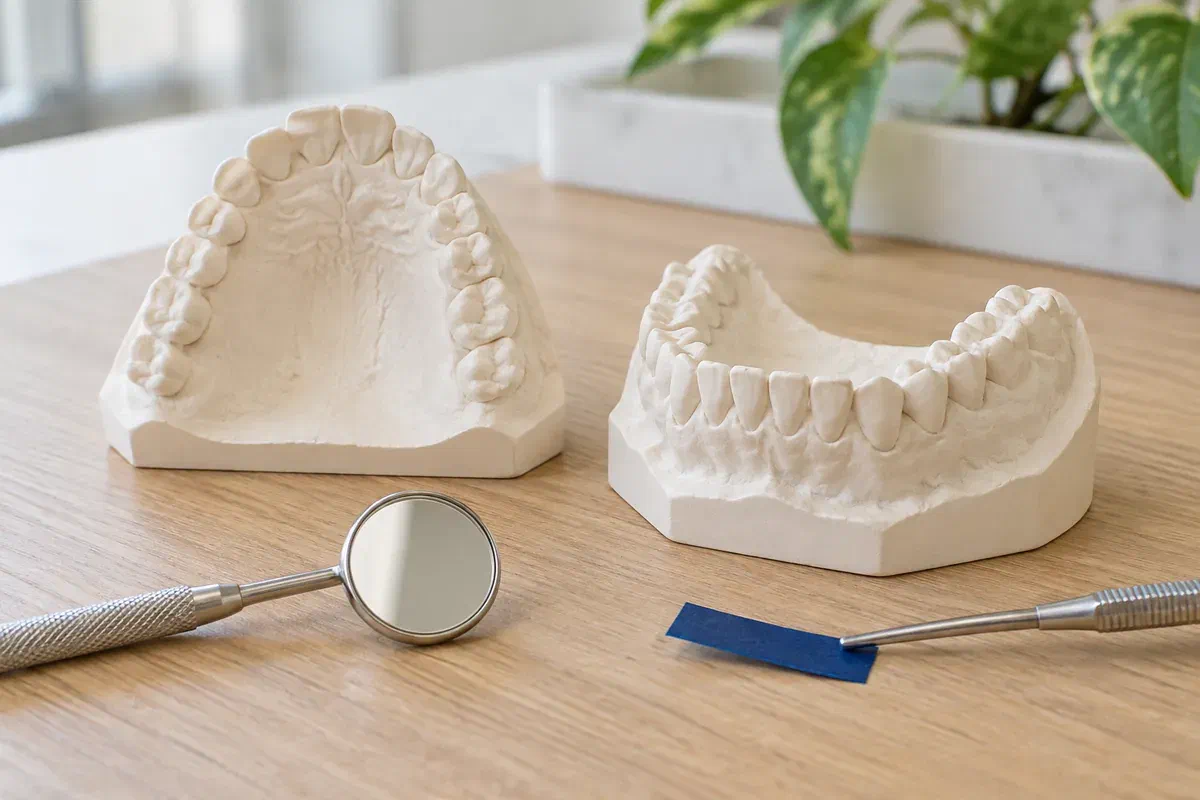
Illustrative dental casts beside a mirror and articulating-paper holder
Reasons people ask

Share the story, and let the examination sort out the cause.

Explain when the feeling began and whether treatment came just before it. That history helps distinguish a single high contact from another dental issue or a more general change in jaw comfort, which in turn affects which surface, if any, should be considered.

New dental work that meets too soon

Tell us which tooth was treated, what was placed and when you first noticed it striking early. Describe whether it happens on a plain close or a sideways glide. Ask the treating dentist to review it; hard chewing is not a reliable way to wear a restoration down and may simply make the tooth sore.

Biting pain that doesn’t fit a simple pattern

Explain where the pain is, whether it comes with cold or heat and whether it lingers. A sore bite does not automatically mean a high restoration. A crack or a problem in the nerve might need investigating first, and adjusting the surface would not resolve either.

A sense that the overall bite has shifted

Tell the team about jaw pain, locking, a recent injury or a change to a guard, retainer or denture. Say whether the feeling stays the same or varies. A broad complaint should lead to a careful, broad assessment, not to reshaping natural teeth as a default.

An uneven feeling after treatment should be checked. Escalating pain, swelling, fever or trouble opening needs prompt advice and may require something entirely different from refining a restoration.

What good consent looks like

Specific enough that you could explain it to someone else

You should be able to repeat the plan in your own words: which surface, what the dentist found, and what should feel different afterward. Ask how it ties to your original complaint. If the contacts do not adequately explain the symptoms, further investigation is usually the better path than repeatedly taking a little more away.

Pay particular attention to scale. Refining one restoration is a narrow decision. Reshaping multiple natural teeth is broad, lasting and difficult to reverse. Ask how much is proposed, why it is necessary and what the options are if the examination has not found a clear target.

A named surface and a named reason

Marking materials and an examination help the dentist see how your teeth meet. Ask what the combined findings mean for the specific surface proposed. A mark alone is not a diagnosis, nor permission to reshape every surface it appears on.

Restoration versus enamel, clearly stated

Confirm whether the change affects filling or crown material, or your own tooth. Discuss risks, such as sensitivity or the chance of needing further restorative care. Enamel does not grow back, so the reason and the amount should be clear in advance.

An agreed plan if comfort doesn’t return

Ask when to report continued discomfort and what a second assessment would involve. Persistent symptoms can mean the cause lies elsewhere. Reassessment should look at the evidence again rather than assume another adjustment is the answer.

The appointment

Nothing changes until you understand what will change.

The dentist explains each step in a way that leaves room for questions. If there is any doubt about whether natural tooth would be affected, settle it before agreeing.

  1. Talk it through and examine the tooth

    Describe the treatment that preceded the change, when you first noticed it and any pain or sensitivity. The clinician examines the tooth and restoration and may suggest further tests if a contact check alone cannot answer the question.

  2. Assess how the teeth meet

    Your bite is observed during closing and chosen movements, sometimes with marking film. Tell the dentist if a position recreates the feeling. Findings are interpreted alongside your history, not used as a stand-alone instruction for removal.

  3. Confirm the surface, then proceed

    If an adjustment is appropriate, the dentist identifies the surface, whether restoration or enamel, and the expected benefit. Ask about alternatives and risks. The way the area is finished and checked depends on the material.

  4. Recheck and agree on next steps

    Describe how gentle, ordinary closing feels afterward rather than biting hard repeatedly. Ask what to monitor and when to call. If a separate tooth or restoration still needs attention, confirm that care too.

Afterward at home

Notice how it feels at meals, then let us know.

Advice depends on what was examined or changed. Any instructions from the original treatment continue to apply alongside what you are told at the bite review.

Don’t keep checking with hard bites

Clenching, tapping your teeth together or biting firm objects to check the contact can keep the area irritated. Pay attention to ordinary meals and relaxed closing. If chewing is uncomfortable, call for advice rather than trying to force the tooth to settle.

Keep any remaining treatment booked

A refined contact does not mean a crown, root canal or other plan is complete. Confirm whether a temporary still needs replacing or another visit is due. A comfortable bite is not a reason to postpone a necessary final restoration without advice.

Report precisely what you feel

If discomfort persists, explain whether it is the same symptom, a new sensitivity or a different contact sensation. Mention swelling or unprompted pain promptly so the dentist can reassess the original diagnosis.

Choosing a response

Reducing a surface is one option among several.

The findings might support a limited correction, more investigation or care aimed at a different source. Ask which route fits and what would change it.

When the contact is clearly identified

Refining a defined area of a restoration

The dentist may propose smoothing and polishing a small patch on the filling or crown. Ask whether the restoration will remain sound and what to expect. The decision concerns that examined tooth and is not a reason for wider reshaping.

When another dental cause is suspected

Investigating or restoring the tooth differently

A tooth might need further assessment or a new restoration if adjusting would not solve the problem. Ask what each test should clarify. A surface change should not take the place of investigating ongoing pain or damage.

When muscles or joints are involved

Reversible care for jaw symptoms

Jaw complaints need their own evaluation. Evidence does not support permanent changes to natural teeth as routine treatment for temporomandibular disorders, and they can worsen symptoms. Conservative approaches or specialist advice come first.

Patient information: NIDCR — evidence and cautions concerning occlusal treatments for TMD

Consent and surface questions

What to ask before saying yes

These answers help you tell a focused restoration check apart from broader permanent treatment. Any recommendation should rest on your own examination and symptoms.

(905) 876-4488
How can I tell if the plan involves my natural teeth or only my filling?
Ask the dentist to name the exact surface and the material. They should be able to point to it and explain why it was chosen. If natural tooth is involved, that should be stated clearly as part of consent.
Can a filling that has been adjusted still last?
A small refinement is usually made with the restoration’s function in mind, but ask whether it will remain suitable. In some cases the restoration may need repair or replacement instead.
Will my teeth be more sensitive if enamel is reduced?
Sensitivity is one of the risks worth discussing if natural tooth is involved. Ask the dentist how likely it is in your situation and what would be done if it occurred.
Can I say no to an adjustment and choose to wait?
Yes. Ask what waiting would mean for the tooth and what signs should prompt you to call. The dentist can explain whether monitoring is reasonable or whether another step is more appropriate.
Is changing my bite a cure for jaw clicking?
No. Permanent tooth reshaping is not a routine treatment for clicking or TMD pain. Ask for a jaw assessment, conservative options, and another opinion if extensive irreversible work is recommended.
Is there anything I should do before leaving Georgetown for the appointment?
Make a short note of the tooth, the recent treatment and what triggers the feeling, and bring any appliance you wear. If you develop swelling or severe pain, call before setting out.
Book from Georgetown

Ask us to show you the surface before anything changes.

Our Bronte Street practice can be reached at (905) 876-4488 to set up a bite assessment. Let us know about recent fillings, crowns, root canal work or appliance changes so the appointment focuses on the right tooth and history.

Having an assessment does not commit you to an adjustment. Whether one is suitable, the extent, the material affected and the expected response depend on your findings and informed consent.

Visit Milton Dental Clinic
Unit 1, 342 Bronte St. S, Milton, ON L9T 5B7
Get directions Clinic hours
Monday–Thursday
11am–7pm
Friday–Sunday
By appointment only

Areas we serve

  • Milton
  • Oakville
  • Mississauga
  • Georgetown
  • Halton Hills
  • Acton
  • Campbellville
  • Brampton
  • Burlington
  • Puslinch
  • Rockwood
  • Erin
  • Caledon
  • Etobicoke
  • Old Milton
  • Bronte Meadows
  • Timberlea
  • Dorset Park
  • Dempsey
  • Clarke
  • Beaty
  • Coates
  • Harrison
  • Scott
  • Willmott
  • Ford
  • Bowes
  • Cobden
  • Walker
  • Mountain View
  • Milton Heights
  • Hawthorne Village
  • Valley View
  • Fallingbrook
  • Nassagaweya
  • Trafalgar
  • Esquesing
  • Nelson
  • Brookville
  • Moffat
  • Glen Williams
  • Norval
  • Limehouse
  • Stewarttown
  • Ashgrove
  • Hornby
  • Silver Creek
  • Speyside
  • Scotch Block
  • North Oakville
  • River Oaks
  • Glen Abbey
  • West Oak Trails
  • Palermo
  • Bronte Creek
  • College Park
  • Joshua Creek
  • Uptown Core
  • Preserve
  • Iroquois Ridge
  • Lisgar
  • Meadowvale
  • Meadowvale Village
  • Churchill Meadows
  • Erin Mills
  • Central Erin Mills
  • Streetsville
  • East Credit
  • Creditview
  • Heartland
  • Sheridan
  • Mount Pleasant
  • Credit Valley
  • Huttonville
  • Churchville
  • Springbrook
  • Northwest Brampton
  • Bram West
  • Fletcher's Meadow
  • Fletcher's Creek South
  • Alton Village
  • Orchard
  • Millcroft
  • Headon Forest
  • Tansley
  • Brant Hills
  • Tyandaga
  • Kilbride
  • Lowville
  • Aberfoyle
  • Morriston
  • Arkell
  • Hillsburgh
  • Freelton
  • Carlisle
  • Waterdown
  • Flamborough
  • Mountsberg

How can we help?

Milton Dental Clinic

Have a question about your smile? Choose the option that works best for you.

For urgent dental concerns, please call.
Messages are reviewed during clinic hours.