

Illustrative patient discussing bite contacts with a clinician beside a dental cast
Specialized Care

Occlusal Adjustment in Puslinch

Your filling was smoothed, yet chewing still isn’t right. That is a signal to look again, not to keep removing material. From Puslinch, you can arrange a bite reassessment with our team to recheck the contact, examine the tooth more closely and talk through what else might explain it.

For Puslinch: when it hasn’t settled

Still sore after the adjustment?

Sometimes a high filling is smoothed and the relief is immediate. Other times the tooth stays tender, or a new kind of discomfort appears. To understand why, it helps to know what was done. Occlusion is the pattern in which your teeth touch when you close and chew; adjusting it means altering one selected contacting surface, often on a restoration, when the examination points to a reason. It was never meant as a guarantee that every bite complaint can be smoothed away.

If the problem persists, the original explanation may have been only part of the story. A crack, irritation of the nerve, gum inflammation or a jaw problem can all mimic or sit alongside a high contact. Repeatedly removing more material in the hope of comfort is not the answer; a careful second look at the tooth and contacts is.

At a reassessment, ask what the dentist now sees and how it compares to before. Would any further change affect restoration material or natural tooth? Ask what tests could help and what alternatives exist. Each irreversible step deserves the same clear reasoning as the first.

Arrange a reassessment
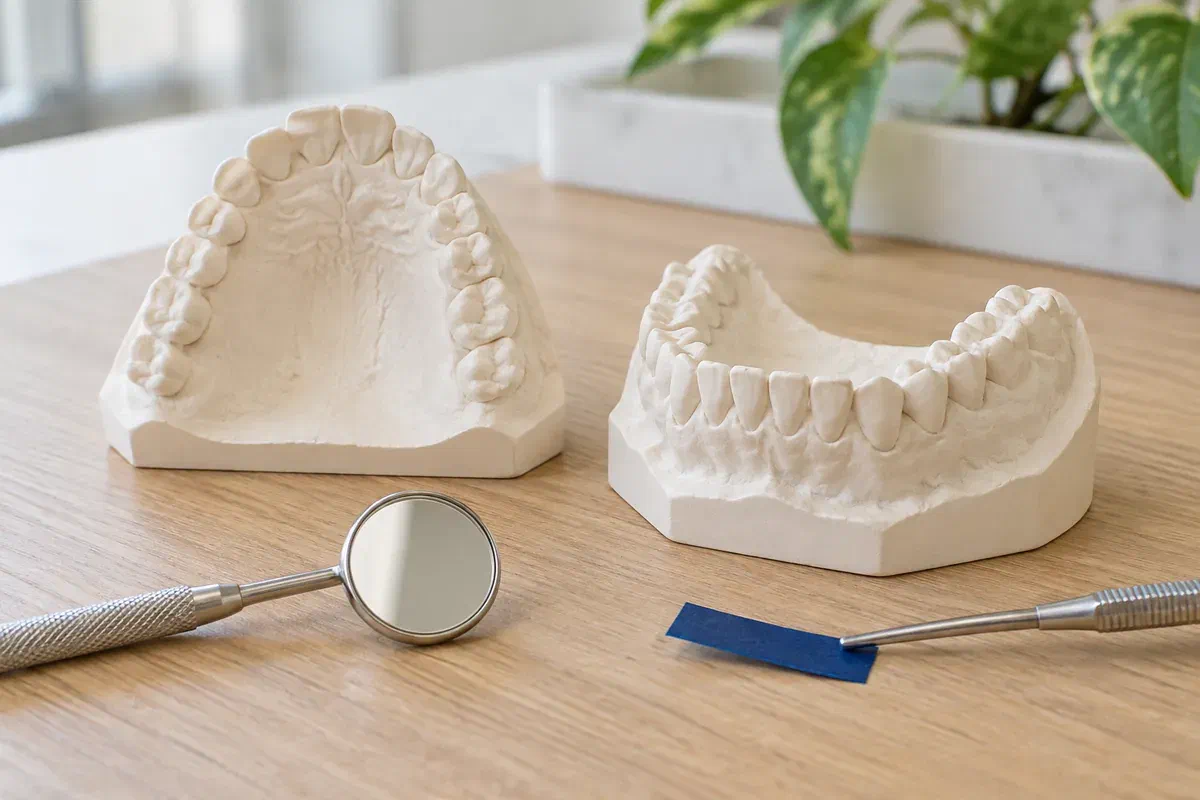
Illustrative dental casts beside a mirror and articulating-paper holder
When to call back

Describe what has changed since the last visit.

Explain how the tooth felt before the adjustment, right after it and now. That sequence helps the dentist judge whether the contact is still the issue, or whether a separate tooth problem or a jaw concern has come to the front.

The same early contact, still there

Say whether the tooth still lands first on closing or in a particular glide, and whether it is better, worse or unchanged. Contact the treating dentist for a recheck rather than chewing hard to see whether it eventually wears in.

Pain on biting that hasn’t eased

Point to the area and mention any cold sensitivity, lingering ache or pain on release. Ongoing biting pain after a contact has been corrected makes other causes, such as a crack or nerve irritation, worth investigating before more is removed.

A new or different sense of unevenness

If the bite now feels off somewhere else, or your jaw aches, clicks or locks, say so. Mention any change in a guard or retainer. A shifting pattern calls for a broader review, not a series of small reshapings.

Discomfort that lingers after an adjustment should be reported. Increasing pain, swelling, fever or difficulty opening needs prompt advice and may require a response quite unlike further smoothing.

What a second look should do

Reopen the question instead of repeating the answer.

A useful reassessment starts from the evidence, not from the last procedure. The dentist should explain what has been found now, how it relates to your symptoms and what the next step is meant to achieve. If contacts no longer explain the problem, investigating other causes is far more sensible than removing a little more material each visit.

This is also the moment to check scale. One refined filling is a small matter. Progressively reshaping several natural teeth is a significant and permanent change. Ask how much has been done so far, what more is proposed, why, and what other options exist.

A fresh look at the contacts

The dentist re-examines the tooth and may use marking film again to compare with earlier findings. Ask what has changed. A mark still needs interpretation and does not, on its own, justify further reduction.

Clear consent for any further change

Confirm whether more work would affect a filling, a crown or your own tooth, and what the risks are, including the possibility of needing restorative treatment later. Enamel removed is gone for good.

A broader search if needed

Ask what other explanations are being considered and how tests could help tell them apart. Persistent symptoms may point to a separate problem that needs its own care rather than more adjustment.

How we approach a recheck

Compare, investigate, decide, and only then act.

The dentist should talk you through what is different this time. If there is any question of natural tooth being reduced, get a clear answer before agreeing.

  1. Go back over the timeline

    Describe the original treatment, the first adjustment and how the tooth has felt since. The clinician re-examines the tooth and restoration. Additional tests may be appropriate when symptoms continue despite a corrected contact.

  2. Check the bite again

    Your teeth are observed in closing and chosen movements, sometimes with marking material, and compared with what was seen before. Say whether the familiar feeling returns. Findings are weighed with your history, not followed blindly.

  3. Agree on a direction

    The next step may be a small further refinement, more investigation or care aimed elsewhere. Ask why one route is recommended over the others, along with the risks and benefits of each.

  4. Plan how to monitor it

    Agree on what to watch for, how long to wait and when to call. If another tooth or restoration problem has been identified, make sure that care is booked rather than assuming the concern is resolved.

While things settle

Give it gentle use and keep notes.

Advice depends on what was examined or changed. Continue any instructions from the original treatment and the earlier bite review, as well as anything new.

Avoid testing the tooth

Clenching, tapping or biting firm foods to check the contact tends to keep it irritated. Use the tooth normally and gently. If chewing remains uncomfortable, call rather than pushing through.

Track the pattern

A short daily note of when it hurts, what triggers it and whether it is improving gives the dentist far more to work with than a general impression. Bring it to the next appointment, along with anything you noticed about hot or cold drinks, chewing on that side, or waking with a sore jaw.

Keep other treatment moving

If a temporary restoration, root canal or final crown is still pending, keep those appointments. Ongoing bite discomfort is a reason to call, not a reason to put essential care on hold.

Next steps after a recheck

When a first adjustment hasn’t solved it

The findings may support a small further correction, closer investigation of the tooth, or care for a different source. Ask which fits and what evidence the recommendation rests on.

When a clear contact is still present

A further limited refinement

If a specific high point remains, the dentist may suggest smoothing it a little more. Ask whether the restoration is still suitable and what improvement to expect. It should be a defined step on one tooth, not open-ended reshaping.

When the contact no longer explains the pain

Investigating the tooth more closely

Ongoing symptoms may call for tests, a closer look for cracks, or a different restoration. Ask what each step is meant to clarify. Further reduction is not a substitute for finding the real cause.

When muscles or joints are involved

Assessing the jaw separately

Jaw aching or clicking needs its own evaluation. Evidence does not back permanent bite reshaping as standard care for temporomandibular disorders, and it may aggravate them. Reversible approaches or a specialist referral are more appropriate.

Patient information: NIDCR — evidence and cautions concerning occlusal treatments for TMD

After-adjustment questions

When comfort doesn’t come right away

These cover what to expect when a tooth stays sore after its contact has been changed. The guiding idea is to look again carefully, rather than keep reducing tooth or restoration in the hope of relief.

(905) 876-4488
How long should a tooth take to feel normal after its contact is adjusted?
It varies with the tooth and what was done. Some people notice relief quickly; others feel tenderness for a short while. If it is not improving, or is getting worse, call the dentist rather than waiting indefinitely.
Is it normal for a different tooth to feel high after one was adjusted?
Changing one contact can make you more aware of others. Describe exactly where the new feeling is. The dentist can check whether it reflects a real contact issue or simply a change in awareness.
Why not just take a little more off until it feels right?
Because repeated reduction can remove too much and may miss the true cause. Each further change needs a clear finding to support it. If the contacts do not explain the pain, other causes should be investigated.
Could the tooth have a crack even though the filling was high?
Both can be present. Pain on release, sharp twinges or lingering cold sensitivity can suggest something beyond a contact problem. Tell the dentist about those patterns so they can be assessed.
Would further adjustment ever help jaw pain?
Permanent bite changes are not routine treatment for jaw pain or TMD, and adding more of them after a first adjustment is unlikely to be the fix. The jaw itself should be examined, with reversible measures considered first. If wide-ranging irreversible work is put forward for jaw symptoms, another dentist’s opinion is worth having.
Can I describe my symptoms by phone before making the trip from Puslinch?
Yes. Calling first lets you explain how things have changed since the adjustment. The team can advise when to be seen, and how quickly, especially if there is swelling or worsening pain.
Rechecks for Puslinch

Tell us what has and hasn’t changed.

Call (905) 876-4488 to book a reassessment at our Bronte Street practice. Let us know what treatment and adjustments you have already had, and bring any notes you have kept, so we can pick up where the last visit left off.

A reassessment does not automatically lead to more adjustment. Whether any further change is suitable, and on what material, depends on the findings and your informed consent.

Visit Milton Dental Clinic
Unit 1, 342 Bronte St. S, Milton, ON L9T 5B7
Get directions Clinic hours
Monday–Thursday
11am–7pm
Friday–Sunday
By appointment only

Areas we serve

  • Milton
  • Oakville
  • Mississauga
  • Georgetown
  • Halton Hills
  • Acton
  • Campbellville
  • Brampton
  • Burlington
  • Puslinch
  • Rockwood
  • Erin
  • Caledon
  • Etobicoke
  • Old Milton
  • Bronte Meadows
  • Timberlea
  • Dorset Park
  • Dempsey
  • Clarke
  • Beaty
  • Coates
  • Harrison
  • Scott
  • Willmott
  • Ford
  • Bowes
  • Cobden
  • Walker
  • Mountain View
  • Milton Heights
  • Hawthorne Village
  • Valley View
  • Fallingbrook
  • Nassagaweya
  • Trafalgar
  • Esquesing
  • Nelson
  • Brookville
  • Moffat
  • Glen Williams
  • Norval
  • Limehouse
  • Stewarttown
  • Ashgrove
  • Hornby
  • Silver Creek
  • Speyside
  • Scotch Block
  • North Oakville
  • River Oaks
  • Glen Abbey
  • West Oak Trails
  • Palermo
  • Bronte Creek
  • College Park
  • Joshua Creek
  • Uptown Core
  • Preserve
  • Iroquois Ridge
  • Lisgar
  • Meadowvale
  • Meadowvale Village
  • Churchill Meadows
  • Erin Mills
  • Central Erin Mills
  • Streetsville
  • East Credit
  • Creditview
  • Heartland
  • Sheridan
  • Mount Pleasant
  • Credit Valley
  • Huttonville
  • Churchville
  • Springbrook
  • Northwest Brampton
  • Bram West
  • Fletcher's Meadow
  • Fletcher's Creek South
  • Alton Village
  • Orchard
  • Millcroft
  • Headon Forest
  • Tansley
  • Brant Hills
  • Tyandaga
  • Kilbride
  • Lowville
  • Aberfoyle
  • Morriston
  • Arkell
  • Hillsburgh
  • Freelton
  • Carlisle
  • Waterdown
  • Flamborough
  • Mountsberg

How can we help?

Milton Dental Clinic

Have a question about your smile? Choose the option that works best for you.

For urgent dental concerns, please call.
Messages are reviewed during clinic hours.