

Illustrative patient discussing bite contacts with a clinician beside a dental cast
Specialized Care

Occlusal Adjustment in Rockwood

After a root canal, a tooth that meets too early can stay tender, and an uneven bite is something endodontists ask you to report. If you are coming from Rockwood, our team can check the contact, look at the temporary or final restoration and explain whether a small adjustment is suitable.

Rockwood: bites after root canal care

A treated tooth should not be the first to touch.

Root canal treatment often ends with a temporary filling and a plan for a permanent restoration later. If that temporary sits a little proud, the tooth can take the full force of every bite while it is still recovering. Dentists call the way teeth meet occlusion, and an occlusal adjustment refines one chosen contact, usually on the restoration, when the examination supports it. It is not a cure-all for discomfort, and changing a surface has consequences.

Some tenderness after a root canal is common and tends to fade. A bite that feels uneven, though, is worth reporting, because a high contact can keep the tooth sore. Pain can also stem from other causes, such as a crack, the surrounding tissues or an issue with the treatment itself, so the tooth is examined before anything is changed.

Ask the dentist what the examination showed and what an adjustment would alter. Is it the temporary, a permanent restoration or the natural tooth? Ask how the plan for the final restoration fits in. Understanding the purpose and limits matters before any irreversible step.

Request a contact check
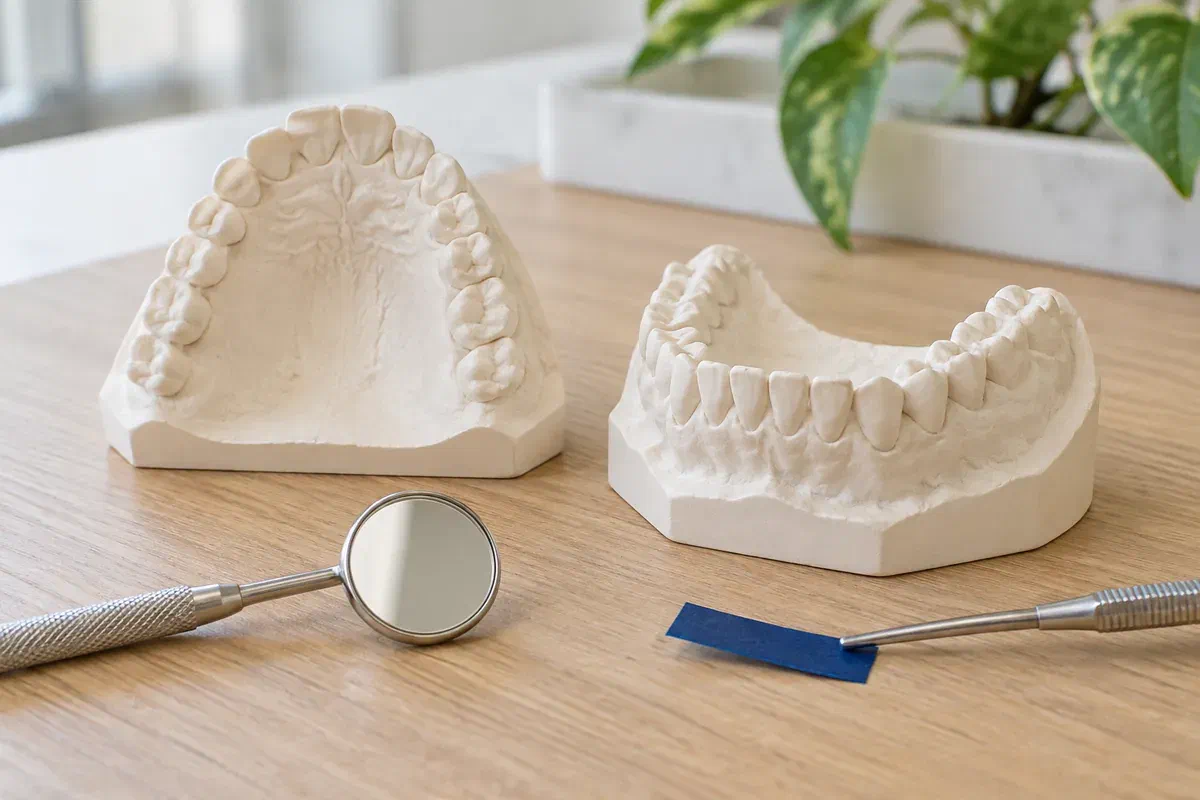
Illustrative dental casts beside a mirror and articulating-paper holder
Signs after endodontic treatment

Report an uneven bite, and protect the tooth while you wait.

Share when the root canal was done, what restoration was placed and when the bite started to feel off. That helps separate a high contact from normal healing tenderness, another tooth problem or a jaw complaint.

The treated tooth landing first

Tell us which tooth, the date of treatment and whether a temporary or final restoration is in place. Explain whether it hits on every close or only in one movement. Call the treating dentist or endodontist rather than chewing on it to wear it down.

Tenderness that isn’t fading

Describe where it is sore, whether it is improving and whether anything else triggers it. A tooth that stays painful on biting may have a high contact, but it might also have a crack or another issue that needs checking first.

A wider sense of bite change

Mention jaw aching after a long appointment, locking or clicking, or a change to a guard. Is it constant or easing? These details guide a fuller assessment rather than reshaping several teeth by default.

Tell the clinic about an uneven bite after root canal treatment. Swelling, fever, increasing pain or difficulty opening needs prompt advice and may need a different response from adjusting the restoration.

What the review should clarify

Is it healing, height or something else?

The dentist should tell you which surface is involved, what was found and what improvement to expect, and link it to the tenderness you described. If the contact does not explain the symptoms, further investigation is more sensible than repeatedly reducing the restoration to chase comfort.

Remember that a temporary is designed for a limited time. Smoothing it is a small step, but it does not replace the permanent restoration that protects the tooth. Reshaping several natural teeth is an entirely different, lasting decision. Ask about scope, reasons and alternatives.

A clear contact finding

Examination and marking film show the dentist how the treated tooth meets its partners. Ask what the findings mean together. A mark alone does not explain pain after endodontic treatment or justify reshaping every marked surface.

Agreement on what would be altered

Confirm whether the temporary, a permanent restoration or natural tooth would change. Discuss risks, including whether the restoration plan might need to adapt. Enamel cannot be replaced once removed.

A plan if tenderness persists

Ask when continuing discomfort should be reported and who you should contact, the general dentist or the endodontist. Lingering pain may point to another issue that needs its own assessment, not simply more adjustment.

During the contact review

Check the treated tooth, confirm the plan, refine only if fitting.

Expect the dentist to explain how the bite review relates to the rest of your root canal plan. Clarify whether any natural tooth would be affected before agreeing.

  1. Review the treatment so far

    Explain when the root canal was done, by whom, what restoration is in place and how the tooth has felt since. The clinician examines the tooth and may recommend further tests if the symptoms raise wider questions.

  2. Look at how it meets

    Your bite is checked in closing and movement, sometimes with marking film. Say whether the check reproduces the tenderness. Findings are interpreted with your history rather than followed as an automatic guide.

  3. Refine the agreed contact

    If adjustment is appropriate, the dentist confirms the surface and expected benefit and discusses alternatives and risks. The approach to smoothing and polishing depends on whether the material is temporary or permanent.

  4. Confirm comfort and the next appointment

    Close gently and describe how it feels. Agree on signs to watch for and when to call. Make sure the permanent restoration is still scheduled, since a smoother temporary is not the end of treatment.

Caring for the tooth afterward

Be gentle with it until the final restoration is in.

Your root canal aftercare instructions still stand, and the bite review may add a few more. What you are told will reflect whether the temporary, a permanent restoration or nothing at all was changed.

Chew carefully on the other side

Until the permanent restoration is placed, avoid biting hard or sticky foods on the treated tooth. Do not keep clenching or tapping to check the contact. If chewing is still uncomfortable, call for advice.

Keep the final restoration on schedule

Teeth that have had root canal treatment and only carry a temporary can be more vulnerable to chipping or leakage. A more comfortable bite should not lead to postponing the permanent filling or crown, even if life gets busy. Confirm the date of that appointment before you leave, and call if you need to move it.

Report how it feels in detail

If discomfort continues, explain whether it is the same tenderness as before, sensitivity that is new, or a bump that seems to have moved to another tooth. Call promptly about swelling, a bad taste, or pain that worsens or starts on its own, since those can need attention beyond the bite.

Possible responses

Polish, investigate, or look beyond the tooth

The examination may support a small refinement, further investigation or care for another source. Ask which fits and how it affects the rest of your root canal plan.

When a clear high contact is found

Smoothing the temporary or restoration

The dentist may refine a defined area of the temporary or permanent restoration. Ask whether it will still protect the tooth and what to expect. It is a decision about the treated tooth, not a reason to reshape others.

When pain may have another cause

Further assessment of the treated tooth

Persistent symptoms may need tests, a referral back to the endodontist or a different restoration. Ask what each step is meant to clarify. A contact change should not substitute for investigating ongoing pain.

When the jaw is part of the picture

Conservative care for jaw discomfort

Long appointments can leave jaw muscles sore, and jaw symptoms deserve their own assessment. Permanently altering teeth is not evidence-based routine care for temporomandibular disorders and may worsen them. Reversible care comes first.

Patient information: NIDCR — evidence and cautions concerning occlusal treatments for TMD

Root canal and bite questions

After endodontic treatment

These answers relate a bite review to root canal care. They distinguish refining one restoration from broader permanent changes, and the advice you receive should reflect your own examination.

(905) 876-4488
Is some soreness after a root canal normal, or is my bite too high?
Mild tenderness for a short time after treatment is common and tends to ease. If the tooth seems to hit first, or soreness is not improving day by day, call and describe it. The dentist can check the contact and the tooth, and decide whether anything beyond time is needed.
Who should check my bite, my dentist or the endodontist?
Contact whoever placed the current restoration first, as they know the details. Either can advise. Mention all the treatment you have had so the right person sees you.
Can a high temporary damage my treated tooth?
A high contact can keep the tooth sore and may put stress on it. That is one reason an uneven bite should be reported and the permanent restoration kept on schedule.
Would an adjustment ever affect the natural tooth instead of the filling?
Ask directly, since it depends on the plan. The dentist should explain the surface, reason, amount, risks and alternatives. Removing natural tooth is permanent.
My jaw aches after a long appointment. Should my bite be reshaped?
Jaw muscle soreness after keeping your mouth open is common and usually eases. Permanent bite changes are not routine treatment for jaw pain or TMD. Ask about conservative care if it persists.
How should I plan visits from Rockwood during root canal treatment?
Ask when booking whether a bite check can be combined with an upcoming appointment. If the tooth is uncomfortable now, or there is swelling, call rather than waiting for the next booked visit.
Arranging care from Rockwood

Tell us about the root canal and how it feels now.

You can book a contact review by phoning (905) 876-4488, which reaches the team at our Bronte Street practice. Let us know when your root canal was done, what restoration is in place and whether you wear a guard, so the visit can be planned around your treatment.

An assessment does not automatically mean adjustment. Whether one is suitable, and on which material, depends on your findings, your treatment plan and your informed consent.

Visit Milton Dental Clinic
Unit 1, 342 Bronte St. S, Milton, ON L9T 5B7
Get directions Clinic hours
Monday–Thursday
11am–7pm
Friday–Sunday
By appointment only

Areas we serve

  • Milton
  • Oakville
  • Mississauga
  • Georgetown
  • Halton Hills
  • Acton
  • Campbellville
  • Brampton
  • Burlington
  • Puslinch
  • Rockwood
  • Erin
  • Caledon
  • Etobicoke
  • Old Milton
  • Bronte Meadows
  • Timberlea
  • Dorset Park
  • Dempsey
  • Clarke
  • Beaty
  • Coates
  • Harrison
  • Scott
  • Willmott
  • Ford
  • Bowes
  • Cobden
  • Walker
  • Mountain View
  • Milton Heights
  • Hawthorne Village
  • Valley View
  • Fallingbrook
  • Nassagaweya
  • Trafalgar
  • Esquesing
  • Nelson
  • Brookville
  • Moffat
  • Glen Williams
  • Norval
  • Limehouse
  • Stewarttown
  • Ashgrove
  • Hornby
  • Silver Creek
  • Speyside
  • Scotch Block
  • North Oakville
  • River Oaks
  • Glen Abbey
  • West Oak Trails
  • Palermo
  • Bronte Creek
  • College Park
  • Joshua Creek
  • Uptown Core
  • Preserve
  • Iroquois Ridge
  • Lisgar
  • Meadowvale
  • Meadowvale Village
  • Churchill Meadows
  • Erin Mills
  • Central Erin Mills
  • Streetsville
  • East Credit
  • Creditview
  • Heartland
  • Sheridan
  • Mount Pleasant
  • Credit Valley
  • Huttonville
  • Churchville
  • Springbrook
  • Northwest Brampton
  • Bram West
  • Fletcher's Meadow
  • Fletcher's Creek South
  • Alton Village
  • Orchard
  • Millcroft
  • Headon Forest
  • Tansley
  • Brant Hills
  • Tyandaga
  • Kilbride
  • Lowville
  • Aberfoyle
  • Morriston
  • Arkell
  • Hillsburgh
  • Freelton
  • Carlisle
  • Waterdown
  • Flamborough
  • Mountsberg

How can we help?

Milton Dental Clinic

Have a question about your smile? Choose the option that works best for you.

For urgent dental concerns, please call.
Messages are reviewed during clinic hours.