
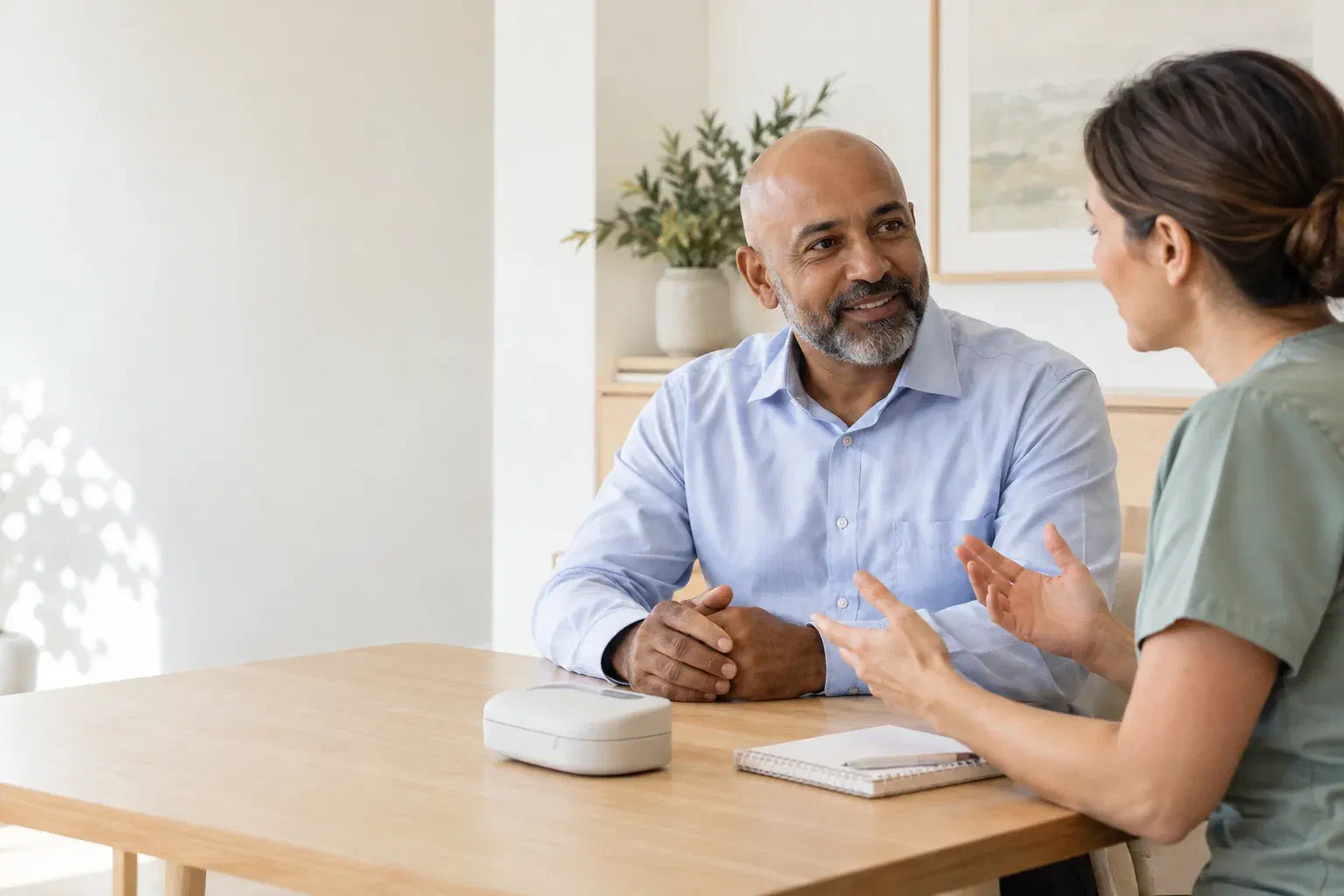
Illustrative patient discussing a sleep-related dental appliance assessment with a clinician
Specialized Care

Oral Appliance Therapy in Halton Hills

A snoring mouthpiece from the pharmacy shelf may seem like an easy fix, but it skips the questions that matter: what is causing the snoring, and is it safe to treat this way? Our Milton team explains how a prescribed appliance, a diagnosis and follow-up fit together.

Beyond the drugstore mouthpiece

Why not just buy one online?

Snoring can be harmless, or it can accompany a breathing disorder such as obstructive sleep apnea. A mouthpiece bought without any assessment can't tell the difference, and quieter nights could hide a problem that deserves medical attention. That's the main reason a physician's evaluation, and often a sleep study, comes before any device.

When a sleep condition is diagnosed and an appliance is recommended, it is prescribed and made for your mouth. Some designs hold the lower jaw forward to help keep the airway open. It isn't the same thing as a guard for grinding, and it isn't chosen because it's convenient; the diagnosis, a dental exam and planned follow-up decide whether it fits.

From Georgetown, Acton, Glen Williams or a smaller Halton Hills hamlet, call ahead with your sleep-care provider's name and any reports. We'll explain the dental steps, whether a referral is required and which parts the clinic can arrange. Expect a process with several stages, not a device handed over at the first visit.

Ask how a prescribed appliance is assessed
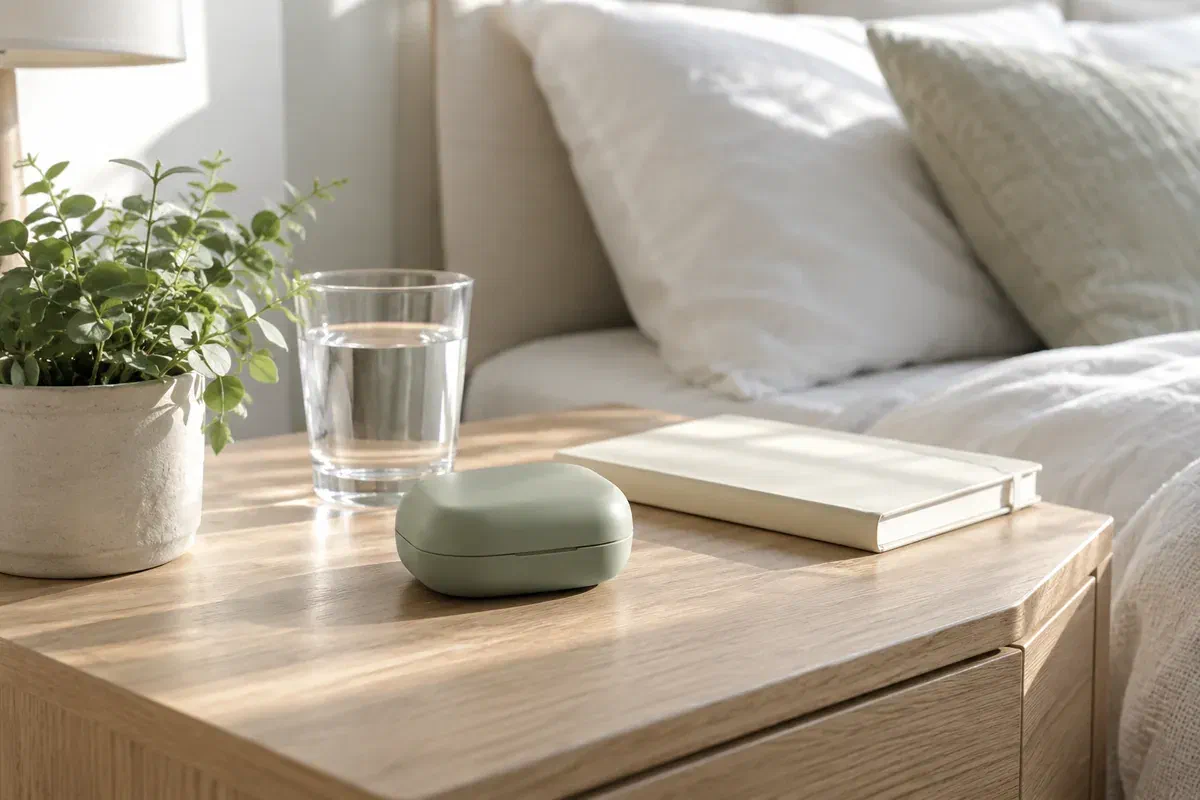
Illustrative closed dental appliance case beside water and a notebook on a bedside table
The questions a shelf product can't ask

Diagnosis, history and dental health all count.

Prescribing starts with more than a complaint about snoring. Explaining your diagnosis, how prescribed treatment has gone and any dental issues helps the team see what is confirmed and what is still open.

What a medical assessment has found

Bring your sleep report or referral and let us know who is responsible for your sleep care. If nobody has assessed you, take symptoms such as witnessed breathing pauses or persistent daytime tiredness to a physician. Dental care can't confirm or rule out a sleep diagnosis.

Your experience with prescribed therapy

If you've been prescribed treatment, say what has been difficult and what has already been tried. The clinician managing your sleep condition may have solutions to comfort or equipment issues. Effective treatment should keep going while an appliance is considered.

Teeth and jaw that need to support it

Tell the dentist about loose teeth, decay, gum problems, planned dental work, dentures and jaw soreness. Bring any snoring device you've bought, too. This helps determine whether your mouth can support a prescribed appliance comfortably, or whether dental care comes first.

Strong daytime sleepiness should be assessed by a physician and treated as a safety concern. Never drive when drowsy. Considering a dental appliance shouldn't push back medical evaluation of your breathing or a check on current treatment.

What supervision adds

Someone checking the fit, someone checking the breathing

The real difference between a prescribed appliance and a retail one is everything around it. A dentist assesses suitability and monitors your teeth; a sleep-care provider manages the diagnosis and evaluates the result. Ask how they'll keep each other informed. Without that link, comfort can easily be mistaken for effective treatment.

Ask about the outcome you'd rather avoid, too. What if the device hurts, sits in the drawer most nights or doesn't help enough? When the review steps are explained beforehand, problems get raised sooner, and a fallback is already on the table rather than an appliance with nowhere to go.

Patient information: AASM and AADSM — oral appliance therapy guideline and follow-up recommendations

A design selected for your findings

Find out why the proposed appliance suits your diagnosis and your mouth. Where indicated, a custom device that can be adjusted may be recommended by a qualified clinician. Confirm what is being made and who supplies it, since mass-market snoring aids aren't the same as prescribed therapy.

Ongoing attention to teeth and bite

Expect a discussion of possible tooth, gum, jaw or bite changes and how they'll be monitored. Let us know if anything feels sore or your bite seems different. Reviews help find changes that weren't visible when the device was fitted.

Confirmation through follow-up

Feeling more rested and snoring less are helpful signs, but they don't prove sleep apnea is adequately controlled. Ask your sleep-care provider what testing is planned and how it will shape decisions. A device that's easy to wear still needs its effect verified.

Four stages, start to review

A prescribed device follows a sequence a shelf product skips.

Your route depends on whether a sleep assessment has been done and on your dental health. Ask what needs to happen before the appliance is made, which visits are involved and who organizes testing or referrals.

  1. Look at the diagnosis together

    We discuss your sleep findings, any current treatment and why you're interested in an appliance. Bring reports and your provider's contact details. If information is missing, we'll explain how it can be obtained and what care should continue while it's gathered.

  2. Check your mouth and outline the device

    The dentist examines teeth, gums, existing restorations and the jaw. You'll hear whether treatment should come first. Before impressions are taken or anything is ordered, review the proposed appliance, its limits, possible side effects, fees and follow-up.

  3. Fit it properly

    The prescribing clinician confirms fit and shows you how to insert, remove and clean the device, and how any allowed adjustment works. Ask what to expect and when to call. Advancing the jaw more than instructed won't necessarily improve the result.

  4. Review it on both fronts

    Attend the recommended dental reviews and sleep testing instead of waiting to see if symptoms come back. Reviews cover comfort, how often you wear it, dental changes and your sleep provider's findings. The plan may be adjusted or changed depending on the response.

Looking after it

The habits that keep a prescribed appliance useful

Once the device becomes familiar, it still needs attention. Keep contact details for both providers somewhere obvious, and know in advance who to call if it breaks, hurts or can't be worn.

Keep to your clinician's instructions

Wear the appliance as prescribed and adjust it only within the directions you were given. If you were asked to record your use, keep the record. Confused by the mechanism? Ask for another demonstration instead of trying instructions from a different product.

Clean it and check it regularly

Follow cleaning and storage guidance for the appliance's material. Bring it to dental reviews and mention cracks, loose parts or a changed fit. Planned fillings or crowns are worth discussing in advance, since a reshaped tooth can change how the device seats.

Speak up and keep medical follow-up

Let the right provider know about ongoing sleepiness, snoring that returns, pauses a bed partner notices or trouble wearing the device. Tooth, gum, jaw or bite concerns belong in that conversation too. A quieter night isn't permission to drop testing or medical care.

Patient information: NHLBI — oral device care and continuing sleep-apnea review

Options worth comparing

Which treatment does the evidence support for you?

An appliance is one possibility, not a default for everyone who snores. Your sleep-care clinician can help weigh suitability, likely effectiveness, everyday practicality and how results will be confirmed.

When the prescribed approach still suits

Continue airway pressure therapy, improved where possible

Problems with comfort, equipment or nightly use are often worth raising with your sleep-care team, as adjustments may help. Our role is to support the discussion. A dental visit is not a signal to put prescribed positive airway pressure treatment aside while you look at alternatives.

When both medical and dental findings fit

A prescribed appliance, reviewed over time

For a suitable patient, an appliance can be used within a supervised plan. Discuss the specific device, whether your teeth and jaw can support it and how its effect will be checked objectively. A device that fits isn't guaranteed to treat the condition adequately.

When the diagnosis or result needs a wider look

More investigation or a different treatment

Further medical assessment or another treatment may be needed if the diagnosis is uncertain or the response is poor. Ask which provider will make that decision. Swapping to a store-bought snoring product isn't a replacement for recommended testing or prescribed care.

Patient information: NHLBI — sleep-apnea treatment options and oral devices

Halton Hills questions

Retail mouthpieces, prescriptions and what comes after

Wherever you're coming from across Halton Hills, have your sleep report, any referral and any mouthpiece you've been using with you. The answers below lay out who is responsible for each part and what follow-up to expect, so you can decide whether to proceed.

(905) 876-4488
Why is a prescribed sleep appliance different from one sold for snoring?
It follows a diagnosis, a dental assessment and a plan for checking its effect. A retail product skips those steps. It shouldn’t be assumed to treat a sleep-related breathing disorder or to suit your teeth and jaw.
Can a snoring mouthpiece hide a more serious sleep problem?
It may reduce snoring without addressing an underlying breathing disorder. That’s why symptoms such as witnessed pauses or heavy daytime sleepiness should be assessed by a physician rather than managed with an unassessed product.
I've been using a store-bought device. Should I bring it to the appointment?
Yes. It helps the dentist understand what you’ve tried and how it has affected your teeth or jaw. Mention how long you’ve used it and whether you’ve noticed soreness or bite changes.
Is a referral needed for oral appliance therapy?
It depends on the pathway and your existing diagnosis. Ask our team when you call. The clinician managing your sleep condition is usually involved in recommending an appliance and in assessing whether it works.
Can reduced snoring confirm the prescribed appliance is doing its job?
Not by itself. Quieter nights are useful information, but your sleep-care provider will recommend follow-up, which may include testing, to judge effectiveness. Keep that follow-up even if you feel better.
Should I continue my current treatment while being assessed for an appliance?
Yes, unless the clinician managing your sleep condition advises a change. Exploring an alternative doesn’t reduce your treatment needs. Raise any difficulties and transition questions with that provider.
Start with a conversation

See what the prescribed route looks like from Halton Hills.

Give our team a call at (905) 876-4488 to discuss the assessment and whether a referral is involved. Let us know about any sleep diagnosis and who's treating it, and we'll help you sort out the right next step and what records to bring.

Suitability, provision, referral and effectiveness depend on what your medical and dental assessments show. Check the pathway available with Milton Dental Clinic; no device, diagnosis or outcome is guaranteed.

Visit Milton Dental Clinic
Unit 1, 342 Bronte St. S, Milton, ON L9T 5B7
Get directions Clinic hours
Monday–Thursday
11am–7pm
Friday–Sunday
By appointment only

Areas we serve

  • Milton
  • Oakville
  • Mississauga
  • Georgetown
  • Halton Hills
  • Acton
  • Campbellville
  • Brampton
  • Burlington
  • Puslinch
  • Rockwood
  • Erin
  • Caledon
  • Etobicoke
  • Old Milton
  • Bronte Meadows
  • Timberlea
  • Dorset Park
  • Dempsey
  • Clarke
  • Beaty
  • Coates
  • Harrison
  • Scott
  • Willmott
  • Ford
  • Bowes
  • Cobden
  • Walker
  • Mountain View
  • Milton Heights
  • Hawthorne Village
  • Valley View
  • Fallingbrook
  • Nassagaweya
  • Trafalgar
  • Esquesing
  • Nelson
  • Brookville
  • Moffat
  • Glen Williams
  • Norval
  • Limehouse
  • Stewarttown
  • Ashgrove
  • Hornby
  • Silver Creek
  • Speyside
  • Scotch Block
  • North Oakville
  • River Oaks
  • Glen Abbey
  • West Oak Trails
  • Palermo
  • Bronte Creek
  • College Park
  • Joshua Creek
  • Uptown Core
  • Preserve
  • Iroquois Ridge
  • Lisgar
  • Meadowvale
  • Meadowvale Village
  • Churchill Meadows
  • Erin Mills
  • Central Erin Mills
  • Streetsville
  • East Credit
  • Creditview
  • Heartland
  • Sheridan
  • Mount Pleasant
  • Credit Valley
  • Huttonville
  • Churchville
  • Springbrook
  • Northwest Brampton
  • Bram West
  • Fletcher's Meadow
  • Fletcher's Creek South
  • Alton Village
  • Orchard
  • Millcroft
  • Headon Forest
  • Tansley
  • Brant Hills
  • Tyandaga
  • Kilbride
  • Lowville
  • Aberfoyle
  • Morriston
  • Arkell
  • Hillsburgh
  • Freelton
  • Carlisle
  • Waterdown
  • Flamborough
  • Mountsberg

How can we help?

Milton Dental Clinic

Have a question about your smile? Choose the option that works best for you.

For urgent dental concerns, please call.
Messages are reviewed during clinic hours.