

Illustrative patient discussing an oral tissue assessment with a dental clinician
Specialized Care

Oral Biopsy in Rockwood

The sample is often the easy part; the hard part is the wait and making sure the result actually reaches you. From Rockwood, you can talk with us about why a biopsy or referral might be advised, how the procedure works and how to keep the follow-up from slipping through the cracks.

Keeping track of the answer

A biopsy isn't finished until someone explains the report.

Picture the week after a mouth biopsy. The site is healing, life is busy, and the phone hasn't rung. It is easy to assume that means good news. It doesn't mean anything yet. A biopsy is the removal of a small piece of tissue for a laboratory to study, done when a clinical exam can't settle what a change is. Its value lies entirely in the result, and the recommendation itself is a way of investigating, not a cancer diagnosis.

The sample may be a section of the area or, where it suits, a small lesion removed whole. The clinician bases that on the site, size, exam findings and the question being asked. You can also ask whether a specialist should perform it, since that affects who holds the report and who will call you.

When someone from Rockwood sees us about a lesion, we try to settle the follow-up before anything else is booked. We examine the area, look at earlier reports and talk about urgency. Then we make sure you know who will do the sampling, who receives the lab report, how you will be contacted and on what date you should pick up the phone yourself.

Plan an assessment and follow-up
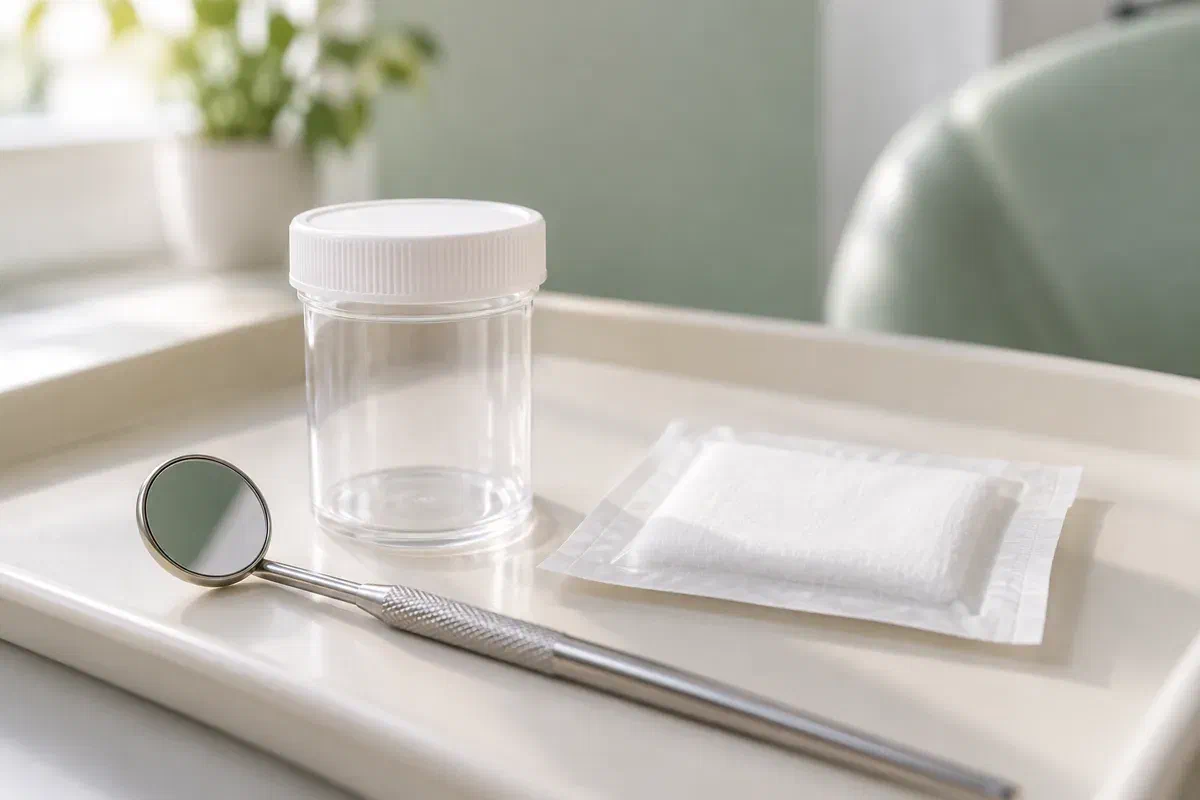
Illustrative empty closed specimen container beside packaged gauze and a dental mirror
Getting started

First, the exam. Bring the history with you.

No online image can tell you what a mouth lesion is. The clinician needs the background: when the change appeared, whether it persists, what it feels like and whether anything has been done for it.

A sore that won't settle

Mention how many weeks it has lasted and whether it has changed. If a tooth edge or habit seems to irritate it, that is good to know, but it doesn't rule out the need for an assessment. Ask whether the next step should be a recheck, a sample or a referral.

A patch or swelling with changes

Describe where it is and any shift in size, colour, surface or feel. Report bleeding, numbness or difficulty eating on that side. A painless area can still need investigation, so comfort shouldn't be the deciding factor.

An earlier biopsy or referral

If you've already had a biopsy elsewhere, or been referred for one, bring the paperwork. Ask how soon the next step was supposed to happen. Be clear whether you're booked to be examined, to have the procedure or to discuss a result.

Keep a recommended biopsy or specialist appointment even if the area feels fine or looks like a reassuring photo. If it changes while you wait, phone the team responsible. Heavy bleeding that won't stop, or any trouble breathing or swallowing, needs emergency medical attention.

Why the result matters most

The answer is what shapes your care.

A clinician can describe a lesion's look and feel, but only lab examination can answer certain questions about the tissue. Ask what your biopsy should clarify and how each type of result might change what happens next. That helps the recommendation make sense, without anyone claiming to know the answer early.

Write down three things before the procedure: who will contact you, how, and by what date. If that date passes, you call. Sampling and explanation are both needed. Treating the procedure as the end point is how results get missed.

A sample suited to the question

Whether part or all of the area is taken depends on the exam. Ask which, and why. The amount removed isn't a forecast of the outcome; it's about collecting enough for a meaningful report.

A report that's explained

Have the clinician who treated you go through the findings plainly and link them to the area sampled. If the report leaves part of the concern unanswered, a further review or sample may be recommended.

A clear owner for what comes next

Depending on the diagnosis, the plan could be monitoring, treatment or referral. Ask who coordinates it and on what timeline. Even after a small lesion is fully removed, ask whether follow-up checks are part of the plan.

The full sequence

Four steps, and the last one is the one people skip.

Tell us if a biopsy or any procedure in your mouth makes you nervous. You can ask about why it's needed, how it will feel and exactly how results will reach you before you consent.

  1. Examination and background

    Describe the timeline and bring any photos or reports. The clinician goes over medicines, allergies, bleeding history and health conditions, then explains whether more assessment or a referral is required and the timeframe.

  2. Explanation and consent

    You'll discuss the site, biopsy type, numbing plan and specific risks. Ask about stitches and what you need to arrange for afterward. Confirm the provider, the setting and the results plan; don't assume the procedure happens at the consultation.

  3. The sample

    Local anaesthetic is frequently used, though it depends on your case. Tissue is taken and sent to a laboratory, and the site is managed. Get aftercare in writing, and before you leave, confirm the date you should expect to hear about results.

  4. The result, explained

    Keep the follow-up call or appointment. Ask what the report says, what it means for you, whether anything needs treating and how the area will be monitored. If more tests are needed, ask what they're for and who will arrange them.

In the days that follow

Heal the site; track the report.

Recovery depends on the biopsy location, how much tissue was removed and your health. Rely on the instructions you were given, not on extraction advice or someone else's experience.

Protect numb areas

Until feeling returns, it's easy to bite your lip, cheek or tongue. Follow the advice on food, drink and activity. Ask how sore the site may be and which pain relief options suit your medicines and health.

Clean as advised

Check how to brush near the site and whether rinses or stitch care are recommended. Avoid poking the wound. If something looks unexpected, call the office rather than removing anything.

Report concerns promptly

Contact the team about increasing pain, significant swelling, fever or bleeding that doesn't stop with the steps you were given. Bleeding that won't stop or problems breathing or swallowing need emergency care without delay.

Where the result may lead

Observation, more sampling or specialist care

Ask why a particular route is suggested. Monitoring, a biopsy and a specialist assessment each have a purpose, and none should become an open-ended way to leave a concern unresolved.

When observation is the advice

A planned recheck

An area may be rechecked after an irritant is removed or after a result is reviewed. Ask for a return date and the changes that mean calling sooner. Watching should come with a reason and a time limit, not an indefinite wait because nothing hurts.

When tissue needs to be examined

A first or further biopsy

Incisional sampling takes part of an area; excisional sampling removes a suitable small lesion entirely. If a first report doesn't answer the question, another sample may be advised. Removing the visible area doesn't end the need for follow-up on its own.

When another provider should be involved

Specialist care

Referral to an oral medicine clinician, an oral surgeon or another appropriate specialist may be suggested. Ask what the referral should establish, how soon it should happen and who will make sure the outcome is followed.

Results questions

Waiting for, reading and acting on a biopsy report

These may help you get ready for the procedure and the results conversation. Your clinician can explain your lesion, the report and next steps after examining you.

(905) 876-4488
How will I know when my biopsy result is ready?
Agree on this before the procedure: who will contact you, how and roughly when. If that date passes, call the provider who did the biopsy rather than waiting.
Can I get a copy of my pathology report?
Ask the provider who performed the biopsy. Even with a copy, have the report explained by the clinician, since technical wording can be easy to misread.
What should I ask during the results appointment?
Start with the basics: what the report found and what it means for you. Then move on to whether treatment is needed, how the area will be monitored and who coordinates the next step. It can help to write your questions down beforehand, because the conversation can move quickly. Bring someone to take notes if that helps, and ask for any unfamiliar term to be explained before you move on.
Does a normal-feeling site mean the result will be fine?
No. Healing shows the wound has recovered, not what the lab found. Keep the results appointment regardless. People sometimes cancel because the drive feels unnecessary once the mouth is comfortable again; if travel from Rockwood is the issue, ask whether the results conversation can happen by phone instead.
What if the report recommends a specialist?
Find out what the specialist is expected to assess, how urgently and who will make the referral. Make sure you know when to expect contact from the specialist’s office.
Is it worth keeping a folder of my mouth biopsy records?
Yes. Keeping reports, referral letters and appointment notes together can help future clinicians, especially if an area needs long-term monitoring. It’s also helpful if you move to a new dental office away from Rockwood.
Biopsy follow-up for Rockwood

Book the assessment, and leave knowing how you'll hear back.

Phone us on (905) 876-4488 to book an oral lesion assessment at our Bronte Street office, or to talk through a biopsy that's been advised. If you've been told it's urgent, mention that so we can help with the right appointment or referral.

Biopsy plans differ in who performs them, where, how tissue is sampled, how recovery goes and how long lab results take. The clinician doing your biopsy should confirm results and follow-up arrangements.

Visit Milton Dental Clinic
Unit 1, 342 Bronte St. S, Milton, ON L9T 5B7
Get directions Clinic hours
Monday–Thursday
11am–7pm
Friday–Sunday
By appointment only

Areas we serve

  • Milton
  • Oakville
  • Mississauga
  • Georgetown
  • Halton Hills
  • Acton
  • Campbellville
  • Brampton
  • Burlington
  • Puslinch
  • Rockwood
  • Erin
  • Caledon
  • Etobicoke
  • Old Milton
  • Bronte Meadows
  • Timberlea
  • Dorset Park
  • Dempsey
  • Clarke
  • Beaty
  • Coates
  • Harrison
  • Scott
  • Willmott
  • Ford
  • Bowes
  • Cobden
  • Walker
  • Mountain View
  • Milton Heights
  • Hawthorne Village
  • Valley View
  • Fallingbrook
  • Nassagaweya
  • Trafalgar
  • Esquesing
  • Nelson
  • Brookville
  • Moffat
  • Glen Williams
  • Norval
  • Limehouse
  • Stewarttown
  • Ashgrove
  • Hornby
  • Silver Creek
  • Speyside
  • Scotch Block
  • North Oakville
  • River Oaks
  • Glen Abbey
  • West Oak Trails
  • Palermo
  • Bronte Creek
  • College Park
  • Joshua Creek
  • Uptown Core
  • Preserve
  • Iroquois Ridge
  • Lisgar
  • Meadowvale
  • Meadowvale Village
  • Churchill Meadows
  • Erin Mills
  • Central Erin Mills
  • Streetsville
  • East Credit
  • Creditview
  • Heartland
  • Sheridan
  • Mount Pleasant
  • Credit Valley
  • Huttonville
  • Churchville
  • Springbrook
  • Northwest Brampton
  • Bram West
  • Fletcher's Meadow
  • Fletcher's Creek South
  • Alton Village
  • Orchard
  • Millcroft
  • Headon Forest
  • Tansley
  • Brant Hills
  • Tyandaga
  • Kilbride
  • Lowville
  • Aberfoyle
  • Morriston
  • Arkell
  • Hillsburgh
  • Freelton
  • Carlisle
  • Waterdown
  • Flamborough
  • Mountsberg

How can we help?

Milton Dental Clinic

Have a question about your smile? Choose the option that works best for you.

For urgent dental concerns, please call.
Messages are reviewed during clinic hours.