

Illustrative patient discussing an oral lesion assessment with a clinician
Specialized Care

Oral Lesion Removal in Campbellville

Told to keep an eye on a spot in your mouth, but not told for how long? Watching only works with a plan. For households in Campbellville, we examine the lesion and set out whether monitoring, sampling, removal or a referral makes sense, with dates attached.

Watch and wait, done properly

Keeping an eye on it needs a date on the calendar.

On a busy rural property, a small sore or bump in the mouth is easy to push down the list. Weeks become months. An oral lesion is the general term for any area of tissue that looks or feels unlike its surroundings. That term tells you something is different, but it can't tell you whether it matters or what should be done.

Removal is sometimes the right call, and sometimes it isn't, which the examination helps decide. The dentist could suggest a review after easing an irritant, a small sample for testing, complete removal of a small lesion as an excisional biopsy, or a specialist assessment when the site or findings warrant it.

If you're coming in from Campbellville, it may make sense to line up this visit with other family appointments. Tell us what you've noticed and what you'd like answered. We'll explain the options and any referral clearly, without assuming you'll leave with the spot removed or a guaranteed result.

Book an exam with a clear plan
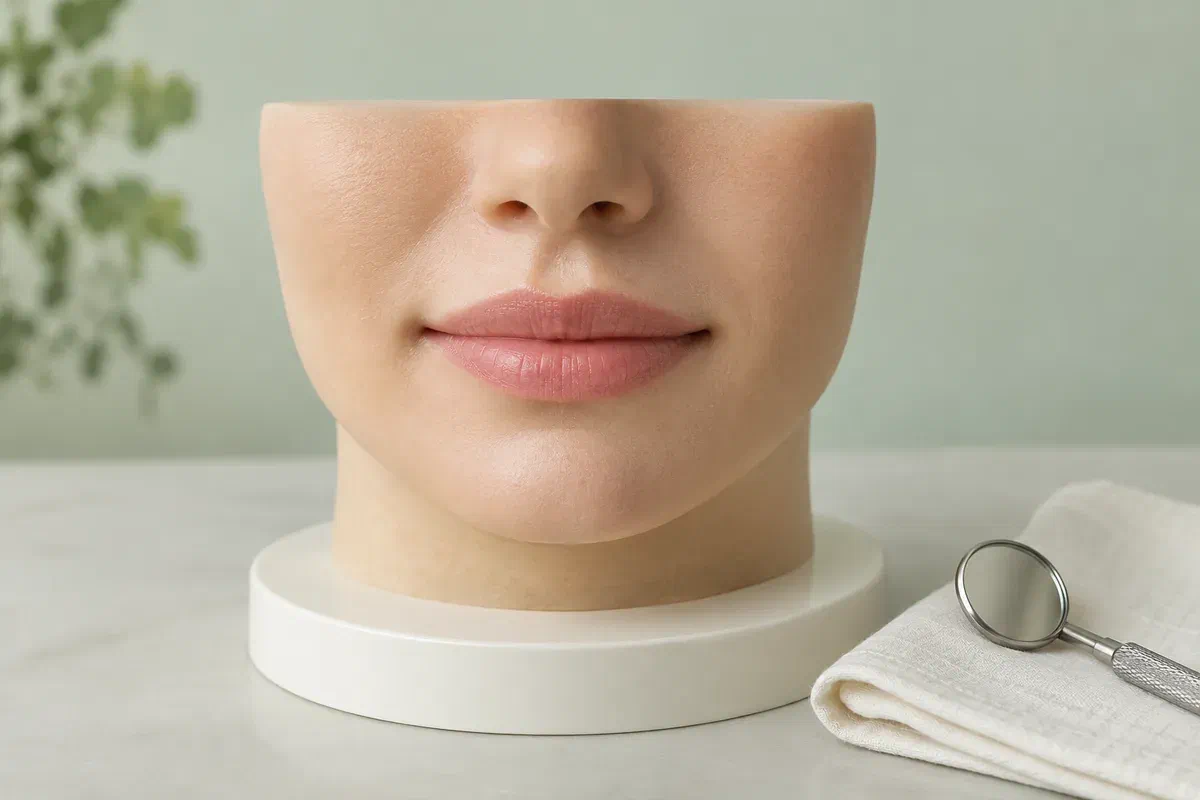
Illustrative closed-mouth teaching model on a display base beside a dental mirror
Notes to bring

When did it start, and what has it done since?

A rough date for when you first noticed the area is useful, along with whether it has grown, shrunk, healed and returned, or stayed the same. Bring any referral letter or notes from a doctor or other dentist so the history doesn't depend on memory.

A sharp edge, appliance or habit nearby

Say whether a tooth, crown, filling, denture or a habit like lip biting touches the area. That irritant and the tissue are checked together. Finding something that rubs is helpful, but it doesn't prove what the spot is or make the assessment unnecessary.

Changes over the weeks

Mention growth, colour change, a new texture, bleeding or trouble eating. A spot that doesn't hurt can still need a closer look. Try not to keep testing it with your tongue or fingers while you wait for the appointment.

Anything done about it before

If the area was sampled or removed at some point, tell us and bring the result if you have one. A lesion that returns is examined again rather than assumed to match the last one. Earlier paperwork shows what has already been checked.

Arrange an assessment for any mouth lesion that persists or changes, and follow the urgency of an existing referral. Never cut, burn, drain or tie off tissue at home. Uncontrolled bleeding, or trouble breathing or swallowing, is an emergency that needs medical care right away.

A plan worth having

Every option should come with a reason and a next date.

Whatever is recommended, ask what it is meant to achieve. Monitoring might be chosen to see whether a spot settles once rubbing stops. Removal might aim to establish a diagnosis, treat a known lesion, or end repeated irritation. Knowing the purpose lets you compare options, and it keeps anyone from treating the disappearance of a visible spot as proof that care is finished.

Location shapes the plan as well. Ask what sits close to the lesion, how that part of the mouth usually heals, and whether eating or speaking will be affected for a few days. If a specialist is suggested, ask why that setting fits and who keeps track of the referral and any results.

Advice based on the examination

The dentist weighs your history and the findings before recommending monitoring or removal. Ask whether more investigation could change the advice. A photo comparison online can't show that a spot is harmless or tell you which approach suits it.

Knowing what will be tested

If tissue is removed, ask whether it will go to a laboratory and how you'll hear the findings. If a biopsy has already been done, talk about how it shapes the plan. Be clear which provider receives and reviews the report.

Reviews with a purpose and a date

Whether the next visit is a monitoring check, a healing review or a results discussion, ask what it's for and when it is. A site that feels fine may still have an open diagnostic question, and a report may still need explaining.

How the plan comes together

Look, decide, act, and check back.

Before you agree to anything, you should understand the plan and the reasoning. If the procedure, the possible diagnosis or fitting visits around farm or work commitments concerns you, mention it early.

  1. Examine and take the history

    We'll ask about the timeline and earlier treatment, and look at any reports or referrals you bring. Your medicines, allergies, any bleeding problems and general health are part of the discussion. The examination points toward monitoring, sampling, removal or a specialist.

  2. Agree on the approach and the timing

    If removal is advised, ask what tissue would be taken and why. If monitoring is advised, ask exactly when and what would change the plan. Discuss site-specific risks, numbing, whether a specialist should be involved, and the fees for each stage.

  3. Carry out the agreed step

    That may be smoothing an edge and booking a review, or performing the planned removal and sending tissue for testing when indicated. Ask about stitches if they're used. Leave with written instructions and a number to call with questions.

  4. Return for the check or the result

    At the next visit, the dentist reviews the area or the findings and explains them plainly. Ask whether the concern is resolved, or whether more testing, treatment or monitoring is recommended. Any lingering irritant should be addressed too.

If removal goes ahead

Easy does it while the area heals.

Recovery depends on how much tissue was removed, the location and your overall health. Follow the written instructions from the treating clinician, and ask about any step that seems hard to manage around your usual routine.

Follow the food and cleaning guidance

Find out which foods and physical tasks to ease off on, and how to clean near the site. Take care not to bite numb tissue after the freezing. Advice from a different procedure may not fit, so don't add a rinse unless it was recommended.

Leave the site alone

Avoid pulling your lip or cheek out to inspect the wound, and don't pick at it. Ask whether stitches dissolve or need a short visit to remove. If something looks unexpected, call and describe it rather than trimming it yourself.

Watch for trouble and keep the next visit

Phone the team if soreness builds rather than fades, swelling becomes noticeable, you run a temperature, or bleeding persists despite the instructions. Keep the results or review visit, and call if you haven't heard back when expected.

The choices on the table

Watching is a real option, as long as it's planned.

Ask why the recommended path suits this particular spot. A sound plan names what's being investigated and what would make the dentist change course.

When examination supports a period of watching

Monitoring with a booked review

If the likely cause is a rubbing edge or habit, the dentist may address it and recheck the area. Ask for the review date before you leave, and which changes should bring you in sooner. Monitoring needs a reason and a finish line.

When tissue testing or local treatment is needed

Sampling or removing a suitable lesion

A partial sample, or complete removal of a small suitable lesion, may be proposed. Ask which and whether further care could follow the report. Small size doesn't settle the diagnosis or mean one procedure ends the matter.

When the site or findings call for more expertise

A specialist's opinion first

For some lesions, the best first step is a referral. Ask how urgent it is and what to do if you don't hear back within the expected time. A specialist can help set the right order of care before any tissue is changed.

Campbellville questions

Monitoring, removal and everything between

Answers depend on what the examination shows and what's already known. Bring any reports and share your main concern, so we can focus on the decisions that matter for you.

(905) 876-4488
What does it mean when a dentist says to keep an eye on a spot?
It should mean a planned review on a set date, ideally after any irritant has been dealt with. Ask when the review is and which changes should bring you back sooner. If no date was given, call and ask for one.
How long is it reasonable to monitor a lesion before acting?
That depends on the findings. A monitoring plan should have an end point where the dentist decides whether the area has settled or needs sampling, removal or referral. Ask what that point is for you.
Can I book my lesion check alongside my family's cleanings?
Often, yes. Let the team know when you call and we’ll try to group appointments where it’s practical. If the lesion needs prompt attention, it may be scheduled sooner on its own.
Does removing a spot always give a diagnosis?
Only when the tissue is sent for testing and the report is interpreted with the examination. Ask whether that’s planned and who will go over the result with you.
What if the spot changes between review visits?
Call rather than waiting. Growth, bleeding, a change in colour or texture, or new discomfort are worth reporting so the dentist can decide whether to see you earlier.
Is a mouth sore that comes and goes something to mention?
Yes. Recurring sores in the same place are worth describing, including how often they appear and how long they last. The dentist can decide whether they need closer assessment.
A lesion check for Campbellville

Come in with questions and leave with a plan and a date.

Phone (905) 876-4488 to set up an oral lesion assessment at our Bronte Street practice. Mention any referral, previous biopsy or recent change, and ask about grouping visits if that helps your household.

Not every lesion needs removal. Diagnosis, the setting for treatment, referral, recovery and any monitoring depend on the examination and lab findings.

Visit Milton Dental Clinic
Unit 1, 342 Bronte St. S, Milton, ON L9T 5B7
Get directions Clinic hours
Monday–Thursday
11am–7pm
Friday–Sunday
By appointment only

Areas we serve

  • Milton
  • Oakville
  • Mississauga
  • Georgetown
  • Halton Hills
  • Acton
  • Campbellville
  • Brampton
  • Burlington
  • Puslinch
  • Rockwood
  • Erin
  • Caledon
  • Etobicoke
  • Old Milton
  • Bronte Meadows
  • Timberlea
  • Dorset Park
  • Dempsey
  • Clarke
  • Beaty
  • Coates
  • Harrison
  • Scott
  • Willmott
  • Ford
  • Bowes
  • Cobden
  • Walker
  • Mountain View
  • Milton Heights
  • Hawthorne Village
  • Valley View
  • Fallingbrook
  • Nassagaweya
  • Trafalgar
  • Esquesing
  • Nelson
  • Brookville
  • Moffat
  • Glen Williams
  • Norval
  • Limehouse
  • Stewarttown
  • Ashgrove
  • Hornby
  • Silver Creek
  • Speyside
  • Scotch Block
  • North Oakville
  • River Oaks
  • Glen Abbey
  • West Oak Trails
  • Palermo
  • Bronte Creek
  • College Park
  • Joshua Creek
  • Uptown Core
  • Preserve
  • Iroquois Ridge
  • Lisgar
  • Meadowvale
  • Meadowvale Village
  • Churchill Meadows
  • Erin Mills
  • Central Erin Mills
  • Streetsville
  • East Credit
  • Creditview
  • Heartland
  • Sheridan
  • Mount Pleasant
  • Credit Valley
  • Huttonville
  • Churchville
  • Springbrook
  • Northwest Brampton
  • Bram West
  • Fletcher's Meadow
  • Fletcher's Creek South
  • Alton Village
  • Orchard
  • Millcroft
  • Headon Forest
  • Tansley
  • Brant Hills
  • Tyandaga
  • Kilbride
  • Lowville
  • Aberfoyle
  • Morriston
  • Arkell
  • Hillsburgh
  • Freelton
  • Carlisle
  • Waterdown
  • Flamborough
  • Mountsberg

How can we help?

Milton Dental Clinic

Have a question about your smile? Choose the option that works best for you.

For urgent dental concerns, please call.
Messages are reviewed during clinic hours.