

Illustrative patient discussing an oral lesion assessment with a clinician
Specialized Care

Oral Lesion Removal in Erin

It doesn't hurt, so it's easy to ignore. Yet many mouth lesions that need attention cause no pain at all. From Erin or Hillsburgh, book an examination so the area can be properly assessed and you can hear whether sampling, removal or a referral is advised.

No pain, no problem?

Comfort isn't a diagnosis.

Pain is usually what sends people to the dentist, so a smooth bump or a pale patch that never aches can go unmentioned for a long time. In clinical terms, an oral lesion is any part of the mouth lining that has changed in look or texture compared with the tissue beside it. Whether it hurts says very little about what it is.

Taking out a lesion is one option among several, and it is chosen after an examination. The dentist may advise sampling a portion first, removing a small lesion fully so it can be studied in the lab, known as an excisional biopsy, or a specialist assessment because of where the area is or how it presents.

For households in Erin, where a trip to the dentist is often planned around work, the farm or school pickups, a painless spot can slide down the list. Tell us what you've noticed, however minor it seems. You'll hear how the examination works and whether a referral is likely, with no promise of removal at the first visit or a specific result.

Book a check for a painless spot
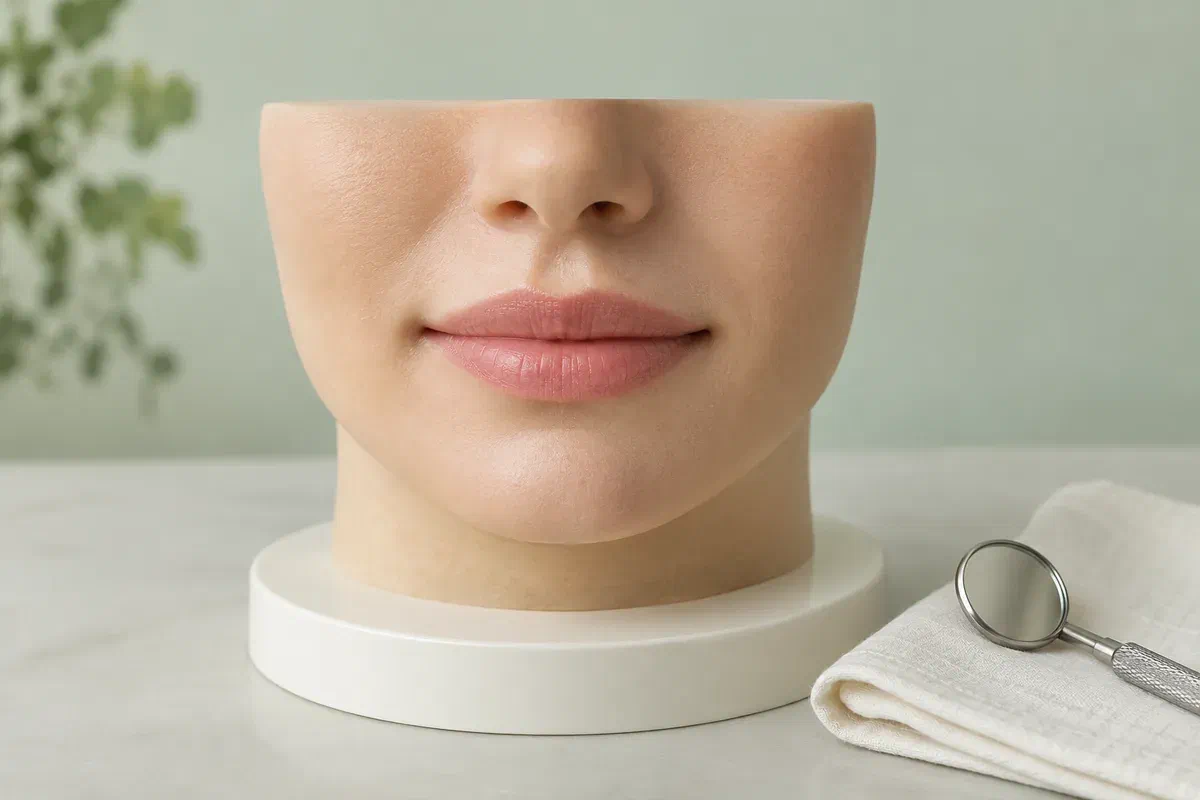
Illustrative closed-mouth teaching model on a display base beside a dental mirror
Even without symptoms

What's worth noting about a spot that doesn't hurt

Try to estimate when you first noticed it and whether it has grown, faded or stayed the same. If a doctor or hygienist has already pointed it out, bring their notes or referral. Small details, written down, are easier to share than memories.

Contact with teeth or dental work

A painless area can still be rubbed by a tooth, a crown margin, a denture clasp or a habit. Let us know if anything touches it. The dentist will check the tissue and the possible cause, keeping in mind that a source of rubbing doesn't identify the lesion.

Quiet changes in appearance

Notice whether the size, colour or surface has shifted, whether it ever bleeds, or whether it has become noticeable when eating. These changes can happen without discomfort. Avoid poking or scraping it in the meantime.

Previous investigation

Has this spot, or one close to it, been biopsied or taken out in the past? Tell us, and share the result if you can. A spot that comes back should be reassessed rather than assumed to be the same thing. Earlier records help the dentist focus on what's still unknown.

A lesion that persists or changes should be assessed even if it's painless, and any referral should be followed at its stated urgency. Please don't cut, burn, drain or tie off tissue at home. Uncontrolled bleeding or difficulty breathing or swallowing needs urgent medical care.

What you gain from a proper assessment

Peace of mind comes from information, not from the absence of pain.

If a procedure is suggested, ask what it's for. With a painless lesion, the main purpose is often to find out what it is, but removal can also treat a known problem or stop something that keeps getting irritated. Knowing the reason helps you weigh the advice and the alternatives, and it avoids the idea that once the visible part is gone, there's nothing more to know.

The location affects the plan as much as the lesion itself. Ask what's nearby, how healing usually goes at that site, and whether eating or speaking might be uncomfortable for a few days, even though the spot itself never hurt. If a specialist is recommended, ask why, and who will arrange the referral and share the result.

A recommendation based on the exam

The dentist considers your history and what the examination shows. Ask whether further investigation could change the advice. Because painless lesions vary so widely, online pictures are an especially poor guide to what yours might be.

A clear plan for any sample

Ask whether removed tissue will be sent for laboratory review and how the findings will reach you. If a biopsy has already been done, discuss its bearing on the plan. Be sure you know whose desk the report lands on and who will sit down with you to explain it.

Follow-up that answers the question

A review may look at healing, explain the lab report or plan further care. Ask what each visit covers. Since the spot never hurt, feeling fine afterward tells you little; the result discussion is where the answer comes from.

What happens at each stage

From an overlooked spot to a clear answer

You should understand the plan before giving consent. Whatever is on your mind, from the procedure itself to what the lesion might turn out to be or how chores and work will go afterward, say so, and the dentist can address it directly.

  1. Examine the area and take a history

    We'll ask about the timeline, look at any reports or referrals, and review your medicines, allergies, bleeding history and overall health. The exam helps decide whether removal, sampling, monitoring or a specialist assessment is the right next move.

  2. Talk through what would be removed and why

    If removal is advised, the dentist explains the extent, the reasoning and the risks at that location. You'll also cover numbing and whether a specialist would be a better choice. Ask for the stages and costs up front, and don't assume the assessment includes treatment.

  3. Treat the area as planned

    When the procedure goes ahead, the clinician removes the agreed tissue and sends it for testing where appropriate. Ask about stitches and how they'll be handled. Before you go, make sure you have written care steps and a number to call.

  4. Review the site and explain the findings

    At the review, ask for the result in clear terms and whether anything else is recommended, such as further testing, treatment or periodic checks. If a clasp, edge or habit was contributing, discuss how it will be addressed.

After treatment

This part may be sore for a little while, and that's expected.

Even if the lesion never hurt, the treated site may be tender as it heals. Recovery depends on the size and location of the removal and your health, so follow the written instructions you're given and ask about anything unclear.

Eat and clean with care

Ask which foods to avoid for now and how to brush near the area. Mind any numb tissue after the freezing, since it's easy to chew on without noticing. Advice from another kind of dental procedure may not apply, and a rinse shouldn't be added unless recommended.

Leave stitches and the surface alone

Avoid stretching your lip or cheek to inspect the site and don't pick at it. Ask whether stitches dissolve or need removal. If something looks unusual, phone and describe it rather than trying to deal with it at home.

Know when to call, and get the result

Contact the team if tenderness gets worse rather than better, the area puffs up noticeably, you feel feverish, or bleeding keeps going after you've followed the instructions. Keep the results appointment, and call if you haven't been contacted when expected.

Possible next steps

How the plan is chosen

Ask what makes the proposed route right for this spot. A good plan says what's being investigated and what would make the dentist recommend something different.

When the exam supports watching

A defined period of monitoring

If the area may be related to rubbing, the dentist may address that first and book a review. Ask when it is and what changes, painful or not, should bring you in earlier. Monitoring needs a clear rationale and an end date.

When testing or local treatment is recommended

Sampling or removing a suitable lesion

A small partial sample, or full removal of a small suitable lesion, may be proposed. Find out which one you're agreeing to and what might come after the report. Neither size nor comfort settles the diagnosis or guarantees a single procedure will be enough.

When findings or location call for more expertise

A specialist assessment first

Some areas should be seen by a specialist before anything is removed. Ask about the referral's urgency and who to phone if the appointment letter never arrives. Their opinion can set the right order of care.

Erin questions about painless spots

If it doesn't hurt, does it matter?

What's true for you will depend on the exam and on any earlier findings. Bring earlier reports and mention what you're most curious or concerned about, so the visit stays focused on your decisions.

(905) 876-4488
Why would a dentist worry about a lump that doesn't hurt?
Pain isn’t a reliable signal for mouth lesions. Some painful sores are minor, and some painless areas need investigation. The dentist looks at features such as size, colour, texture and how long it’s been there.
Do routine checkups include looking for mouth lesions?
Yes, dental examinations usually include checking the soft tissues of the mouth. If it’s been a while since your last checkup, an assessment is a good opportunity to have everything looked at.
What makes a white or red patch worth having checked?
Patches that don’t rub off, don’t heal or change over time are worth assessing. Only an examination, and sometimes a biopsy, can show what a patch is. Mention how long you’ve noticed it.
Can a painless lesion be removed at the first visit?
Not usually. The dentist needs to assess it first and decide whether removal is appropriate here, or whether a sample, more information or a specialist opinion should come first.
Will the treated area hurt even though the lesion didn't?
Some tenderness is common as the site heals. Ask the dentist what to expect and which pain relief is suitable for you. Call if discomfort increases instead of easing.
If a removed lesion was harmless, do I still need follow-up?
Possibly. Depending on the diagnosis and any contributing factors, the dentist may suggest periodic checks. Ask what’s recommended and report any new or returning spot.
Planning a visit from Erin

Small, painless, and still worth a look.

Call our Bronte Street practice on (905) 876-4488 to book a lesion assessment. Let the team know about any referral, previous biopsy or recent change when you call, so enough time is set aside for what you need.

Not every lesion needs to be removed. Diagnosis, where treatment happens, referral, healing and follow-up are determined by the examination and any laboratory results.

Visit Milton Dental Clinic
Unit 1, 342 Bronte St. S, Milton, ON L9T 5B7
Get directions Clinic hours
Monday–Thursday
11am–7pm
Friday–Sunday
By appointment only

Areas we serve

  • Milton
  • Oakville
  • Mississauga
  • Georgetown
  • Halton Hills
  • Acton
  • Campbellville
  • Brampton
  • Burlington
  • Puslinch
  • Rockwood
  • Erin
  • Caledon
  • Etobicoke
  • Old Milton
  • Bronte Meadows
  • Timberlea
  • Dorset Park
  • Dempsey
  • Clarke
  • Beaty
  • Coates
  • Harrison
  • Scott
  • Willmott
  • Ford
  • Bowes
  • Cobden
  • Walker
  • Mountain View
  • Milton Heights
  • Hawthorne Village
  • Valley View
  • Fallingbrook
  • Nassagaweya
  • Trafalgar
  • Esquesing
  • Nelson
  • Brookville
  • Moffat
  • Glen Williams
  • Norval
  • Limehouse
  • Stewarttown
  • Ashgrove
  • Hornby
  • Silver Creek
  • Speyside
  • Scotch Block
  • North Oakville
  • River Oaks
  • Glen Abbey
  • West Oak Trails
  • Palermo
  • Bronte Creek
  • College Park
  • Joshua Creek
  • Uptown Core
  • Preserve
  • Iroquois Ridge
  • Lisgar
  • Meadowvale
  • Meadowvale Village
  • Churchill Meadows
  • Erin Mills
  • Central Erin Mills
  • Streetsville
  • East Credit
  • Creditview
  • Heartland
  • Sheridan
  • Mount Pleasant
  • Credit Valley
  • Huttonville
  • Churchville
  • Springbrook
  • Northwest Brampton
  • Bram West
  • Fletcher's Meadow
  • Fletcher's Creek South
  • Alton Village
  • Orchard
  • Millcroft
  • Headon Forest
  • Tansley
  • Brant Hills
  • Tyandaga
  • Kilbride
  • Lowville
  • Aberfoyle
  • Morriston
  • Arkell
  • Hillsburgh
  • Freelton
  • Carlisle
  • Waterdown
  • Flamborough
  • Mountsberg

How can we help?

Milton Dental Clinic

Have a question about your smile? Choose the option that works best for you.

For urgent dental concerns, please call.
Messages are reviewed during clinic hours.