

Illustrative patient discussing an oral lesion assessment with a clinician
Specialized Care

Oral Lesion Removal in Mississauga

You want the spot dealt with, and you want to know how many appointments that takes. The honest answer starts with an examination. From Mississauga, we can assess the lesion, outline the likely visits, and explain whether sampling, removal or a referral fits.

Planning around a busy week

One appointment or several? It depends on what the exam shows.

Between work, commuting and family, it's natural to hope a mouth spot can be handled in a single sitting. Sometimes it can. Often it can't, and the reason is good care rather than red tape. An oral lesion is simply tissue that differs from its surroundings, whether a bump, a patch, a sore or a rough area, and its appearance alone doesn't reveal what it is.

For a suitable lesion, removal may be part of the plan. Before that, the dentist examines the area and decides on the safest order of steps. That might mean a small sample first, taking out a small lesion completely so the lab can study it, which is called an excisional biopsy, or a specialist assessment because of the location or findings.

If you're travelling in from Meadowvale, Churchill Meadows or elsewhere in Mississauga, tell us about your schedule along with your concerns. We'll explain which visits are likely and why, without promising removal on day one or a particular outcome.

Plan an oral lesion assessment
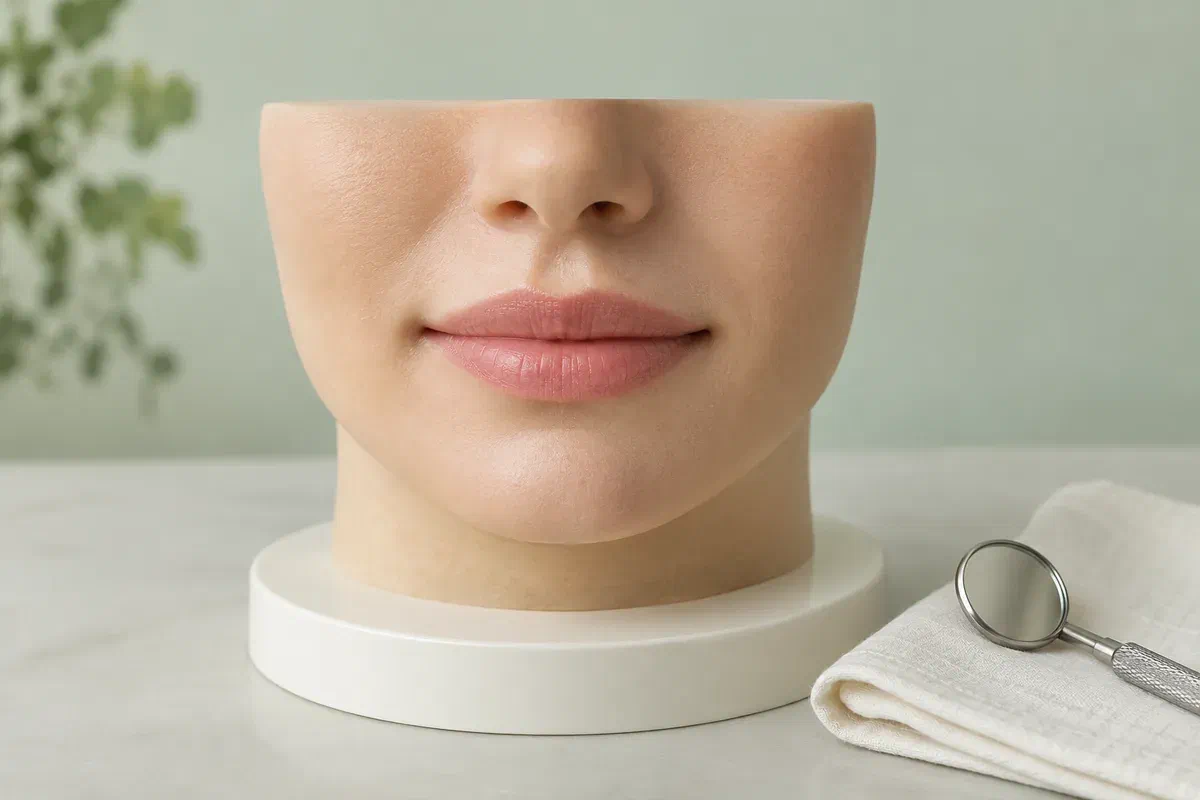
Illustrative closed-mouth teaching model on a display base beside a dental mirror
Helpful to have ready

Five minutes of notes can save a return trip.

Write down when you first noticed the area and how it has behaved since: bigger, smaller, gone and back, or unchanged. Bring any referral or report from another provider so nothing important depends on memory, and so we don't have to request it later.

Something in your mouth that rubs it

Note whether a tooth, filling, crown, denture or retainer presses on the spot. The dentist checks the tissue and the possible cause at the same visit. A rubbing point is a useful clue, but it can't confirm the diagnosis on its own or replace an examination.

A lesion that's changing or lingering

Mention changes in size, colour, surface or sensation, plus any bleeding or difficulty eating. A spot without pain can still deserve attention. In the days before your visit, try not to poke, chew or scrape at it.

Past biopsies or removals

Tell us if this area or a similar one has been treated or tested before, and bring the lab report if you have it. A lesion that returns needs reassessing rather than assuming it's the same as before. Those records help decide what still needs to be learned.

Book an assessment for any mouth lesion that persists or changes, and follow any referral at the urgency it was given. Don't try to cut, burn or drain tissue, or tie it off, yourself. Bleeding that won't stop, or difficulty breathing or swallowing, means getting emergency medical care right away.

What a good plan includes

A clear aim, a clear route, and no loose ends.

Start by asking what the procedure is for. Some removals aim to produce a diagnosis; others treat a lesion already identified, stop repeated irritation, or do several of these at once. Once you know the aim, you can judge the recommendation fairly, compare it with alternatives, and avoid thinking that removing the visible spot automatically wraps everything up.

The plan also needs to account for where the lesion is. Ask what lies close to it, what normal healing looks like at that site, and whether eating, speaking or a full workday will be uncomfortable for a few days. If specialist care comes up, ask why that setting is a better fit and who keeps track of the referral and the results.

Advice tied to the examination

The recommendation should reflect your history and what the dentist actually finds. Ask whether any test could change it. A quick online search can't show that a spot is benign, and it can't tell you what procedure would be right for it.

A clear plan for lab testing

Ask whether removed tissue goes to a laboratory, roughly how you'll be told the result, and who explains it. If you've already had a biopsy, talk about how that finding shapes things. One provider should clearly be responsible for receiving and reviewing the report.

Appointments you can schedule with purpose

Knowing whether a follow-up is for the wound, the results or further planning helps you book time off sensibly. Ask what each visit is for. A healed site doesn't answer the diagnostic question, and a report can still need explaining weeks later.

A typical sequence

Here's roughly how the appointments line up.

Before you consent, you should understand what is planned and why. If you're anxious about the procedure, a possible diagnosis or taking time away from work, bring it up so the dentist can address it head-on.

  1. Assessment visit

    We go over when the lesion appeared, what has been done, and any reports or referrals. You'll review medicines, allergies, bleeding concerns and health conditions with us. The examination tells us whether removal, sampling, a monitoring period or specialist care makes most sense.

  2. Planning conversation

    This may happen at the same visit or a separate one. You'll learn what tissue would be removed and why, the risks specific to that spot, how freezing will work, and whether a specialist should treat it. Ask for the stages and fees so you can plan time and costs.

  3. Treatment appointment

    When the procedure goes ahead, the clinician treats the area as agreed and sends tissue for testing if that's part of the plan. Find out whether stitches are placed and how they'll be managed. Take home written instructions and a contact number.

  4. Results and healing review

    This last step closes the loop. Ask to hear the findings in everyday words, and whether anything further is recommended, such as more testing, treatment or periodic checks. If a filling, crown or appliance was irritating the area, arrange to correct it.

Recovery around work and home

A few careful days, then the results conversation.

How quickly you recover depends on the size and site of the removal and your general health. Keep the written aftercare from your clinician, and ask about anything that seems difficult to manage while working.

Plan meals and cleaning ahead

Ask which foods and activities to avoid and how to brush near the site. Pack softer lunches for the first workdays if that's advised. Mind numb lips or cheeks after the freezing. Don't apply care tips from a different procedure, or start a rinse that nobody recommended.

Hands off the healing site

Checking the area in a mirror over and over can disturb it, and so can picking at the surface. Ask whether stitches dissolve or need a removal visit, and book that early if so. If something looks odd, call and describe it instead of fixing it yourself.

Know when to call, and keep the review

Call about pain that is getting worse, significant swelling, a fever, or bleeding that the instructions don't control. Hold onto the results appointment even if you feel fine. If the promised call hasn't come, follow up to confirm how the findings will be shared.

Possible routes

Three directions the plan can take

Ask why the suggested path suits this particular lesion. The plan should name what's being investigated and what would lead the dentist to change it.

When the exam supports monitoring

Watch and review on a date

After addressing something that may be irritating the area, the dentist may suggest checking it again later. Ask for the review date and what changes should bring you in sooner. Monitoring should have a reason and a finish, not stretch into an indefinite wait.

When lab testing or local treatment is indicated

Sample or remove a suitable lesion

Taking a small piece for testing, or removing a small suitable lesion entirely, may be proposed. Ask which and whether further treatment could follow the result. A small size doesn't settle the diagnosis or guarantee that a single procedure ends care.

When location or findings need more expertise

Specialist evaluation first

Referral may be the sensible opening step when an area needs wider evaluation or a different procedural setting. Ask about the urgency and how to follow up. A specialist can help sort out the correct order of treatment before tissue is changed.

Questions about timing from Mississauga

Scheduling, results and recovery, answered

Answers depend on what the examination shows and what's already known. Bring previous reports and share your main concern, so the visit focuses on decisions you actually need to make.

(905) 876-4488
Can the assessment and removal happen at the same appointment?
Occasionally, but don’t count on it. The dentist first needs to examine the area and decide whether removal is appropriate in this setting. A sample, records or a specialist opinion may need to come first. Ask what the first visit includes.
Will I need time off work after a lesion is removed?
It depends on the size and site of the procedure and the kind of work you do. Ask the dentist what the first day or two may feel like, so you can decide whether to book it before a lighter day or a weekend.
How will I get my results, and who explains them?
Ask before the procedure who receives the lab report and how they’ll contact you, whether by call or a review visit. If the expected time passes without word, phone to check. The report should be explained alongside what the dentist saw.
Can I go straight back to the gym after the procedure?
Ask about this specifically. Strenuous activity soon after some mouth procedures can increase bleeding or discomfort, and the advice depends on what was done. Follow the instructions you’re given for the first few days.
If the lump is fully removed, is the problem solved for good?
That can’t be promised. What happens next depends on the diagnosis, the procedure and anything that contributed. Ask what checks are recommended, and report any area that returns or changes.
Can a skin-tag product or home remedy shrink a mouth lump?
No. Products made for skin aren’t meant for the inside of the mouth, and cutting, burning or tying off tissue can injure it and make diagnosis harder. Have it examined instead.
From Mississauga to our Milton practice

Let's map out the visits together.

Call (905) 876-4488 to book an oral lesion assessment at our Bronte Street practice. Mention any referral, prior biopsy or recent change when you book, and let us know your scheduling needs so we can plan sensibly.

Not every lesion should be removed. Diagnosis, treatment setting, referral, recovery and follow-up all depend on the examination and any laboratory findings.

Visit Milton Dental Clinic
Unit 1, 342 Bronte St. S, Milton, ON L9T 5B7
Get directions Clinic hours
Monday–Thursday
11am–7pm
Friday–Sunday
By appointment only

Areas we serve

  • Milton
  • Oakville
  • Mississauga
  • Georgetown
  • Halton Hills
  • Acton
  • Campbellville
  • Brampton
  • Burlington
  • Puslinch
  • Rockwood
  • Erin
  • Caledon
  • Etobicoke
  • Old Milton
  • Bronte Meadows
  • Timberlea
  • Dorset Park
  • Dempsey
  • Clarke
  • Beaty
  • Coates
  • Harrison
  • Scott
  • Willmott
  • Ford
  • Bowes
  • Cobden
  • Walker
  • Mountain View
  • Milton Heights
  • Hawthorne Village
  • Valley View
  • Fallingbrook
  • Nassagaweya
  • Trafalgar
  • Esquesing
  • Nelson
  • Brookville
  • Moffat
  • Glen Williams
  • Norval
  • Limehouse
  • Stewarttown
  • Ashgrove
  • Hornby
  • Silver Creek
  • Speyside
  • Scotch Block
  • North Oakville
  • River Oaks
  • Glen Abbey
  • West Oak Trails
  • Palermo
  • Bronte Creek
  • College Park
  • Joshua Creek
  • Uptown Core
  • Preserve
  • Iroquois Ridge
  • Lisgar
  • Meadowvale
  • Meadowvale Village
  • Churchill Meadows
  • Erin Mills
  • Central Erin Mills
  • Streetsville
  • East Credit
  • Creditview
  • Heartland
  • Sheridan
  • Mount Pleasant
  • Credit Valley
  • Huttonville
  • Churchville
  • Springbrook
  • Northwest Brampton
  • Bram West
  • Fletcher's Meadow
  • Fletcher's Creek South
  • Alton Village
  • Orchard
  • Millcroft
  • Headon Forest
  • Tansley
  • Brant Hills
  • Tyandaga
  • Kilbride
  • Lowville
  • Aberfoyle
  • Morriston
  • Arkell
  • Hillsburgh
  • Freelton
  • Carlisle
  • Waterdown
  • Flamborough
  • Mountsberg

How can we help?

Milton Dental Clinic

Have a question about your smile? Choose the option that works best for you.

For urgent dental concerns, please call.
Messages are reviewed during clinic hours.