

Illustrative patient discussing ongoing gum care with a dental hygienist
Specialized Care

Periodontal Maintenance in Puslinch

Curious what actually happens at a gum maintenance visit? For adults coming from Puslinch, our team walks you through each stage, from the measurements to the cleaning, so the appointment makes sense and the next step is clear.

Puslinch, behind the scenes

What the hygienist is doing with that little probe

You lie back, someone calls out numbers, and a few minutes later the cleaning starts. It can feel routine, yet each part has a purpose. Periodontal maintenance is the continuing care for people who have been treated for periodontitis. It brings together a careful assessment of the gums, professional cleaning, and guidance for home, all aimed at keeping things stable and noticing change while it is still small.

Those numbers matter because they are compared with your earlier ones. The teeth that were treated, any change in bleeding or pocket depth, and how easily you can clean each area shape what is done that day. So the visit is a measured review, not a polish that happens because the calendar ticked over.

If you are making the trip from Puslinch, bring any charts, letters, or summaries from earlier periodontal care, including care from a specialist. We can explain what is being tracked and how often it makes sense to check. If getting in has been difficult, say so, and we can build a schedule you can keep.

Learn what your visit will cover
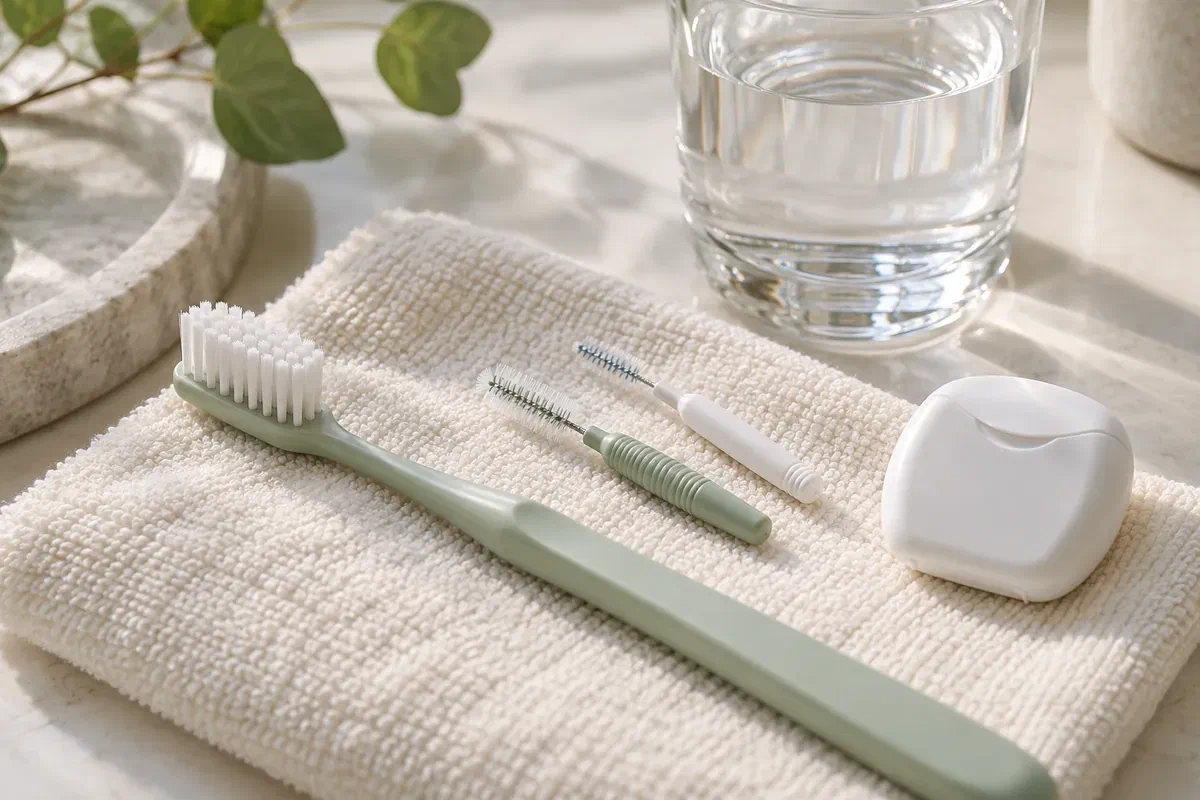
Illustrative toothbrush, interdental brushes, and floss container arranged for daily gum care
Your side of the conversation

What you notice helps us read the numbers.

Pain isn’t the threshold for speaking up. Tell us about anything that has made cleaning harder, symptoms that have come and gone, and changes in your health or medicines since the last appointment.

Bleeding, tenderness, or food that lodges

Show us where you see blood, feel soreness, or find food packing in, and whether you can still reach the spaces that were pointed out. These reports help us interpret the readings. We still check the areas that feel fine, since a comfortable site can measure differently.

Health, medicine, and routine changes

New diagnoses, prescriptions, tobacco use, or a period when your routine slipped are all useful to know. So are practical issues such as sore hands or new responsibilities at home. We use them to adjust the plan, not to judge.

When you were last measured

Share roughly when your last full periodontal charting took place and who did it. If a specialist is involved, bring their latest recommendations. After a longer gap, a fresh baseline may be needed before choosing maintenance or further active care.

New swelling, pus, a tooth that feels loose, or significant pain should be reported promptly. Waiting until your next routine appointment isn’t advisable, because a maintenance cleaning is not intended to assess urgent problems.

Why measuring helps

Numbers you can compare over time

A single visit tells us how your gums look today; a series of visits tells us where they are heading. Comparing readings lets us point to which teeth are steady and which are drifting. Ask to hear the comparison, so you know where to put your effort rather than relying on a general reminder.

The routine at home is what fills the time between measurements. Bring the tools you rely on and show us where technique falls short. A few minutes practising one stubborn area can do more than buying another product, especially if your vision, grip, or working hours have changed.

Patient information: SDCEP — supportive periodontal care and individualized review

Charting the previously treated teeth

Pocket depths, bleeding, inflammation, and related findings are recorded and set against your treatment history. Ask what the numbers mean for you. Support lost in the past remains on record, even when the gums look healthier now.

Cleaning aimed by the chart

Professional care is directed at the deposits and areas the assessment identifies. Ask the clinician to explain each stage of the cleaning as it happens. Because the work follows the chart, it may look different from one visit to the next.

An interval based on the trend

Ask what the readings suggest about when to return and what could move that date. History, current findings, risk factors, and your practical needs all feed in. Someone else’s recall pattern, or a benefits limit, isn’t the measure your gums need.

Stage by stage

A walk through the appointment

If you have sensitive teeth or feel nervous, mention it before we begin. We can describe each step as it happens and stop whenever you need a moment, so nothing feels like a mystery.

  1. Questions about your health and history

    We start by asking what has changed since your last visit and whether a periodontist has given new advice. Describe any symptoms and the routine you have really kept up. If useful records sit with another office, we work out how to get hold of them.

  2. Measuring and looking

    A small probe gently measures the space between gum and tooth at several points, and the clinician notes bleeding and other signs. Ask what each reading means. Radiographs join the visit if your history or the readings give a reason for them, so many appointments go without.

  3. Cleaning, then coaching

    The cleaning that follows is matched to what the measurements showed, with care taken over comfort. Then we can practise an interdental tool together in the area you find trickiest. If the readings suggest active disease, extra treatment is discussed as a separate decision.

  4. Reading back the plan

    Before you leave, we summarize what was found, what your next appointment will focus on, and whether a referral or further treatment is needed. Ask who is following which teeth. That keeps follow-up on track and avoids appointments that overlap.

Until the next set of readings

What you do at home shows up in the numbers.

Professional assessments and daily cleaning work hand in hand. Keep a routine that is specific and repeatable, using tools that match the spaces between your own teeth.

Repeat the technique we practised

Carry on with the brushing and between-teeth approach from your last appointment, checking with us if different gaps need different brush sizes. A brush that needs forcing is the wrong size. If a tool is fiddly to hold or aim, bring it next time so we can work on it again.

Leave the measuring to us

Report any new bleeding, puffiness, tenderness, or food catching. Please don’t try to check pocket depth yourself with picks or toothpicks. A short note on where a change is and when it began helps the team judge whether an earlier appointment is sensible.

Keep the series going

If work, health, finances, or transport makes a visit hard, call us to talk about it. A gap is nothing to be embarrassed about, but an open-ended one makes comparisons harder. A current assessment is the best way to pick the series back up.

Patient information: NIDCR — continuing care and daily cleaning for gum disease

Once the chart is complete

What the numbers can lead to

Maintenance responds to the findings each time rather than following a fixed script. Ask what today’s readings mean for your next appointment and whether any site needs something different.

When the readings are holding

Stay on your maintenance plan

If the measurements are stable, supportive care may simply continue at an interval that suits you, alongside a home routine you can keep. Ask which teeth still need extra care. Steady readings are reassuring, though they are not a guarantee for the future.

When readings show active disease

More treatment for particular sites

Where a site has deepened or bleeds persistently, extra cleaning or a new treatment plan may be suggested. Ask how that care differs from maintenance and when it will be re-measured. The recommendation should point back to specific readings.

When readings are complex or persistent

A periodontist’s opinion or shared care

A specialist may be involved for further assessment, treatment, or ongoing review. Clarify where each appointment will take place and how charts will be passed between offices, so you are never unsure what comes next.

Patient information: American Academy of Periodontology — ongoing maintenance after nonsurgical treatment

Puslinch questions about the visit

Curious about the details? Good.

Bring your past charts or letters and whatever you’d like explained. Each appointment should leave you understanding the readings and the plan.

(905) 876-4488
What do the numbers called out during my visit mean?
They are usually pocket depth measurements in millimetres at points around each tooth. Lower numbers generally indicate shallower spaces. Ask the clinician to explain your readings and how they compare with last time.
Does the measuring hurt?
Most people feel pressure rather than pain, though inflamed areas can be tender. Let us know if it is uncomfortable, and we can talk about ways to make it easier.
Why does bleeding during measuring matter?
Bleeding when the gums are gently probed can be a sign of inflammation. It is one of several findings compared over time to judge whether an area is stable.
Can I get a copy of my gum chart?
Ask the team. Seeing your readings can help you understand which areas to focus on at home, and it may be useful if you share care with a specialist.
Why didn’t I have X-rays at this visit?
Radiographs are taken when there is a clinical reason, not automatically at every maintenance appointment. The clinician can explain when they might be needed for you.
If one area measures deeper, does that mean the whole plan has failed?
No. Finding a change is one purpose of maintenance. The clinician can explain what may be contributing and adjust care for that site.
Gum maintenance for Puslinch

Come in, get measured, understand the plan.

Phone (905) 876-4488 and our Bronte Street team can book a gum assessment, including for care that began at another office. Bring any charts or recommendations you have, and we can help set out the maintenance and follow-up arrangement that fits your readings.

Intervals, the cleaning required, additional treatment, and specialist involvement are decided by what the assessment shows. Maintenance supports ongoing management and offers no guarantee that gum disease won’t return.

Visit Milton Dental Clinic
Unit 1, 342 Bronte St. S, Milton, ON L9T 5B7
Get directions Clinic hours
Monday–Thursday
11am–7pm
Friday–Sunday
By appointment only

Areas we serve

  • Milton
  • Oakville
  • Mississauga
  • Georgetown
  • Halton Hills
  • Acton
  • Campbellville
  • Brampton
  • Burlington
  • Puslinch
  • Rockwood
  • Erin
  • Caledon
  • Etobicoke
  • Old Milton
  • Bronte Meadows
  • Timberlea
  • Dorset Park
  • Dempsey
  • Clarke
  • Beaty
  • Coates
  • Harrison
  • Scott
  • Willmott
  • Ford
  • Bowes
  • Cobden
  • Walker
  • Mountain View
  • Milton Heights
  • Hawthorne Village
  • Valley View
  • Fallingbrook
  • Nassagaweya
  • Trafalgar
  • Esquesing
  • Nelson
  • Brookville
  • Moffat
  • Glen Williams
  • Norval
  • Limehouse
  • Stewarttown
  • Ashgrove
  • Hornby
  • Silver Creek
  • Speyside
  • Scotch Block
  • North Oakville
  • River Oaks
  • Glen Abbey
  • West Oak Trails
  • Palermo
  • Bronte Creek
  • College Park
  • Joshua Creek
  • Uptown Core
  • Preserve
  • Iroquois Ridge
  • Lisgar
  • Meadowvale
  • Meadowvale Village
  • Churchill Meadows
  • Erin Mills
  • Central Erin Mills
  • Streetsville
  • East Credit
  • Creditview
  • Heartland
  • Sheridan
  • Mount Pleasant
  • Credit Valley
  • Huttonville
  • Churchville
  • Springbrook
  • Northwest Brampton
  • Bram West
  • Fletcher's Meadow
  • Fletcher's Creek South
  • Alton Village
  • Orchard
  • Millcroft
  • Headon Forest
  • Tansley
  • Brant Hills
  • Tyandaga
  • Kilbride
  • Lowville
  • Aberfoyle
  • Morriston
  • Arkell
  • Hillsburgh
  • Freelton
  • Carlisle
  • Waterdown
  • Flamborough
  • Mountsberg

How can we help?

Milton Dental Clinic

Have a question about your smile? Choose the option that works best for you.

For urgent dental concerns, please call.
Messages are reviewed during clinic hours.