

Illustrative patient discussing periodontal findings with a clinician and a supported tooth model
Specialized Care

Periodontal Pocket Treatment in Brampton

Parents often book everyone’s checkups and quietly skip their own gum care. If that sounds familiar and you are coming from Brampton, our team can explain your pocket readings, whether professional cleaning beneath the gums is needed and how a practical home routine and follow-up review fit in.

Your turn in the chair

Looking after everyone else’s teeth, and now your own gums

Busy households tend to run on the needs of the children, older relatives and work, with an adult’s own gum health left for later. Then a checkup turns up deeper readings. Those readings come from a soft-tipped probe placed gently between gum and tooth to see how far the space extends. They can hint at gum disease, but they are only one clue.

A diagnosis depends on more than depth. Bleeding at the site, the position of the gum, attachment that has been lost and supporting bone on suitable images all count. Treatment targets that overall condition. If it is indicated, the team cleans beneath the gum to clear deposits and settle inflammation, and a review later shows whether maintenance, extra care or specialist advice should follow.

Time is usually the sticking point. For many families in Brampton, a plan only works if the visits and the nightly routine are both manageable. Ask which teeth need attention, what each appointment achieves and which tools will make cleaning quicker at home. Knowing the reasons makes it easier to protect that time for yourself.

Book time for your own gum care
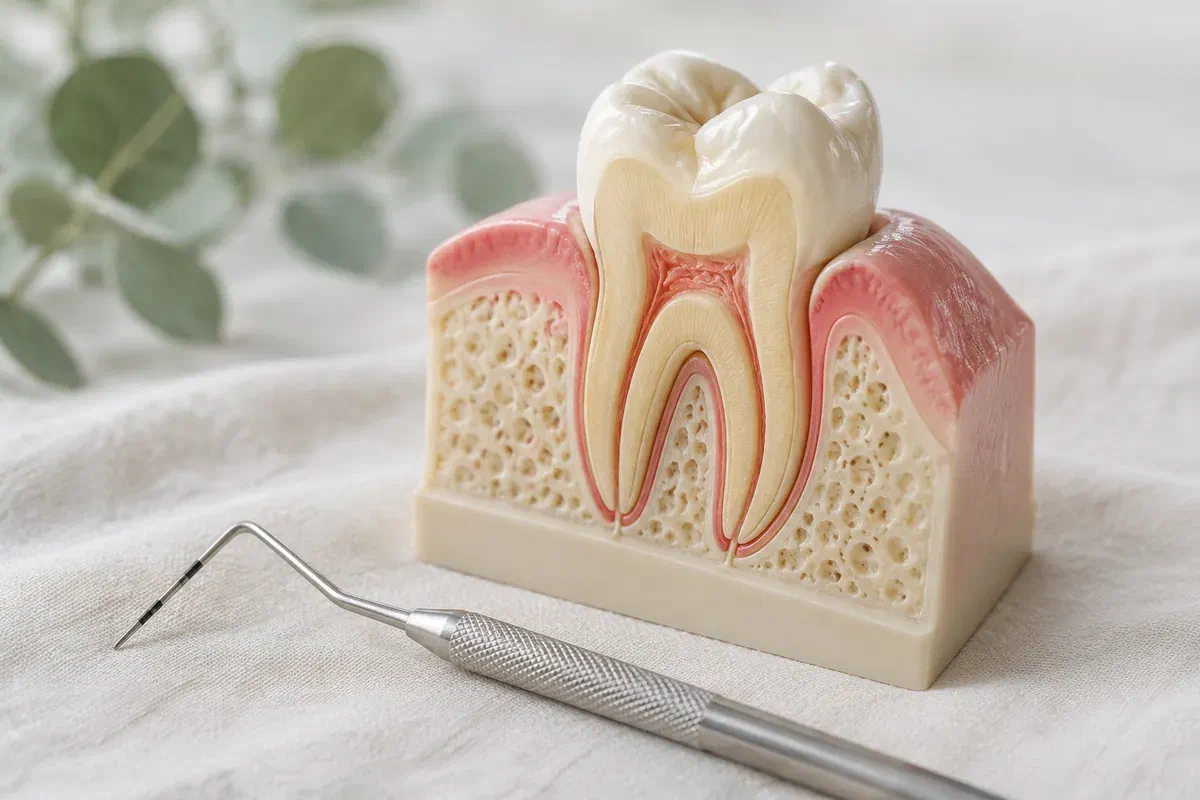
Illustrative tooth-and-gum teaching model beside a periodontal examination probe
What the team is checking

Why the probe reading never stands alone

Mention gum tenderness, past treatment and health or medication changes, including any during or after pregnancy. Teeth that feel fine are assessed too, since a lack of pain does not tell anyone whether the supporting tissue is stable.

Signs of inflamed gum

If a site bleeds when touched gently, or the gum looks puffy or has drawn back, the depth reading means something different. Your clinician can explain how these details relate and whether a full periodontal charting or further records would be worthwhile.

Places a rushed routine misses

Back teeth and tight gaps are easy to skip at the end of a long day. Deposits can harden there, and some tooth shapes or fillings make access harder. Point out where food tends to stick; the team will say what needs professional care and what a small change at home could fix.

Earlier care and present support

Old charts, images or a specialist’s summary help the team see whether things have changed. When a tooth has already lost support, its outlook needs individual assessment. Pocket depth on its own does not answer that question.

New swelling, pus, fever or serious pain needs advice right away. Do not use any tool to check or clean a pocket yourself, and do not put off a sudden problem until a routine gum appointment.

A plan you can keep

Fewer surprises, a quicker routine, and a review with purpose

The job of periodontal treatment is to control disease and help you keep teeth you are able to maintain. A neater chart is not the goal on its own. Ask what improvement is realistic for each affected area and what limits remain. Lost support, hard-to-reach spots and wider health factors will all shape the outlook.

It also helps to know the order of things. Advice and initial cleaning come first, focused work under the gum follows where needed, and a reassessment closes the active phase. Knowing which part you have reached, and what remains before the dentist can call the active phase complete, keeps the plan from feeling endless.

Patient information: SDCEP — stepwise treatment of periodontitis

Professional cleaning where your chart points

Deposits may be removed above and below the gum at the sites that need it. Ask why those teeth were chosen and how you will be kept comfortable. Visit numbers and lengths should match your findings, not a fixed bundle.

Tools that save time at home

The right interdental brush size or a simpler flossing method can make an evening routine faster and more thorough. Ask for a demonstration and say what feels awkward. The routine is for reachable surfaces; it is not a home substitute for professional work.

A reassessment that answers real questions

Bleeding, depth, cleaning access and related signs are checked again after treatment. Ask which sites have responded and which still concern the clinician. A remaining reading is considered in context before further nonsurgical care, surgery or a specialist’s view is discussed.

How it fits together

From the first chart to the check that follows

Tell us about sensitive teeth or dental nerves before anything starts. You can ask for pauses or explanations along the way, so each step makes sense against the plan you agreed.

  1. Understand the diagnosis

    The clinician reviews your history and gum findings, using images or extra assessment if they help. Ask how the diagnosis connects to the readings and the supporting tissue. Find out whether today is an assessment, first-stage care, targeted cleaning or a check on earlier treatment.

  2. Agree on visits that work for your week

    Sort out which areas will be cleaned, roughly how many sessions it will take and whether freezing is worth using. Your daily habits and any risk factors come up as well. Before consenting, find out what preparation helps and which after-effects are likely, so childcare or shifts can be arranged.

  3. Have the planned cleaning done

    Appropriate instruments clear deposits from the agreed sites. If you feel discomfort, say so and the clinician can adapt. The work follows the findings and the access available, and it should not be presented as a guaranteed way to clear every pocket in one go.

  4. Come back so the response can be measured

    Return at the suggested time for the tissue to be reviewed. The clinician will explain whether the results point toward maintenance or more treatment. Should a referral be suggested, ask what it is for and who will keep up your cleanings and checks until that appointment happens.

At home afterwards

A few minutes each evening makes a difference

The advice you receive reflects the amount treated, the use of freezing and anything else carried out that day. Ask what is normal and how to flag a worry without letting your home routine slip.

Stick with the routine you were shown

Use the brushing and between-teeth cleaning demonstrated at your visit, plus any temporary advice you were given. A fiddly tool can often be swapped for another size or a simpler technique, so just ask. Do not replace the routine with forceful scraping, picking or a rinse nobody suggested.

Notice tenderness and gum changes

Some soreness or sensitivity can follow treatment. As swelling goes down, the gumline may look different and spaces between teeth can seem bigger. Ask what is expected for you and report anything that persists or worsens rather than guessing what it means.

Protect the review appointment

Feeling better is good news but does not confirm how each site has healed. The review gives the clinician something to compare. If family plans change, call to rebook instead of letting active care end without that check.

Patient information: NHS — dental abscess symptoms and urgent care

What may come next

Persistent pockets: reassess before deciding

Next steps depend on your diagnosis, the treatment so far and how each site looks today. Ask how any recommendation ties to those findings and what it can realistically offer.

When cleaning and calming inflammation still fit

Continued nonsurgical care and review

Further cleaning below the gum may continue active treatment. You should know which teeth are on the list and what will show whether they responded. Antibiotics, lasers or other additions are not automatically needed because a pocket was charted.

When disease remains or the case is involved

Further treatment or a gum specialist

A periodontist can consider more nonsurgical care, surgery or another plan for a particular site. Ask what factors influence that advice. A referral does not guarantee surgery, and depth alone is never a full explanation for a procedure.

When active care reaches a sensible review point

Supportive maintenance over time

Maintenance visits monitor areas that were affected and add cleaning where needed. Ask what interval suits your condition now and which findings will be followed. Past gum disease still matters once you are in maintenance.

Patient information: American Academy of Periodontology — nonsurgical treatment and its limitations

Brampton questions about gum pockets

Straight answers for busy people

Ask the team to show you the sites on your chart and explain the plan in plain terms. The numbers are most helpful once you see how they link to treatment, your routine and the review.

(905) 876-4488
Is a water flosser a good substitute for cleaning between my teeth?
Some people find one helpful, but whether it suits your spaces depends on your mouth. Ask the team whether it should replace or add to interdental brushes or floss, and how to use it well.
How long will each pocket treatment appointment take?
It depends on how many sites are being treated and your comfort needs. Ask for an estimate when the plan is made so you can arrange work, childcare or other commitments around each visit.
Which medications should I tell the team about before treatment?
Mention all prescription and over-the-counter medications and supplements, especially blood thinners or anything for diabetes or heart conditions. This helps the team plan care safely and coordinate with your physician if needed.
Can my pockets come back after they have been treated?
Gum disease can recur, which is why reassessment and maintenance matter. Keeping up your home routine and agreed visits allows any change to be spotted. Ask what signs to watch for between appointments.
Is one deep reading enough for a diagnosis?
No. The clinician weighs depth with bleeding, gum position, attachment, bone and history. Ask how the findings fit together and whether more assessment is needed before the plan is settled.
Can I use a dental scraper at home to clean under my gums?
Please do not. Home scrapers and picks can injure the gum if forced underneath it. Work beneath the gum belongs in the chair; your part is daily cleaning of the spaces you can reach, which the team is happy to demonstrate.
Making the time from Brampton

Put your own gum health on the calendar

Call (905) 876-4488 to book a gum assessment with our Bronte Street team or to review pocket treatment you have been told you need. If you have earlier charts or specialist notes, bring them so we can build on what is already known.

How much treatment you need, how your gums respond, when reviews fall and whether a specialist is involved are decided by your findings. A single pocket number cannot guarantee a diagnosis, a procedure or a result.

Visit Milton Dental Clinic
Unit 1, 342 Bronte St. S, Milton, ON L9T 5B7
Get directions Clinic hours
Monday–Thursday
11am–7pm
Friday–Sunday
By appointment only

Areas we serve

  • Milton
  • Oakville
  • Mississauga
  • Georgetown
  • Halton Hills
  • Acton
  • Campbellville
  • Brampton
  • Burlington
  • Puslinch
  • Rockwood
  • Erin
  • Caledon
  • Etobicoke
  • Old Milton
  • Bronte Meadows
  • Timberlea
  • Dorset Park
  • Dempsey
  • Clarke
  • Beaty
  • Coates
  • Harrison
  • Scott
  • Willmott
  • Ford
  • Bowes
  • Cobden
  • Walker
  • Mountain View
  • Milton Heights
  • Hawthorne Village
  • Valley View
  • Fallingbrook
  • Nassagaweya
  • Trafalgar
  • Esquesing
  • Nelson
  • Brookville
  • Moffat
  • Glen Williams
  • Norval
  • Limehouse
  • Stewarttown
  • Ashgrove
  • Hornby
  • Silver Creek
  • Speyside
  • Scotch Block
  • North Oakville
  • River Oaks
  • Glen Abbey
  • West Oak Trails
  • Palermo
  • Bronte Creek
  • College Park
  • Joshua Creek
  • Uptown Core
  • Preserve
  • Iroquois Ridge
  • Lisgar
  • Meadowvale
  • Meadowvale Village
  • Churchill Meadows
  • Erin Mills
  • Central Erin Mills
  • Streetsville
  • East Credit
  • Creditview
  • Heartland
  • Sheridan
  • Mount Pleasant
  • Credit Valley
  • Huttonville
  • Churchville
  • Springbrook
  • Northwest Brampton
  • Bram West
  • Fletcher's Meadow
  • Fletcher's Creek South
  • Alton Village
  • Orchard
  • Millcroft
  • Headon Forest
  • Tansley
  • Brant Hills
  • Tyandaga
  • Kilbride
  • Lowville
  • Aberfoyle
  • Morriston
  • Arkell
  • Hillsburgh
  • Freelton
  • Carlisle
  • Waterdown
  • Flamborough
  • Mountsberg

How can we help?

Milton Dental Clinic

Have a question about your smile? Choose the option that works best for you.

For urgent dental concerns, please call.
Messages are reviewed during clinic hours.