

Illustrative patient discussing periodontal findings with a clinician and a supported tooth model
Specialized Care

Periodontal Pocket Treatment in Mississauga

Gum pocket treatment is often spread across more than one appointment, which matters when your calendar is already full. For people heading over from Mississauga, our team explains the findings, how cleaning below the gumline would be divided up and when the response will be checked.

Treatment in stages

Why gum pocket care rarely happens in one sitting

It surprises some people that treating gum pockets can take several visits and a return check weeks later. The reason starts with the exam itself. Around every tooth, the clinician eases a rounded probe into the narrow gap under the gum and notes how deep it goes. Some deeper readings suggest gum disease, but none of them stands alone.

Bleeding, gum level, attachment loss and the bone seen on appropriate images all feed into a diagnosis. Care is aimed at that diagnosis. Where it is indicated, the team cleans beneath the gumline to reduce deposits and inflammation, often working on one area at a time for comfort. A later reassessment shows whether maintenance, further work or a specialist referral is the right path.

With commutes and shift work in the mix, households in Mississauga often need to know the shape of the plan before they can commit. Ask how many visits are likely, which teeth each one covers and what you should be doing at home in between. A plan you can schedule is one you are far more likely to finish.

Plan your gum treatment visits
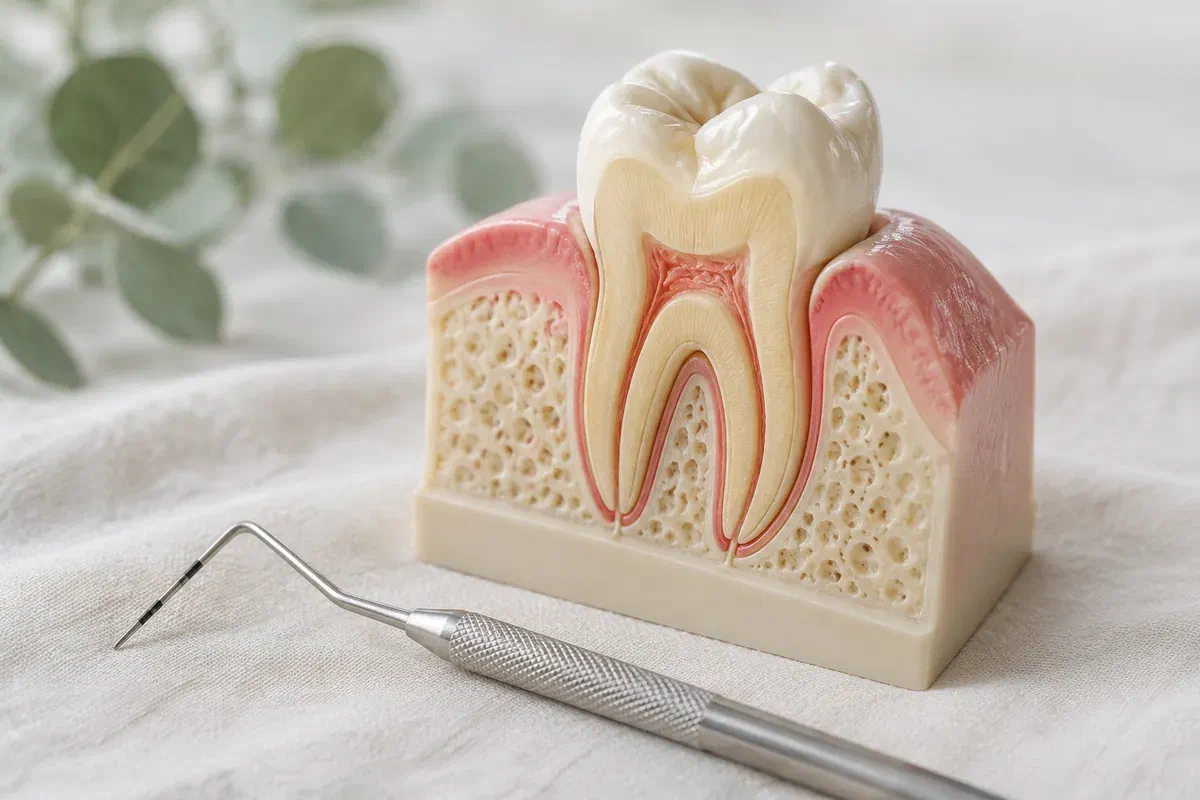
Illustrative tooth-and-gum teaching model beside a periodontal examination probe
What shapes the plan

How many sites, how inflamed, and how much support remains

Let the team know about symptoms, earlier gum treatment and any change in your health or medications. Teeth that feel comfortable are checked as well, because the absence of discomfort says little about tissue stability.

Inflammation around each tooth

Sites that bleed when gently measured, plus gum that has swollen or drawn back, alter the meaning of each reading. The clinician can explain how these signs combine and whether a complete periodontal charting or further records would help shape the schedule.

Buildup that needs professional removal

Hardened deposits beneath the gum, or a ledge on an old filling, can stop a brush from doing its job. Tell the team where you notice food catching. They can separate the areas that need professional care from those where a better home routine will help.

History that changes the outlook

Past charts, images or a periodontist’s summary let the team compare over time. Where a tooth has already lost some support, its prospects deserve an individual look. A depth figure alone cannot predict how that tooth will do.

Pus, new swelling, fever or strong pain should prompt a call straight away. Do not try to measure or clean out a pocket with any instrument at home, and do not wait for the next scheduled visit if something acute develops.

Knowing the route ahead

A schedule with a reason behind every appointment

Periodontal treatment exists to bring disease under control and help you keep teeth that can be maintained. Improving the chart without explanation is not the aim. Ask what can realistically change at each affected site and what limits will remain, since existing bone loss, access for cleaning and general health all affect the outlook.

Thinking in stages makes the calendar easier. One visit may focus on assessment and initial cleaning, later visits on targeted work beneath the gum, and a final one on reassessment. Ask which stage a given appointment belongs to and what must happen before the dentist can decide whether active care is done.

Patient information: SDCEP — stepwise treatment of periodontitis

Cleaning divided sensibly across visits

Removing deposits above and below the gum may be planned area by area. Ask why particular teeth are included and how comfort will be handled at each session. The number and length of appointments should come from your findings, not a one-size package.

Home routines that fit a busy day

A quick demonstration of the right interdental brush or floss technique can save effort every evening. Mention anything that feels fiddly or slow. The routine should keep reachable surfaces clean without asking you to replicate professional instrument work.

A reassessment worth keeping in the diary

Bleeding, depth, ease of cleaning and other findings are compared after treatment. Ask which sites have improved and which remain a worry. Any leftover reading is placed in context before more nonsurgical care, surgery or a specialist’s opinion is raised.

The appointment sequence

What happens at each stage, from first chart to final check

Say early on if your teeth are sensitive or appointments make you tense. Breaks and explanations can be built in, so you always know how the current step relates to the overall plan.

  1. Assessment and diagnosis

    Your history and periodontal measurements are reviewed, with images or added assessment when indicated. Ask how the diagnosis links to the readings and the supporting tissue. Check what kind of visit this is: assessment, first-phase care, targeted cleaning or review.

  2. Scheduling and home-care planning

    Agree which areas will be treated, how many sessions are likely and whether freezing would help. Your daily routine and risk factors are discussed. Ask about preparation, and about the expected after-effects, so you can arrange work or family plans around them.

  3. Professional cleaning, one area at a time

    Suitable instruments are used to clear deposits from the planned sites. If something feels uncomfortable, say so and the clinician will adjust. Treatment is guided by the findings and access rather than presented as a certain way to clear every pocket at once.

  4. Reassessment and the next phase

    Return at the advised interval for the tissue response to be reviewed. Ask which findings support maintenance and which suggest more care. If a referral is suggested, clarify its purpose and how your cleanings and checks will continue meanwhile.

Between sessions and afterwards

What to do while the gums settle

Instructions depend on the extent of cleaning, whether freezing was used and any added procedure. Ask the clinician what to expect after each visit and how to raise a concern without setting your home routine aside.

Keep your routine going between visits

Continue the brushing and interdental cleaning you were shown, with any short-term adjustments for treated areas. If a tool is awkward, ask for a different size or approach. Hard scraping, digging at the gum or an unadvised rinse are not substitutes.

Tenderness and a different-looking gumline

Treated areas may feel sore or sensitive for a short time. As inflammation subsides, the gum can sit lower and spaces may look larger. Ask what is typical for your treatment and report anything persistent or worsening rather than drawing your own conclusions.

Hold on to the review date

Feeling better does not prove each site has responded. The review lets the clinician compare current findings and decide what is left. If your schedule shifts, call to rebook rather than letting active care lapse without that assessment.

Patient information: NHS — dental abscess symptoms and urgent care

After the first round

Some sites settle, some need another look

What follows depends on your diagnosis, the care already completed and how each site appears now. Ask how any recommendation connects to those findings and what it is likely to achieve.

When cleaning and inflammation control are still indicated

Further nonsurgical care

Additional work below the gum can continue active treatment. Ask which teeth are included and how their response will be measured. Antibiotics, lasers and other add-ons are not standard simply because a pocket was charted.

When disease persists or the case is complex

Specialist opinion or further procedures

A periodontist may consider more nonsurgical care, a surgical route or another approach. Ask which site features influence that advice. A referral does not guarantee surgery, and pocket depth alone does not explain a proposed procedure.

When active care has reached a suitable checkpoint

Ongoing maintenance appointments

Maintenance keeps track of previously affected areas and offers cleaning support. Ask what interval suits your current condition and which findings will be followed. Past gum disease remains relevant once you move into this phase.

Patient information: American Academy of Periodontology — nonsurgical treatment and its limitations

Mississauga scheduling and care questions

Fitting gum treatment into real life

Ask the team to mark the areas on your chart and explain the plan in everyday terms. The readings are most useful when you can see how they shape treatment, your routine and the review.

(905) 876-4488
Why is my gum treatment split over several appointments?
Dividing the work by area can help with comfort, freezing and the time each site needs. The exact split depends on your findings. Ask for an outline of what each visit covers.
Can I eat normally after a session that used freezing?
It is generally wise to wait until the numbness wears off so you do not bite your cheek or tongue. Ask the team for advice specific to your treatment and any temporary food suggestions for treated areas.
Is a mouthwash enough to treat a periodontal pocket?
No. A rinse cannot remove hardened deposits below the gumline. If a particular mouthwash is recommended for a short period, follow that advice, but do not swap your agreed cleaning routine for an unrecommended product.
If I miss one session, does the whole plan start over?
Not necessarily. Call to rebook as soon as you can, and the team will advise how to continue. Long gaps can make the plan harder to judge, so keeping the sequence reasonably close together is helpful.
Does a pocket still being deep at review mean surgery is next?
No. The site is reassessed alongside inflammation, support and the care already provided. More nonsurgical treatment, maintenance or a specialist opinion may be discussed. Ask why an option is proposed and what the alternatives are.
Why have the gaps between my teeth opened up since treatment?
As swollen gum settles, the outline can change and spaces may become more visible. Ask what is expected for you and how to clean those areas comfortably. Report symptoms that concern you rather than judging the result by appearance alone.
Arranging care from Mississauga

Map out the visits before you begin

Phone (905) 876-4488 to book a gum assessment at our Bronte Street practice, or to talk through pocket treatment you have already been advised to have. Bring any earlier periodontal charts or specialist letters so we can see what has been done so far.

Treatment extent, tissue response, review timing and any specialist role depend on your individual findings. No single reading guarantees a diagnosis, a particular procedure or an outcome.

Visit Milton Dental Clinic
Unit 1, 342 Bronte St. S, Milton, ON L9T 5B7
Get directions Clinic hours
Monday–Thursday
11am–7pm
Friday–Sunday
By appointment only

Areas we serve

  • Milton
  • Oakville
  • Mississauga
  • Georgetown
  • Halton Hills
  • Acton
  • Campbellville
  • Brampton
  • Burlington
  • Puslinch
  • Rockwood
  • Erin
  • Caledon
  • Etobicoke
  • Old Milton
  • Bronte Meadows
  • Timberlea
  • Dorset Park
  • Dempsey
  • Clarke
  • Beaty
  • Coates
  • Harrison
  • Scott
  • Willmott
  • Ford
  • Bowes
  • Cobden
  • Walker
  • Mountain View
  • Milton Heights
  • Hawthorne Village
  • Valley View
  • Fallingbrook
  • Nassagaweya
  • Trafalgar
  • Esquesing
  • Nelson
  • Brookville
  • Moffat
  • Glen Williams
  • Norval
  • Limehouse
  • Stewarttown
  • Ashgrove
  • Hornby
  • Silver Creek
  • Speyside
  • Scotch Block
  • North Oakville
  • River Oaks
  • Glen Abbey
  • West Oak Trails
  • Palermo
  • Bronte Creek
  • College Park
  • Joshua Creek
  • Uptown Core
  • Preserve
  • Iroquois Ridge
  • Lisgar
  • Meadowvale
  • Meadowvale Village
  • Churchill Meadows
  • Erin Mills
  • Central Erin Mills
  • Streetsville
  • East Credit
  • Creditview
  • Heartland
  • Sheridan
  • Mount Pleasant
  • Credit Valley
  • Huttonville
  • Churchville
  • Springbrook
  • Northwest Brampton
  • Bram West
  • Fletcher's Meadow
  • Fletcher's Creek South
  • Alton Village
  • Orchard
  • Millcroft
  • Headon Forest
  • Tansley
  • Brant Hills
  • Tyandaga
  • Kilbride
  • Lowville
  • Aberfoyle
  • Morriston
  • Arkell
  • Hillsburgh
  • Freelton
  • Carlisle
  • Waterdown
  • Flamborough
  • Mountsberg

How can we help?

Milton Dental Clinic

Have a question about your smile? Choose the option that works best for you.

For urgent dental concerns, please call.
Messages are reviewed during clinic hours.