

Illustrative patient discussing periodontal findings with a clinician and a supported tooth model
Specialized Care

Periodontal Pocket Treatment in Rockwood

Worried that cleaning below the gums will be uncomfortable? You are far from alone. If you are coming from Rockwood, our team can explain your pocket readings, talk through freezing, pauses and pacing, and set out how the treated sites will be reviewed afterwards.

Comfort comes first

Nervous about gum treatment? Start with what it actually involves

For a lot of people, the anxious part of gum care is not knowing what will happen. So here it is plainly. The examination uses a thin probe with a rounded tip, rested lightly in the small space between your gum and each tooth to see how far down it goes. Some sites can feel tender, and you can ask the clinician to slow down.

A deeper reading may point toward gum disease, though it is only understood together with bleeding, the level of the gum, any lost attachment and bone seen on suitable images. Treatment responds to the overall condition. Where it is indicated, cleaning below the gumline removes deposits and helps calm inflammation, and a reassessment later decides on maintenance, further care or a specialist opinion.

Many people travelling from Rockwood tell us that understanding the plan eased their nerves more than anything else. Ask which teeth are involved, what each visit will feel like and how freezing or breaks can be used. You should also know what you are doing at home between appointments, so every step feels expected.

Talk about comfort before treatment
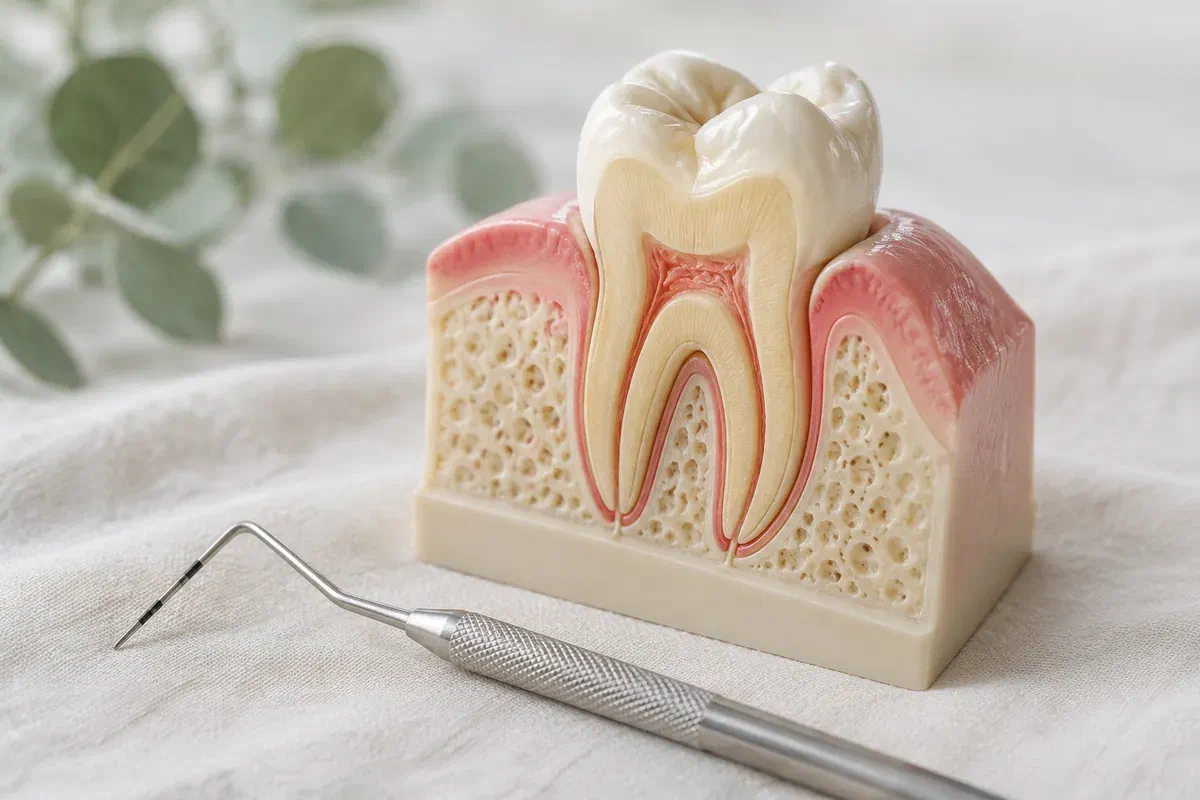
Illustrative tooth-and-gum teaching model beside a periodontal examination probe
What is assessed, gently

Several small observations add up to one diagnosis

Mention tender areas, previous gum care, dental anxiety and changes in health or medicines. Sites that feel fine are still checked, since comfort cannot tell anyone whether the supporting tissue is stable.

Bleeding and gum position

Light probing that causes bleeding is a sign of inflammation, and swollen or receded gum changes how depth is read. Your clinician can talk you through these findings as they go and say whether a more complete chart or extra images are needed.

Deposits and tricky surfaces

Hardened buildup beneath the gum is often what keeps a site inflamed. Some tooth shapes and older fillings make it harder to clean. Tell the team where food catches, and ask which spots need professional care and which a different home technique could improve.

Earlier treatment and current support

Records from previous visits or a specialist help the team compare over time. A tooth that has lost some support needs its own assessment of how it will likely do; depth alone is not enough to judge that.

New swelling, pus, fever or significant pain should be reported promptly, even if you are nervous about coming in. Do not put any tool into the gum to check or clean a pocket yourself, and do not wait for a routine appointment if a sudden problem appears.

A plan that feels manageable

Knowing the steps takes much of the worry away

The goal is to control periodontal disease and help you hold on to teeth you can care for. It is not about chasing perfect numbers. Ask what improvement is realistic at each site and which limits remain, because existing loss of support, access for cleaning and wider health can all shape the outlook and the possible need for more care.

Breaking the work into stages also makes it less daunting. Advice and initial cleaning, targeted work below the gum and a reassessment each have a defined purpose, and shorter sessions are sometimes possible. Ask which stage you are in, and what must happen before the dentist can say the active phase is over.

Patient information: SDCEP — stepwise treatment of periodontitis

Cleaning paced for your comfort

Removal of deposits at and below the gumline may be planned for the sites involved. Ask why those teeth were chosen, whether freezing is suitable and whether work can be split into shorter visits. Session length and number should reflect your findings and needs.

Home care you feel confident doing

If cleaning between teeth feels uncomfortable, the tool or technique may need adjusting. Ask for a gentle demonstration and say what is difficult. Aim to clean the surfaces you can reach; work beneath the gum stays with the clinician.

A reassessment with no surprises

At the review, bleeding, depths, cleaning access and related signs are compared with earlier findings. Ask in advance what will be checked. Any remaining reading is interpreted in context before more nonsurgical care, surgery or a specialist assessment is suggested.

Step by step, at your pace

What each appointment involves, and how you stay in control

Tell the team about sensitivity or anxiety before anything starts. Agree on a signal for stopping, ask for explanations whenever you like, and take breaks so each step makes sense to you.

  1. A calm, explained assessment

    Your history and periodontal findings are reviewed, with images or added assessment if useful. Ask how the diagnosis connects to the readings and the supporting tissue, and make sure you know whether the visit is assessment, initial care, targeted cleaning or review.

  2. Agreeing on comfort and the visit plan

    Discuss which areas will be treated, the likely number of sessions and whether local anaesthetic would help. Your routine and risk factors are covered. Ask what preparation is useful and which after-effects to expect before you consent, and raise any past dental experiences that worry you.

  3. Treatment with room to pause

    The clinician uses suitable instruments to clear deposits from the agreed sites. If you feel discomfort, raise your hand or use your agreed signal so the approach can change. The work follows the findings and accessible areas, and should not be promised to clear every pocket at once.

  4. Reviewing how the tissues responded

    Return when advised so the gums can be re-examined. The clinician will explain whether the results suggest moving to maintenance or more care. If a specialist is recommended, ask why and how your cleanings and checks will continue until that visit.

The next few days

Mild tenderness can be normal; ask what to expect

Your advice will depend on the extent of the cleaning, whether you had freezing and anything else that was done. Ask the clinician what is normal and how to raise a concern without stopping your home routine.

Return to your routine gently

Resume the brushing and interdental cleaning you were shown, following any short-term guidance about treated sites. If something stings or feels awkward, ask for a softer approach or different size. Avoid hard scraping, picking or rinses nobody recommended.

Sensitivity and shifting gums

Treated areas may feel tender or sensitive to temperature for a while. As swelling settles, the gum may sit lower and gaps may look wider. Ask what is expected in your case, and report symptoms that persist or worsen rather than putting up with them.

Go to the review even if you would rather not

Feeling better does not show how every site responded. The review is usually simpler than treatment, and it lets the clinician compare findings and decide what remains. If you need to rebook, call rather than letting active care end without that check.

Patient information: NHS — dental abscess symptoms and urgent care

If some sites need more

More care is discussed, never assumed

What comes next depends on your diagnosis, the treatment already provided and how each site looks now. Ask how any recommendation links to those findings and what it can realistically offer.

When cleaning and inflammation control are still indicated

Further nonsurgical care

More cleaning beneath the gum may continue active treatment, with the same comfort options as before. Ask which teeth are included and how progress will be judged. Antibiotics, lasers or other additions are not automatic because a pocket was recorded.

When problems remain or the case is complicated

Specialist assessment or other treatment

A periodontist may consider further nonsurgical care, surgery or another plan. Ask what site features lead to that view, and what comfort options a specialist offers. Referral does not guarantee surgery, and depth alone never fully explains a procedure.

When active care has reached a natural pause

Supportive maintenance

Maintenance visits monitor formerly affected tissue and provide cleaning support, often with less intensive work than active treatment. Ask what interval suits you and what will be followed. Past gum disease remains relevant in this phase.

Patient information: American Academy of Periodontology — nonsurgical treatment and its limitations

Rockwood comfort questions

Honest answers about how treatment feels

Ask the clinician to show you the sites involved and explain each step before it happens. The chart is easier to accept once you see how it connects to treatment, home care and review.

(905) 876-4488
Does having my gum pockets measured hurt?
Most people feel pressure or mild tenderness, and inflamed sites can be more sensitive. Tell the clinician if it is uncomfortable so they can slow down, and ask whether anything can be done to make the examination easier.
Can I ask for freezing during cleaning below the gumline?
Yes, you can ask. Whether local anaesthetic is suitable depends on the areas treated and your health. Discuss it when planning so the team can include it where appropriate.
What if I need to stop in the middle of treatment?
Agree on a signal beforehand, such as raising a hand. The clinician can pause, check how you are and adjust the approach. Treatment can also be split across visits if that helps.
Will my teeth be sensitive after the cleaning?
Some tenderness or temperature sensitivity can follow treatment. Ask the team what to expect and what may help, and report sensitivity that does not settle or gets worse.
Is one deep reading the whole explanation for my treatment plan?
No. Depth is considered with bleeding, gum position, attachment, bone and history. Ask how your findings fit together and whether more assessment is needed.
Can I avoid treatment by scraping the pocket clean myself?
No. Sharp or improvised tools can injure the gum and cannot do the professional job safely. Ask for a demonstration of comfortable daily cleaning for the spaces you can reach.
Gum care for Rockwood

Start with a conversation, not a procedure

Call our Bronte Street practice on (905) 876-4488 to arrange a relaxed gum assessment or to discuss pocket treatment you have been advised to have. Let us know about any anxiety when you book, and bring earlier periodontal records or specialist notes if you have them.

The extent of care, tissue response, review timing and specialist involvement depend on your findings. No single pocket reading guarantees a diagnosis, a particular procedure or an outcome.

Visit Milton Dental Clinic
Unit 1, 342 Bronte St. S, Milton, ON L9T 5B7
Get directions Clinic hours
Monday–Thursday
11am–7pm
Friday–Sunday
By appointment only

Areas we serve

  • Milton
  • Oakville
  • Mississauga
  • Georgetown
  • Halton Hills
  • Acton
  • Campbellville
  • Brampton
  • Burlington
  • Puslinch
  • Rockwood
  • Erin
  • Caledon
  • Etobicoke
  • Old Milton
  • Bronte Meadows
  • Timberlea
  • Dorset Park
  • Dempsey
  • Clarke
  • Beaty
  • Coates
  • Harrison
  • Scott
  • Willmott
  • Ford
  • Bowes
  • Cobden
  • Walker
  • Mountain View
  • Milton Heights
  • Hawthorne Village
  • Valley View
  • Fallingbrook
  • Nassagaweya
  • Trafalgar
  • Esquesing
  • Nelson
  • Brookville
  • Moffat
  • Glen Williams
  • Norval
  • Limehouse
  • Stewarttown
  • Ashgrove
  • Hornby
  • Silver Creek
  • Speyside
  • Scotch Block
  • North Oakville
  • River Oaks
  • Glen Abbey
  • West Oak Trails
  • Palermo
  • Bronte Creek
  • College Park
  • Joshua Creek
  • Uptown Core
  • Preserve
  • Iroquois Ridge
  • Lisgar
  • Meadowvale
  • Meadowvale Village
  • Churchill Meadows
  • Erin Mills
  • Central Erin Mills
  • Streetsville
  • East Credit
  • Creditview
  • Heartland
  • Sheridan
  • Mount Pleasant
  • Credit Valley
  • Huttonville
  • Churchville
  • Springbrook
  • Northwest Brampton
  • Bram West
  • Fletcher's Meadow
  • Fletcher's Creek South
  • Alton Village
  • Orchard
  • Millcroft
  • Headon Forest
  • Tansley
  • Brant Hills
  • Tyandaga
  • Kilbride
  • Lowville
  • Aberfoyle
  • Morriston
  • Arkell
  • Hillsburgh
  • Freelton
  • Carlisle
  • Waterdown
  • Flamborough
  • Mountsberg

How can we help?

Milton Dental Clinic

Have a question about your smile? Choose the option that works best for you.

For urgent dental concerns, please call.
Messages are reviewed during clinic hours.