

Illustrative patient discussing recovery questions after a tooth extraction with a clinician
Specialized Care

Post-Extraction Care in Caledon

A good phone call about a healing socket depends on having the right details in front of you. From Bolton or one of Caledon’s villages, you can gather a few facts, ring our team, and get help deciding whether reassurance, an examination, or further treatment comes next.

Before you call from Caledon

Five facts that make a recovery call useful.

When did the tooth come out, who removed it, was anything else done, what medicines do you take, and what exactly has changed? Those five answers let a dental team give you sensible advice quickly. They matter because recovery after a simple extraction can look quite different from healing after surgery, a graft, or special precautions.

Tenderness, a little swelling, and saliva with a pink tinge are often part of the first days. Change is what to track. A symptom that is getting worse, will not settle with your usual measures, or is not described in your instructions is worth a call. Nobody expects you to decide whether it is normal beforehand.

Across a township as spread out as Caledon, a call first can decide whether a trip is needed at all. The office that performed the extraction usually holds the most detail and is a natural first contact. If you need a local review instead, our Bronte Street practice can talk through availability once we have those five facts.

Get ready to call about your recovery
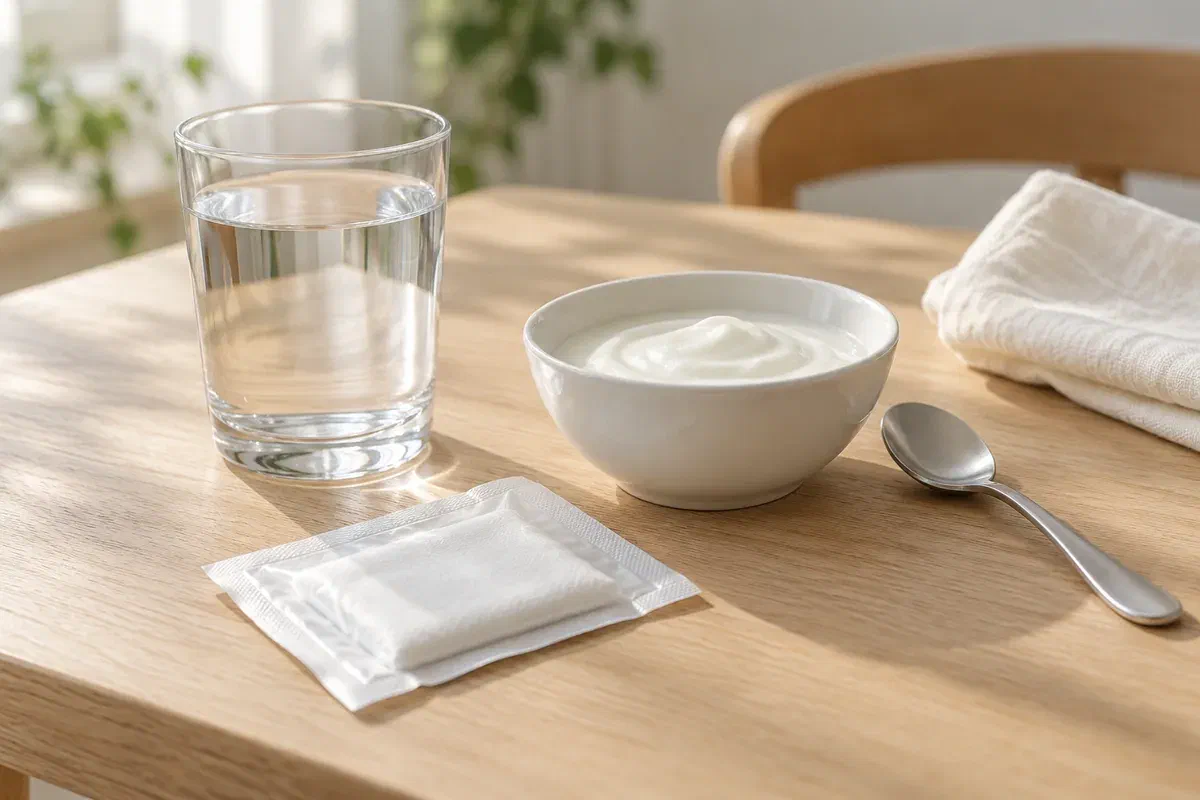
Illustrative recovery supplies with water, a soft-food bowl, and packaged gauze
The fifth fact: what has changed

Bleeding? Pain? Something about the socket itself?

Describing the change precisely is what lets the team set the right urgency. Never wait on an online form for a problem that needs help now.

Bleeding: how much, and since when

Is there a faint stain in your saliva, or blood steadily coming from the socket? Say how long you have pressed on it and how. Keep using the technique from your instructions. Bleeding that persists needs professional advice, more urgently if you take a clotting-related medicine or feel unwell.

Pain and swelling: the direction of travel

Give the day each started, whether they are increasing, and whether they settled before coming back. Fever, a bad taste, or difficulty opening should be mentioned. This shapes the advice, but only an examination can tell a dry socket from infection or another cause.

The site: stitches, feeling, appearance

Describe a stitch that has loosened, numbness that has not faded on schedule, or anything about the socket that looks wrong to you. Do not pull at it or probe with a fingernail. Report numbness that is lasting or changing to the clinician who removed the tooth.

Skip the checklist in an emergency. Bleeding that pressure will not stop, rapidly spreading swelling, trouble breathing or swallowing, or feeling severely ill all need emergency medical care. Call 911 for an immediate emergency.

After the call: a review

Turning a description into an answer.

If an examination is suggested, it builds on what you shared on the phone. The clinician compares the procedure details and your timeline with what can be seen now, and you can ask plainly whether it looks like healing or a problem. Expect a candid answer when uncertainty remains, not comfort based solely on the date.

Bring the same five facts, plus any questions about meals, brushing, activity, and medicines. Ask for the answers on paper and for one number to use if things change again. That single point of contact is especially useful when the extraction and the review happen at different offices.

A targeted look at the concern

Where appropriate, the clinician examines the socket and nearby gum and teeth, with the original procedure in mind. Ask what the findings explain and whether records from the treating office would help. Possible outcomes include reassurance, local care, or a referral.

Comfort guidance matched to your list

Your medicine list helps here. Ask which pain relievers suit your health and other prescriptions, and how to space them. Stay within recommended doses, check for overlapping ingredients, and do not reach for leftover antibiotics.

A next step you can write down

Confirm whether stitches, a dressing, a healing check, or later tooth replacement planning will need another visit. Ask which changes mean calling sooner and who to contact after hours. A good day is welcome, but it may not mean follow-up is finished.

What the team does with your facts

Listen, prioritise, examine, and explain.

Everyday words are enough. Once you have shared the details and what you have tried, the team can concentrate on what is most relevant.

  1. Hear the extraction story

    You give the date, the treating office, and whether a graft, implant, or other procedure was part of it. Medicines, health conditions, and your instructions come next. Then describe where recovery has departed from what you expected.

  2. Set a priority

    The team weighs bleeding, swelling, pain, your general health, and anything else reported. That might mean booking a visit or directing you to urgent care. If symptoms change while you wait, call again.

  3. Examine and share findings

    The clinician looks at the relevant area and explains the probable cause or what is still unknown. Some issues are treated at the socket; others need new advice or more investigation. Ask what each proposal is for and whether it addresses the cause.

  4. Confirm the plan

    Before you leave, check what to change at home and what to continue. Ask when to return and how to report a worsening symptom. If another office remains in charge of your care, confirm what will be sent to them.

Keeping the site settled

Your instructions, followed closely, do most of the work.

Advice from the clinician who removed the tooth should guide recovery, especially after a surgical extraction or added procedure. If a point is missing or unclear, add it to your list of questions rather than blending several online routines.

First day: hands off

Common advice is no rinsing, spitting, or touching the socket during the first day. Be careful with a numb lip and tongue, and avoid hot food or drinks until feeling returns. Follow any extra precautions noted for your procedure.

Soft food and gentle cleaning after that

Choose soft meals early and follow the advice on brushing neighbouring teeth and starting gentle rinses. Leave the socket itself alone, without scraping or tongue-checking. Ask about smoking, vaping, and exercise, as each extraction has its own timeline.

Pressure for bleeding, no changes to prescriptions

If bleeding begins, use the pressure method you were taught and call if it does not ease. Avoid lifting the gauze to check. Prescribed anticoagulant and antiplatelet medicines should only be changed by the clinician who manages them.

Patient information: UCLH — dental extraction aftercare · Royal Devon — post-extraction bleeding and anticoagulant precautions

Possible next steps

Three paths, chosen by the findings.

Ask how a recommendation follows from your symptoms and examination. A sore socket is not necessarily infected, and each recovery concern has its own answer.

When healing looks to be continuing

Advice and a planned review

The team may explain what lies ahead and suggest small changes at home. Ask what good progress looks like and which change would justify another call. Reassurance should rest on the examination and a plan rather than a promised date when symptoms end.

When the site needs clinical attention

Treatment at the socket

With a dry socket, the clinician may clean the area and place a dressing to ease symptoms. That is not an infection, and antibiotics are not automatic. Ask what the treatment can achieve and if a recheck is needed. Keep oils, tablets, and homemade packing out of the socket.

When another provider or setting is needed

Referral or emergency care

Persistent bleeding, possible infection, changed sensation, or another complication may need the original surgical team or a suitable provider nearer to you. Ask who will arrange it. Serious warning signs need emergency care immediately.

Patient information: East Sussex Healthcare — dry socket and symptom management

Caledon recovery FAQ

Getting the most from a call or visit.

Contact the treating team when you are unsure or symptoms change. The details of the extraction and your health shape the advice, particularly if medicines or other procedures are involved.

(905) 876-4488
What information should I have ready before phoning about my extraction?
The extraction date, the office that did it, whether a graft or other procedure was done, your medicines and health conditions, and a clear description of what has changed. Your instruction sheet helps too.
Do I need my X-rays from the office that removed the tooth?
Not necessarily for a first call. If a review is needed, the team may ask for records with your consent. Do not delay urgent care while waiting for them.
Should I write down my symptoms each day?
A short note of pain, swelling, bleeding, and anything new each day can make your description clearer. It is not required, but it helps the team see the pattern.
Can I send a photo of the socket instead of coming in?
A photo cannot replace an examination, and appearance alone does not show whether healing is on track. Describe your symptoms by phone and the team will advise whether you need to be seen.
Is new pain on day three or four a sign the socket is infected?
It can have several causes, including dry socket, so an examination is needed. Share the timeline and any fever or swelling, and do not start leftover antibiotics.
Who should I phone first if a surgeon removed my tooth?
Start with the surgeon’s office, since they know the procedure. If you cannot reach them or need a local review, call us and explain. Severe warning signs need emergency care first.
Caledon post-extraction care

Have the five facts ready, then call.

Ring (905) 876-4488 to reach our Bronte Street practice about a recovery concern and when an assessment could be arranged. The procedure date, treating office, aftercare sheet, and medicine list are the details that help most.

Healing differs with each procedure and health history. Use online forms for non-urgent questions only; phone about worsening symptoms and go to emergency care for serious warning signs.

Visit Milton Dental Clinic
Unit 1, 342 Bronte St. S, Milton, ON L9T 5B7
Get directions Clinic hours
Monday–Thursday
11am–7pm
Friday–Sunday
By appointment only

Areas we serve

  • Milton
  • Oakville
  • Mississauga
  • Georgetown
  • Halton Hills
  • Acton
  • Campbellville
  • Brampton
  • Burlington
  • Puslinch
  • Rockwood
  • Erin
  • Caledon
  • Etobicoke
  • Old Milton
  • Bronte Meadows
  • Timberlea
  • Dorset Park
  • Dempsey
  • Clarke
  • Beaty
  • Coates
  • Harrison
  • Scott
  • Willmott
  • Ford
  • Bowes
  • Cobden
  • Walker
  • Mountain View
  • Milton Heights
  • Hawthorne Village
  • Valley View
  • Fallingbrook
  • Nassagaweya
  • Trafalgar
  • Esquesing
  • Nelson
  • Brookville
  • Moffat
  • Glen Williams
  • Norval
  • Limehouse
  • Stewarttown
  • Ashgrove
  • Hornby
  • Silver Creek
  • Speyside
  • Scotch Block
  • North Oakville
  • River Oaks
  • Glen Abbey
  • West Oak Trails
  • Palermo
  • Bronte Creek
  • College Park
  • Joshua Creek
  • Uptown Core
  • Preserve
  • Iroquois Ridge
  • Lisgar
  • Meadowvale
  • Meadowvale Village
  • Churchill Meadows
  • Erin Mills
  • Central Erin Mills
  • Streetsville
  • East Credit
  • Creditview
  • Heartland
  • Sheridan
  • Mount Pleasant
  • Credit Valley
  • Huttonville
  • Churchville
  • Springbrook
  • Northwest Brampton
  • Bram West
  • Fletcher's Meadow
  • Fletcher's Creek South
  • Alton Village
  • Orchard
  • Millcroft
  • Headon Forest
  • Tansley
  • Brant Hills
  • Tyandaga
  • Kilbride
  • Lowville
  • Aberfoyle
  • Morriston
  • Arkell
  • Hillsburgh
  • Freelton
  • Carlisle
  • Waterdown
  • Flamborough
  • Mountsberg

How can we help?

Milton Dental Clinic

Have a question about your smile? Choose the option that works best for you.

For urgent dental concerns, please call.
Messages are reviewed during clinic hours.