

Illustrative patient discussing a concern after dental surgery with a clinician
Specialized Care

Post-Operative Dental Concerns in Etobicoke

Coming from Etobicoke, the trip to us is longer than most, so it pays to call before you set out. Tell us what procedure you had and what has changed, and we can help decide whether to come in, wait, or get help closer to home.

Planning around distance from Etobicoke

Call first, then decide whether the drive makes sense.

A sore jaw on a weekday evening raises a practical question as well as a clinical one. Is this something to show a clinician tomorrow, something that can be handled with advice over the phone, or something that needs care tonight, nearer to where you are? Getting that call right matters more when the journey is a long one.

The answer starts with the operation. Recovery after an extraction differs from recovery after a gum graft, an implant or a biopsy, and a symptom carries different weight in each case. The direction of change counts too. Steady easing, no change at all, and a setback after a good day all lead to different conversations. Elapsed days are relevant, but a severe problem is never dismissed because of them.

Phone us to describe what is happening and to ask about assessment availability. If the surgery was done by another provider, reach that team as well and keep their written aftercare handy. They may hold details that change the advice, or they may be better placed to see you.

Phone before you travel
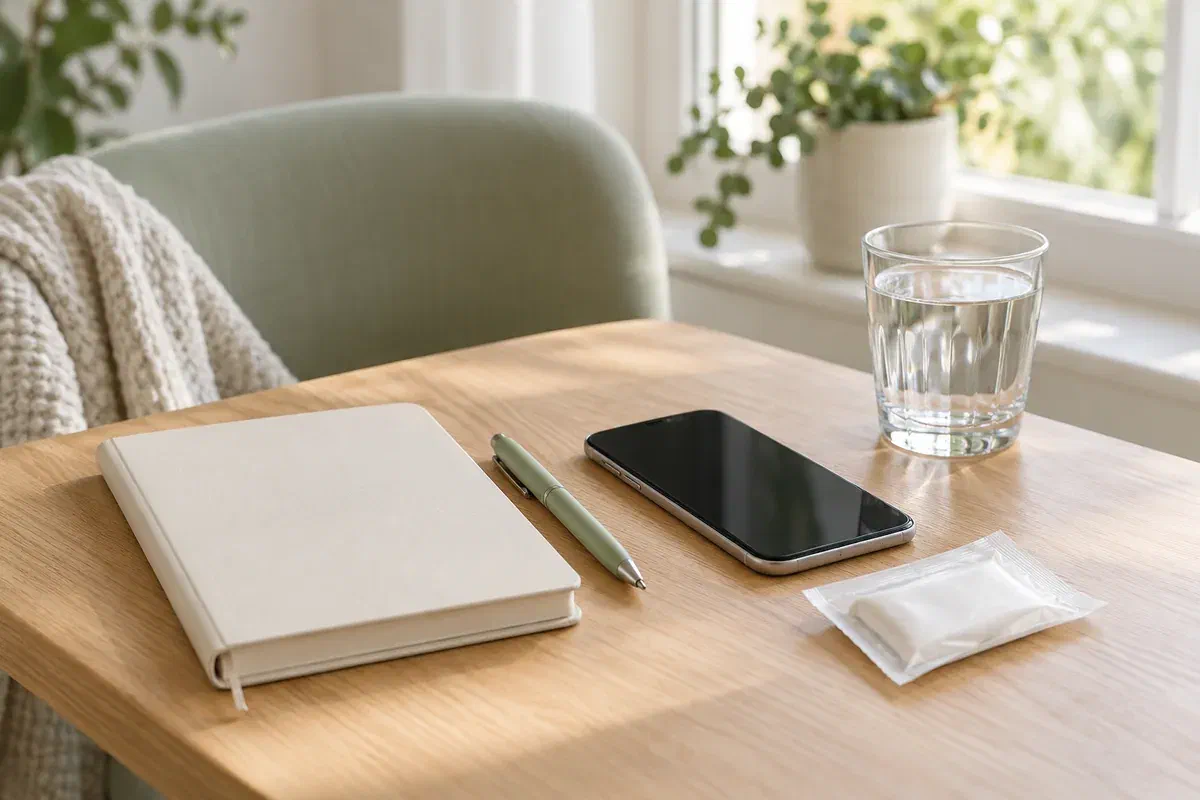
Illustrative follow-up notebook and phone beside water and packaged gauze
What to report on the phone

Give us enough to judge whether you should travel at all.

Concerns that might need quick attention are best handled by phone. An email or web form could sit unread. Say up front if anything serious is going on.

Pain, swelling, bleeding or general illness

Explain whether these are worsening, and whether you have a fever, a jaw that will not open well or difficulty getting fluids down. Real bleeding and a faint pink in saliva are different things, so describe what you see. A review that is already booked should not hold you back if the picture changes sharply.

Feeling or appearance of the surgical area

Mention numbness, tingling, a sharp point or a wound that looks wrong to you, plus when it began and what you were told to expect. If a stitch or dressing feels loose, say so without tugging on it. That tells the clinician whether phone advice, an examination or contact with the surgeon fits best.

Medicines and instructions

Read out each medicine you have taken and the instruction that has you stuck. A rash, nausea or unusual drowsiness could signal a reaction and should be raised. Hold off on changing doses, combining products or using another person's prescription while waiting.

Dial 911 for bleeding you cannot control, swelling that is spreading fast, trouble breathing or swallowing, a severe allergic reaction, or someone who is not waking normally after sedation. Do not set out on a long drive to a dental office in those situations.

Making one visit count

A well-organised review saves repeat trips.

If you do make the journey, the visit should leave you knowing where you stand. That means hearing whether the change looks like normal healing, whether it needs treatment, or whether more information is needed. Ask what the clinician saw, how confident the conclusion is and what is still open. If the surgeon's notes are needed, find out how they will be obtained and what to do until then.

Bundling questions together helps too. Stitch removal, a lab result, a confusing prescription and the cleaning routine may each have a separate follow-up, sometimes with different offices. Sorting out who is responsible for what at a single appointment reduces the chance that a comfortable site lets a result or a later stage of care fall off the list.

A thorough look at the area that worries you

The clinician examines the site and relates your symptoms to the procedure. Ask whether the issue looks confined to the wound or calls for a wider check. A photo sent ahead can help with planning, yet an exam is still needed when real questions are unresolved.

Instructions that finally agree

Bring every handout and note you have, and point out where they contradict each other. Cleaning and activity precautions vary from one operation to the next, and the treating team can confirm the routine meant for yours.

A plan for the days you are back home

Ask what recovery should look like over the coming days, which changes justify another call, and whether a further visit is planned. Find out who to contact after hours and when to use closer urgent care instead. That is especially useful when the clinic is not around the corner.

From phone call to follow-up

How we help you avoid a wasted journey

You do not need to know the name of the operation. Tell us the date, who treated you and what you are noticing. If you do come in, bring any instructions, records and medicine packaging.

  1. Hear the full story on the phone

    We ask where the surgery was, whether a graft or implant was placed and whether you were sedated. You describe when the change started and how it has moved since. Health conditions, medicines and what you have already tried complete the picture.

  2. Choose the right place and time

    Severity and associated symptoms guide the decision more than the date of surgery. The answer may be advice, a booked visit or urgent care nearer to you. If serious warning signs develop at any point, emergency services come first.

  3. Assess the area in person

    When a visit is arranged, the clinician checks the tissues or treated site and may need records or further investigation. Ask whether a cause has been confirmed and what treatment would address it. The plan should make clear which steps relieve symptoms and which tackle the problem.

  4. Leave with everything written down

    Before you head home, confirm aftercare changes, any treatment planned and why another review is booked. If your surgeon or a specialist should be involved, agree on who will make contact. A written summary saves a phone call later.

Back at home

Protect the area and keep your options open.

Carry on with the written instructions for your procedure unless a treating clinician changes them. If something is unclear or hard to manage, ask rather than improvising.

Leave stitches, dressings and grafts undisturbed

Avoid pulling out stitches, peeling up a dressing or stretching your lip to check a graft. If something seems loose, call and describe it. How much it matters depends on the surgery, so advice meant for a simple extraction should not be assumed for a more complex wound.

Check medicine questions before acting, and do not drive too soon

Ask about any suspected reaction or prescription confusion before changing the plan. After sedation, follow the rules on transport and supervision, and do not drive yourself to a review until it is clearly safe. Feeling more alert is not proof that driving or work is appropriate.

Keep notes for the phone call

Jot down when symptoms change and what you have taken or done on the team's advice. Have the notes ready when you call. You do not need to keep disturbing the wound to take photos or test it; describing what you notice is enough.

Patient information: Guy's and St Thomas' — procedure-specific gum-surgery recovery and review · Guy's and St Thomas' — protecting a gum graft during recovery

Three ways it can go

Advice, treatment or a closer, more urgent route

Ask why a particular response fits and what would make it change. Reassurance and prescriptions both need a reason drawn from the assessment, not just the fact that surgery came first.

If healing seems to be progressing

Guidance and a scheduled check

You may get an explanation of expected changes and answers about eating, cleaning, activity or stitches. Ask what to monitor and when to return. Reassurance means most when it includes specific steps and a simple way to report back by phone.

If the exam shows a local problem

Treatment for a cause that was found

Depending on the diagnosis, local care, a dressing change or another procedure may be suitable. Ask what it is meant to achieve and whether further visits are likely, so you can plan the travel. Prescriptions should suit the diagnosis and your health, not every painful day.

If the procedure or severity points elsewhere

The surgical team, a specialist or emergency care

Grafts, implants, ongoing altered sensation and other complex issues may need the original surgeon. Serious symptoms may need a hospital nearer to you. Clarify urgency and the referral path so you know exactly what to do next.

Questions from Etobicoke

Planning care when the clinic is a longer trip

Every answer depends on your operation and what you are experiencing. Follow your treating provider's instructions, and pick up the phone about anything that is getting worse or does not seem able to wait.

(905) 876-4488
When should I go to a closer emergency department instead of driving to a dental clinic?
Seek emergency care nearby for uncontrolled bleeding, swelling that spreads quickly, breathing or swallowing problems, a serious allergic response, or someone who will not wake normally. In an immediate emergency, call 911.
Can my post-surgery question be handled by phone so I don't have to travel?
Sometimes. The team can listen, give advice where that is appropriate and tell you if an examination is needed. A phone call cannot replace an exam when important questions remain, so be prepared for that possibility.
Could my follow-up be combined with another appointment to save a trip?
Ask when you book. Depending on what is needed, it may be possible to plan visits efficiently. Clinical needs come first, though, so do not delay an urgent review just to line it up with something else.
Is it safe to drive myself in the day after sedation?
Follow the specific instructions from the provider who sedated you. Many people are told not to drive for a set period. Feeling alert is not a reliable guide, so arrange a ride if you are unsure.
What if a symptom gets worse on the way to my appointment?
If it becomes severe or you develop emergency warning signs, stop and call 911 or go to the nearest emergency department. For a less serious change, call ahead so the team knows what to expect.
Should I send photos before deciding whether to come in?
Ask whether that would help. A photo can add context but cannot answer every question. Do not pull or disturb the wound to get a better shot, and do not let waiting on a reply delay a call about something serious.
Post-surgery advice for Etobicoke

One phone call can save a long drive.

Call (905) 876-4488 and our Bronte Street practice can talk through the change, the urgency and what assessment times are open. If another provider treated you, contact them too and bring their instructions to any visit.

Advice and timing depend on the procedure, symptoms and medical history. Online forms are for non-urgent questions and should never delay emergency care closer to home.

Visit Milton Dental Clinic
Unit 1, 342 Bronte St. S, Milton, ON L9T 5B7
Get directions Clinic hours
Monday–Thursday
11am–7pm
Friday–Sunday
By appointment only

Areas we serve

  • Milton
  • Oakville
  • Mississauga
  • Georgetown
  • Halton Hills
  • Acton
  • Campbellville
  • Brampton
  • Burlington
  • Puslinch
  • Rockwood
  • Erin
  • Caledon
  • Etobicoke
  • Old Milton
  • Bronte Meadows
  • Timberlea
  • Dorset Park
  • Dempsey
  • Clarke
  • Beaty
  • Coates
  • Harrison
  • Scott
  • Willmott
  • Ford
  • Bowes
  • Cobden
  • Walker
  • Mountain View
  • Milton Heights
  • Hawthorne Village
  • Valley View
  • Fallingbrook
  • Nassagaweya
  • Trafalgar
  • Esquesing
  • Nelson
  • Brookville
  • Moffat
  • Glen Williams
  • Norval
  • Limehouse
  • Stewarttown
  • Ashgrove
  • Hornby
  • Silver Creek
  • Speyside
  • Scotch Block
  • North Oakville
  • River Oaks
  • Glen Abbey
  • West Oak Trails
  • Palermo
  • Bronte Creek
  • College Park
  • Joshua Creek
  • Uptown Core
  • Preserve
  • Iroquois Ridge
  • Lisgar
  • Meadowvale
  • Meadowvale Village
  • Churchill Meadows
  • Erin Mills
  • Central Erin Mills
  • Streetsville
  • East Credit
  • Creditview
  • Heartland
  • Sheridan
  • Mount Pleasant
  • Credit Valley
  • Huttonville
  • Churchville
  • Springbrook
  • Northwest Brampton
  • Bram West
  • Fletcher's Meadow
  • Fletcher's Creek South
  • Alton Village
  • Orchard
  • Millcroft
  • Headon Forest
  • Tansley
  • Brant Hills
  • Tyandaga
  • Kilbride
  • Lowville
  • Aberfoyle
  • Morriston
  • Arkell
  • Hillsburgh
  • Freelton
  • Carlisle
  • Waterdown
  • Flamborough
  • Mountsberg

How can we help?

Milton Dental Clinic

Have a question about your smile? Choose the option that works best for you.

For urgent dental concerns, please call.
Messages are reviewed during clinic hours.