

Illustrative patient discussing a concern after dental surgery with a clinician
Specialized Care

Post-Operative Dental Concerns in Rockwood

A gum graft asks for patience and a light touch, and that can make every twinge feel significant. From Rockwood, call us with the date of your graft and what you are noticing, and we will help decide whether it needs to be looked at.

Graft and gum surgery recovery, Rockwood

Delicate tissue, careful questions

After gum grafting, many people are told not to brush the area, not to chew on that side and not to pull the lip to look. That is a lot of restraint. It also means that when something feels or looks different, you cannot easily check it yourself. The roof of the mouth may be sore too, if tissue was taken from there.

Grafts are not the only surgery that brings questions. Extractions, implants and biopsies all heal on their own terms, and our team will ask which one you had before weighing a symptom. Tell us whether the change is gradually settling, holding steady or worse after an improvement. Days since surgery are useful context but are never a reason to dismiss severe pain, swelling or bleeding.

You can phone us to discuss what you are noticing and ask about assessment availability. If a periodontist or another office did the graft, contact them too and keep their written instructions close. Grafts in particular often need the original team's review, and their notes may change the advice.

Ask about a change after gum surgery
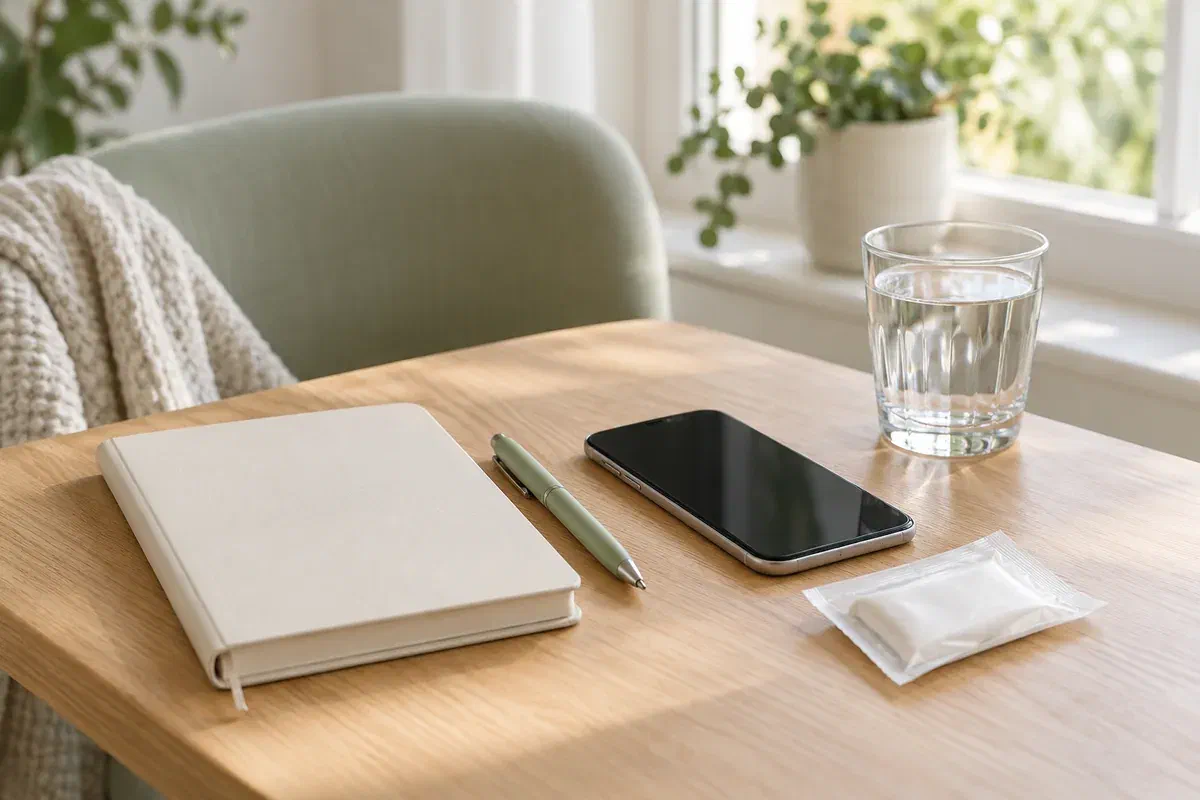
Illustrative follow-up notebook and phone beside water and packaged gauze
What to watch at the graft and beyond

Signs worth reporting during the first weeks

Call when something may need prompt attention; an email might not be seen soon enough. Mention any serious symptom at the very start.

Increasing pain, swelling, bleeding or fever

Say whether symptoms at the graft or the palate are getting worse, and whether you have a temperature, difficulty opening or trouble drinking. Describe ongoing bleeding separately from a pink tinge. A scheduled check does not mean waiting if things change markedly.

A shifted dressing, loose graft or altered feeling

Mention if a protective covering has moved, a stitch has come loose, the graft looks different or an area feels numb or tingly. Give the day you noticed it and what the periodontist said was normal. Avoid lifting the lip or touching the site; the clinician can choose advice, an exam or contact with your periodontist.

Medicine or rinse instructions that confuse you

Tell us which medicines and rinses you have used and which instruction is unclear. Report a rash, nausea, unusual sleepiness or any possible reaction. Do not change doses, add products or use someone else's prescription while you wait.

Some symptoms are for 911, not a dental office: bleeding that keeps going despite following your instructions, fast-spreading swelling, difficulty breathing or swallowing, a serious allergic response, or someone who will not wake normally after sedation.

Why a careful look helps

Knowing whether the graft is on track, without disturbing it

A gentle review can tell you whether the change seems to fit ordinary healing, needs some treatment, or cannot be judged yet without the surgical team's input. Ask what was seen, how certain the conclusion is and what is still unknown. If the periodontist's notes or opinion are needed, find out how they will be obtained and what you should do meanwhile.

Gum surgery often comes with several follow-ups: stitch removal, a check on the graft, guidance on returning to brushing, and sometimes a later stage of treatment. These may involve different offices. Confirm who is in charge of each, so that a graft that feels settled does not mean an important check or step gets missed.

An assessment that respects the graft

The clinician can look at the graft and any donor site without unnecessary disturbance, and relate what is seen to the procedure. Ask whether the concern is local or needs a wider check. A photo may help, but it cannot answer every question about a graft.

Clarity on brushing, rinsing and eating

Graft aftercare is often stricter than extraction aftercare. Bring your written instructions and point out anything unclear or that conflicts with other advice. The treating team can confirm the routine intended for your surgery.

A timeline and an escalation point

Ask what the graft should look and feel like over the coming days, which signs mean calling again, and whether a visit is booked. Note how to contact help after hours. That is clearer than being told only to leave it alone and wait.

How we handle a graft concern

Gather, judge, examine gently, coordinate.

You do not need the exact name of the procedure. Share the date, who did it and what you are noticing, and bring any instructions or records.

  1. Understand the surgery

    We ask where the graft was placed, whether tissue came from the palate or another source, whether other work such as an implant was involved and whether you were sedated. Then we hear when the change started, how it has developed, your medicines and anything you have tried.

  2. Decide on the urgency

    We weigh severity and accompanying signs, not simply the number of days. Follow the advised timing and call again if things worsen. Serious medical warning signs need emergency help rather than a wait for a dental opening.

  3. Examine carefully and explain

    When you are seen, the clinician checks the graft, donor area and surrounding tissue with care, and may request records or other investigation. Ask whether a specific cause was found and how it would be addressed. Symptom relief and treating a cause should be clearly separated.

  4. Coordinate with your periodontist

    Confirm changes to aftercare, any treatment and the purpose of the next review. Graft concerns often need the original team, so agree on who will contact them. A short written note keeps every part of follow-up visible.

Protecting the graft in the meantime

No peeking, no pulling, no new routines.

The graft instructions you went home with still apply until your periodontist or another treating clinician adjusts them. If something is unclear or hard to follow, call before adapting it.

Leave the lip and the graft alone

Do not stretch the lip or cheek to look, lift a dressing or remove stitches. Avoid brushing or chewing on the area if you were told to. If something seems loose, call and describe it. Advice that suits a routine extraction is not necessarily right for a graft.

Check medicines and rinses before changing them

Raise any suspected reaction or prescription question with the provider first, and do not add a new rinse without asking. If you were sedated, follow the rules about transport and supervision. Feeling well does not by itself mean driving or work is appropriate yet.

Describe rather than inspect

Write down when symptoms change and what you took or did on advice. Bring the note to your review. You do not need to check the graft visually or disturb it for a photo; telling us what you feel is enough.

Patient information: Guy's and St Thomas' — procedure-specific gum-surgery recovery and review · Guy's and St Thomas' — protecting a gum graft during recovery

What the review might recommend

Patience with a plan, local care, or the graft surgeon

Ask why a particular response fits what was found and what would shift the plan. Comforting words and medicine each need to be justified by the assessment.

When the graft appears to be healing

Continued protection and a follow-up

The clinician may explain what normal graft healing looks like and answer questions about food, cleaning and activity. Ask what signs to watch and when to return. Reassurance is most valuable with specific instructions and a simple way to report a change.

When the exam finds something to address

Care for a problem that was identified

Depending on the findings, a dressing review, local care or another step may help. Find out what it is meant to achieve and whether more care will follow. If medicine is suggested, it should suit the diagnosis and your health.

If the graft details or severity need another provider

Your periodontist or urgent care

Graft concerns, implants and ongoing altered sensation are often best assessed by the surgeon who did the work. Severe symptoms may need immediate medical attention. Agree on the urgency and the referral path before you leave.

Rockwood graft and gum surgery questions

What to ask while a graft heals

Answers depend on the procedure and your symptoms. Follow the graft instructions from your treating team, and phone about anything worsening or that cannot wait.

(905) 876-4488
The roof of my mouth hurts more than the graft. Is that expected?
If tissue was taken from the palate, that area can be sore during healing. Mention how strong the pain is, whether there is bleeding and whether it is easing. The team can tell you whether it needs to be seen.
My graft looks pale or white. Should I be concerned?
Graft tissue can change colour as it heals, but appearance alone is hard to judge. Describe it along with any pain, swelling or bleeding, and the clinician can decide whether an exam is needed. Avoid pulling the lip to look again.
When can I start brushing near my gum graft again?
Follow the timeline in your written instructions, which often differs from other procedures. Ask the treating team before resuming brushing on that area, and use any alternative cleaning they recommend.
Is the protective covering supposed to fall off on its own?
That depends on the type used. Ask your periodontist what to expect. If it comes off earlier than you were told or the area is sore or bleeding, call and describe it rather than replacing it.
Should I call you from Rockwood or the periodontist who did my graft?
Contact the periodontist first if you can, since they know the details. If you cannot reach them and are worried, call us to talk through urgency. For emergency warning signs, call 911.
Can I eat normally on the other side of my mouth after a graft?
Follow your diet advice, which usually includes avoiding chewing on the grafted side for a time. Ask the team what textures and foods suit your stage of healing.
Help after gum surgery for Rockwood

Tell us about the graft before anyone touches it.

Call (905) 876-4488 to reach our Bronte Street practice, describe the change and ask what assessment times are available. If a periodontist or another office did your surgery, contact them too and pack their written graft instructions for the appointment.

Our advice and the timing of any visit depend on what was done, what you are feeling and your medical history. Web forms are for non-urgent matters only and must never delay emergency care.

Visit Milton Dental Clinic
Unit 1, 342 Bronte St. S, Milton, ON L9T 5B7
Get directions Clinic hours
Monday–Thursday
11am–7pm
Friday–Sunday
By appointment only

Areas we serve

  • Milton
  • Oakville
  • Mississauga
  • Georgetown
  • Halton Hills
  • Acton
  • Campbellville
  • Brampton
  • Burlington
  • Puslinch
  • Rockwood
  • Erin
  • Caledon
  • Etobicoke
  • Old Milton
  • Bronte Meadows
  • Timberlea
  • Dorset Park
  • Dempsey
  • Clarke
  • Beaty
  • Coates
  • Harrison
  • Scott
  • Willmott
  • Ford
  • Bowes
  • Cobden
  • Walker
  • Mountain View
  • Milton Heights
  • Hawthorne Village
  • Valley View
  • Fallingbrook
  • Nassagaweya
  • Trafalgar
  • Esquesing
  • Nelson
  • Brookville
  • Moffat
  • Glen Williams
  • Norval
  • Limehouse
  • Stewarttown
  • Ashgrove
  • Hornby
  • Silver Creek
  • Speyside
  • Scotch Block
  • North Oakville
  • River Oaks
  • Glen Abbey
  • West Oak Trails
  • Palermo
  • Bronte Creek
  • College Park
  • Joshua Creek
  • Uptown Core
  • Preserve
  • Iroquois Ridge
  • Lisgar
  • Meadowvale
  • Meadowvale Village
  • Churchill Meadows
  • Erin Mills
  • Central Erin Mills
  • Streetsville
  • East Credit
  • Creditview
  • Heartland
  • Sheridan
  • Mount Pleasant
  • Credit Valley
  • Huttonville
  • Churchville
  • Springbrook
  • Northwest Brampton
  • Bram West
  • Fletcher's Meadow
  • Fletcher's Creek South
  • Alton Village
  • Orchard
  • Millcroft
  • Headon Forest
  • Tansley
  • Brant Hills
  • Tyandaga
  • Kilbride
  • Lowville
  • Aberfoyle
  • Morriston
  • Arkell
  • Hillsburgh
  • Freelton
  • Carlisle
  • Waterdown
  • Flamborough
  • Mountsberg

How can we help?

Milton Dental Clinic

Have a question about your smile? Choose the option that works best for you.

For urgent dental concerns, please call.
Messages are reviewed during clinic hours.