

Illustrative conversation about preparing the mouth for a dental prosthesis
Specialized Care

Pre-Prosthetic Oral Surgery in Burlington

Facing extractions and a first denture is a lot to take in. If you are coming from Burlington, we can explain when shaping the ridge or gums is part of that plan, when it isn’t, and how healing leads to a replacement that suits you.

First dentures, planned from Burlington

Think about the denture before the teeth come out.

For many people, the move to a denture begins with a recommendation to remove the teeth that remain. It is natural to focus on the extractions themselves. Yet the shape of the ridge left behind will become the base for the new appliance, which is why the replacement should be part of the discussion from the very first visit.

Pre-prosthetic oral surgery covers a handful of procedures used when a feature of the bone or gum would interfere with that appliance, such as a sharp edge, an uneven area or excess tissue. Sometimes this is discussed alongside extractions; often it is not needed at all. Simply having teeth removed does not mean extra surgery is required.

Bring any partial denture you wear, recent X-rays and the treatment plan you have been given. Our team can explain what the examination suggests, how it fits the denture you are hoping for, and whether a surgeon or the clinician making the appliance should be consulted before dates are set.

Plan your first denture with us
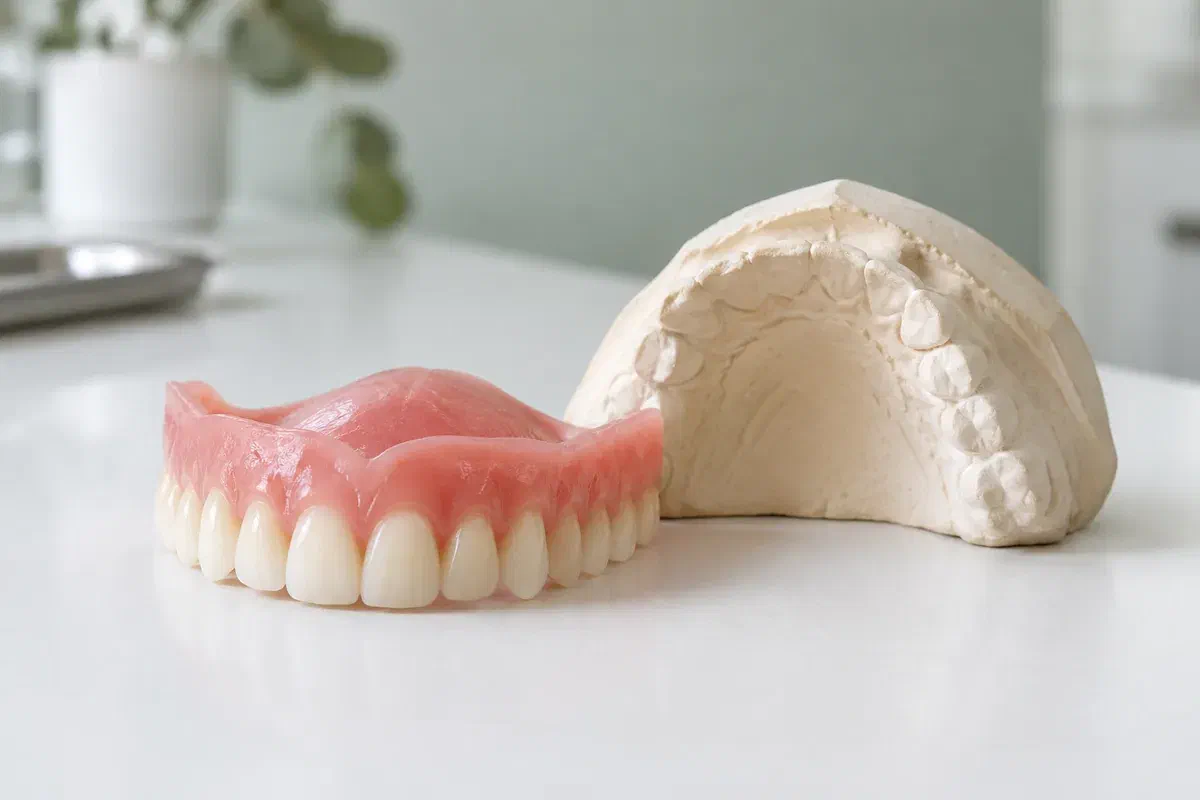
Illustrative denture and dental cast used to explain restorative planning
Questions at the planning stage

What could make the new denture harder to wear?

Share what worries you about the transition. Talking about eating, speaking and comfort lets the clinician connect the examination to goals you care about, instead of judging the ridge in isolation.

Sore spots under a current partial denture

If a partial already presses somewhere, mention it and say whether adjustment helped. The bone in that area may be prominent or irregular, though the appliance and gum need checking as well. That history can matter when a full denture is designed for the same ridge.

Gum features that may affect a full denture

Tissue folds, muscle or frenum attachments and areas irritated by an existing appliance can all influence how a full denture sits. Ask what the finding would mean for the design and whether it should be checked again after healing. Many tissue variations need no treatment.

Extractions, surgery and denture work in different hands

Removal of teeth, any preparation and the denture itself may involve different clinicians. Ask who is leading the plan and what records each person needs. The order of procedures should support the agreed replacement, with one person confirming readiness before impressions.

A lasting sore, a lump that is enlarging or any unexplained change in the tissues needs separate assessment. Don’t assume it is part of the extraction process or something the new denture will simply cover.

The advantage of planning ahead

A ridge prepared with a purpose

If preparing the ridge is recommended, you should hear how it relates to the denture that will rest on it. Ask what specific feature is being addressed, what difference it should make and what challenges will remain. Even a smooth, well-healed ridge doesn’t determine every detail of how the finished appliance fits or looks.

Planning also helps with the gap between losing teeth and wearing the final denture. Ask whether an immediate or temporary appliance is part of the plan, how it may need relining as the gums settle, and what changes if healing takes longer. That makes it easier to prepare for meals, work and social plans.

Patient information: AAOMS — preparation before fitting a dental prosthesis

Knowing which area matters and why

Ask the clinician to point out the feature on examination, a model or an image. Find out whether the concern is bone, soft tissue or both. Understanding it lets you compare preparation with other approaches and ask clearer questions.

A sequence everyone agrees on

The extractions, any preparation and the denture should follow one plan. Ask who is keeping track of records, design needs and follow-up visits, particularly if a specialist or a separate denture provider is involved.

Expectations that suit a first-time wearer

A first denture takes time to get used to, whatever preparation is done. Discuss stability, comfort, cleaning and relines as separate topics. Ask what can be estimated now and what you will only know after a period of wearing the appliance.

The planning sequence

Map the route from extraction to fitting.

Ask your questions about extractions, preparation and the denture together. If any step is unclear, get it explained before the first procedure is booked.

  1. Discuss your goals for the replacement

    Describe what you want from the denture, any appliance you wear now and the problems you have had. Share medical history, medications and earlier oral surgery. Mention if frequent visits would be hard, so the plan can take that into account from the start.

  2. Examine the teeth, ridge and supporting gum

    The clinician looks at what remains and decides whether imaging or another opinion would help answer a particular question. Ask which findings matter for the future denture. Existing X-rays from another office may be useful, so bring them or ask that they be sent.

  3. Decide what happens at each stage

    Go over whether preparation would be done with the extractions, separately or not at all, and whether a specialist should be involved. Review the change intended, the key risks, pain management, alternatives and recovery. Ask how the plan would adapt if something unexpected is found.

  4. Plan healing, temporary teeth and the final denture

    Agree who will check healing and decide when the ridge is ready. Get instructions on wearing any immediate appliance, cleaning and eating. Ask whether impressions for the final denture depend on that review rather than a fixed number of weeks.

Early recovery

New gums, new routines

What you do after the procedure depends on what was done and whether an immediate or temporary denture is in place. Follow the written instructions from your treating clinician rather than general denture advice.

Wear an immediate denture exactly as directed

Some people are asked to leave an immediate denture in for a set time, others to take it out at certain points. Follow the guidance you were given and report pressure spots. Don’t try to adjust the appliance yourself as the gums change shape.

Care for the healing ridge and choose soft foods

Ask which areas to brush, how to keep the surgical site clean and when firmer foods can return. Let the team know if discomfort is making it hard to eat or drink. Use only the medicines and rinses recommended for your procedure.

Keep follow-up visits as the gums settle

Reviews may check healing, how the temporary appliance sits and when the final denture can be started. Bring the appliance and describe any spots that feel tender. If another provider is making the final denture, ask what information they need.

Possible approaches

Preparation only where it earns its place

Each option should connect a finding with what the denture needs. Ask what each would involve, its limits and whether it affects the order, timing or cost of your treatment.

When the appliance can accommodate the shape

Designing the denture around the ridge

Many ridges can be fitted well without surgical change. Ask whether design choices, an immediate denture with later relines or a different appliance would work for you. The answer depends on the condition of your mouth, not just on how many teeth are being removed.

When a feature would interfere with the fit

Smoothing or contouring a specific area

Some plans include smoothing sharp or uneven bone or removing excess tissue, either with extractions or afterwards. Ask what will be changed and why. The goal is a ridge that supports the agreed denture while preserving as much useful bone as possible.

When anatomy or goals call for wider planning

Referral or a different type of replacement

More complex situations may justify a specialist opinion or discussion of other replacement options. Ask how a different design might suit you and what further assessment it would need. Referral should clarify your choices, not expand treatment without reason.

First denture questions

What people want to know before extractions and a denture

Bring your treatment plan and any appliance you wear now. These answers give general guidance; your plan depends on examination and the denture you choose.

(905) 876-4488
Is ridge smoothing usually done at the same time as extractions?
It can be, when a specific sharp or uneven area is expected to interfere with the denture. In many cases no separate smoothing is needed. Ask whether it is planned, why, and what difference it is expected to make.
What is an immediate denture, and how does it relate to surgery?
An immediate denture is made in advance and placed when teeth are removed, so you are not without teeth during healing. As the gums settle it often needs relining or replacing. Whether any preparation is done at the same visit depends on your examination.
Why might my gums change shape after teeth are removed?
The bone and gum remodel as extraction sites heal, especially in the first months. That is why temporary appliances often need adjustment and why final impressions are usually timed around healing. The clinician will advise when the ridge is stable enough.
Will I need more than one procedure before the final denture?
Not necessarily. Some people have extractions and go straight to an immediate denture with later relines. Others need a further step if a feature remains that would affect the fit. Ask for the full expected sequence at the start, along with what could change it.
Does preparation make it easier to get used to a first denture?
It may help if a specific feature would otherwise cause soreness or instability. It does not remove the normal adjustment period. Learning to eat and speak with a new denture still takes practice, and follow-up adjustments are common.
How should I plan appointments from Burlington around healing?
Ask for a written outline of which visits are fixed and which depend on healing. Grouping reviews where possible helps, but leave room to come in sooner if a sore spot or other concern appears.
Planning from Burlington

Start the denture conversation before extractions.

Tell us what replacement you are considering and what has already been recommended. We can review your records, explain the stages and discuss how care would be coordinated.

Recommendations, including any specialist referral, are made after examination.

Visit Milton Dental Clinic
Unit 1, 342 Bronte St. S, Milton, ON L9T 5B7
Get directions Clinic hours
Monday–Thursday
11am–7pm
Friday–Sunday
By appointment only

Areas we serve

  • Milton
  • Oakville
  • Mississauga
  • Georgetown
  • Halton Hills
  • Acton
  • Campbellville
  • Brampton
  • Burlington
  • Puslinch
  • Rockwood
  • Erin
  • Caledon
  • Etobicoke
  • Old Milton
  • Bronte Meadows
  • Timberlea
  • Dorset Park
  • Dempsey
  • Clarke
  • Beaty
  • Coates
  • Harrison
  • Scott
  • Willmott
  • Ford
  • Bowes
  • Cobden
  • Walker
  • Mountain View
  • Milton Heights
  • Hawthorne Village
  • Valley View
  • Fallingbrook
  • Nassagaweya
  • Trafalgar
  • Esquesing
  • Nelson
  • Brookville
  • Moffat
  • Glen Williams
  • Norval
  • Limehouse
  • Stewarttown
  • Ashgrove
  • Hornby
  • Silver Creek
  • Speyside
  • Scotch Block
  • North Oakville
  • River Oaks
  • Glen Abbey
  • West Oak Trails
  • Palermo
  • Bronte Creek
  • College Park
  • Joshua Creek
  • Uptown Core
  • Preserve
  • Iroquois Ridge
  • Lisgar
  • Meadowvale
  • Meadowvale Village
  • Churchill Meadows
  • Erin Mills
  • Central Erin Mills
  • Streetsville
  • East Credit
  • Creditview
  • Heartland
  • Sheridan
  • Mount Pleasant
  • Credit Valley
  • Huttonville
  • Churchville
  • Springbrook
  • Northwest Brampton
  • Bram West
  • Fletcher's Meadow
  • Fletcher's Creek South
  • Alton Village
  • Orchard
  • Millcroft
  • Headon Forest
  • Tansley
  • Brant Hills
  • Tyandaga
  • Kilbride
  • Lowville
  • Aberfoyle
  • Morriston
  • Arkell
  • Hillsburgh
  • Freelton
  • Carlisle
  • Waterdown
  • Flamborough
  • Mountsberg

How can we help?

Milton Dental Clinic

Have a question about your smile? Choose the option that works best for you.

For urgent dental concerns, please call.
Messages are reviewed during clinic hours.