

Illustrative conversation about preparing the mouth for a dental prosthesis
Specialized Care

Pre-Prosthetic Oral Surgery in Caledon

It is tempting to hope one procedure will make a denture feel like natural teeth. For adults coming from Caledon, we explain honestly what preparing the ridge or gum can improve, what it can’t, and how to judge whether it is worth doing for you.

Honest expectations, Caledon

Better foundation, not a perfect denture

After months of a denture that slips or rubs, it is natural to want a single fix. Sometimes surgery is presented, or imagined, as that fix. The more useful way to think about it is narrower: a procedure can change one feature of the mouth that is getting in the way, and the denture still has to be designed, fitted and maintained well.

Pre-prosthetic oral surgery describes those targeted changes to the jawbone or gum, such as smoothing a sharp ridge, reducing excess tissue or releasing an attachment that lifts the appliance. It is considered when that feature would undermine the planned replacement. For many people, a better-fitting or redesigned denture brings more improvement than any operation would.

From Bolton or the smaller villages, start by bringing your current denture and any written proposal. Our team can explain what the examination shows, what difference surgery might realistically make and whether a specialist or the person making your appliance should weigh in. You can then compare that with what an appliance change alone could do.

Get a realistic assessment
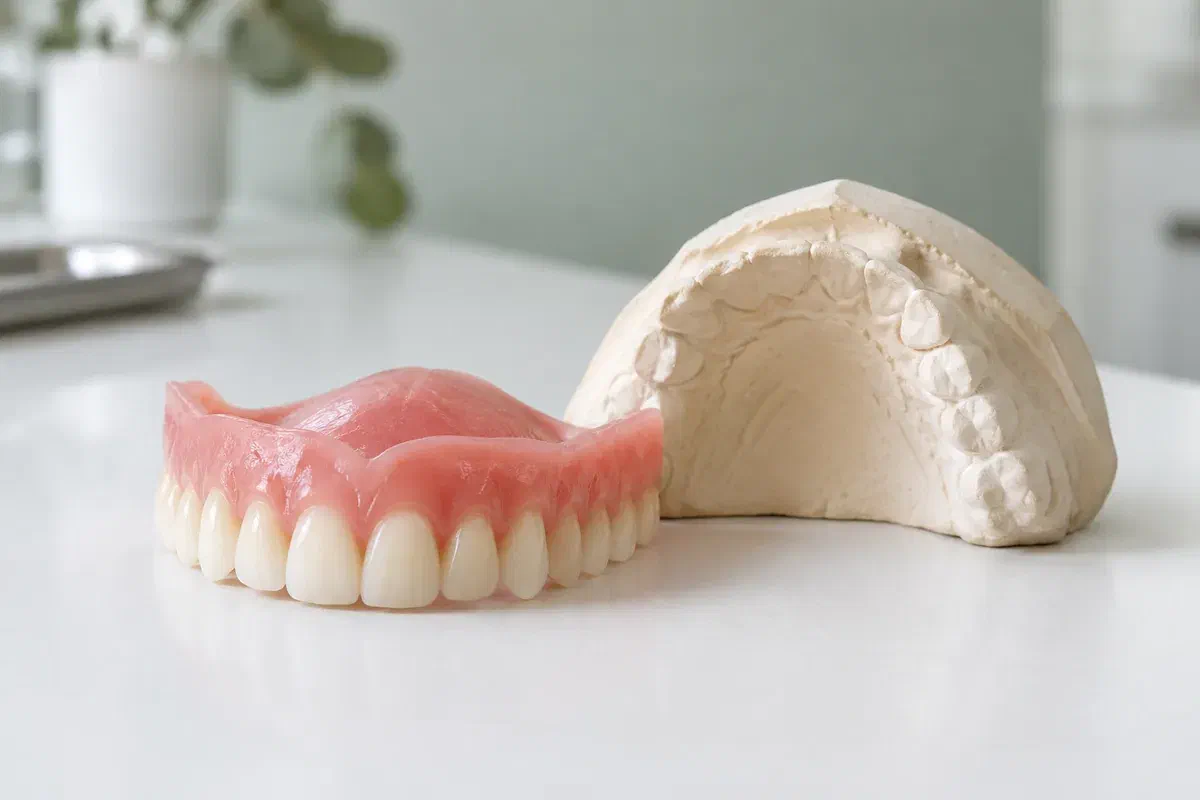
Illustrative denture and dental cast used to explain restorative planning
Frustrations people describe

What would ‘better’ look like for you?

Describe the difficulty and the change you are hoping for. A clear goal, like eating without soreness or speaking without slipping, lets the clinician tell you how much of it surgery could deliver.

A recurring sore spot

Point out where pressure builds and whether past adjustments have helped. A prominent or sharp ridge may be part of the reason, though fit and gum health also matter. Bring the appliance, even a retired one, so the source can be traced.

A denture that won’t stay put

Movable tissue, a high muscle attachment or a ridge reshaped by years of wear can all reduce stability. Ask how much a given finding is contributing, and whether the tissue should be reassessed after irritation calms. Some looseness has causes surgery can’t address.

Surgery proposed as the answer

If you have been told surgery will solve your denture problems, bring the recommendation and ask what each provider needs to share. The procedure should support an agreed replacement. Ask who will confirm healing before impressions, and what improvement they expect.

Not every problem under a denture is about fit. A persistent ulcer, a growing lump or an unexplained tissue change should be examined promptly and separately, not assumed to be irritation that surgery or a new appliance will fix.

What preparation can offer

Real gains, clearly defined

If surgery is right for you, its value should be described in terms of the specific prosthesis. Ask what obstacle it removes, how much improvement is realistic and what limitations will remain. Reshaping tissue improves the base; it doesn’t by itself guarantee comfort, stability or appearance, and the final appliance still needs careful design and follow-up.

Clear expectations extend to the healing period, too. Ask whether your current denture can be worn, whether it will need altering and how the plan shifts if recovery is slower. Knowing this helps you plan meals, work and any temporary arrangement, and avoids disappointment if the timeline changes.

Patient information: AAOMS — preparation before fitting a dental prosthesis

A specific target for the procedure

Ask the clinician to show you the feature to be treated, using your mouth, a model or an image if one is appropriate. Find out whether bone, soft tissue or something else is involved, and how much of your current problem it explains.

One plan for preparation and prosthesis

The clinician preparing the area and the one making the replacement should agree on the expected outcome. Ask who coordinates records, design needs and review visits, especially if a specialist or a separate denture provider is involved.

Expectations you can check later

Discuss stability, comfort, cleaning and future adjustments as separate goals. Surgery may improve one while others depend on the appliance. Ask which can be estimated before treatment and which you will only judge once the new denture has been worn for a while.

Making a measured decision

Define the goal, test the simple options, then decide.

Discuss surgery and the replacement together, along with what each could realistically achieve. If anything is uncertain, ask before a procedure is booked.

  1. Describe the problem and what you hope will change

    Talk through the teeth being replaced, your current appliance, earlier adjustments and your goals. Share medical history, medicines and any earlier oral surgery. Mention if several appointments would be hard to attend.

  2. Examine the mouth and the denture together

    The clinician checks the supporting tissues, how the appliance sits and your bite, then decides whether imaging or another opinion would help settle the question. Ask which finding contributes most to your difficulty.

  3. Compare what each option could achieve

    Weigh adjustment, redesign, surgery or referral, and the likely improvement from each. If surgery is proposed, review the intended change, material risks, pain control, alternatives and recovery. Ask what would happen if new findings shift the plan.

  4. Plan the healing check and the new appliance

    Agree who will examine the treated area and confirm it is ready. Take home written guidance on appliance wear, cleaning, food and contact. Expect impressions to be timed by healing, not by a date chosen in advance.

Through the healing phase

Careful recovery protects what the procedure achieved.

What you do afterwards depends on the work done and whether an appliance is worn. Follow your clinician’s written instructions instead of returning straight to your usual denture habits.

Wear an appliance only as instructed

Your old or interim denture may be adjusted, lined or limited to certain hours. Ask before putting it over the healing area, and report pressure promptly. Don’t reshape it yourself, as healing tissue may no longer match its old fit.

Follow cleaning and eating guidance closely

Your instructions should say which parts of the mouth can be brushed as usual, what to do around the treated area and how long to stay with softer food. If discomfort or an interim appliance is making meals a struggle, tell the team rather than waiting it out. Stick to the medicines and rinses prescribed for this procedure, even if you have others at home from earlier treatment.

Use the review to check progress

The follow-up may assess healing, appliance contact and readiness for the new denture. Bring the appliance and mention what feels different. If someone else is making the prosthesis, ask what information should be sent to them.

Weighing the realistic choices

Which option gets you closest to your goal?

Each choice should link a finding to a need of the replacement. Ask what it involves, how much improvement to expect, its limits and how it affects the order or cost of treatment.

When the appliance is the main limitation

A better-fitting or redesigned denture

Adjusting, relining, remaking or redesigning the denture may deliver much of the improvement you want. Ask what your examination suggests. The choice depends on the condition of your mouth and appliance, not simply its age.

When a defined feature limits any denture

Targeted ridge or gum preparation

Selected cases involve smoothing an irregular ridge or reducing excess tissue. Ask exactly what would be changed, how much difference it should make and what risks are involved. Useful support should be preserved.

When goals go beyond what a denture can offer

Specialist opinion or a different replacement

If your expectations, such as greater stability, exceed what a conventional denture can provide, referral or a different type of prosthesis may be worth discussing. Ask what further assessment it would involve. A specialist should help clarify, not expand, your choices.

Expectations and limits

What surgery can and can’t do for a denture

Bring your appliance and any written proposals. These answers are general; what is realistic for you depends on examination and the replacement chosen.

(905) 876-4488
Will pre-prosthetic surgery make my denture feel like natural teeth?
No procedure can do that. Surgery can address a specific feature that causes soreness or instability, but a removable denture will still feel different from natural teeth. Ask what improvement is realistic for your situation.
Why might my denture still move after the ridge is prepared?
Stability depends on several factors: the remaining bone, the tissue, the denture design, your bite and changes over time. Preparation may improve one of these, but others may still limit how firmly the appliance stays in place. Lower dentures in particular tend to move more than upper ones, because there is less surface for them to rest on.
Could a new denture alone solve the problem?
In many cases, it can. A well-fitting, carefully designed appliance often resolves soreness and looseness without surgery, particularly when the old denture was made for a ridge that has since changed. Ask whether your examination points to the appliance, the tissue or both, and what a new denture alone would be expected to improve.
How will I know whether the surgery was worthwhile?
Agree before treatment on the specific goal, such as fewer sore spots in one area. After the new denture has been worn for a while, that goal can be reviewed together. Some outcomes only become clear with time, and minor adjustments in the first months are a normal part of settling in rather than a sign that the procedure failed.
Are there options that offer more stability than a conventional denture?
For some people, implant-supported options can offer greater stability, though they involve their own surgery, assessment and costs. Whether they suit you depends on your anatomy, health and preferences. Ask whether a referral to discuss them makes sense.
Is it worth the drive from Caledon for an assessment of realistic outcomes?
If you are unsure whether surgery is worth it, an assessment focused on realistic expectations can help you decide. Bring your appliance and any proposals so the visit covers everything at once.
From Caledon

Bring your goal, and we’ll be honest about the path.

Tell us about the replacement you are considering and any surgery that has been proposed. We can explain the findings, discuss what is realistic and outline how the stages would be coordinated.

What we recommend, including referral, depends on your examination.

Visit Milton Dental Clinic
Unit 1, 342 Bronte St. S, Milton, ON L9T 5B7
Get directions Clinic hours
Monday–Thursday
11am–7pm
Friday–Sunday
By appointment only

Areas we serve

  • Milton
  • Oakville
  • Mississauga
  • Georgetown
  • Halton Hills
  • Acton
  • Campbellville
  • Brampton
  • Burlington
  • Puslinch
  • Rockwood
  • Erin
  • Caledon
  • Etobicoke
  • Old Milton
  • Bronte Meadows
  • Timberlea
  • Dorset Park
  • Dempsey
  • Clarke
  • Beaty
  • Coates
  • Harrison
  • Scott
  • Willmott
  • Ford
  • Bowes
  • Cobden
  • Walker
  • Mountain View
  • Milton Heights
  • Hawthorne Village
  • Valley View
  • Fallingbrook
  • Nassagaweya
  • Trafalgar
  • Esquesing
  • Nelson
  • Brookville
  • Moffat
  • Glen Williams
  • Norval
  • Limehouse
  • Stewarttown
  • Ashgrove
  • Hornby
  • Silver Creek
  • Speyside
  • Scotch Block
  • North Oakville
  • River Oaks
  • Glen Abbey
  • West Oak Trails
  • Palermo
  • Bronte Creek
  • College Park
  • Joshua Creek
  • Uptown Core
  • Preserve
  • Iroquois Ridge
  • Lisgar
  • Meadowvale
  • Meadowvale Village
  • Churchill Meadows
  • Erin Mills
  • Central Erin Mills
  • Streetsville
  • East Credit
  • Creditview
  • Heartland
  • Sheridan
  • Mount Pleasant
  • Credit Valley
  • Huttonville
  • Churchville
  • Springbrook
  • Northwest Brampton
  • Bram West
  • Fletcher's Meadow
  • Fletcher's Creek South
  • Alton Village
  • Orchard
  • Millcroft
  • Headon Forest
  • Tansley
  • Brant Hills
  • Tyandaga
  • Kilbride
  • Lowville
  • Aberfoyle
  • Morriston
  • Arkell
  • Hillsburgh
  • Freelton
  • Carlisle
  • Waterdown
  • Flamborough
  • Mountsberg

How can we help?

Milton Dental Clinic

Have a question about your smile? Choose the option that works best for you.

For urgent dental concerns, please call.
Messages are reviewed during clinic hours.