

Illustrative conversation about preparing the mouth for a dental prosthesis
Specialized Care

Pre-Prosthetic Oral Surgery in Erin

Most of the healing after surgery for a denture happens at your kitchen table and bathroom sink, not in the dental chair. From Erin or Hillsburgh, learn when this preparation is advised and how to set up a home routine that supports recovery.

Erin · the home side of healing

The real work of recovery happens at home.

When people imagine surgery before a new denture, they tend to picture the procedure. In practice, the days and weeks afterwards shape the experience just as much: what you eat, how you clean, whether you can wear an appliance and how you recognise a problem early. Planning for that part is as important as planning the surgery.

Of course, surgery has to be the right choice first. Pre-prosthetic oral surgery is a targeted change to the bone or gum when a specific feature, perhaps a sharp ridge, excess tissue or an attachment that lifts the appliance, would get in the way of the planned replacement. Many denture problems are fixed by changing the appliance and never reach that point.

Bring the denture you wear now, a list of your medicines and any plan from another office. Our team can talk through the examination, explain how it relates to the replacement you want and whether anyone else, such as a surgeon or your denture provider, needs to be in the loop. We will also go over what recovery at home would involve.

Ask about preparation and recovery
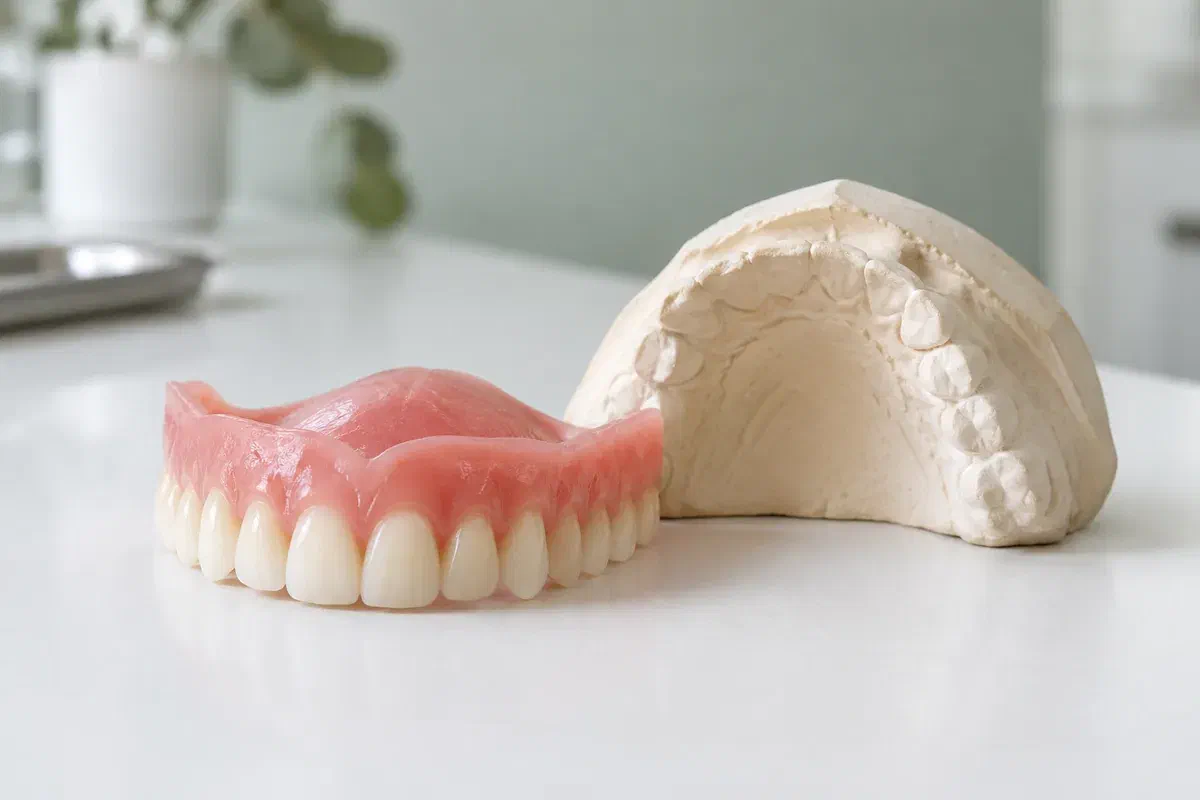
Illustrative denture and dental cast used to explain restorative planning
Why people start asking

Daily routines that have become a struggle

Tell us which parts of your day the denture makes harder, whether it is breakfast, a conversation or cleaning before bed. Those details give the examination a practical focus.

Meals cut short by a sore spot

Say where pressure builds while eating and whether adjustments have helped. A prominent area of bone may be one reason; the appliance and the gum also need checking. Bring the denture, even if it now spends mealtimes in a cup.

Gum that is hard to keep comfortable

Folds, movable tissue or areas irritated by an old denture can make cleaning and wearing uncomfortable. Ask what a finding would change about a new design, and whether it might settle with a rest from pressure. Many tissue differences need no surgery.

A recommendation that came with few details

If you have been told to have surgery before a denture is made, bring the advice and ask what each provider needs to share. The procedure should serve an agreed replacement. Ask who will tell you when healing is complete and impressions can be taken.

A sore that lingers, a lump that is getting bigger or a change you can’t explain should be checked separately, before it is folded into a denture plan. Don’t assume a home remedy or a new appliance will take care of it.

Why a full plan makes home recovery easier

Know what to expect before the first night at home.

When surgery is suitable, its value should be explained against the prosthesis that comes next. Ask which obstacle it removes, what improvement is realistic and what will stay the same. A prepared ridge is a better foundation, but the fit, look and daily care of the final appliance are still worked out in later steps.

A clear plan also takes the uncertainty out of the healing weeks. Ask whether you can wear your current denture, whether it will be modified and what changes if healing takes longer. With that in hand, you can stock the kitchen, arrange help if you need it and know whether to expect a temporary appliance.

Patient information: AAOMS — preparation before fitting a dental prosthesis

Seeing the feature for yourself

Ask the clinician to show you what needs attention, using a mirror, a cast or an image where justified. Learn whether it involves bone, gum or something else. That makes it easier to judge the alternatives.

Providers who agree on the result

If one person prepares the ridge and another makes the denture, they should share records and the same goal. Ask who books reviews and who to call with questions, especially if a specialist is part of the plan.

Expectations for daily life with the new appliance

Consider stability, comfort, cleaning and later adjustments separately. Surgery may help with one limitation, but wearing a removable denture still involves a routine of care. Ask what can be predicted and what you will only know once the new appliance is in use.

How it comes together

Plan the denture, the procedure and the recovery as one.

Ask about surgery, the replacement and aftercare in one discussion. If something is unclear, get it answered before anything is scheduled.

  1. Talk about your goals and your household

    Explain the teeth being replaced, the appliance you have, past adjustments and what you want to improve. Share health conditions and medicines. Mention whether someone can help at home after a procedure, and if frequent visits would be hard.

  2. Assess the ridge, gum and current appliance

    The clinician examines the tissues and the denture, then decides whether imaging or another opinion would help with a specific decision. Ask which finding matters most, and whether earlier records can be used.

  3. Review the choices and what recovery involves

    Compare adjustment, redesign, surgery or referral. If surgery is suggested, go over the change intended, material risks, pain control, alternatives and the recovery you can expect at home. Ask what would happen if findings during treatment differ.

  4. Leave with written home-care instructions

    Agree who will review healing and decide when the next stage can begin. Take home written guidance on appliance use, cleaning, food and contact. Ask whether impressions depend on that review rather than a set date.

Your recovery routine

Kitchen, sink and bedside: what changes for a while

The details depend on the procedure and whether an appliance is worn during healing. Follow your clinician’s written instructions rather than slipping back into an old denture routine.

At the bedside: when the appliance comes out

You may be asked to wear an existing or temporary denture only at certain times, or to leave it out overnight. Ask before placing it over the treated area, and tell us if it rubs. Leave any reshaping to the team.

At the sink: gentle, site-specific cleaning

Find out which areas to brush, how to clean around the surgical site and how to care for the appliance itself. Use rinses and medicines exactly as prescribed for your procedure, not leftovers from another treatment.

At the table: soft meals until you’re cleared

Ask when firmer food can return and which textures to avoid at first, such as crusty bread or small seeds. Tell the team if eating or drinking enough is becoming difficult. At the review, bring the appliance and describe what feels different, so the next stage can be planned.

Choices to discuss

Easier options often mean an easier recovery.

Each option should tie an examination finding to what the replacement needs. Ask what it involves, its limits and how it affects the length of recovery and cost of treatment.

When the denture can be made to work

Improving the appliance

Adjusting, relining, remaking or redesigning the denture may solve the problem with little or no recovery time. Ask which suits your mouth and appliance. The choice depends on their condition, not just the denture’s age.

When one feature keeps getting in the way

Preparing a specific ridge or gum area

Smoothing an irregular ridge or reducing excess tissue may be suggested in selected cases. Ask what would be changed and why that extent. The aim is a better base for the agreed replacement, preserving useful support, with risks discussed.

When the situation needs broader planning

A specialist opinion or another prosthesis

More complex anatomy or goals may justify referral or a different type of replacement. Ask what further assessment would be involved and how it changes the overall plan. A specialist should clarify choices rather than add procedures.

Home recovery questions

Eating, cleaning and sleeping after preparation surgery

Bring your appliance and any written plans. These answers are general; your instructions will depend on the procedure and the replacement chosen.

(905) 876-4488
What should I eat in the first few days after ridge or gum surgery?
Soft, cool or lukewarm foods that need little chewing are usually easiest. Your clinician will tell you when to move on to firmer textures, based on the procedure and whether you are wearing an appliance. Stocking a few options before the procedure, such as soups, yogurt, eggs and soft cooked vegetables, saves a trip to the store while you are sore.
How do I clean my mouth without disturbing the surgical site?
Follow the specific instructions you are given. You may be asked to avoid brushing the treated area for a time while keeping the rest of your mouth clean. Ask about rinses and when normal brushing can resume.
Should I sleep with my denture in after surgery?
That depends on your procedure and instructions. Some people are asked to keep an appliance in for a set time at first, others to remove it overnight. Ask before your procedure so you know what to expect.
Does the denture itself need different cleaning while I heal?
Ask whether any change to your usual cleaning method is needed, particularly if the appliance has been modified or a soft lining added, since some cleaners and brushes can damage a lining. Gentle cleaning helps protect both the appliance and the healing tissue, and keeping it clean also reduces irritation where it rests on the gum.
When can I return to my usual routine?
It varies with the procedure and how healing progresses. Your clinician will advise on eating, cleaning and appliance wear at each stage, and the review visit is usually when the next steps are confirmed.
Is it practical to recover at home in Erin and come in only for reviews?
For many people, yes. Ask for a clear list of which visits are needed and which depend on healing, and keep a contact number handy so you can call before deciding to make the trip.
Planning from Erin

Plan the procedure and the weeks that follow.

Let us know what replacement you have in mind and whether preparation has been proposed. We can review the findings, explain the stages and walk you through what recovery at home would involve.

Recommendations, and any referral, follow your examination.

Visit Milton Dental Clinic
Unit 1, 342 Bronte St. S, Milton, ON L9T 5B7
Get directions Clinic hours
Monday–Thursday
11am–7pm
Friday–Sunday
By appointment only

Areas we serve

  • Milton
  • Oakville
  • Mississauga
  • Georgetown
  • Halton Hills
  • Acton
  • Campbellville
  • Brampton
  • Burlington
  • Puslinch
  • Rockwood
  • Erin
  • Caledon
  • Etobicoke
  • Old Milton
  • Bronte Meadows
  • Timberlea
  • Dorset Park
  • Dempsey
  • Clarke
  • Beaty
  • Coates
  • Harrison
  • Scott
  • Willmott
  • Ford
  • Bowes
  • Cobden
  • Walker
  • Mountain View
  • Milton Heights
  • Hawthorne Village
  • Valley View
  • Fallingbrook
  • Nassagaweya
  • Trafalgar
  • Esquesing
  • Nelson
  • Brookville
  • Moffat
  • Glen Williams
  • Norval
  • Limehouse
  • Stewarttown
  • Ashgrove
  • Hornby
  • Silver Creek
  • Speyside
  • Scotch Block
  • North Oakville
  • River Oaks
  • Glen Abbey
  • West Oak Trails
  • Palermo
  • Bronte Creek
  • College Park
  • Joshua Creek
  • Uptown Core
  • Preserve
  • Iroquois Ridge
  • Lisgar
  • Meadowvale
  • Meadowvale Village
  • Churchill Meadows
  • Erin Mills
  • Central Erin Mills
  • Streetsville
  • East Credit
  • Creditview
  • Heartland
  • Sheridan
  • Mount Pleasant
  • Credit Valley
  • Huttonville
  • Churchville
  • Springbrook
  • Northwest Brampton
  • Bram West
  • Fletcher's Meadow
  • Fletcher's Creek South
  • Alton Village
  • Orchard
  • Millcroft
  • Headon Forest
  • Tansley
  • Brant Hills
  • Tyandaga
  • Kilbride
  • Lowville
  • Aberfoyle
  • Morriston
  • Arkell
  • Hillsburgh
  • Freelton
  • Carlisle
  • Waterdown
  • Flamborough
  • Mountsberg

How can we help?

Milton Dental Clinic

Have a question about your smile? Choose the option that works best for you.

For urgent dental concerns, please call.
Messages are reviewed during clinic hours.