

Illustrative conversation about preparing the mouth for a dental prosthesis
Specialized Care

Pre-Prosthetic Oral Surgery in Georgetown

Ridge smoothing, tissue removal, bone grafting: the terms blur together quickly when you are choosing new teeth. From Georgetown, get a plain explanation of what pre-prosthetic surgery is, what it isn’t, and how it depends on the replacement you pick.

Sorting out the terms, for Georgetown

The replacement you choose shapes the preparation you need.

People researching tooth replacement often meet a cluster of surgical terms at once. Some describe adding bone so an implant can be placed; others describe removing or reshaping tissue so a denture sits properly. They are not interchangeable, and hearing one of them in a consultation does not mean you need the others.

Pre-prosthetic oral surgery, in the sense used here, means a targeted change to the bone or gum before a denture or similar prosthesis is made, because a particular feature would otherwise get in its way. A sharp or bulky ridge, excess soft tissue and an attachment that dislodges the appliance are typical examples. Many people need none of it.

That is why the conversation starts with the replacement. Are you weighing a complete denture, a partial or an implant-supported option? Bring any current appliance and written plans. Our team can explain what the examination shows, how it relates to each type of replacement and at what point surgical or denture-making expertise would add something useful.

Talk through your replacement options
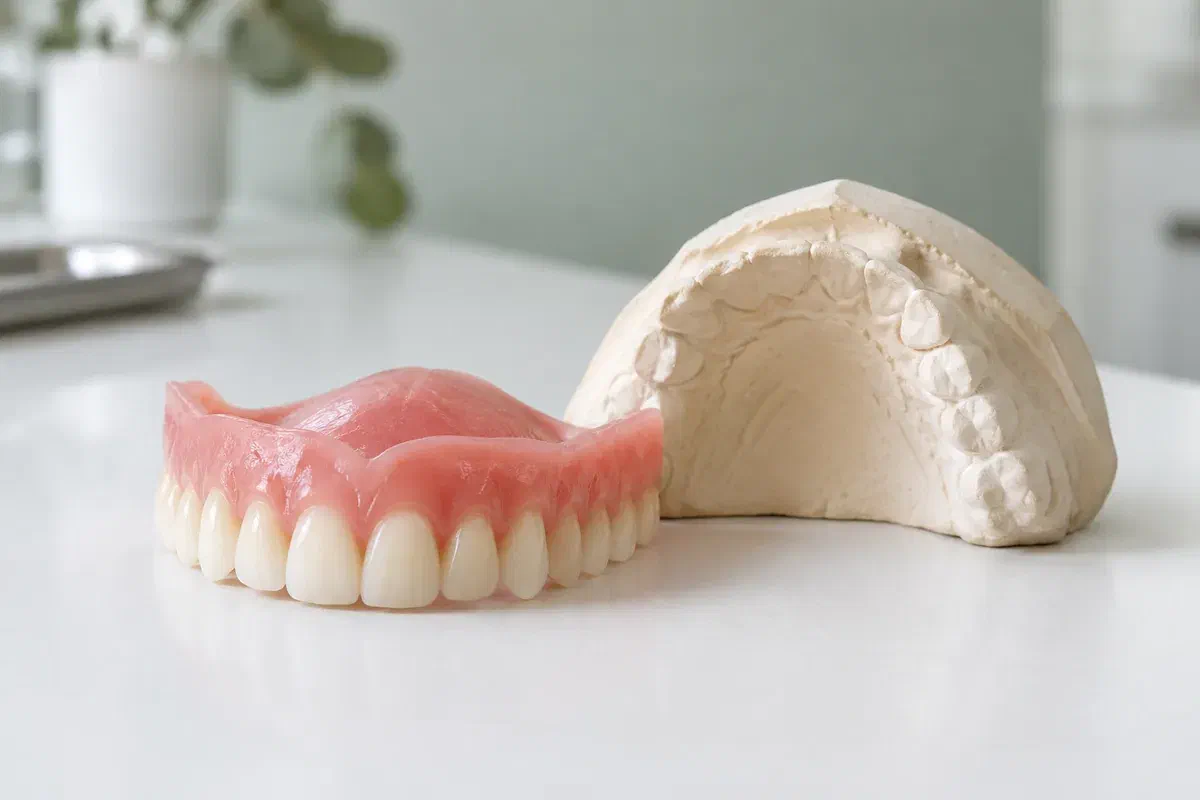
Illustrative denture and dental cast used to explain restorative planning
Common starting points

Confused by the word surgery?

Tell us what you were told and what you are hoping for. Your goals let the clinician explain a finding in terms of the replacement you want, rather than describing anatomy that seems disconnected from your choice.

A denture that presses on a bony area

Show where the appliance digs in and say how often it has been adjusted. A prominent ridge can be part of it, but the fit of the denture and the health of the gum count too. Bring the appliance, worn or retired, so all three can be compared.

Gum features noted during planning

An examiner may mention extra tissue, an attachment close to the ridge or areas affected by an old denture. Ask how the finding would influence the design of each option you are considering. Unusual tissue contours do not automatically need treatment.

Surgery recommended without a clear replacement plan

If preparation has been suggested before you have decided on the prosthesis, ask what the procedure assumes about the final design. Bring the recommendation and ask who will coordinate. Someone should confirm readiness before impressions or the next stage.

A persistent ulcer, a growing lump or unexplained tissue changes deserve separate assessment before planning goes further. Don’t assume they are part of the preparation or simply caused by an appliance.

The benefit of matching surgery to design

Preparation that serves a particular prosthesis

When a procedure is appropriate, its value only makes sense alongside the planned replacement. Ask what specific obstacle it removes for that design, what improvement is realistic and which limits will remain. Changing the tissues improves the foundation, but the final fit, appearance and care routine still depend on the prosthesis itself.

Knowing the design also clarifies the timeline. Ask whether your present appliance can be worn during healing, whether it needs modification, and how a slower recovery would affect the next stage. With the sequence mapped out, you can plan meals, work and any temporary solution. An implant-based plan and a conventional denture plan can follow quite different timelines, so ask about the one that applies to you.

Patient information: AAOMS — preparation before fitting a dental prosthesis

A precise description of the target

Ask to see the finding on examination, a model or an image if one is justified. Confirm whether the proposed work concerns bone, soft tissue or another issue, and whether it is reductive, like smoothing, or additive, like grafting. Those are very different procedures.

Restorative and surgical goals aligned

The clinician preparing the site and the person making the replacement should agree on what the result needs to look like. Ask who is coordinating records, design requirements and review visits, particularly if care is split between practices.

Expectations matched to the replacement type

A complete denture, a partial and an implant-supported option each bring different strengths and limits. Discuss stability, comfort, cleaning and future adjustments for the option you choose. Ask what can be estimated beforehand and what only becomes clear with use.

A sensible order of decisions

Choose the prosthesis. Then plan the foundation.

Ask about the replacement and any surgery together, so neither decision is made in isolation. If either part is unclear, get it explained before a date is set.

  1. Explore which replacement suits you

    Discuss the teeth to be replaced, any appliance you wear, what has and hasn’t worked, and your priorities. Share medical conditions, medicines and earlier oral surgery. Mention how many visits you can realistically manage, since some options take longer than others.

  2. Assess the ridge with that option in mind

    The clinician examines the supporting tissues and decides if an image or further evaluation would help with a particular decision. Ask which features matter for your chosen design. Records from a previous consultation may be useful here.

  3. Compare preparation choices and their risks

    Consider whether adjustment, redesign, a targeted procedure or specialist input fits best. If surgery is proposed, go over what it changes, material risks, pain control, alternatives and recovery. Ask how the plan would shift if new findings appear.

  4. Arrange healing checks and restorative timing

    Agree who will review the treated area and decide when it is ready. Collect instructions on appliance use, cleaning, food and how to reach the team. Ask whether impressions or fitting depend on that review rather than a fixed date.

Recovering well

Instructions written for your procedure

Aftercare varies with the work done and whether you wear an appliance while healing. Use the treating clinician’s written guidance instead of general advice meant for a different procedure.

Confirm the plan for any appliance

An existing or temporary prosthesis may need adjustment or a particular wearing schedule. Check before placing it over the treated area, and report rubbing. Leave modifications to the clinician, since healing tissue may no longer match the old fit.

Keep the surgical site clean and meals gentle

Ask which areas to brush, how to look after the site and when you can go back to regular food. Let the team know if discomfort or a temporary arrangement is interfering with eating. Use medicines and rinses only as prescribed.

Treat the review as a gate to the next stage

A follow-up may check healing, appliance contact and readiness for restorative work. Bring the appliance and mention areas that feel different. If someone else is making the replacement, ask what they need and whether their appointment should move.

Comparing the routes

Different replacements, different preparation

Each option should connect an examination finding with what the chosen prosthesis needs. Ask what it involves, its limits and how it changes the sequence or cost of treatment.

When design changes can handle the issue

Adapting the denture to the mouth

Adjustments, a reline, a new appliance or a different denture design may solve the problem without surgery. The choice depends on the current state of your tissues and appliance, not just its age. Ask which approach your examination supports.

When a defined feature would undermine the fit

Smoothing or reducing a specific area

Some plans involve smoothing an irregular ridge or removing excess soft tissue. Ask exactly what would be changed and why that extent is suitable. The goal is a foundation for the agreed replacement, with useful support kept and the risks explained.

When anatomy or goals call for wider planning

Specialist planning or an implant-based approach

If you are considering implants or the anatomy is complex, referral or a different kind of prosthesis may be worth discussing. Ask what additional assessment would be involved. A specialist opinion should clarify the choices rather than imply every procedure is needed.

Terms and options explained

Clearing up the vocabulary of tooth replacement

Bring your appliance and any written plans. These answers explain common terms; your own recommendation will follow from examination and the design you settle on.

(905) 876-4488
What is the difference between alveoloplasty and a bone graft?
Alveoloplasty reshapes or smooths the bony ridge, usually to remove sharp or irregular areas. A bone graft adds material to build up an area, often to support implants. They serve different goals, so ask which one is being proposed and why.
Do implant-supported dentures always need surgery first?
Placing implants is itself a surgical procedure, and some cases need additional preparation such as grafting. Whether that applies depends on the available bone and the planned design. A detailed assessment is needed before anyone can say.
Does a partial denture ever need pre-prosthetic surgery?
Occasionally, if a specific bone or tissue feature would prevent the partial from fitting well. More often, the design of the partial can work around it. Ask whether the feature truly affects your planned appliance.
What is a frenectomy and why might it come up?
A frenum is a fold of tissue connecting the lip or tongue to the gum. If one attaches close to the ridge, it can lift a denture edge. Releasing it is sometimes discussed, though not every prominent frenum needs treatment. Ask whether the attachment is actually affecting your appliance, or whether a change to the denture edge could accommodate it instead.
Is surgery the only way to deal with a sharp ridge under a denture?
Not always. Relieving the denture over the area or changing its design may be enough. Surgery is more likely to be considered when soreness persists despite adjustments and the sharp feature is clearly the cause.
Can I compare replacement options from Georgetown before committing?
Yes. Ask for an outline of each realistic option, the preparation it would involve and the expected number of visits. Taking time to compare before booking surgery is reasonable and helps you plan. It can also help to note which options would keep you in a removable appliance and which would not, since that changes daily care.
Planning from Georgetown

Start with the teeth you want, then the steps to get there.

Tell us which replacement you are considering and whether preparation has been suggested. We can review findings, explain the differences between procedures and discuss how the care would be coordinated.

Treatment and referral advice are based on your examination.

Visit Milton Dental Clinic
Unit 1, 342 Bronte St. S, Milton, ON L9T 5B7
Get directions Clinic hours
Monday–Thursday
11am–7pm
Friday–Sunday
By appointment only

Areas we serve

  • Milton
  • Oakville
  • Mississauga
  • Georgetown
  • Halton Hills
  • Acton
  • Campbellville
  • Brampton
  • Burlington
  • Puslinch
  • Rockwood
  • Erin
  • Caledon
  • Etobicoke
  • Old Milton
  • Bronte Meadows
  • Timberlea
  • Dorset Park
  • Dempsey
  • Clarke
  • Beaty
  • Coates
  • Harrison
  • Scott
  • Willmott
  • Ford
  • Bowes
  • Cobden
  • Walker
  • Mountain View
  • Milton Heights
  • Hawthorne Village
  • Valley View
  • Fallingbrook
  • Nassagaweya
  • Trafalgar
  • Esquesing
  • Nelson
  • Brookville
  • Moffat
  • Glen Williams
  • Norval
  • Limehouse
  • Stewarttown
  • Ashgrove
  • Hornby
  • Silver Creek
  • Speyside
  • Scotch Block
  • North Oakville
  • River Oaks
  • Glen Abbey
  • West Oak Trails
  • Palermo
  • Bronte Creek
  • College Park
  • Joshua Creek
  • Uptown Core
  • Preserve
  • Iroquois Ridge
  • Lisgar
  • Meadowvale
  • Meadowvale Village
  • Churchill Meadows
  • Erin Mills
  • Central Erin Mills
  • Streetsville
  • East Credit
  • Creditview
  • Heartland
  • Sheridan
  • Mount Pleasant
  • Credit Valley
  • Huttonville
  • Churchville
  • Springbrook
  • Northwest Brampton
  • Bram West
  • Fletcher's Meadow
  • Fletcher's Creek South
  • Alton Village
  • Orchard
  • Millcroft
  • Headon Forest
  • Tansley
  • Brant Hills
  • Tyandaga
  • Kilbride
  • Lowville
  • Aberfoyle
  • Morriston
  • Arkell
  • Hillsburgh
  • Freelton
  • Carlisle
  • Waterdown
  • Flamborough
  • Mountsberg

How can we help?

Milton Dental Clinic

Have a question about your smile? Choose the option that works best for you.

For urgent dental concerns, please call.
Messages are reviewed during clinic hours.