

Illustrative conversation about preparing the mouth for a dental prosthesis
Specialized Care

Pre-Prosthetic Oral Surgery in Halton Hills

Helping a parent or partner through a new denture often means keeping track of advice, appointments and aftercare for two. For households in Halton Hills, we explain when preparation surgery is proposed, what it involves and how a helper can support each stage.

Caring for someone in Halton Hills

Two people at the appointment, one plan to follow

It is common for an adult son, daughter or partner to come along when an older relative is being fitted for a new denture. Sometimes that helper is the first to hear the word surgery and the one left trying to understand why. This page is written for both of you: the person who will wear the appliance and the person helping them through it.

Pre-prosthetic oral surgery is a narrow set of procedures that change one feature of the jawbone or gum, like a sharp ridge, a flap of loose tissue or an attachment that keeps lifting the denture. It is offered when that feature would undermine the planned replacement. Plenty of people, including many older adults, get a comfortable new denture without it.

Families from Georgetown, Acton, Glen Williams and the smaller hamlets are welcome to attend together. Bring the denture, a current medication list and any letters from other providers. We can talk through the findings in plain terms, explain how they relate to the new appliance and say when a surgeon or denture maker should be involved.

Arrange a visit for the two of you
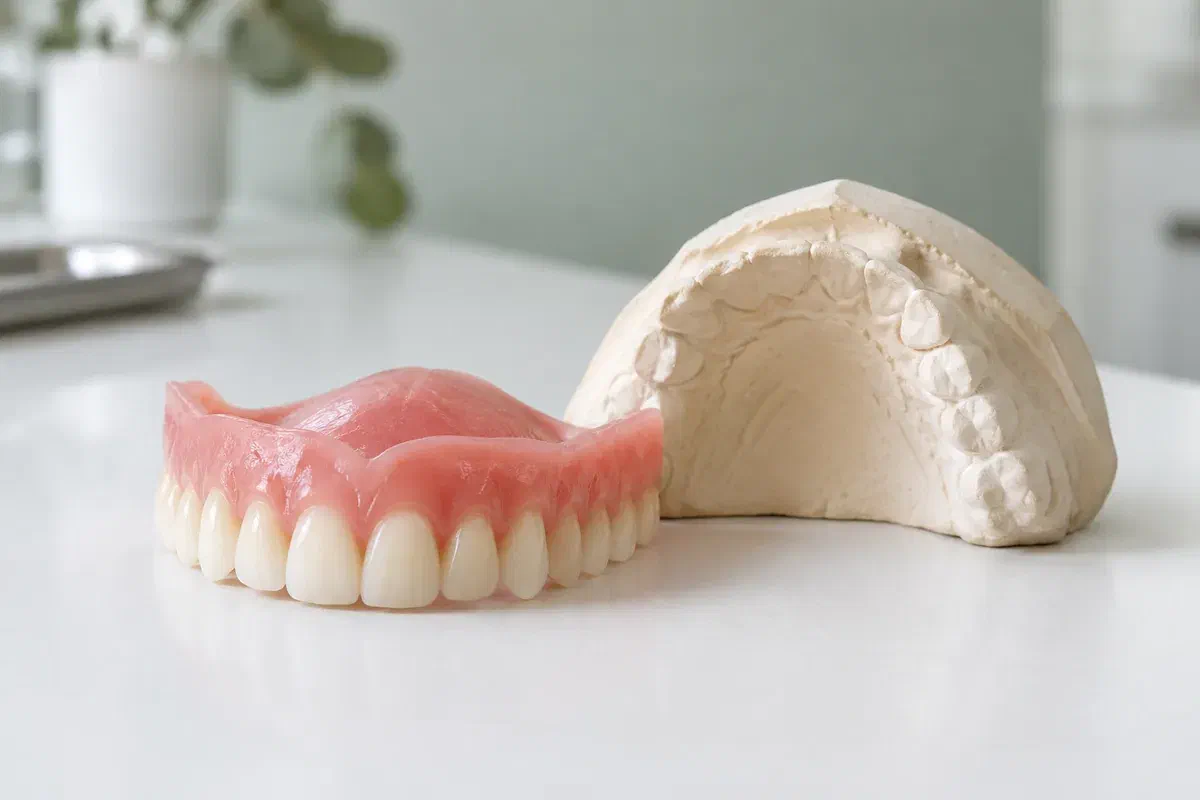
Illustrative denture and dental cast used to explain restorative planning
What a helper may notice

Small changes at home can be the first clue.

Helpers often see what the wearer downplays: skipped meals, a denture left on the counter, a wince while talking. Share those observations, because they connect the examination to real daily life.

Avoiding certain foods or leaving the denture out

If your relative has stopped wearing the appliance or only eats soft foods, mention when that started and where it seems to hurt. A prominent area of bone may be involved, though the fit and the condition of the gum are just as likely. Bring the denture so it can be checked.

Redness or folds of gum under the appliance

Tissue reshaped or irritated by an older denture can affect a new design. Ask what a finding would change and whether the gum should be looked at again after a rest from pressure. A difference in shape is not by itself a reason to operate.

Advice from several clinicians at once

Older adults may see a family doctor, a dentist, a denturist and perhaps a surgeon. Bring any written recommendations and ask who needs to know what. The procedure should serve an agreed replacement, and one person should confirm readiness before impressions.

A mouth sore that won’t heal, a lump that is enlarging or any unexplained tissue change should be examined on its own, even if your relative insists it is just the denture. Don’t let it be folded quietly into the plan.

Why a shared plan helps families

Clear answers are easier to pass on.

When surgery is suggested, ask that the reason be explained in terms of the denture to come. Find out which obstacle it removes, what difference it should make and what challenges will stay. Changing the tissues doesn’t decide everything about how the final appliance fits, looks or must be cleaned, so those topics deserve their own discussion.

A written sequence also makes the in-between weeks easier to manage at home. Ask whether the current denture can be used, whether it will be modified, and what happens if healing is slower than hoped. That lets the household plan meals, rides to appointments and any temporary arrangement.

Patient information: AAOMS — preparation before fitting a dental prosthesis

An explanation both of you understand

Ask the clinician to show the finding on examination, a model or an image where needed, and to say whether it involves bone or soft tissue. Taking notes, or asking for written points, helps when you later explain it to other family members.

Providers working from the same page

The person preparing the site and the person making the denture should share records and agree on the result. Ask who arranges reviews and who you should call with questions. This becomes more important if a specialist is involved.

Expectations that fit the wearer

Talk separately about comfort, stability, cleaning and future adjustments. Surgery can ease one limitation without removing others, and adapting to a new denture can take longer for some people. Ask what can be predicted now and what will only be clear after a period of wear.

Working through it together

Agree on the new denture, then decide on the groundwork.

Discuss surgery and the replacement in a single conversation, with the helper present if the wearer wishes. When anything is unclear, ask before a procedure is booked.

  1. Share health history and daily difficulties

    Cover the teeth being replaced, the current appliance, earlier adjustments and what would make daily life easier. A complete medication list and health history are especially important. Mention mobility or transport limits so the plan stays realistic.

  2. Examine the mouth and gather records

    The clinician assesses the ridge and gum and decides whether imaging or another opinion would answer a specific question. Ask which finding matters for the new denture, and whether records from another office can be used.

  3. Discuss options, risks and consent

    Review adjustment, redesign, surgery or referral. If surgery is advised, cover the intended change, significant risks, pain control, alternatives and recovery. The wearer makes the decision; the helper can ask questions and take notes.

  4. Plan the healing period and next visit

    Agree who will check the treated area and decide when it is ready. Take home written guidance on appliance wear, cleaning, food and contact details. Ask whether impressions depend on that review rather than on a set date.

Helping at home

Recovery support, step by step

What to do after the procedure depends on the work done and whether an appliance is worn. Keep the written instructions somewhere both of you can see them, rather than relying on the usual denture routine.

Be sure about when the denture can go in

An existing or temporary appliance may need adjustment or limited wear. Check before it is placed over the treated area, and call if it rubs or presses. Please don’t file or reshape it at home; the healing tissue may not match the old fit.

Help with soft meals and gentle cleaning

Ask which areas can be brushed, how the surgical site should be cared for and when ordinary meals can return. If your relative is not eating or drinking well, tell the team. Give medicines and rinses only as prescribed for this procedure.

Attend the review together if you can

The follow-up may look at healing, appliance contact and readiness for denture work. Bring the appliance and notes about any changes you have seen. If another provider is making the denture, ask what they need from this visit.

Options worth comparing

Gentler routes are often worth trying first.

The right choice should tie what was found to what the denture needs. Ask about each option’s demands, its limits and how it affects the length, order or cost of treatment.

When the appliance itself can be improved

Making changes to the denture

Often the fix is an adjustment, a reline or a new appliance rather than surgery. Ask which of these would suit your relative’s mouth and needs. The decision rests on the condition of the tissues and the denture, not only on how old the denture is.

When a clear feature blocks a good fit

Preparing one specific area

In selected cases, an irregular ridge is smoothed or excess tissue is removed. Ask exactly what would be done, why that amount, and what recovery would ask of the household. Useful support should be preserved and risks explained in plain language.

When health or anatomy needs wider planning

Referral or a different replacement

Complex situations, or health conditions that affect surgery, may justify a specialist opinion or a different type of prosthesis. Ask what further assessment would involve. Referral should clarify choices rather than add procedures.

Family questions

What helpers and wearers often ask

Bring the appliance, a medication list and any written proposals. These answers are general guidance; the right plan depends on examination and the replacement chosen.

(905) 876-4488
Can I attend my parent’s denture consultation with them?
Yes, if your parent agrees. A helper can take notes, ask questions and keep track of instructions. The person receiving treatment still makes the decisions, so they should be part of every conversation.
Is surgery riskier for older adults?
Age alone does not decide it, but health conditions and medications can affect bleeding, healing and the timing of surgery. Share a full medical history. The team may want to coordinate with the family doctor before recommending a procedure.
What if my relative won’t wear the denture at all anymore?
Bring it anyway. Examining both the appliance and the mouth helps find out why it was abandoned. The cause may be fit, bite, tissue soreness or a specific ridge feature, and each points toward a different solution.
How can I help with eating during recovery?
Have soft, easy foods ready and follow the instructions about when to return to firmer textures. Watch that fluids and meals are still being managed. If eating becomes very difficult, call the team for advice.
Will the new denture still need adjustments after surgery?
Usually, yes. Preparation can improve the foundation, but a new denture often needs follow-up adjustments as the wearer gets used to it and the tissues settle. Plan for those visits from the start.
How can we plan visits from Halton Hills around rides and schedules?
Ask for a written list of upcoming appointments and which ones depend on healing. Grouping visits where possible helps, and booking the review at a time a helper can attend makes it easier to follow the next steps.
Visiting from Halton Hills

Come together, and bring every letter.

Let us know what replacement is planned and whether surgery has been suggested. We can review findings, explain the stages in plain terms and discuss how care would be coordinated.

An examination comes first; treatment and referral advice follow from it.

Visit Milton Dental Clinic
Unit 1, 342 Bronte St. S, Milton, ON L9T 5B7
Get directions Clinic hours
Monday–Thursday
11am–7pm
Friday–Sunday
By appointment only

Areas we serve

  • Milton
  • Oakville
  • Mississauga
  • Georgetown
  • Halton Hills
  • Acton
  • Campbellville
  • Brampton
  • Burlington
  • Puslinch
  • Rockwood
  • Erin
  • Caledon
  • Etobicoke
  • Old Milton
  • Bronte Meadows
  • Timberlea
  • Dorset Park
  • Dempsey
  • Clarke
  • Beaty
  • Coates
  • Harrison
  • Scott
  • Willmott
  • Ford
  • Bowes
  • Cobden
  • Walker
  • Mountain View
  • Milton Heights
  • Hawthorne Village
  • Valley View
  • Fallingbrook
  • Nassagaweya
  • Trafalgar
  • Esquesing
  • Nelson
  • Brookville
  • Moffat
  • Glen Williams
  • Norval
  • Limehouse
  • Stewarttown
  • Ashgrove
  • Hornby
  • Silver Creek
  • Speyside
  • Scotch Block
  • North Oakville
  • River Oaks
  • Glen Abbey
  • West Oak Trails
  • Palermo
  • Bronte Creek
  • College Park
  • Joshua Creek
  • Uptown Core
  • Preserve
  • Iroquois Ridge
  • Lisgar
  • Meadowvale
  • Meadowvale Village
  • Churchill Meadows
  • Erin Mills
  • Central Erin Mills
  • Streetsville
  • East Credit
  • Creditview
  • Heartland
  • Sheridan
  • Mount Pleasant
  • Credit Valley
  • Huttonville
  • Churchville
  • Springbrook
  • Northwest Brampton
  • Bram West
  • Fletcher's Meadow
  • Fletcher's Creek South
  • Alton Village
  • Orchard
  • Millcroft
  • Headon Forest
  • Tansley
  • Brant Hills
  • Tyandaga
  • Kilbride
  • Lowville
  • Aberfoyle
  • Morriston
  • Arkell
  • Hillsburgh
  • Freelton
  • Carlisle
  • Waterdown
  • Flamborough
  • Mountsberg

How can we help?

Milton Dental Clinic

Have a question about your smile? Choose the option that works best for you.

For urgent dental concerns, please call.
Messages are reviewed during clinic hours.