

Illustrative conversation about preparing the mouth for a dental prosthesis
Specialized Care

Pre-Prosthetic Oral Surgery in Puslinch

Before you sign a consent form, you should be able to explain in your own words why the procedure is being done. From Puslinch, bring your questions about surgery before a denture, and leave knowing the purpose, the risks and the alternatives.

Informed decisions for Puslinch

Could you explain this procedure to a friend?

A good test of whether you are ready to agree to treatment is simple: can you say what will be done, why, what could go wrong and what else you could have chosen? If any of those answers is fuzzy, it is worth another conversation before a date is booked.

Pre-prosthetic oral surgery is a set of procedures that change a particular part of the jawbone or gum so that a planned denture or similar prosthesis can work. Typical targets are a sharp or bulbous ridge, extra soft tissue, or an attachment that lifts the appliance. It is not a routine step, and many denture problems are solved by changing the appliance instead.

Bring the denture you wear now and any written proposal you have received. Our team can walk through the findings, explain how they relate to the replacement you want and discuss whether a surgeon or denture maker should be part of the plan. You are welcome to take notes, bring someone with you or ask us to repeat anything.

Ask your questions before deciding
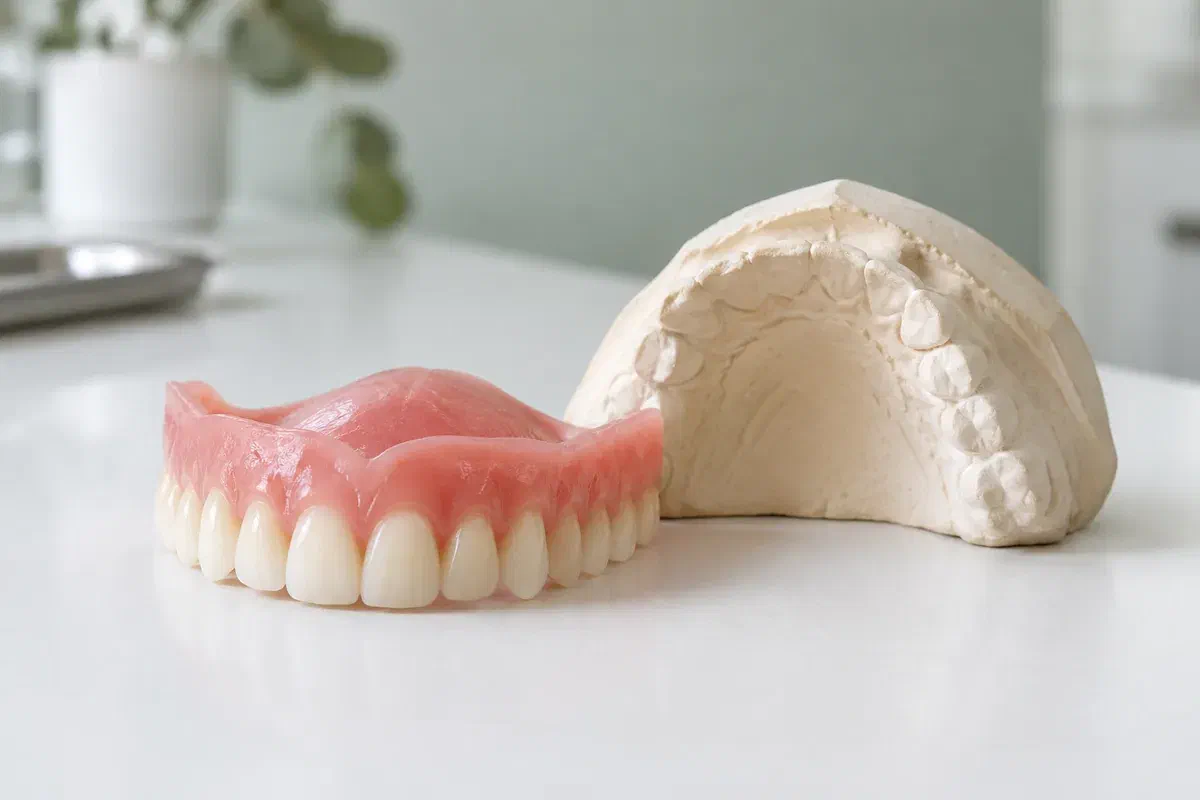
Illustrative denture and dental cast used to explain restorative planning
Why the question comes up

The reason for surgery should be specific.

Describe what led to the recommendation. When the clinician knows what bothers you and what someone else has suggested, the examination can confirm or question that reason, rather than simply describing your anatomy.

An area of soreness that won’t settle

Note where it hurts and how often the denture has been adjusted. A sharp ridge can be part of it, but the appliance and the gum also need examining. Bring the denture even if it’s been retired, so the clinician can see whether the problem lies in it or beneath it.

Tissue someone has suggested removing

If extra gum, a high attachment or tissue irritated by an old denture has been pointed out, ask how it affects the new appliance. Sometimes irritated tissue improves once pressure is reduced, so a second look later may be sensible. Not every tissue difference needs surgery.

A recommendation without a clear explanation

If you were told surgery is needed but not why, bring the recommendation and ask what each provider needs to share. The procedure should serve an agreed replacement. Ask who will decide that healing is complete before impressions are taken.

Some findings are not about fit at all. A sore that persists, a lump that grows or tissue that changes without a clear cause should be examined in its own right, and not explained away as denture irritation.

What a well-explained plan offers

You decide with the full picture.

If surgery is appropriate, the case for it should be made in terms of the prosthesis to come. Ask what obstacle it removes, what improvement you can reasonably expect and what it cannot change. Preparing the tissues does not, on its own, decide the fit, appearance or care needs of the final appliance.

Understanding the sequence is part of informed consent, too. Ask whether your current denture can be worn during healing, whether it needs modifying and what happens if recovery is slow. Knowing this lets you plan meals, work and any temporary solution, and judge whether the overall commitment suits you.

Patient information: AAOMS — preparation before fitting a dental prosthesis

A finding you have seen for yourself

Ask the clinician to show you what they mean, in your mouth, on a model or on an image if one is justified. Learn whether it concerns bone, soft tissue or something else. Seeing it makes the alternatives easier to weigh.

One plan, shared by everyone involved

Whoever prepares the area and whoever makes the replacement should agree on the result. Ask who coordinates records, design requirements and reviews. This matters especially if a specialist is involved or the work is split between offices.

A frank discussion of limits

Stability, comfort, cleaning and future adjustments are separate questions. Surgery may address one limitation without solving every challenge of a removable denture. Ask what can be assessed before treatment and what will only be known after you begin wearing the new appliance.

From questions to consent

Understand the plan before agreeing to any part of it.

Ask about surgery and the denture in the same conversation. If something remains unclear, you can take time to think before a procedure is booked or an appliance is started.

  1. Set out your goals and your history

    Explain the teeth being replaced, your current appliance, previous adjustments and what you want to improve. Share health conditions, medicines and earlier oral surgery. Mention practical limits on travel or time, so the plan accounts for them from the start.

  2. Examine the tissues and review what’s known

    The clinician assesses the ridge and gum and decides whether imaging or another opinion is needed to resolve a particular question. Ask which observation drives the recommendation, and whether existing records from elsewhere can be used.

  3. Hear the options, risks and alternatives

    Discuss adjustment, redesign, surgery or specialist assessment. If surgery is proposed, ask about the intended change, its material risks, pain control, alternatives including doing nothing for now, and the usual recovery. Ask what would happen if new findings change the plan.

  4. Agree on healing checks and the next stage

    Confirm who will review the treated area and decide it is ready. Get written instructions on appliance wear, cleaning, eating and how to contact the team. Ask whether impressions depend on that review rather than a date set in advance.

After you’ve gone ahead

The instructions you were given are the ones to follow.

Aftercare depends on the procedure and on whether an appliance is worn while you heal. Rely on the treating clinician’s written guidance rather than your usual denture habits or advice meant for a different operation.

Know the rules for your appliance

Some procedures allow the old appliance back almost at once; others mean modifying it or wearing it sparingly. Ask before it sits over the healing area, and mention any rubbing. Don’t adjust it yourself; tissue that has been changed may no longer suit the old fit.

Clean and eat in the way you were shown

Find out which areas to brush, how to care for the surgical site and when you can return to normal meals. Let the team know if discomfort or a temporary arrangement is making eating difficult. Use the rinses and medicines prescribed for you.

Go to the review, and bring your questions

The follow-up may check healing, appliance contact and readiness for the next stage. Bring the appliance and mention areas that feel different. If another provider is making the denture, ask what they need and whether their appointment should change.

The alternatives to ask about

What are the other ways to solve this?

Every option should link an examination finding to a need of the replacement. For each, ask what it involves, what it can’t do and whether it changes the order or cost of treatment.

When the appliance can handle the problem

Adjusting, relining or remaking the denture

The examination may show the appliance is the main issue. Ask whether adjustment, a reline, a new denture or a different design would work. The answer depends on the condition of your mouth and appliance, rather than the denture’s age.

When one finding blocks the plan

Focused surgery on a specific feature

Some situations involve smoothing an uneven ridge or removing excess soft tissue. Ask what would change, why that extent and what the main risks are. The aim is a foundation for the agreed replacement, with useful support preserved.

When the case needs broader planning

A specialist opinion or a different replacement

More complex anatomy or goals can justify referral or a fresh look at the type of prosthesis. Ask whether another design might suit you better and what extra assessment would be needed. Referral should clarify options, not add unnecessary procedures.

Before you consent

Questions worth asking about any proposed surgery

Bring your appliance and any written proposals. These answers are general; your own plan follows from examination and the replacement you decide on.

(905) 876-4488
What risks should I ask about before ridge or gum surgery?
Ask about pain, swelling, bleeding, infection and how healing could affect the denture plan, as well as any risks particular to your health or the area being treated. Your clinician should explain which apply to you and how they are managed.
Is it reasonable to wait and think before agreeing to surgery?
Yes. Unless there is an urgent reason, taking time to consider the recommendation, get answers to your questions or seek another opinion is reasonable. Ask whether delaying would change anything for your mouth.
What happens if I decide not to have the surgery?
Ask what that would mean for your denture. Sometimes a different design or more frequent adjustments can work, with certain trade-offs in comfort or stability. Understanding those trade-offs is part of making the choice, and declining one option doesn’t close the door on revisiting it later if your needs change.
Can I ask for the plan in writing?
Yes. A written summary of the proposed procedure, the reason for it, the alternatives and the expected sequence of visits makes it easier to review at home and share with family. It also gives you something to compare if you decide to seek another opinion, and a list to check off as each stage is completed.
How is pain usually managed after pre-prosthetic surgery?
Your clinician will discuss pain control before the procedure and give instructions for afterwards, tailored to the work done and your health. Tell the team if pain is increasing rather than easing.
Is it worth travelling from Puslinch for a consultation if I’m unsure?
If you have questions about a recommendation, an unhurried consultation can be worthwhile. Bring your appliance, records and a list of questions so you can cover everything in one visit.
Visiting from Puslinch

Come with questions; leave with answers.

Tell us what replacement you are considering and what has been proposed. We can review the findings, explain the options and their risks and discuss how care would be coordinated.

Treatment and referral recommendations depend on a clinical examination.

Visit Milton Dental Clinic
Unit 1, 342 Bronte St. S, Milton, ON L9T 5B7
Get directions Clinic hours
Monday–Thursday
11am–7pm
Friday–Sunday
By appointment only

Areas we serve

  • Milton
  • Oakville
  • Mississauga
  • Georgetown
  • Halton Hills
  • Acton
  • Campbellville
  • Brampton
  • Burlington
  • Puslinch
  • Rockwood
  • Erin
  • Caledon
  • Etobicoke
  • Old Milton
  • Bronte Meadows
  • Timberlea
  • Dorset Park
  • Dempsey
  • Clarke
  • Beaty
  • Coates
  • Harrison
  • Scott
  • Willmott
  • Ford
  • Bowes
  • Cobden
  • Walker
  • Mountain View
  • Milton Heights
  • Hawthorne Village
  • Valley View
  • Fallingbrook
  • Nassagaweya
  • Trafalgar
  • Esquesing
  • Nelson
  • Brookville
  • Moffat
  • Glen Williams
  • Norval
  • Limehouse
  • Stewarttown
  • Ashgrove
  • Hornby
  • Silver Creek
  • Speyside
  • Scotch Block
  • North Oakville
  • River Oaks
  • Glen Abbey
  • West Oak Trails
  • Palermo
  • Bronte Creek
  • College Park
  • Joshua Creek
  • Uptown Core
  • Preserve
  • Iroquois Ridge
  • Lisgar
  • Meadowvale
  • Meadowvale Village
  • Churchill Meadows
  • Erin Mills
  • Central Erin Mills
  • Streetsville
  • East Credit
  • Creditview
  • Heartland
  • Sheridan
  • Mount Pleasant
  • Credit Valley
  • Huttonville
  • Churchville
  • Springbrook
  • Northwest Brampton
  • Bram West
  • Fletcher's Meadow
  • Fletcher's Creek South
  • Alton Village
  • Orchard
  • Millcroft
  • Headon Forest
  • Tansley
  • Brant Hills
  • Tyandaga
  • Kilbride
  • Lowville
  • Aberfoyle
  • Morriston
  • Arkell
  • Hillsburgh
  • Freelton
  • Carlisle
  • Waterdown
  • Flamborough
  • Mountsberg

How can we help?

Milton Dental Clinic

Have a question about your smile? Choose the option that works best for you.

For urgent dental concerns, please call.
Messages are reviewed during clinic hours.