

Illustrative consultation about a changing gumline and tooth sensitivity
Specialized Care

Receding Gums Assessment

A changing gumline can raise questions about sensitivity, appearance, and the support around a tooth. Arrange a receding gums assessment in Milton to understand the pattern, contributing factors, and whether monitoring or treatment is appropriate.

A closer look at receding gums

Understand the change at the gumline before choosing a way to manage it.

Gum recession means the edge of the gum has moved away from its previous position, exposing more of the tooth or root. You might notice a tooth looking longer, a change near an old photograph's gumline, or sensitivity when eating or cleaning. The appearance alone does not explain why it has happened or whether it is progressing.

An assessment considers the tissues around the tooth, the root surface, cleaning habits, and relevant dental history. Recession can involve several contributing factors, and it is not always a sign of the same underlying condition. A localized change beside one tooth needs to be understood in the context of the rest of your mouth.

At Milton Dental Clinic, tell us when you first noticed the change and what concerns you most. Comfort, cleaning, appearance, and the prospect of further change are all reasonable topics. We can discuss what the examination shows, what needs monitoring, and whether treatment or a periodontal opinion would be useful.

Discuss a change in your gumline
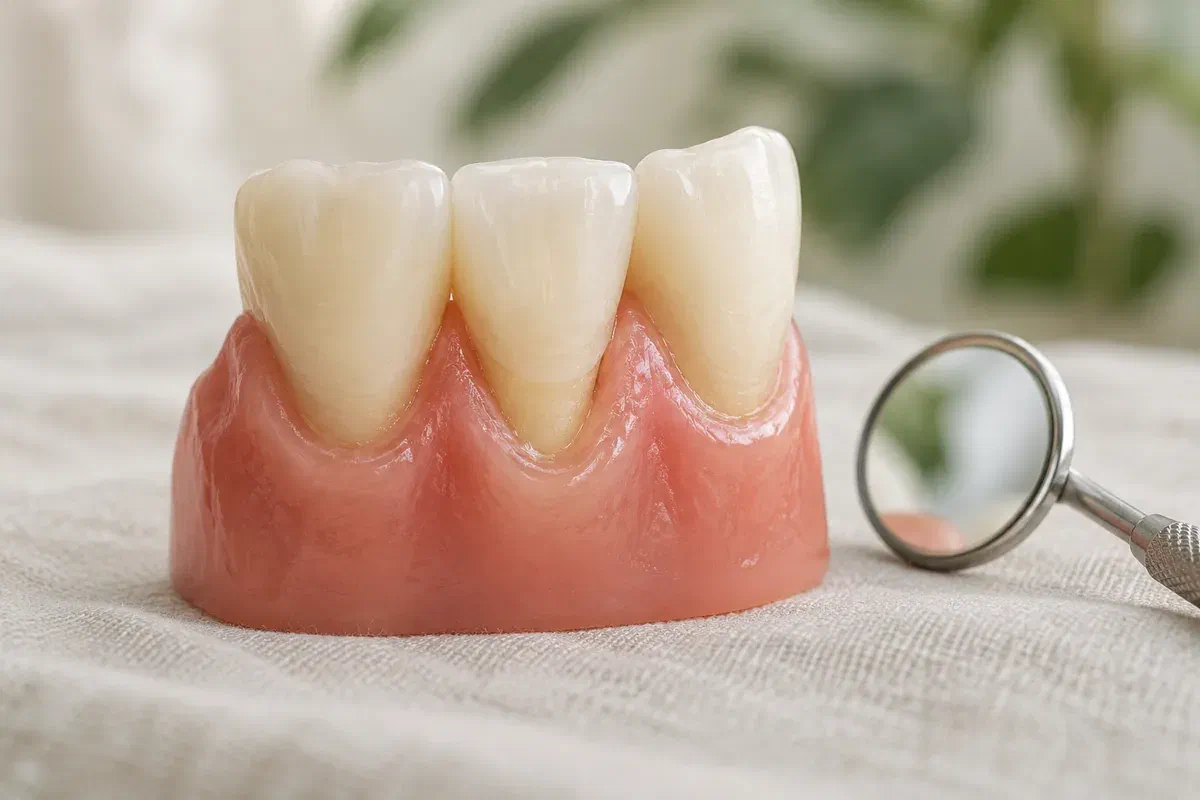
Illustrative teaching model showing an exposed tooth neck beside neighbouring teeth
What to bring to the conversation

The pattern and your symptoms help guide the assessment.

You do not need to measure the gum yourself. Explain what looks or feels different, and bring previous dental records or photographs if they help show when you first became aware of the change.

A longer-looking tooth or an uneven gum edge

Describe whether one area seems affected or you have noticed changes across several teeth. Mention previous orthodontic treatment, restorations, or gum treatment. These details help frame the examination without proving a cause by themselves or establishing that the gumline is still moving.

Sensitivity near the exposed area

Explain which temperatures, foods, or cleaning actions trigger discomfort and how long it lasts. Exposed roots can be sensitive, but the clinician also needs to consider other tooth problems. Persistent, spontaneous, or worsening pain should not simply be labelled recession without a dental assessment.

Cleaning that feels difficult or makes you hesitant

Tell the team if a brush feels uncomfortable, an interdental aid catches, or you avoid a particular area. Bring the products you use or describe them. The aim is to find a manageable cleaning technique that respects the tissues, rather than asking you to scrub harder or stop cleaning.

A changing gumline deserves assessment even when it is painless. Sudden swelling, pus, severe pain, or a loose tooth may indicate an additional problem and should be reported promptly when you contact the clinic.

What an assessment can clarify

Separate the current appearance from the risk of future change.

A useful assessment explains more than the visible amount of recession. Ask whether the tissues appear inflamed, whether there are signs of periodontal disease, and what is known about change over time. If earlier measurements are unavailable, the current examination may provide a baseline for comparison rather than an immediate prediction.

Your priorities should also shape the discussion. Someone concerned mainly about sensitivity may need a different first step from someone with increasing recession or difficulty keeping an area clean. Ask which concern a recommendation addresses and whether improvement in one area would leave another issue to monitor or manage separately.

Patient information: Cambridge University Hospitals — recession factors and soft-tissue grafting

A record that supports future comparisons

Measurements and examination findings can help the clinician judge whether the condition changes at later visits. Ask which teeth need review and what the comparison will involve. A planned reassessment is more informative than repeatedly checking the mirror without a consistent way to evaluate the gumline.

Advice about factors you can realistically change

Discuss brushing pressure, suitable cleaning aids, and any local irritation identified during assessment. Ask for a demonstration on the areas you find difficult. Recommendations should fit your mouth and ability, while acknowledging that tissue thickness and tooth position are not matters of effort or willpower.

An explanation of when referral could help

A periodontist may be able to assess a complex site or discuss grafting and other options. Ask what question the referral is intended to answer. Seeking an opinion does not commit you to surgery, and the consultation should include expected benefits, limitations, alternatives, and recovery requirements.

How the gumline is assessed

Look at the tissues, the tooth, and the history together.

Tell us if a particular area is tender or if examination makes you anxious. The visit is an opportunity to understand the findings, not a commitment to a procedure before the options have been discussed.

  1. Discuss the change and your dental history

    Explain the symptoms, when you noticed them, and any earlier advice or treatment. Review cleaning habits, tobacco use, health conditions, and medicines where relevant. Mention the outcome that matters most to you, whether that is comfortable brushing, appearance, or understanding the likelihood of progression.

  2. Examine the gum margin and surrounding support

    The clinician assesses recession alongside gum health, tooth condition, and other relevant findings. Measurements or appropriate imaging may help answer specific questions. Ask what the examination can establish today and whether past records would help distinguish a longstanding feature from a more recent change.

  3. Identify priorities and compare management choices

    Discuss any active disease or local irritation that needs attention, then consider sensitivity management, monitoring, or specialist input. Ask which factors support the recommendation. An option should be linked to your findings rather than selected solely because a root is visible in the mirror.

  4. Agree on home care and a review point

    Leave with practical instructions for the affected sites and a plan for checking them again. Confirm which changes should prompt earlier contact and whether a referral is being arranged. If several steps are proposed, clarify their order and how the response to initial care will be assessed.

Looking after an exposed root surface

Keep the area clean without repeatedly irritating it.

Advice after assessment should reflect the condition of your gums and teeth. Ask the team to demonstrate a routine you can reproduce comfortably rather than changing several products or techniques at once without guidance.

Use the cleaning technique recommended for the site

Discuss a soft brush, gentle pressure, and suitable interdental cleaning. Do not avoid the area because you are worried about recession, but do not scrub it aggressively to try to make the gum return. Ask for help if a suggested aid feels painful or cannot be used safely.

Review sensitivity care and tooth protection

A clinician may recommend a suitable sensitivity product or other preventive care after checking the tooth. Ask how to use it and when to review the response. Continuing or changing pain needs reassessment; a less sensitive tooth does not by itself show that the gum position has improved.

Keep follow-up focused on measurable changes

Attend the agreed review and describe any new symptoms or cleaning difficulties. The clinician can compare findings and reconsider the plan if needed. Avoid pulling at the gum or repeatedly testing the area with cold drinks in an attempt to judge its condition yourself.

Choosing an appropriate response

Monitoring, symptom care, and surgery have different purposes.

Ask what each option is intended to achieve for the affected tooth. The best next step may address active disease or daily care first, with the need for additional treatment reviewed afterwards.

When observation and local care are appropriate

Personalized care and planned monitoring

The clinician may recommend a change in cleaning technique, management of irritation, and comparison at future visits. Ask why monitoring is suitable and what would change that decision. Observation should include a defined review plan rather than leaving you to guess whether the gumline is stable.

When another finding needs attention

Treatment of disease or an exposed-root concern

Gum disease, decay, or a sensitive root surface may require its own care. Ask which diagnosis the treatment addresses and what it will not change. Treating discomfort or repairing a tooth surface is different from moving the gum margin, even when both concerns occur together.

When the tissue condition warrants further discussion

Assessment for a gum graft or other specialist care

A graft may be considered to add tissue or cover an exposed root in a suitable case. The intended result depends on the site and procedure. Ask about achievable coverage, tissue sources, recovery, and limitations; complete coverage and permanent prevention of further recession cannot be promised.

Patient information: American Academy of Periodontology — gum graft procedures

Questions about a changing gumline

A visible root is a starting point for assessment, not the whole diagnosis.

Your examination can help distinguish the condition of the gum from the health of the underlying tooth. Bring concerns about appearance and comfort so both can be considered in the plan.

(905) 876-4488
Does recession around one tooth prove that I have periodontitis?
No. Recession has several possible contributing factors. The clinician assesses the gums and supporting tissues more broadly before diagnosing periodontitis or another condition. A single longer-looking tooth, photograph, or home measurement cannot establish the cause or show whether disease is currently active.
Can an old photograph show whether my gums are still receding?
It may help illustrate when you noticed a change, but lighting, angle, and tooth position can make comparisons unreliable. Clinical measurements and records provide more useful context. Bring the photograph if you have it, while allowing the examination to guide conclusions about current condition and follow-up.
If toothpaste reduces root sensitivity, has the recession reversed?
No. Symptom improvement and gum position are different outcomes. A product may help discomfort without replacing lost tissue. Continue the review plan and ask what is being monitored. If sensitivity persists or changes character, the tooth may need reassessment for other causes of pain.
Should I stop brushing a tooth because its gum has receded?
Do not abandon cleaning, but ask for a gentle technique suited to the area. The team can help with brush pressure and interdental aids if the site is uncomfortable. Avoid aggressive scrubbing and report pain that prevents normal care so the cause can be checked.
Can a gum graft guarantee an even gumline across every affected tooth?
No. The achievable result varies with the tissues, tooth position, supporting structures, and procedure. Ask whether the goal is tissue thickness, root coverage, easier cleaning, or a combination. A specialist should explain the likely limits at each site rather than promise identical results everywhere.
Do receding gums need review if they do not hurt or bleed?
Yes, a painless change can still merit assessment and a baseline record. Absence of symptoms does not establish the cause or stability of recession. The clinician can explain whether monitoring is sufficient and what findings or future changes would make additional care appropriate.
Arrange a gumline assessment in Milton

Tell us what has changed and what you would like to understand.

Contact Milton Dental Clinic about recession, exposed roots, or sensitivity near the gums. Bring previous advice or records if available, and we will discuss assessment and a practical next step for the affected areas.

Treatment recommendations and referral needs depend on the findings at your examination.

Visit Milton Dental Clinic
Unit 1, 342 Bronte St. S, Milton, ON L9T 5B7
Get directions Clinic hours
Monday–Thursday
11am–7pm
Friday–Sunday
By appointment only

How can we help?

Milton Dental Clinic

Have a question about your smile? Choose the option that works best for you.

For urgent dental concerns, please call.
Messages are reviewed during clinic hours.