

Illustrative consultation about a changing gumline and tooth sensitivity
Specialized Care

Receding Gums Assessment in Milton

One tooth looks a little taller than it used to, or the gum edge no longer lines up with its neighbours. A receding gums assessment in Milton helps explain what has changed, what may be contributing, and whether watching or treating it makes more sense.

Gumline changes, explained in Milton

Is the gum still moving, or has it simply settled where it is?

That is usually the question behind a booking. Recession happens when the margin of the gum sits lower on the tooth than before, uncovering part of the root. Some people spot it while brushing under a bright bathroom light; others feel a twinge from cold water first. Seeing it, though, tells you nothing about why it began or whether it is getting worse.

During the visit, the clinician looks at the gum tissue, the exposed surface, how you clean, and what dental work or treatment you have had before. More than one factor can play a part, and recession does not always point to the same condition. A change beside a single tooth still has to be read against the rest of your mouth.

Because you are close by in Milton, a first assessment can also set up straightforward follow-up. Let us know when you first saw the change and what bothers you most, whether that is comfort, cleaning, looks, or the worry that it will keep going. We will explain the findings and talk through monitoring, treatment, or a periodontal opinion.

Ask about your gumline
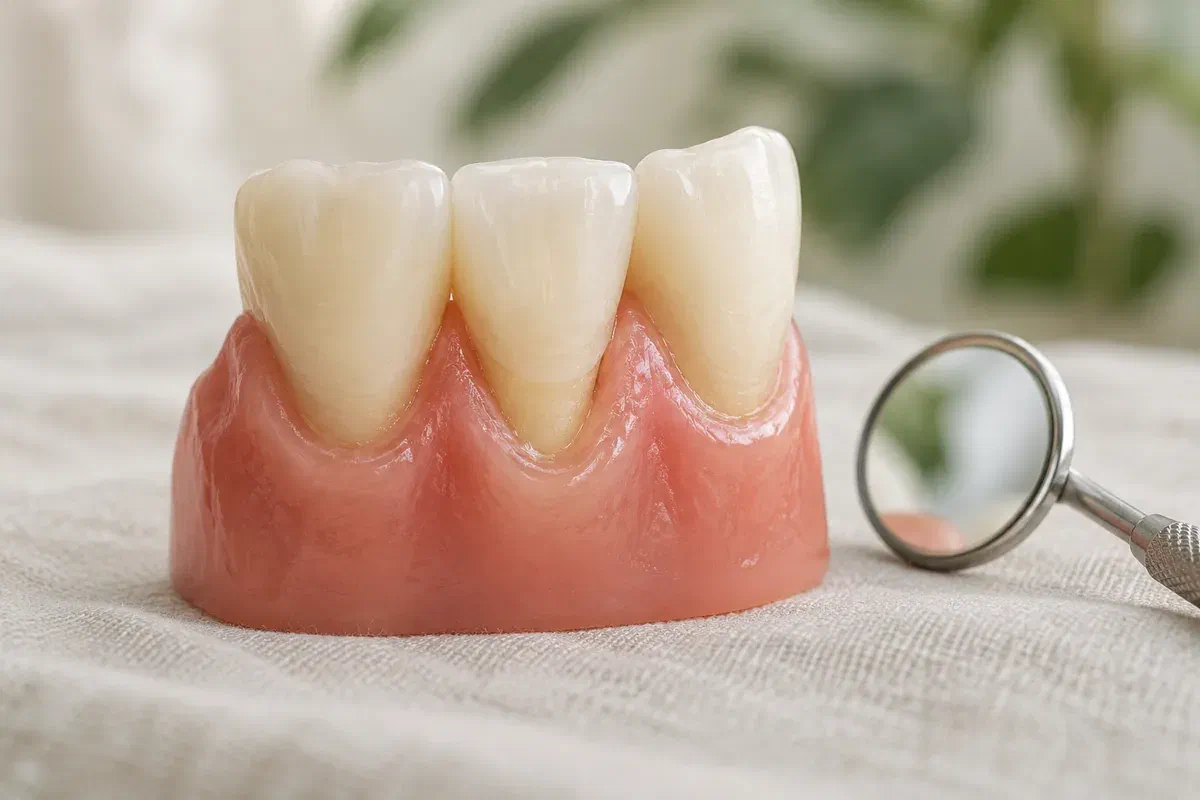
Illustrative teaching model showing an exposed tooth neck beside neighbouring teeth
Useful details to mention

Your observations give the examination a starting point.

There is no need to measure anything at home. Describe what you see and feel, and if older dental records or photos help show roughly when you became aware of it, feel free to bring them along.

A tooth that seems taller or a gum edge that dips

Say whether it is one spot or several teeth. Past braces, fillings or crowns near the gum, and any earlier gum treatment are all worth mentioning. On their own, these details frame the examination; they do not prove the cause or show that the gum is still on the move.

Twinges near the uncovered area

Tell us whether cold, heat, sweet foods, or brushing sets it off, and how long the feeling lingers. Exposed root surfaces are often sensitive, yet other tooth problems can feel similar. Pain that keeps coming back, arrives without a trigger, or is getting stronger needs proper dental assessment rather than an assumption.

An area you have started to clean around

Mention it if the brush feels sore there, floss or a small brush snags, or you have begun skipping that spot. Bring your products or describe them. The goal is a gentle routine that suits the tissue, not harder scrubbing and not giving up on the area.

Recession is worth checking even if nothing hurts. Sudden swelling, pus, strong pain, or a tooth that has started to feel loose may mean something else is going on, so mention it right away when you call.

What you can expect to learn

Today’s appearance and tomorrow’s risk are two different answers.

A good assessment goes beyond how much root is showing. You can ask whether the gum looks inflamed, whether there are signs of periodontal disease, and what is understood about change so far. When no earlier measurements exist, this visit can become the baseline that later visits are compared with, rather than a forecast.

What matters to you should steer the plan, too. If sensitivity is the main issue, the first step may differ from the one suggested for recession that is increasing or a spot that is hard to keep clean. It is fair to ask which concern each suggestion targets and what would still need watching afterwards.

Patient information: Cambridge University Hospitals — recession factors and soft-tissue grafting

A starting record for later comparison

Measurements and notes from this visit help the clinician tell whether anything shifts over time. Ask which teeth are being tracked and how they will be compared. A scheduled recheck is far more reliable than studying the mirror every few days without a consistent reference point.

Practical changes within your control

Talk about how firmly you brush, which cleaning aids suit you, and any local irritation the clinician finds. Ask to be shown how to reach the awkward spots. Advice should fit your mouth and your hands, while recognising that gum thickness and tooth position are not about effort.

A clear reason if a referral is suggested

A periodontist can look closely at a complicated site and discuss grafting or other approaches. Ask what the referral is meant to answer. Seeing a specialist does not commit you to surgery, and that appointment should cover likely benefits, limits, alternatives and recovery.

Inside the assessment

History first, then the gum, the tooth, and a plan.

If one area is tender, or if having your gums checked makes you nervous, say so at the start. This appointment is for understanding what is happening, not for agreeing to a procedure before you have heard the options.

  1. Talk through what you have noticed

    Describe the symptoms, roughly when they began, and any earlier advice or care. The clinician may ask about cleaning habits, smoking or vaping, health conditions and medicines. Share what you most want from the visit, such as comfortable brushing, a better appearance, or knowing how likely further change is.

  2. Check the gum margin and supporting tissue

    Recession is assessed together with overall gum health, the condition of the tooth and other findings. Measurements or suitable imaging may be used for specific questions. Ask what can be confirmed at this visit and whether older records might show whether the change is longstanding or recent.

  3. Sort out priorities and weigh the choices

    Any active gum disease or local irritation is addressed first, followed by sensitivity care, monitoring or specialist input as needed. Ask what in your findings supports the suggestion. A recommendation should come from the examination, not simply from the fact that some root is visible.

  4. Leave with a routine and a recheck date

    You should go home with clear instructions for the affected teeth and a time to look at them again. Confirm which changes mean you should call sooner and whether a referral is being made. If there are several steps, ask about their order and how progress will be judged.

Caring for the uncovered root

Gentle and consistent works better than hard and occasional.

Home care after the visit should match what was found in your mouth. Ask the team to show you a routine you can repeat comfortably, rather than switching several products or methods at once on your own.

Clean the area the way you were shown

That usually means a soft brush, light pressure and an interdental aid that suits the gap. Skipping the area out of worry does not help, and scrubbing it will not bring the gum back. If a recommended aid hurts or feels unsafe to use, let us know.

Follow the sensitivity advice and protect the tooth

After checking the tooth, the clinician may suggest a sensitivity product or other preventive care. Ask how to use it and when its effect will be reviewed. A tooth that feels better has not necessarily regained gum, and pain that continues or changes needs another look.

Let the follow-up do the measuring

Keep the agreed review and mention any new symptoms or trouble cleaning. The clinician can compare findings and adjust the plan. Try not to tug at the gum or test the tooth with ice water to see how it is doing.

Possible next steps

Watch, treat the symptom, or refer: each answers a different need.

Ask what each choice is meant to do for the affected tooth. Often the sensible first move deals with active disease or daily cleaning, and the need for anything further is reviewed after that.

When watching and local care fit the findings

Personalized care and planned monitoring

This may involve adjusting how you clean, dealing with a source of irritation, and comparing the site at later visits. Ask why monitoring suits your situation and what would change that view. Watching should come with a set review plan, not leave you guessing.

When a separate finding needs care

Treatment for disease or a sensitive root

Gum disease, decay or a tender root surface may each need their own treatment. Ask which problem the treatment targets and what it will leave unchanged. Easing sensitivity or repairing the tooth surface does not move the gum margin, even when both issues appear together.

When the tissue calls for a closer look

A specialist opinion on grafting or other care

In a suitable case, a graft may add tissue or cover part of an exposed root. Results depend on the site and the technique used. Ask about realistic coverage, where tissue comes from, healing time and limits; full coverage and an end to future recession cannot be promised.

Patient information: American Academy of Periodontology — gum graft procedures

Milton gumline questions

Common things people ask once they notice recession.

These answers are general. Your examination is what links the condition of the gum to the health of the tooth underneath, so bring both your comfort and appearance concerns.

(905) 876-4488
Will my gum grow back on its own if I brush more gently?
Gum tissue that has receded does not usually return by itself. Gentler cleaning can help protect the area and reduce irritation, which is still worthwhile. The clinician can explain whether monitoring is enough or whether another option is worth discussing for that site.
Is one longer tooth enough to say I have gum disease?
Not by itself. Recession can have several contributing factors, and the clinician looks at the gums and supporting tissue more broadly before diagnosing periodontitis or anything else. A single taller-looking tooth cannot show the cause or whether disease is active.
Can braces I had years ago be connected to recession now?
Tooth position and past orthodontic movement can be one of several factors, but they do not automatically explain a change. Mention any orthodontic history during the visit. The clinician will consider it together with gum thickness, cleaning habits and other findings.
Does an electric toothbrush make recession worse?
Not necessarily. What matters more is pressure, brush head type and technique. Many electric brushes have pressure sensors that can help. Bring yours or describe it, and the team can show you how to use it gently around the affected teeth.
How often will the receded area need to be checked?
That depends on what the examination shows. Some sites may be reviewed at regular dental visits, while others need a closer recheck. Ask for the planned interval and what the clinician will compare, so you know what each review is for.
Since I live in Milton, can monitoring visits line up with my regular cleanings?
Often they can, if the clinician feels the timing suits the findings. Ask whether the gumline review can be paired with your usual hygiene appointment, and confirm which changes should prompt an earlier call rather than waiting.
Book a gumline check in Milton

Bring your questions about the change you have spotted.

Call Milton Dental Clinic about receding gums, an exposed root, or sensitivity near the gumline. If you have earlier records or advice, bring them, and we will go over the assessment and a sensible next step for the area.

Any treatment or referral will depend on what your examination shows.

Visit Milton Dental Clinic
Unit 1, 342 Bronte St. S, Milton, ON L9T 5B7
Get directions Clinic hours
Monday–Thursday
11am–7pm
Friday–Sunday
By appointment only

Areas we serve

  • Milton
  • Oakville
  • Mississauga
  • Georgetown
  • Halton Hills
  • Acton
  • Campbellville
  • Brampton
  • Burlington
  • Puslinch
  • Rockwood
  • Erin
  • Caledon
  • Etobicoke
  • Old Milton
  • Bronte Meadows
  • Timberlea
  • Dorset Park
  • Dempsey
  • Clarke
  • Beaty
  • Coates
  • Harrison
  • Scott
  • Willmott
  • Ford
  • Bowes
  • Cobden
  • Walker
  • Mountain View
  • Milton Heights
  • Hawthorne Village
  • Valley View
  • Fallingbrook
  • Nassagaweya
  • Trafalgar
  • Esquesing
  • Nelson
  • Brookville
  • Moffat
  • Glen Williams
  • Norval
  • Limehouse
  • Stewarttown
  • Ashgrove
  • Hornby
  • Silver Creek
  • Speyside
  • Scotch Block
  • North Oakville
  • River Oaks
  • Glen Abbey
  • West Oak Trails
  • Palermo
  • Bronte Creek
  • College Park
  • Joshua Creek
  • Uptown Core
  • Preserve
  • Iroquois Ridge
  • Lisgar
  • Meadowvale
  • Meadowvale Village
  • Churchill Meadows
  • Erin Mills
  • Central Erin Mills
  • Streetsville
  • East Credit
  • Creditview
  • Heartland
  • Sheridan
  • Mount Pleasant
  • Credit Valley
  • Huttonville
  • Churchville
  • Springbrook
  • Northwest Brampton
  • Bram West
  • Fletcher's Meadow
  • Fletcher's Creek South
  • Alton Village
  • Orchard
  • Millcroft
  • Headon Forest
  • Tansley
  • Brant Hills
  • Tyandaga
  • Kilbride
  • Lowville
  • Aberfoyle
  • Morriston
  • Arkell
  • Hillsburgh
  • Freelton
  • Carlisle
  • Waterdown
  • Flamborough
  • Mountsberg

How can we help?

Milton Dental Clinic

Have a question about your smile? Choose the option that works best for you.

For urgent dental concerns, please call.
Messages are reviewed during clinic hours.