

Illustrative consultation about a changing gumline and tooth sensitivity
Specialized Care

Receding Gums Assessment in Rockwood

A sensitivity toothpaste took the edge off, so the problem feels solved. Yet the gum that pulled back is still where it was. For anyone in Rockwood weighing whether to book, a receding gums assessment checks what the toothpaste cannot: the gum itself.

When the twinge fades but the gum does not

Relief is good news. It just answers a different question.

Desensitizing toothpastes work on the exposed root surface, calming the nerve’s response to cold and touch. They do nothing to the gum. Recession, after all, is the gum edge having moved lower on the tooth, and a comfortable tooth can sit beside a gum that is stable, or one that is still slowly drawing back. The mirror cannot tell those apart.

An assessment can. It covers the gum tissue, the root surface, how you clean, and the history of the tooth and its neighbours. Recession may have several contributing factors and does not always reflect one condition. It also rules out other reasons for the original sensitivity, such as decay or a crack, which toothpaste might simply have masked.

From Rockwood, a single visit is often enough to set a baseline and a plan. Tell us what product you have used, how long it took to help, and what still concerns you. We will explain what the examination shows, whether the area can simply be watched, and when other care or a periodontist would be worth considering.

Check the gum behind the sensitivity
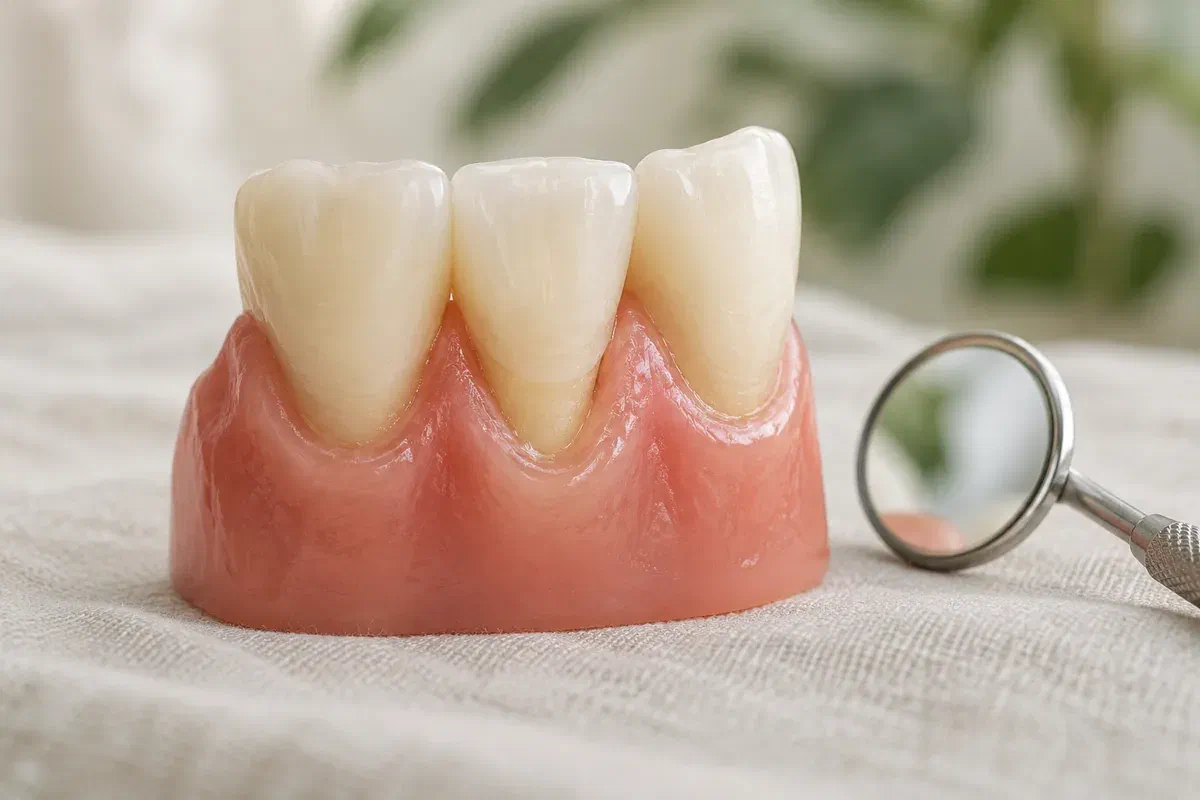
Illustrative teaching model showing an exposed tooth neck beside neighbouring teeth
Tell us about the last few months

What you tried, and what changed

There is no need to measure the gum. Bring the toothpaste or describe it, explain how the sensitivity behaved before and after, and share any older records or photos that might date the change.

The tooth or teeth where the gum looks lower

Note whether it is one site or several, along with orthodontic treatment, fillings at the gumline or earlier gum care. These points help steer the examination; they cannot establish the cause on their own, nor show whether the margin is still drifting.

How the sensitivity started and settled

Describe the original triggers, how long relief took, and whether twinges still appear. Exposed roots often respond well to sensitivity products, but decay, worn fillings and cracks can also ease temporarily. Pain that comes back, appears unprovoked or slowly gets stronger must be examined.

Brushing since the sensitivity eased

Some people relax their care once a tooth stops hurting, while others brush harder now that it can be tolerated. Tell us which describes you, and what aids you use. We will help you settle on a gentle, steady routine.

A tooth that no longer twinges can still have a gum worth checking. Swelling that comes up quickly, pus, severe pain, or a tooth beginning to wobble is a separate concern and needs a call straight away.

What the toothpaste cannot tell you

Comfort today, and the gum’s direction over time

Once the sensitivity has quietened, the useful questions shift to the gum. Is the tissue healthy or inflamed? Is there any evidence of periodontitis? Has the margin been recorded before? If there are no earlier measurements, this visit provides the first set, so that a future appointment can show whether anything has moved.

Your aims still count. Perhaps comfort was all you wanted and the toothpaste delivered. Perhaps you are now curious about the look of the tooth, or worried about further change. Ask what each recommendation is designed to address, and what would remain to be followed on its own.

Patient information: Cambridge University Hospitals — recession factors and soft-tissue grafting

A baseline independent of symptoms

Because sensitivity can come and go, measurements are a steadier guide. Ask which teeth are being tracked and how they will be compared. That record is far more informative than judging the gum by whether ice cream still stings.

Home care that keeps relief going

Review brushing force, the interdental aids that fit you and any irritation the clinician finds, and ask for a demonstration. Advice should suit your mouth. Thin gum tissue or a tooth set forward in the jaw is anatomy rather than anything you did wrong.

A clear purpose for any referral

If the site is complex, a periodontist may be suggested to assess it or discuss grafting. Ask what the referral is intended to answer. Attending that consultation does not commit you to an operation, and it should lay out benefits, limits, alternatives and recovery.

Four steps, one visit

What we check once the sensitivity has calmed

Let us know if any area is still tender or if gum checks unsettle you. The appointment is for understanding, and no treatment is arranged before you have heard the findings and choices.

  1. Hear how the sensitivity behaved

    We will ask when it began, what helped and how quickly, plus any earlier advice. Questions about smoking, general health and medicines may follow. Mention what you want from the visit: lasting comfort, a better appearance, or knowing whether the gum will keep moving.

  2. Examine gum, root and tooth

    The recession is assessed with gum health, the tooth’s condition and any restorations. Measurements are recorded, and imaging is used when a specific question needs it. Ask what the examination can confirm and whether older records would show if the change predates the sensitivity.

  3. Rule out other causes, then rank priorities

    If decay, a crack or active gum disease is found, that is dealt with first. Otherwise, the choice is usually between staying with the current sensitivity routine, adding measured follow-up, or asking a periodontist to look at the site. Ask what in the findings supports each one, and which you could combine.

  4. Leave with a routine and a recheck date

    You should know which products to keep using, how to clean the area and when it will be reviewed. Check which signs mean calling before then, and whether a referral is underway. If there are several steps, ask about their order.

Keeping things comfortable

Stay consistent, even when nothing hurts.

Home care should reflect what the examination found. Ask the team which products to continue, and avoid rotating through several new ones on your own, since that can make it harder to tell what is working.

Keep cleaning gently and thoroughly

Soft bristles, a light hand and an interdental aid sized for the gap usually work best. Once a tooth feels better it is tempting to brush harder; resist that, since it will not lift the gum. Let us know if an aid is uncomfortable.

Continue sensitivity care as advised

If the clinician recommends staying with a desensitizing toothpaste, or applies a protective treatment in the clinic, ask how long to continue and when it will be reviewed. Comfort is a good sign for the tooth, but it says nothing about where the gum sits.

Rely on the review, not the ice-water test

Attend the follow-up and describe any return of sensitivity or cleaning trouble. Measurements are repeated and the plan adjusted. Testing the tooth with cold drinks to see whether it still reacts tells you about the nerve, not the gum.

Next moves after relief

Carry on, treat something else, or seek a specialist view

Ask what each option is aiming at. Often, continuing gentle care and monitoring is enough, with the need for more reviewed as the comparison builds up.

When the gum looks stable and healthy

Continued home care and monitoring

Keeping up sensitivity care, refining technique and measuring the site at future visits may be all that is needed. It is reasonable to ask what makes observation the right call for your tooth, and what kind of change at a review would lead the clinician to suggest something more. A watch plan needs a defined review date, not an open-ended wait.

When decay, a crack or gum disease is found

Treatment for something the toothpaste masked

Sensitivity products can quiet symptoms from other problems too. If one is found, it needs its own care. Ask which diagnosis the treatment addresses and what it leaves alone; repairing a tooth does not reposition the gum.

When tissue condition warrants discussion

Periodontal opinion on grafting

A graft may be discussed to add gum tissue or cover part of the root at a suitable site. Outcomes vary with the tooth and technique. Ask about expected coverage, donor tissue, recovery and limits; full root coverage and lasting stability are not things anyone can guarantee.

Patient information: American Academy of Periodontology — gum graft procedures

Rockwood sensitivity FAQs

After the toothpaste starts working

General answers only. At the visit, the clinician sorts out how much of your original discomfort came from the exposed root and how much may have had another source, so describe the whole history.

(905) 876-4488
How long should a sensitivity toothpaste take to help?
Many people notice a difference within a few weeks of regular use, though it varies. If there is no improvement, or the pain changes, have the tooth checked rather than simply switching products.
If I stop the sensitivity toothpaste, will the pain come back?
It may, because the root is still exposed and the toothpaste works only while you keep using it. The clinician can advise whether to continue it long term, whether a different product would suit you, or whether protective care applied in the clinic would make more sense for that tooth.
Can the clinic apply something stronger for sensitive roots?
In some cases a clinician may apply a desensitizing agent or fluoride treatment to the exposed area. Whether it is suitable depends on the examination, so ask at your visit.
Do acidic drinks affect exposed roots?
Frequent acidic foods and drinks can contribute to wear on tooth surfaces, and root surfaces may be more vulnerable. The team can discuss practical habits, such as timing and rinsing with water.
Could my sensitivity have been a cavity all along?
It is possible. Decay near the gumline can cause similar symptoms, and a toothpaste may reduce them for a while. That is one reason an examination is worthwhile even after relief.
My tooth feels fine now. Why do I still need a gum review?
Comfort shows the nerve is calmer, not that the gum has stopped receding. A recorded baseline and review are how you find out whether the gum is stable.
Arranging a visit from Rockwood

Relief is a good start. Let’s check the rest.

Call Milton Dental Clinic about a receding gum, an uncovered root, or sensitivity that has eased but left you wondering. Bring the products you have used and any old records, and we will look at the area together.

Treatment and referral recommendations depend on your examination.

Visit Milton Dental Clinic
Unit 1, 342 Bronte St. S, Milton, ON L9T 5B7
Get directions Clinic hours
Monday–Thursday
11am–7pm
Friday–Sunday
By appointment only

Areas we serve

  • Milton
  • Oakville
  • Mississauga
  • Georgetown
  • Halton Hills
  • Acton
  • Campbellville
  • Brampton
  • Burlington
  • Puslinch
  • Rockwood
  • Erin
  • Caledon
  • Etobicoke
  • Old Milton
  • Bronte Meadows
  • Timberlea
  • Dorset Park
  • Dempsey
  • Clarke
  • Beaty
  • Coates
  • Harrison
  • Scott
  • Willmott
  • Ford
  • Bowes
  • Cobden
  • Walker
  • Mountain View
  • Milton Heights
  • Hawthorne Village
  • Valley View
  • Fallingbrook
  • Nassagaweya
  • Trafalgar
  • Esquesing
  • Nelson
  • Brookville
  • Moffat
  • Glen Williams
  • Norval
  • Limehouse
  • Stewarttown
  • Ashgrove
  • Hornby
  • Silver Creek
  • Speyside
  • Scotch Block
  • North Oakville
  • River Oaks
  • Glen Abbey
  • West Oak Trails
  • Palermo
  • Bronte Creek
  • College Park
  • Joshua Creek
  • Uptown Core
  • Preserve
  • Iroquois Ridge
  • Lisgar
  • Meadowvale
  • Meadowvale Village
  • Churchill Meadows
  • Erin Mills
  • Central Erin Mills
  • Streetsville
  • East Credit
  • Creditview
  • Heartland
  • Sheridan
  • Mount Pleasant
  • Credit Valley
  • Huttonville
  • Churchville
  • Springbrook
  • Northwest Brampton
  • Bram West
  • Fletcher's Meadow
  • Fletcher's Creek South
  • Alton Village
  • Orchard
  • Millcroft
  • Headon Forest
  • Tansley
  • Brant Hills
  • Tyandaga
  • Kilbride
  • Lowville
  • Aberfoyle
  • Morriston
  • Arkell
  • Hillsburgh
  • Freelton
  • Carlisle
  • Waterdown
  • Flamborough
  • Mountsberg

How can we help?

Milton Dental Clinic

Have a question about your smile? Choose the option that works best for you.

For urgent dental concerns, please call.
Messages are reviewed during clinic hours.