

Illustrative patient and clinician discussing assessment of a retained tooth root
Specialized Care

Retained Root Removal in Brampton

Swelling near an old tooth site that settles, then returns, deserves more than another round of guesswork. For adults in Brampton, we can look for the source, check whether a retained root is involved, and explain removal, monitoring or referral.

Flare-ups that keep returning

Why does the same spot keep swelling?

A tender bump on the gum that calms down for a while and then flares again is one way a retained root can make itself known. The fragment may be what is left of a tooth that broke at the gumline, or a tip that stayed after an extraction. Recurring swelling can have other causes too, so the source needs confirming.

Finding a root does not automatically mean it must come out. The clinician looks at the pattern of symptoms, signs of infection, where the fragment lies and what removal would risk. A decayed root just under the surface that keeps causing abscesses is a very different case from a quiet tip deep in the bone near a nerve.

When you call from Brampton, describe how often the swelling returns, how long each episode lasts, and what has helped. Mention any previous extraction or treatment in that area and bring records if you have them. We can then plan the assessment and talk about whether an oral surgeon’s input would be useful.

Book an assessment for the flare-ups
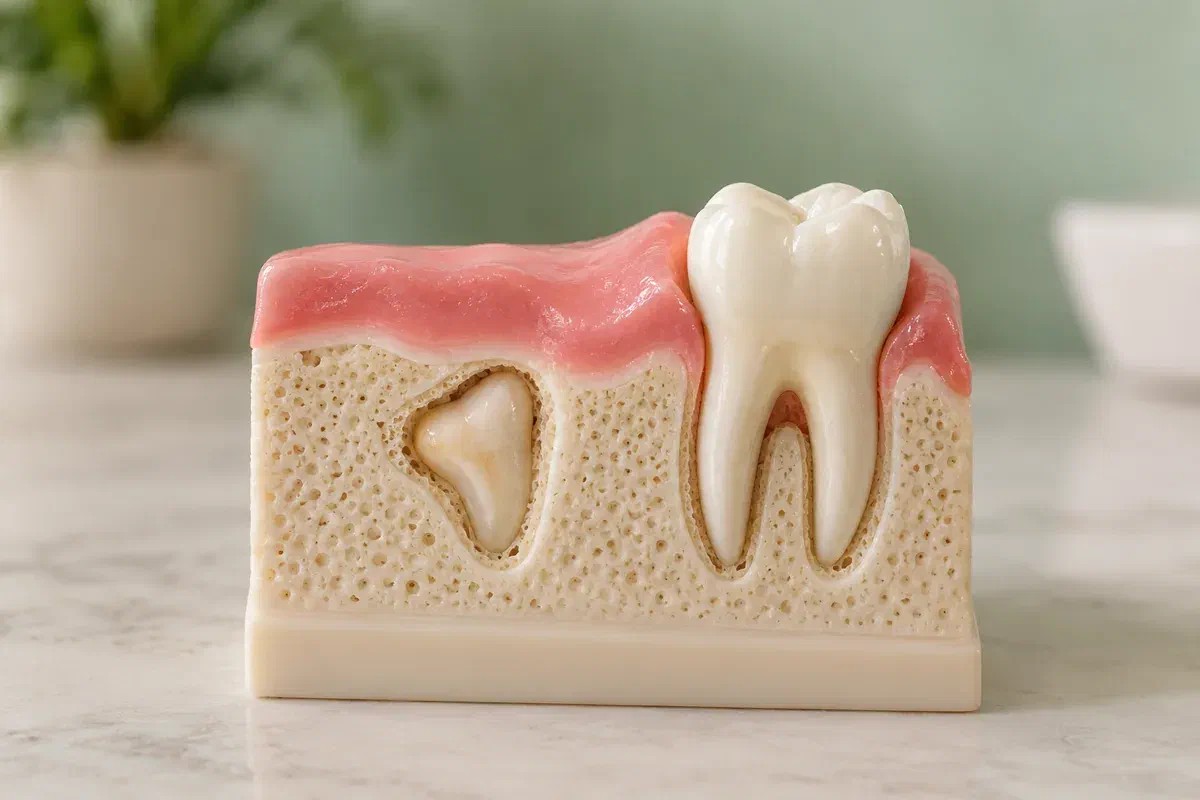
Illustrative cutaway teaching model showing a buried root fragment beside an intact tooth
Patterns worth reporting

Track the cycle. It tells the clinician a lot.

Working out whether the fragment is infected is not your job. A short timeline of the flare-ups, what you have tried and what you were told before is the most helpful thing to bring.

Swelling, pain or discharge that comes and goes

Note when each episode starts, how long it lasts, and whether it returned after treatment such as a course of antibiotics. Fever or swelling that is spreading should be mentioned right away. Only an examination identifies the source, as the root nearby may or may not be responsible.

A gum bump or hard edge at the old site

Some people notice a small pimple-like spot on the gum, or a rough edge they can feel. Do not squeeze it or try to dig anything out. Tell the team when it appeared and whether it interferes with eating, brushing or a removable appliance.

Flare-ups delaying a replacement

Repeated soreness can stall plans for an implant, bridge or denture. Ask whether the fragment is relevant to that specific plan and what needs to be clarified first. The decision about the root is made alongside the replacement, not as an automatic step toward surgery.

Swelling that is spreading quickly, trouble breathing or swallowing, or heavy bleeding that will not stop are reasons to call 911 or attend emergency care. If your symptoms are urgent but do not include these signs, phone the clinic to discuss assessment.

What the assessment aims to settle

Find the source first, then decide on the fix.

When symptoms keep returning, the consultation should tell you whether the root is likely behind them and whether removing it would help. You can expect an explanation of what treatment would target, what tends to happen if a problem fragment stays, and which risks are tied to the procedure itself. The advice should fit your findings.

Breaking the cycle and replacing the tooth are two different tasks. Removing a fragment may stop the flare-ups and still leave a space to be planned. Bring up healing time, whether the site will be rechecked, what restorative steps might follow, and who will coordinate them after the infection or soreness has settled.

Patient information: York and Scarborough Teaching Hospitals — retained fragments and surgical risks

A clearer sense of what is causing the flare-ups

Examination and suitable imaging can show where the fragment is and whether there are signs of infection around it or a nearby tooth. Ask to have the findings explained in plain terms and whether further imaging would change the plan. Each image should answer a useful question.

A clear reason for where care takes place

How accessible the root is, your anatomy and medical history, and the procedure required all shape who should treat it. Ask why care can be provided here or why a surgeon is recommended. A referral should set out the question and pass along existing findings.

A watchful plan if removal waits

If the root is not to be removed yet, find out which signs should prompt a call and when the next check will be. Keep a record of the decision. Monitoring a fragment that has caused flare-ups means acting quickly if swelling returns, not waiting it out.

What to expect on the day

A careful history, an examination, and a plan you agree to

If past flare-ups or a hard extraction have left you anxious about more treatment, tell us when you book. It helps the clinician explain each step and plan support for the appointment.

  1. Your symptom history and health review

    Share the pattern of flare-ups, any antibiotics or other treatment you have had, and what you were told about the area. The clinician reviews medicines and medical conditions, including bone-related treatment or prior jaw radiotherapy. Keep taking prescribed medicines unless the prescribing clinician advises otherwise.

  2. Checking the gum, nearby teeth and images

    The site and neighbouring teeth are examined and any records reviewed before a likely cause is explained. Imaging is considered where it helps. You can ask whether the fragment is reachable, whether nearby anatomy affects removal, and whether a specialist opinion would add to the picture.

  3. Talking through removal, monitoring and referral

    The reasons for treatment, expected benefit, alternatives and relevant risks are discussed. If removal is advised, find out whether surgical access is likely and what will be done for comfort. Confirm what has been agreed and how any unexpected finding during treatment would be handled.

  4. Aftercare and what comes next

    When the root is removed, the approach depends on where it sits and may involve opening the gum. You will be told what the clinician did, if any stitches were placed, and whether a review is needed. Take written aftercare home and confirm the plan for replacing the tooth, if that is next.

After removal

Healing well means watching for the right signs.

Recovery depends on the access needed, where the root was and anything else done at the visit. Rely on the written instructions you receive, not on what helped during a past flare-up.

Let the site settle undisturbed

Avoid picking, pulling at stitches or prodding the area to check for leftover pieces. Follow the cleaning, eating and activity advice you were given. If a hard spot appears, describe it to the team instead of trying to remove it.

Medicines exactly as directed

Understand your prescription and report any suspected reaction or difficulty taking it. Do not finish an old antibiotic course from a previous flare-up, and do not alter blood-thinning medicine without direction. After sedation, follow its separate transport, supervision and activity rules even if you feel fine.

Act on symptoms that are getting worse

Check whether a review is planned and when replacement can be discussed. Call about rising pain, swelling that returns or grows, bleeding that continues, or altered sensation that is not improving. Do not hold off for a scheduled visit if things are heading the wrong way.

Deciding what to do with the root

Each option should come with its reasoning.

The right choice depends on the fragment, the flare-ups and your health. Compare the benefit of each option with its risks, and ask what would change the advice.

When repeated infection, decay or the treatment plan support it

Removing a fragment linked to symptoms

If assessment points to the root as the source, removal may be recommended. It can be straightforward or need surgical access. Ask what removal should achieve, whether further care is needed, and which complications are relevant to this specific root.

When removal carries more risk than benefit

Monitoring with a written plan

Some fragments are left because the risks of removing them outweigh the gains. That needs an individual assessment, and a quiet spell between flare-ups does not settle it. Learn what is known, how it will be reviewed, and which changes mean coming back promptly.

When anatomy, medical history or access complicates removal

An oral surgeon’s assessment

A specialist may help with a deep fragment or one near important structures. Confirm what the referral is meant to resolve and whether your records will go with it. Until the appointment, follow the interim advice and report any change in symptoms or general health.

Flare-up questions from Brampton

Answers for a problem that keeps coming back

A record of past flare-ups and treatments is useful, but you do not need complete notes to book. Tell us what you remember and what you most want to understand.

(905) 876-4488
Why did my swelling go down with antibiotics and then come back?
Antibiotics can calm an infection for a time, but they do not remove a root or other source of the problem. If the cause is still there, symptoms may return. An examination helps identify what is driving the flare-ups and whether local treatment is needed.
Is a pimple on my gum near an old extraction site serious?
It can be a sign of infection draining from the area, and it should be assessed even if it does not hurt. The source may be a retained root, a neighbouring tooth or the gum itself. Avoid squeezing it and call to arrange an examination.
Can a retained root cause an abscess years after the extraction?
It can happen, although many retained fragments never cause trouble. Decay or infection around a fragment can develop later. If you notice swelling, discharge or pain near an old site, arrange an assessment rather than assuming it will settle on its own.
Should I wait for the next flare-up so the clinician can see it?
No. The clinician can assess the area between episodes, and your description of the pattern is valuable. Waiting for a flare-up can mean seeking care when you are sore and swollen. If an episode does start, call promptly, especially if swelling spreads.
Does a quiet spell mean the root has healed on its own?
Not necessarily. Symptoms can settle temporarily even when the underlying cause remains. A period without swelling is useful information but does not replace an examination. The clinician can tell you whether the fragment looks stable or whether treatment is advised.
What should I note down between flare-ups?
Keep a simple log: the date each episode starts, how long it lasts, what it feels like, and any treatment you used. Note whether there was fever or swelling beyond the gum. Bring the log along with any records, since the pattern often helps the clinician narrow down the cause.
Book from Brampton

Bring the pattern. We will look for the cause.

Reach us by phone or online about recurring swelling near an old site, a suspected root, or one already identified. Tell us about symptoms, earlier surgery and any replacement plan, so we can discuss the right assessment and what records to bring.

For urgent symptoms, call the clinic. Treatment or referral advice is given after the site is examined.

Visit Milton Dental Clinic
Unit 1, 342 Bronte St. S, Milton, ON L9T 5B7
Get directions Clinic hours
Monday–Thursday
11am–7pm
Friday–Sunday
By appointment only

Areas we serve

  • Milton
  • Oakville
  • Mississauga
  • Georgetown
  • Halton Hills
  • Acton
  • Campbellville
  • Brampton
  • Burlington
  • Puslinch
  • Rockwood
  • Erin
  • Caledon
  • Etobicoke
  • Old Milton
  • Bronte Meadows
  • Timberlea
  • Dorset Park
  • Dempsey
  • Clarke
  • Beaty
  • Coates
  • Harrison
  • Scott
  • Willmott
  • Ford
  • Bowes
  • Cobden
  • Walker
  • Mountain View
  • Milton Heights
  • Hawthorne Village
  • Valley View
  • Fallingbrook
  • Nassagaweya
  • Trafalgar
  • Esquesing
  • Nelson
  • Brookville
  • Moffat
  • Glen Williams
  • Norval
  • Limehouse
  • Stewarttown
  • Ashgrove
  • Hornby
  • Silver Creek
  • Speyside
  • Scotch Block
  • North Oakville
  • River Oaks
  • Glen Abbey
  • West Oak Trails
  • Palermo
  • Bronte Creek
  • College Park
  • Joshua Creek
  • Uptown Core
  • Preserve
  • Iroquois Ridge
  • Lisgar
  • Meadowvale
  • Meadowvale Village
  • Churchill Meadows
  • Erin Mills
  • Central Erin Mills
  • Streetsville
  • East Credit
  • Creditview
  • Heartland
  • Sheridan
  • Mount Pleasant
  • Credit Valley
  • Huttonville
  • Churchville
  • Springbrook
  • Northwest Brampton
  • Bram West
  • Fletcher's Meadow
  • Fletcher's Creek South
  • Alton Village
  • Orchard
  • Millcroft
  • Headon Forest
  • Tansley
  • Brant Hills
  • Tyandaga
  • Kilbride
  • Lowville
  • Aberfoyle
  • Morriston
  • Arkell
  • Hillsburgh
  • Freelton
  • Carlisle
  • Waterdown
  • Flamborough
  • Mountsberg

How can we help?

Milton Dental Clinic

Have a question about your smile? Choose the option that works best for you.

For urgent dental concerns, please call.
Messages are reviewed during clinic hours.