

Illustrative patient and clinician discussing assessment of a retained tooth root
Specialized Care

Retained Root Removal in Georgetown

A back tooth that broke off at the gumline years ago can leave its root behind. From Georgetown, you can have that remaining part examined and learn whether removal, keeping an eye on it, or a specialist opinion is the sensible next move.

After a tooth breaks down

When a tooth snaps at the gumline, the part you cannot see still matters.

Teeth weakened by decay or large fillings sometimes break away bit by bit until only the root is left, sitting level with the gum or slightly below it. People often live with this for a long time, especially if it does not hurt. Retained roots can also be left after an extraction, and the same questions apply.

What should happen next depends on the specifics. The clinician weighs any pain or infection, the condition of the root, its position and how difficult it would be to reach. An exposed, decaying stump that traps food and flares up is a different matter from a small fragment buried deep near a nerve or the sinus.

From Georgetown, it helps to come in with a simple account: roughly when the tooth broke, whether it has ever been treated, and whether anyone has suggested taking it out. Bring images or notes if you have them. We can then talk about the assessment and whether a referral to an oral surgeon would be sensible.

Ask about a broken-down tooth
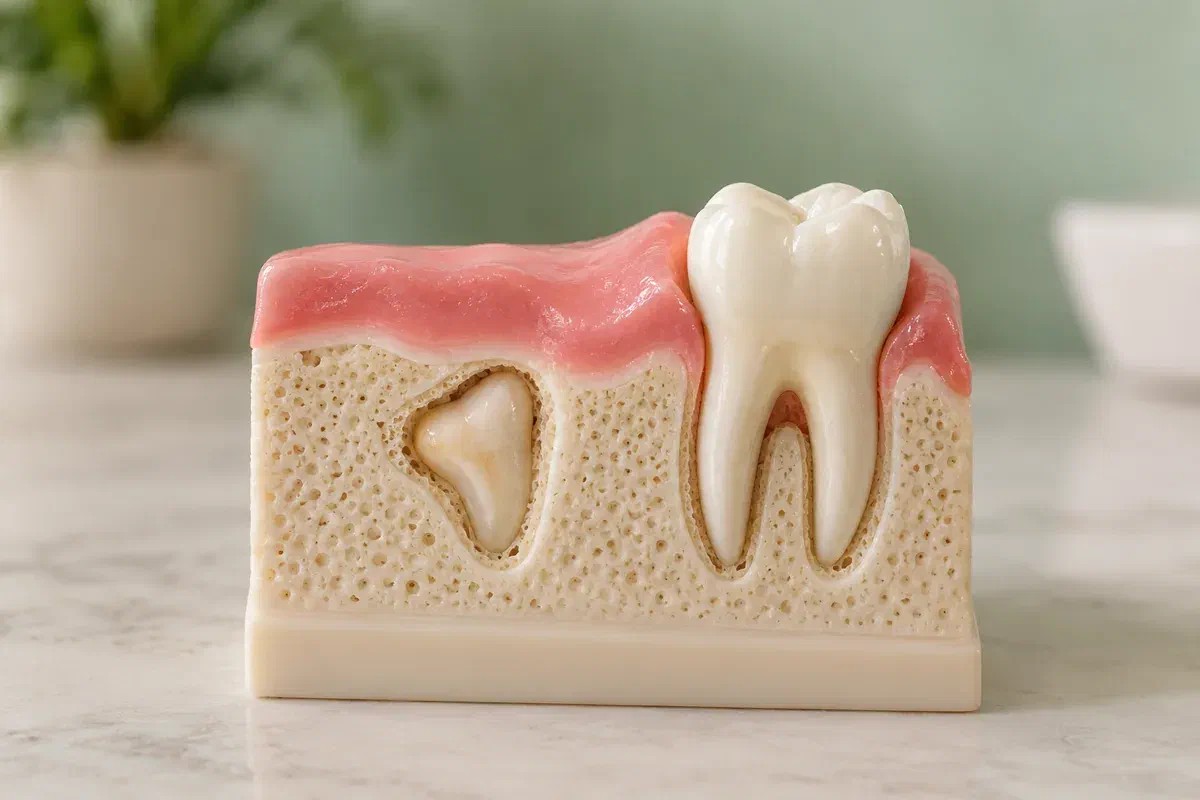
Illustrative cutaway teaching model showing a buried root fragment beside an intact tooth
Signs that suggest a review

The root may be quiet, or it may be telling you something.

Judging whether the root is infected is the clinician’s task. Describe what you have noticed, how long the tooth has been broken, and any advice you were given, so the assessment has the right context.

Aching, gum swelling or a bad taste

Let us know about any of these, including whether they come and go. If you have a temperature or the swelling is widening, say so on the phone. The source has to be confirmed by examination, because pain near a broken tooth can also come from the gum or a neighbouring tooth.

Jagged edges or food trapping

A broken root can feel rough and catch food or floss. Avoid trying to smooth or remove it. Note whether it cuts your tongue or cheek, makes cleaning the area awkward, or interferes with a partial denture you wear.

Thinking about filling the gap

If you are considering a bridge, denture or implant, the remaining root becomes part of that conversation. Ask how it affects your preferred option and what information is needed before deciding. Its presence is weighed alongside the plan rather than being an automatic reason for surgery.

Seek emergency medical care by calling 911 if you have difficulty breathing or swallowing, swelling that spreads quickly, or bleeding that will not stop. For urgent dental symptoms without these warning signs, call the clinic and we will talk about assessment options.

Why an assessment is worthwhile

A clear answer about the part of the tooth that remains

The consultation should spell out the trade-off between leaving the root and removing it. You can expect to learn what removal would address, what might happen if the root stays, and which risks come with the procedure. Because broken roots vary widely, the recommendation should come from what is found, not from a rule of thumb.

It can also keep the removal question separate from the replacement question. Taking out a broken root may deal with infection or food trapping, while the gap still needs its own plan. Discuss healing, reassessment, any restorative work and who will coordinate the next stage once the immediate issue is resolved.

Patient information: York and Scarborough Teaching Hospitals — retained fragments and surgical risks

An explanation of the root’s condition and location

Suitable imaging can show how much root remains and what lies near it. Ask for the findings in plain terms and whether more imaging would change the recommendation. Images are worthwhile when they help answer a specific question about your care.

Reasons behind the treatment setting

How easy the root is to reach, your anatomy, your medical history and the procedure needed all affect who should provide care. It is reasonable to ask whether this clinic is the right place for it or whether a specialist should take over. A referral should state its purpose and include the findings so far.

A plan if the root is left for now

When removal is not recommended yet, find out what follow-up suits your situation and which symptoms mean you should phone. Write the decision down somewhere you will find it. Monitoring a broken root is an active plan and does not mean ignoring new swelling or pain.

How the visit goes

From a broken tooth to a plan you are comfortable with

Some people put off dealing with a broken tooth because of worry about treatment. If that is you, tell us. The clinician can explain each step and plan support for the appointment.

  1. Review the tooth’s history and your health

    Explain when the tooth broke, whether it was ever treated, and what you have been told. The clinician reviews your medicines and health conditions, such as treatment that affects the bones or past radiation to the jaw. Do not stop a prescribed medicine yourself; changes must come from the prescriber.

  2. Examine the root and the surrounding area

    The gum, neighbouring teeth and any records are assessed before the likely cause of symptoms is explained. Images are taken only if they help decide. It is fair to ask how deep the root sits, what lies close to it, and whether an oral surgeon ought to see it.

  3. Talk through removal, monitoring and referral

    You will hear why treatment might be advised, what it should achieve, what else could be done, and which risks are worth knowing about. If removal is proposed, find out whether a surgical approach is likely and how pain will be managed. Agree on the plan in advance and how unexpected findings would be communicated.

  4. Leave with instructions and the next step

    Taking out a broken root can be simple, or it may mean opening the gum a little to reach it, depending on where it lies. Find out what the clinician did and whether you need stitches checked or a review visit. Take written aftercare home and confirm what happens next if the gap is to be filled.

Caring for the site afterward

Healing goes best when the area is left to settle.

Recovery advice depends on how the root was reached, where it was and whether other treatment was done. The written instructions you receive take priority over general tips.

Leave the site undisturbed

Avoid poking at the area, pulling on stitches or using a toothpick to check for remaining fragments. Follow your instructions on cleaning, meals and activity. If you feel a new sharp spot, tell the team instead of trying to remove it.

Take medicines as instructed

Be clear on any prescription and report a suspected reaction or difficulty following the plan. Old antibiotics stay unused, and blood-thinning medicine stays as prescribed unless its prescriber says otherwise. If you had sedation, follow its transport, supervision and activity instructions even if your mouth feels comfortable.

Keep follow-up appointments and report changes

Find out if a review visit is planned and when the replacement plan can be discussed. Contact the clinic about pain that is getting worse, swelling that increases, bleeding that continues, or numbness that is not improving. Do not wait for a scheduled review if things are deteriorating.

Managing a broken-down root

Choosing a path should never be a guess.

The right choice depends on the root and on you. Compare the expected benefit with the risks, and ask what would change the recommendation.

When infection, decay or your replacement plan supports it

Removing the remaining root

After assessment, the clinician may recommend removal. Some broken roots come out simply; others need surgical access. Ask what it is meant to fix, whether more treatment comes after, and which complications actually apply to your root.

When taking it out would do more harm than good

Leaving it under observation

Some roots are better left when removal would carry more risk than it is worth. That decision requires an individual assessment, not simply an absence of pain. Ask what has been found, when it will next be looked at, and which changes mean coming back.

When position, anatomy or medical history makes it complex

Seeking a specialist opinion

Roots that sit deep, or close to a nerve or the sinus, may benefit from an oral surgeon’s view. Before you go, know what question the specialist is being asked, and make sure your images travel with you. Until then, follow interim advice and let us know about changes in your symptoms or health.

Georgetown questions about broken teeth

What to know when only the root is left

It does not matter how long ago the tooth broke or whether you have old records. Tell us what you remember, and we can answer your questions from there.

(905) 876-4488
My tooth broke years ago and does not hurt. Does the root still need attention?
It is worth having it assessed. Some broken roots stay quiet, while others develop decay or infection without much warning. The clinician checks the root and surrounding area and explains whether removal, monitoring or another approach makes sense.
Can a broken-off tooth be saved instead of removed?
Sometimes, depending on how much tooth remains and the health of the root and surrounding bone. Options may include restoring it with further treatment, though that is not always possible. The clinician will explain whether the root can be kept or whether removal is the better choice.
Is a root left from a broken tooth different from one left after an extraction?
The origin can differ, but the assessment questions are similar: is it causing symptoms, is there disease, where does it sit, and what would removal involve. Tell the clinician how the tooth was lost, if you know, because the history can help explain what is found.
Why does food keep getting stuck around the broken root?
Rough, uneven edges left by a broken root create small gaps where food collects. That can make cleaning difficult and may contribute to gum irritation or decay. Mention it at your visit so the clinician can assess the area and suggest how to manage it.
Can I take painkillers and wait to see if the ache goes away?
Over-the-counter pain relief used as directed on the label may help in the short term, but it does not treat the cause. If the ache persists, returns or comes with swelling, arrange an assessment. Seek urgent care for spreading swelling or difficulty breathing or swallowing.
What happens to the gum after a broken root is removed?
The gum and bone gradually heal over the site. The clinician will explain what to expect, including whether stitches were used and when the area should be reviewed. If you plan to replace the tooth, ask when healing will be far enough along to discuss that.
From Georgetown, book a root assessment

However long it has been, it is worth a look.

Get in touch about a broken tooth, a suspected retained root, or one already noted on an X-ray. Share your symptoms, any earlier treatment and your thoughts on replacing the tooth, so we can suggest which assessment and records would help.

Call us about urgent symptoms. Recommendations follow an examination of the site.

Visit Milton Dental Clinic
Unit 1, 342 Bronte St. S, Milton, ON L9T 5B7
Get directions Clinic hours
Monday–Thursday
11am–7pm
Friday–Sunday
By appointment only

Areas we serve

  • Milton
  • Oakville
  • Mississauga
  • Georgetown
  • Halton Hills
  • Acton
  • Campbellville
  • Brampton
  • Burlington
  • Puslinch
  • Rockwood
  • Erin
  • Caledon
  • Etobicoke
  • Old Milton
  • Bronte Meadows
  • Timberlea
  • Dorset Park
  • Dempsey
  • Clarke
  • Beaty
  • Coates
  • Harrison
  • Scott
  • Willmott
  • Ford
  • Bowes
  • Cobden
  • Walker
  • Mountain View
  • Milton Heights
  • Hawthorne Village
  • Valley View
  • Fallingbrook
  • Nassagaweya
  • Trafalgar
  • Esquesing
  • Nelson
  • Brookville
  • Moffat
  • Glen Williams
  • Norval
  • Limehouse
  • Stewarttown
  • Ashgrove
  • Hornby
  • Silver Creek
  • Speyside
  • Scotch Block
  • North Oakville
  • River Oaks
  • Glen Abbey
  • West Oak Trails
  • Palermo
  • Bronte Creek
  • College Park
  • Joshua Creek
  • Uptown Core
  • Preserve
  • Iroquois Ridge
  • Lisgar
  • Meadowvale
  • Meadowvale Village
  • Churchill Meadows
  • Erin Mills
  • Central Erin Mills
  • Streetsville
  • East Credit
  • Creditview
  • Heartland
  • Sheridan
  • Mount Pleasant
  • Credit Valley
  • Huttonville
  • Churchville
  • Springbrook
  • Northwest Brampton
  • Bram West
  • Fletcher's Meadow
  • Fletcher's Creek South
  • Alton Village
  • Orchard
  • Millcroft
  • Headon Forest
  • Tansley
  • Brant Hills
  • Tyandaga
  • Kilbride
  • Lowville
  • Aberfoyle
  • Morriston
  • Arkell
  • Hillsburgh
  • Freelton
  • Carlisle
  • Waterdown
  • Flamborough
  • Mountsberg

How can we help?

Milton Dental Clinic

Have a question about your smile? Choose the option that works best for you.

For urgent dental concerns, please call.
Messages are reviewed during clinic hours.