

Illustrative patient and clinician discussing assessment of a retained tooth root
Specialized Care

Retained Root Removal in Milton

Heard the word “root” at your last checkup and not sure what it means? We can explain what was seen, how it relates to any symptoms, and whether removal, monitoring or a specialist opinion makes sense for you in Milton.

When an X-ray shows more than expected

A root on an image is a finding, not a verdict.

Many people first hear about a retained root during a routine visit, when an X-ray taken for something else shows a piece of tooth sitting under the gum. It might be left from a tooth that broke down years ago or from an earlier extraction. Some cause no trouble at all; others are linked to pain, swelling or infection.

What happens next depends on details: where the fragment lies, what condition it is in, whether there are signs of disease, and how risky it would be to reach. A decayed root near the surface that keeps flaring up is a different conversation from a tiny tip resting close to a nerve or the sinus.

Because you are already close to our Bronte Street practice, a follow-up look is easy to fit into your week. Tell us what you remember about the tooth, any previous extraction, and any plan you were given. Bring records or images if you have them, and we can talk through assessment and whether an oral surgeon should weigh in.

Book a visit to talk about the root
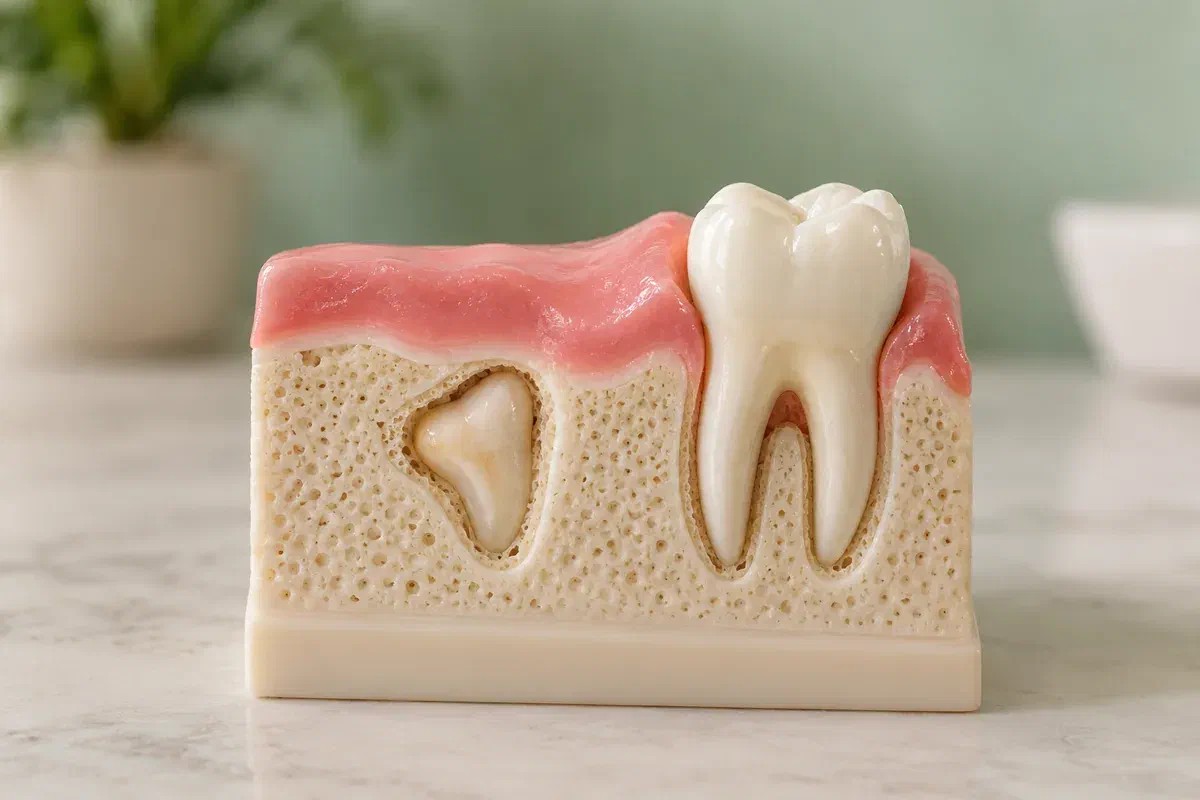
Illustrative cutaway teaching model showing a buried root fragment beside an intact tooth
Reasons to have it looked at

What you feel, what you remember, and what you are planning all count.

There is no need to work out on your own whether the root is a problem. Share what you have noticed and anything a previous dentist said, and the clinician can examine the area with that background in mind.

Soreness, puffiness or a recurring bad taste

Mention any pain, swelling or drainage near the area and whether it has come back after earlier care. If you have a fever or swelling that is spreading, say so when you call. An exam is what identifies the source, since tenderness nearby is not proof that the fragment is responsible.

Something sharp your tongue keeps finding

A rough point at the gumline could be root, bone or old filling material, particularly after an extraction. Leave it alone rather than picking at it. Note when you first felt it and whether it catches your tongue, rubs against a denture, or gets in the way of brushing.

Questions raised by a bridge, denture or implant plan

Planning a replacement tooth often brings an old site back under review. The useful question is whether the root matters for that specific plan and what would need to be known first. A fragment being there is a reason to assess it alongside the restoration, not an automatic ticket to surgery.

Trouble breathing or swallowing, swelling that is spreading quickly, or bleeding that will not stop needs emergency medical care, so call 911 for anything immediate. For an urgent dental problem without those signs, phone the clinic to ask about the next available assessment.

What the visit should give you

Reasons for acting, and reasons for holding back, laid out plainly.

A good consultation weighs leaving the root against taking it out. You should hear what treatment would aim to fix, what could happen if nothing is done, and which risks belong to the procedure itself. Every fragment is different, so the advice should rest on what is found in your mouth rather than a general rule.

The visit can also pull apart two decisions that often get tangled: dealing with the root and replacing the missing tooth. Taking out a fragment may settle one problem while leaving the gap unfinished. Talk about healing time, any reassessment, further restorative work, and who will coordinate each step once the immediate issue is handled.

Patient information: York and Scarborough Teaching Hospitals — retained fragments and surgical risks

A plain-language picture of where it sits

Suitable imaging can show the fragment and how close it lies to nearby structures. Ask for the finding to be explained without jargon, and whether another view would actually change the plan. Extra images are useful only when they answer a real clinical question.

Clarity on who should do the treatment

How easy the root is to reach, your anatomy, your health history and the planned procedure all shape where care should happen. You can ask why a general dental setting fits or why a referral is suggested. Any referral should state its purpose and carry the information already gathered.

A real plan if the decision is to wait

When removal is not advised for now, find out what follow-up makes sense and which symptoms mean you should call. Keep a note of the decision for future dentists. Watching a root is a deliberate plan built on the exam, and it never means ignoring new swelling or other changes.

How the appointment unfolds

History first, then the exam, then a choice you understand.

If the original extraction was hard going, or the idea of more treatment makes you uneasy, let us know at the start. That background helps the clinician pace the explanation and plan support for the visit.

  1. Go over symptoms, past treatment and your health

    Share when the tooth broke or came out and what you were told back then. The clinician reviews your medicines and conditions, including any bone-related treatment or past radiation to the jaw. Keep taking prescribed medicine unless the clinician who manages it directs a change.

  2. Check the site and look at the relevant images

    The tissues, neighbouring teeth and any records are examined before the likely cause is explained. Imaging is used when it helps the decision. Find out whether the root can be reached easily, whether nearby structures complicate removal, and whether a specialist would add something useful.

  3. Weigh removal, observation and referral side by side

    Talk through the reason for treatment, the expected benefit, the alternatives and the risks that matter. If removal is suggested, ask whether surgical access is likely and how pain will be controlled. Confirm the agreed plan beforehand and how anything unexpected would be handled and explained to you.

  4. Leave with instructions and a review date if needed

    When the root is removed, the technique depends on its position and can mean opening the gum to reach it. Ask what was done, whether stitches were placed, and whether you need to come back. Take written aftercare home and confirm the next step if a replacement tooth is planned.

Looking after the site

Your own instructions come first. Changes that matter get a call.

How recovery goes depends on how the root was reached, where it was, and what else was done. The written advice from the treating team outranks whatever you remember from an earlier extraction.

Let the area heal without checking on it

Resist poking the site, tugging at a stitch, or probing to see whether anything is left. Stick to the cleaning, eating and activity advice you were given. A new sharp spot is something to describe to the team, not something to remove on your own.

Take medicines exactly as directed

Confirm how to take anything prescribed and mention possible reactions or trouble following the plan. Leftover antibiotics stay in the cupboard, and blood thinners are not adjusted on your own. After sedation, follow the separate rules on getting home, supervision and activity, even if your mouth feels fine.

Keep the review and report what is getting worse

Find out whether a check is booked and when the replacement plan can be picked up again. Call about pain or swelling that is increasing, bleeding that persists, or numbness or tingling that is not settling. A scheduled review is no reason to sit through a decline.

Possible ways forward

Taking it out is one option. The reason should be spelled out.

The right approach depends on the fragment and on you. Ask how the expected benefit stacks up against the risks, and what new information might shift the advice.

When symptoms, disease or the treatment plan point toward it

Removing a root that needs attention

After examining the site and considering alternatives, the clinician may advise removal. It can be simple or may need surgical access. Ask what problem removal should solve, what care might follow, and which complications apply to this root specifically rather than to extractions in general.

When leaving the fragment carries less risk

Careful observation with a recorded plan

Some fragments are better left alone when removal would do more harm than good. That judgement needs an individual assessment, not just the absence of pain. Find out what is known about it, how it will be reviewed, and what changes should bring you back for another look.

When anatomy, health history or access makes it complex

A specialist opinion first

An oral surgeon can help with a deeply positioned root or one close to important structures. Clarify what the referral should answer and whether your records can be sent ahead. Until that appointment, follow the interim advice and report changes in symptoms or overall health.

What people ask about a root on their X-ray

Straight answers for a finding you did not expect.

Old records help, but not having them should not stop you from booking. Tell the clinician what you remember and which part of the decision feels unclear, and we will start from there.

(905) 876-4488
How can a root be there if I never felt anything?
Roots can sit quietly under the gum for years, especially once healed tissue covers them. They often show up only on an image taken for another reason. Feeling nothing is reassuring but not the whole story, so the clinician checks the area and surrounding bone before suggesting next steps.
Does finding a root mean my old extraction was botched?
Not necessarily. Roots can fracture during removal, and sometimes a small tip is left on purpose because chasing it would carry more risk. Earlier records may explain that decision. Today’s assessment focuses on the root’s condition and position, not on assigning blame for its presence.
Will the root have to come out on the same day it is assessed?
Not as a given. The first goal is to understand the site, your health history and the options. Sometimes treatment can be planned soon after; sometimes more imaging, a referral or a period of observation comes first. You will hear the reasoning before anything is booked.
Can a retained root affect the teeth beside it?
It can in some cases, for example if infection develops around it or decay is involved, but often it does not. The clinician examines the neighbouring teeth and gums as part of the visit and explains whether anything nearby is affected or simply worth keeping an eye on.
Is it safe to work the fragment loose myself if it is poking through?
Please don’t. You cannot tell at home what the hard piece is attached to, and pulling at it can cause bleeding or injury. Leave it be and arrange a visit, mentioning whether it is sore, sharp or interfering with eating so the right timing can be discussed.
Living in Milton, how quickly can I come back if something changes?
Call the clinic and describe what has changed, such as new swelling or pain, and we can discuss availability and how soon you should be seen. For trouble breathing or swallowing, or swelling that spreads fast, go to emergency care or call 911 rather than waiting for a dental appointment.
Talk to us in Milton about a retained root

Start with whatever you know about the tooth.

Get in touch with our Milton team about a root you suspect or one that has already been identified. Mention any symptoms, past surgery and a planned replacement tooth, and we can talk about the right assessment and which records would help.

Phone us for urgent symptoms. Any treatment or referral advice comes after the site is examined.

Visit Milton Dental Clinic
Unit 1, 342 Bronte St. S, Milton, ON L9T 5B7
Get directions Clinic hours
Monday–Thursday
11am–7pm
Friday–Sunday
By appointment only

Areas we serve

  • Milton
  • Oakville
  • Mississauga
  • Georgetown
  • Halton Hills
  • Acton
  • Campbellville
  • Brampton
  • Burlington
  • Puslinch
  • Rockwood
  • Erin
  • Caledon
  • Etobicoke
  • Old Milton
  • Bronte Meadows
  • Timberlea
  • Dorset Park
  • Dempsey
  • Clarke
  • Beaty
  • Coates
  • Harrison
  • Scott
  • Willmott
  • Ford
  • Bowes
  • Cobden
  • Walker
  • Mountain View
  • Milton Heights
  • Hawthorne Village
  • Valley View
  • Fallingbrook
  • Nassagaweya
  • Trafalgar
  • Esquesing
  • Nelson
  • Brookville
  • Moffat
  • Glen Williams
  • Norval
  • Limehouse
  • Stewarttown
  • Ashgrove
  • Hornby
  • Silver Creek
  • Speyside
  • Scotch Block
  • North Oakville
  • River Oaks
  • Glen Abbey
  • West Oak Trails
  • Palermo
  • Bronte Creek
  • College Park
  • Joshua Creek
  • Uptown Core
  • Preserve
  • Iroquois Ridge
  • Lisgar
  • Meadowvale
  • Meadowvale Village
  • Churchill Meadows
  • Erin Mills
  • Central Erin Mills
  • Streetsville
  • East Credit
  • Creditview
  • Heartland
  • Sheridan
  • Mount Pleasant
  • Credit Valley
  • Huttonville
  • Churchville
  • Springbrook
  • Northwest Brampton
  • Bram West
  • Fletcher's Meadow
  • Fletcher's Creek South
  • Alton Village
  • Orchard
  • Millcroft
  • Headon Forest
  • Tansley
  • Brant Hills
  • Tyandaga
  • Kilbride
  • Lowville
  • Aberfoyle
  • Morriston
  • Arkell
  • Hillsburgh
  • Freelton
  • Carlisle
  • Waterdown
  • Flamborough
  • Mountsberg

How can we help?

Milton Dental Clinic

Have a question about your smile? Choose the option that works best for you.

For urgent dental concerns, please call.
Messages are reviewed during clinic hours.