

Illustrative discussion of gum treatment using a dental teaching model
Specialized Care

Scaling and Root Planing in Acton

Most questions about root planing come up the evening after, at home. We explain the gum findings and treatment plan, then prepare you for the days that follow: tenderness, cleaning, food, what is normal, and when the sites will be rechecked.

Thinking ahead from Acton

The evening after, and the weeks that follow

The freezing wears off on the drive home, and suddenly there are questions. Can I brush tonight? Is this ache normal? Why does that tooth feel different against my tongue? Recovery after scaling and root planing is usually manageable, but it goes more smoothly when you know what to expect before you leave the chair.

Some background first. The treatment cleans calculus and bacterial biofilm off tooth and root surfaces affected by periodontal disease, often under the gum, after an assessment shows it is needed. Because it works on inflamed tissue, the gums often feel tender for a while and then gradually change shape as they settle. That healing period is also what the later review is designed to measure.

For anyone coming from Acton, a little preparation saves a phone call or a return trip. At our Bronte Street practice, we explain the findings and plan, then go through aftercare in plain terms, including which changes are expected and which mean you should call.

Prepare for treatment and recovery
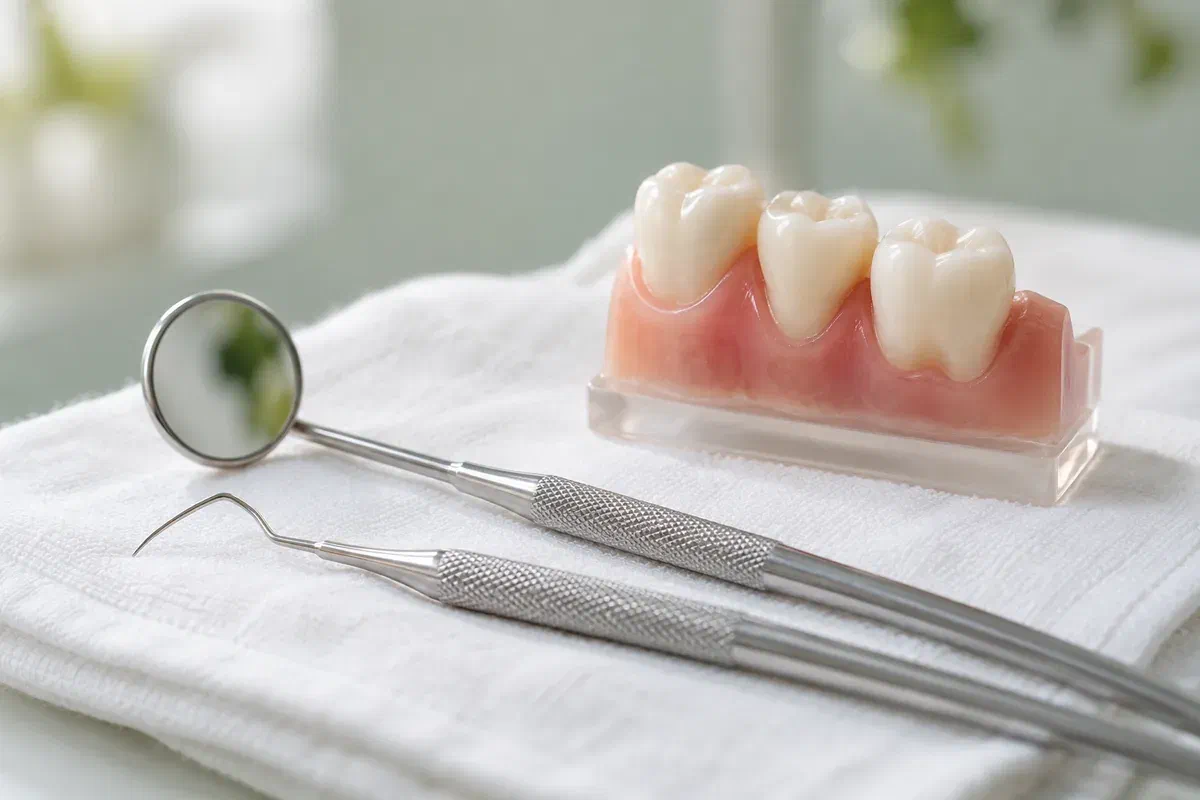
Illustrative periodontal cleaning instrument, mirror, and supported tooth model
Before recovery comes the reason

What the examination found

A recommendation for root planing comes from several findings together. What you notice day to day is helpful context, but gums can lose support with no discomfort, so feeling fine is not a reliable sign.

Inflamed gums, bleeding, or visible tartar

Let the team know where bleeding shows up and whether cleaning certain teeth has become sore. The exam distinguishes gum-edge inflammation from deeper involvement. Ask how the findings at each tooth connect to the treatment, since that also shapes what recovery will look like in those areas.

Earlier pocket charts or bone changes

Previous records, X-rays, or a specialist letter help show how things have changed. Bring them if you can. The clinician can then explain which areas need active treatment now and which only need monitoring, rather than treating the whole mouth the same way.

Sites that are hard to clean at home

Sensitive roots, crowding, stiff hands, or uncertainty about technique can all leave plaque behind, and the same spots may be tricky to care for after treatment. Mention them. Practical, realistic advice matters more than a long shopping list of products.

Swelling that hurts, any discharge of pus, a fever, or a tooth that has abruptly started to feel different needs a prompt call, whether it happens before treatment or during recovery. These signs should not wait for a booked cleaning, because the urgency and the type of care may need to change, and an earlier visit may be the safer choice.

What healing is working toward

Calmer tissue you can keep clean

Root planing aims to remove the deposits that keep gums inflamed, so periodontal disease can be brought under better control. Ask the clinician what improvement they expect at each treated site, and what is not likely to change. Lost bone and attachment may not come back, and some teeth will respond better than others.

Healing is not just something to get through; it is part of the result. After an appropriate interval, the clinician measures the same sites again and compares them. Some may be ready for maintenance, others may need more treatment or a periodontist’s opinion, and the review should make that clear.

Root surfaces cleaned below the gumline

Specialized instruments reach deposits that brushing misses. Find out which teeth are on the list and why, so you know where to expect tenderness afterwards. A long appointment reflects the extent of the condition, not any failing on your part.

A cleaning plan for the healing period

Ask for a demonstration of how to clean around the treated teeth while they are tender, and how that will change once they settle. Different gaps may need different aids. Say what you are comfortable using so the plan is realistic.

A check on how healing went

The reassessment compares fresh measurements with the starting chart. Ask what will be looked at and how it guides future visits. Less tenderness and bleeding are welcome, but they are not the same as stable gums.

On the day

From the chair to your front door

Mention past cleanings that were uncomfortable, sensitive roots, or worries about freezing. We cover comfort before beginning and agree on a signal you can use to pause whenever you need to.

  1. Review the plan and your health history

    The clinician outlines the diagnosis, the teeth involved, and how sessions may be divided. Mention your medications, medical conditions, and any previous gum treatment. If other dental work is needed, ask how it will be timed around healing.

  2. Freeze where needed and begin

    Freezing is commonly offered for each section on the day’s list, and it is worth asking roughly how long it tends to last so you can plan the evening. Signal if anything hurts at any stage. Manual or ultrasonic instruments are chosen to suit the sites, and the device itself is not the measure of good care.

  3. Get aftercare instructions in writing if you like

    Ask how to brush and clean between the treated teeth, which foods are easier while tender, and which symptoms mean you should phone. Until feeling returns, avoid hot drinks and chewing on the numb side. Confirm before using any rinse, medicine, or home tool.

  4. Return when healing is far enough along

    At the review, measurements are repeated and compared with the baseline. Ask if active treatment is finished, which teeth still concern the clinician, and what maintenance interval or referral makes sense from here.

Recovery, in practice

Tender for a while, then gradually better

Your instructions should tell you what is expected at the treated sites. If soreness, a gumline that looks different, or confusion about a product is making things difficult, call the team rather than guessing.

Keep the treated areas clean, gently

It can feel natural to avoid sore teeth, but plaque left behind slows healing. Use the technique you practised with a soft touch, and never poke under the gum with a pick or home scaler. If tenderness makes cleaning hard, ask what to adjust.

Expect some changes as swelling settles

Gums often tighten and sit a little lower, so teeth can look longer or gaps wider, and cold may feel sharp. Raise these with the team and ask about comfort measures. Severe, worsening, or long-lasting pain should be checked.

Keep the review and later maintenance

Feeling better is a good start, not the final word. Bring questions about spots you cannot reach or products you have found awkward. Maintenance visits help keep things stable, and intervals can shift as findings and health change.

Different stages, different recoveries

Not every plan involves the same healing

Ask whether your recommendation is first-phase active treatment, routine maintenance, or further assessment of a site that has not responded. Each stage asks something different of you afterwards.

Lighter care, quicker bounce-back

Preventive care for mild inflammation

If the findings show gingivitis rather than periodontitis, a regular cleaning and better daily plaque control may be enough. Ask which diagnosis applies. Choosing root planing should depend on measurements and X-rays, not on it seeming more complete or being covered by a plan.

Active treatment with a healing period

Root planing and a planned recheck

Nonsurgical therapy usually includes root planing, home care tailored to you, and attention to risk factors such as smoking. Ask how success will be judged; the review after healing guides the next step.

Further care if some sites remain active

Additional treatment or a periodontist

Some areas need more assessment or care after the first phase, and a specialist can advise on more complex disease. Ask what the referral is for and what it might involve. Surgery, antibiotics, and adjunct devices are not automatic for everyone.

Recovery questions from Acton

The things people wonder about at home

Bring any estimate or older records you have. These answers cover common recovery questions; your own aftercare depends on what was treated and your examination.

(905) 876-4488
Can I brush the treated areas the same night?
Usually, yes, gently, unless you have been told otherwise. Keeping plaque off the treated teeth supports healing. Use a soft brush and the technique you were shown, and ask the team if anything feels too sore.
Is coffee or spicy food a problem while my gums are tender?
Hot or spicy foods may sting tender gums, and very hot drinks should wait until any numbness is gone. Many people prefer softer, milder foods for a day or two. Ask if there is anything specific to avoid for your sites.
Why do my teeth feel different to my tongue now?
Smoother root surfaces, less swelling, and slightly larger spaces can all feel unfamiliar, and the tongue is very good at noticing small changes. These differences are often expected and tend to feel normal over time, but mention anything that worries you at the review or sooner.
Should I rinse with salt water afterwards?
Only if the clinician recommends it. Aftercare instructions vary, and adding rinses or products on your own is not always helpful. Ask what is suitable for you.
When should a sore spot worry me?
Call if pain is increasing rather than easing, if swelling or pus appears, if a tooth feels looser, or if you feel unwell. Mild tenderness that slowly improves is more typical.
Does smoking affect healing after root planing?
Smoking is a known risk factor for gum disease and can affect how gums respond to treatment. Tell the team if you smoke or vape, and ask about support if you would like to cut down or quit.
Booking from Acton

Know what to expect afterwards, before you start

Reach out to Milton Dental Clinic to talk about scaling and root planing, records from another office, or what recovery might be like. We will review the affected teeth and explain how treatment, healing, and the review fit together.

Treatment extent and review timing depend on your individual periodontal findings.

Visit Milton Dental Clinic
Unit 1, 342 Bronte St. S, Milton, ON L9T 5B7
Get directions Clinic hours
Monday–Thursday
11am–7pm
Friday–Sunday
By appointment only

Areas we serve

  • Milton
  • Oakville
  • Mississauga
  • Georgetown
  • Halton Hills
  • Acton
  • Campbellville
  • Brampton
  • Burlington
  • Puslinch
  • Rockwood
  • Erin
  • Caledon
  • Etobicoke
  • Old Milton
  • Bronte Meadows
  • Timberlea
  • Dorset Park
  • Dempsey
  • Clarke
  • Beaty
  • Coates
  • Harrison
  • Scott
  • Willmott
  • Ford
  • Bowes
  • Cobden
  • Walker
  • Mountain View
  • Milton Heights
  • Hawthorne Village
  • Valley View
  • Fallingbrook
  • Nassagaweya
  • Trafalgar
  • Esquesing
  • Nelson
  • Brookville
  • Moffat
  • Glen Williams
  • Norval
  • Limehouse
  • Stewarttown
  • Ashgrove
  • Hornby
  • Silver Creek
  • Speyside
  • Scotch Block
  • North Oakville
  • River Oaks
  • Glen Abbey
  • West Oak Trails
  • Palermo
  • Bronte Creek
  • College Park
  • Joshua Creek
  • Uptown Core
  • Preserve
  • Iroquois Ridge
  • Lisgar
  • Meadowvale
  • Meadowvale Village
  • Churchill Meadows
  • Erin Mills
  • Central Erin Mills
  • Streetsville
  • East Credit
  • Creditview
  • Heartland
  • Sheridan
  • Mount Pleasant
  • Credit Valley
  • Huttonville
  • Churchville
  • Springbrook
  • Northwest Brampton
  • Bram West
  • Fletcher's Meadow
  • Fletcher's Creek South
  • Alton Village
  • Orchard
  • Millcroft
  • Headon Forest
  • Tansley
  • Brant Hills
  • Tyandaga
  • Kilbride
  • Lowville
  • Aberfoyle
  • Morriston
  • Arkell
  • Hillsburgh
  • Freelton
  • Carlisle
  • Waterdown
  • Flamborough
  • Mountsberg

How can we help?

Milton Dental Clinic

Have a question about your smile? Choose the option that works best for you.

For urgent dental concerns, please call.
Messages are reviewed during clinic hours.