

Illustrative discussion of gum treatment using a dental teaching model
Specialized Care

Scaling and Root Planing in Erin

Root planing is a beginning, not a finish line. We explain the gum findings, which teeth need treatment, how the visit can stay comfortable, and what the years afterwards look like, from the first review to a maintenance rhythm you can sustain.

The long view, from Erin

One treatment, many years of looking after it

A common hope after gum treatment is that it will be done and dusted, like a filling. Periodontal disease does not usually work that way. It is a chronic condition that can be brought under control, but it tends to need ongoing attention, and the treatment you start now is the first chapter of a longer story.

That first chapter is often scaling and root planing: a clinician removes hardened deposits and the bacterial layer from roots involved in gum disease, frequently beneath the gumline, after an assessment of pocket depths, bleeding, and bone levels. A review after healing then shows how the gums responded, and from there a maintenance pattern is agreed.

Rural households in and around Erin and Hillsburgh often think in seasons and plan visits well ahead. At our Bronte Street practice, we can explain the findings, the treatment, and what the following years may look like, so you can fit gum care into the calendar for the long term.

Plan your long-term gum care
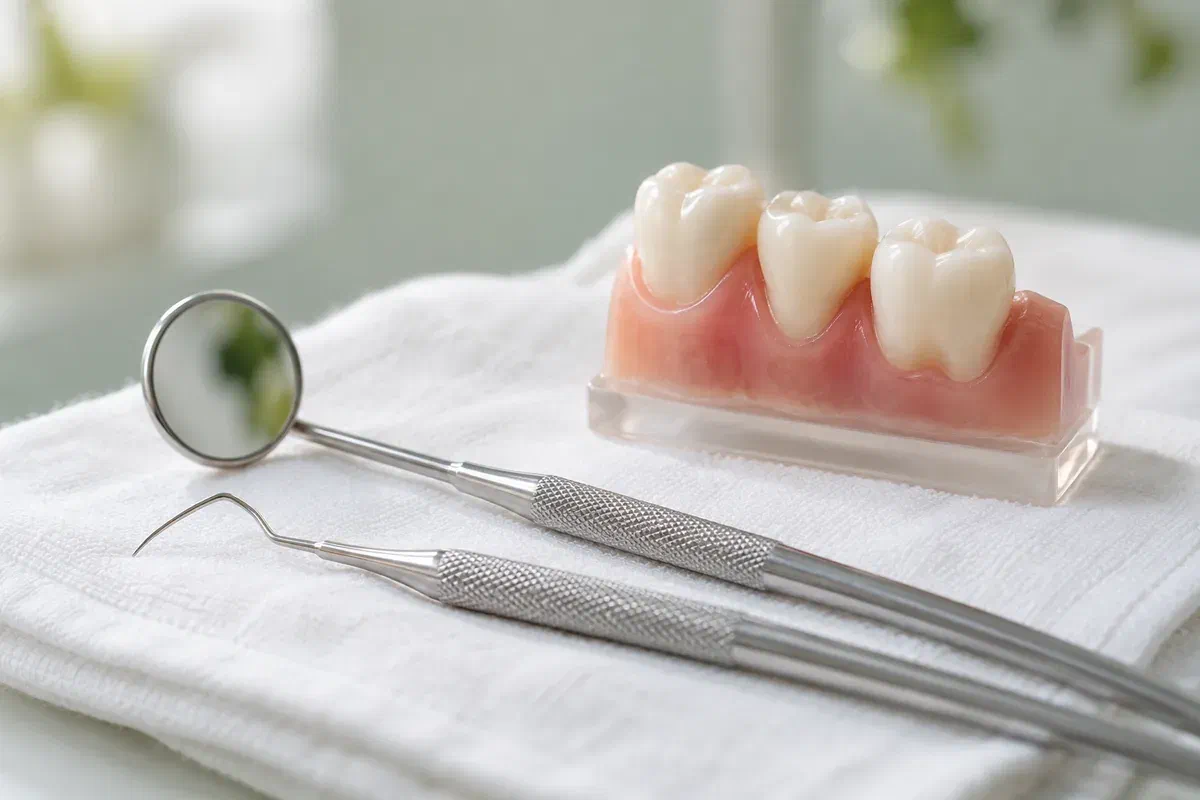
Illustrative periodontal cleaning instrument, mirror, and supported tooth model
Where the plan begins

Understanding today’s findings, and the trend

The clinician weighs measurements, bleeding, gum position, X-rays, and your history together. Your own observations help, though gum disease frequently advances with no pain, so a comfortable mouth is not proof of stable support.

Bleeding, inflamed margins, or calculus buildup

Describe where bleeding appears and whether any area has become tender. The examination distinguishes gum-edge inflammation from deeper loss of attachment. Ask how the readings at each tooth relate to the plan, since that same picture will be the starting point for every future comparison.

A record of pockets or bone loss over time

Old charts and radiographs, or a specialist’s letter, can show how quickly things have changed. That pace matters for long-term planning. Ask which sites need active treatment now and which can be kept under observation at regular visits.

What makes daily care hard to sustain

A routine that works for a month is not the same as one that works for years. Sensitive roots, crowding, stiff hands, or busy seasons can all erode good habits. Talk about it honestly, so the advice is something you can keep going without feeling blamed.

Call promptly about a swelling that hurts, any pus, running a temperature, or a tooth that suddenly behaves differently. Those signs need attention now, not at the next scheduled visit, and the type of care may change.

What the first phase sets up

Control now, and a baseline for the years ahead

Root planing aims to clear the deposits that sustain inflammation, so periodontal disease can be brought under control. Ask what change the clinician expects at each treated site and what is unlikely to change. Support that has already gone is not reliably rebuilt by cleaning, and some teeth may carry a more guarded long-term outlook than others.

The reassessment after healing is the hinge between active treatment and maintenance. Comparing new measurements with the starting chart shows which sites have settled, which need more care, and whether a periodontist’s opinion would help. Those results also inform how often you should be seen from then on.

Thorough cleaning where the disease is active

Specialized instruments reach root surfaces below the gum. Find out which teeth are included and why each one was chosen. Knowing the scope explains the visit length, and a longer appointment is about the condition, not a verdict on your habits.

Habits designed to last

Ask for a routine that is realistic over years, not just the first few weeks. The team can show you aids for different gaps and adjust them as your mouth changes. Say what you will keep using, and how to cope while the gums are tender.

A starting point for every future visit

The review records where your gums stand after treatment. Ask what is measured and how future maintenance will compare against it. A comfortable mouth is welcome, but periodontal stability is tracked by examination over time.

How the active phase unfolds

Treat, heal, measure, then settle into a rhythm

Tell us if earlier cleanings were difficult, your roots are sensitive, or freezing worries you. We plan comfort before beginning and agree on a simple way for you to ask for a break.

  1. Agree on the diagnosis and scope

    The clinician explains the findings, the teeth involved, and how sessions might be arranged. Share your medical history, medicines, and any earlier gum treatment. If other dental work is also needed, ask how it fits with the periodontal plan.

  2. Plan comfort, then begin the cleaning

    Local anaesthetic may be used where deeper work is needed. Find out what sensations are likely and signal if anything hurts. Instruments are chosen for the clinical need, whether manual or ultrasonic, and their brand is not the measure of treatment.

  3. Leave with clear short-term instructions

    Get guidance on cleaning the treated teeth, food while they are tender, and which signs warrant a call. Until the numbness has worn off, keep hot tea and coffee aside and chew on the other side. Check with the team before adding any rinse, medicine, or home device you have read about.

  4. Reassess and set the maintenance pattern

    At the review, measurements are repeated and compared. You can ask if the active phase is over, which teeth still need watching, and what maintenance interval the results suggest. Any referral should be explained along with what it aims to decide.

Living with treated gums

A routine for this month, and for the next decade

Short-term aftercare should explain what is normal at the treated sites. Longer term, the aim is a routine and visit pattern you can keep. Call if tenderness, a changed gumline, or confusing products get in the way.

Keep cleaning the way you were shown

Use the technique and aids that were demonstrated, easing off the pressure for the first while if the clinician suggested it. Leave anything below the gum to professional instruments; home scalers can injure tissue. If soreness, harvest season, or any busy stretch makes you skip areas, ask for a simpler routine rather than letting it lapse altogether.

Discuss sensitivity and gumline changes

As inflammation settles, gums may recede slightly, exposing more root, and cold can feel sharp. Mention what you notice and ask about comfort options. Severe, increasing, or lasting pain should be assessed.

Treat maintenance as part of the treatment

The review and the visits that follow are how stability is protected. Bring questions about spots you struggle to reach. Intervals are revisited over the years as your findings, health, and routine change, and they may lengthen or shorten.

Stages of periodontal care

Where you are now, and where you may go next

Ask whether today’s advice is the first round of active therapy, ongoing maintenance, or further investigation of a stubborn site. Over the years you may move between these stages, and that is normal.

If there is no deeper involvement

Preventive visits for gum-edge inflammation

Gingivitis often settles with routine cleaning and improved daily plaque control. Ask which diagnosis applies. Root planing should rest on what the measurements and X-rays show, rather than on how thorough it sounds or what a benefit plan lists.

If roots need active cleaning

First-phase nonsurgical treatment

Root planing usually anchors this stage, together with daily habits built around your mouth and a look at factors such as smoking or diabetes. Ask how the outcome will be judged; it shapes your maintenance pattern for years to come.

If some sites remain active

Additional care or a specialist referral

Areas that do not settle may need further treatment or a periodontist’s assessment, now or later. Ask what the specialist would be deciding. Surgery, antibiotics, and adjuncts are considered individually, not added for everyone.

Long-term questions from Erin

Life after root planing

Earlier records or treatment estimates are welcome at the visit. Below are the questions we hear most about the years after treatment; your own plan depends on your examination and review.

(905) 876-4488
Will gum disease come back after root planing?
It can. Periodontitis is usually managed rather than cured, and sites can become active again if plaque builds up or risk factors change. Regular maintenance and good daily care help catch problems early.
Why might maintenance be every few months instead of twice a year?
Deposits below the gum can rebuild over a period of months, and people with a history of periodontitis often benefit from closer monitoring. The interval is set from your review results and may change over time.
What is the difference between periodontal maintenance and a regular cleaning?
Maintenance is tailored to someone with a history of periodontal disease. It typically includes checking pocket depths and cleaning sites at risk, not just the visible surfaces. Ask what your maintenance visits will include.
Can my maintenance visits be booked well ahead to suit rural schedules?
Yes, booking several visits in advance is often easier for people travelling in from Erin or Hillsburgh. Let us know which seasons or days work best, and we will try to plan around them.
Will I ever go back to a standard checkup schedule?
Possibly, if the gums remain stable over time. The clinician will review your findings at each visit and adjust the interval when it is reasonable to do so. Even then, your periodontal history stays on record, so pocket measurements continue to be checked at regular visits rather than being dropped.
Might root planing need to be repeated on some teeth?
Sometimes. If a site becomes active again, further treatment may be recommended, which might be a localized cleaning of just that area rather than a repeat of the whole plan. The reassessment and maintenance visits are where that need is identified, which is one reason they matter.
Planning ahead from Erin

Start the first chapter with a clear plan

Call Milton Dental Clinic to talk through a root planing recommendation, earlier periodontal records, or what long-term care might involve. We will explain how treatment, the review, and maintenance build on each other over the years.

Treatment and maintenance intervals depend on your individual periodontal findings.

Visit Milton Dental Clinic
Unit 1, 342 Bronte St. S, Milton, ON L9T 5B7
Get directions Clinic hours
Monday–Thursday
11am–7pm
Friday–Sunday
By appointment only

Areas we serve

  • Milton
  • Oakville
  • Mississauga
  • Georgetown
  • Halton Hills
  • Acton
  • Campbellville
  • Brampton
  • Burlington
  • Puslinch
  • Rockwood
  • Erin
  • Caledon
  • Etobicoke
  • Old Milton
  • Bronte Meadows
  • Timberlea
  • Dorset Park
  • Dempsey
  • Clarke
  • Beaty
  • Coates
  • Harrison
  • Scott
  • Willmott
  • Ford
  • Bowes
  • Cobden
  • Walker
  • Mountain View
  • Milton Heights
  • Hawthorne Village
  • Valley View
  • Fallingbrook
  • Nassagaweya
  • Trafalgar
  • Esquesing
  • Nelson
  • Brookville
  • Moffat
  • Glen Williams
  • Norval
  • Limehouse
  • Stewarttown
  • Ashgrove
  • Hornby
  • Silver Creek
  • Speyside
  • Scotch Block
  • North Oakville
  • River Oaks
  • Glen Abbey
  • West Oak Trails
  • Palermo
  • Bronte Creek
  • College Park
  • Joshua Creek
  • Uptown Core
  • Preserve
  • Iroquois Ridge
  • Lisgar
  • Meadowvale
  • Meadowvale Village
  • Churchill Meadows
  • Erin Mills
  • Central Erin Mills
  • Streetsville
  • East Credit
  • Creditview
  • Heartland
  • Sheridan
  • Mount Pleasant
  • Credit Valley
  • Huttonville
  • Churchville
  • Springbrook
  • Northwest Brampton
  • Bram West
  • Fletcher's Meadow
  • Fletcher's Creek South
  • Alton Village
  • Orchard
  • Millcroft
  • Headon Forest
  • Tansley
  • Brant Hills
  • Tyandaga
  • Kilbride
  • Lowville
  • Aberfoyle
  • Morriston
  • Arkell
  • Hillsburgh
  • Freelton
  • Carlisle
  • Waterdown
  • Flamborough
  • Mountsberg

How can we help?

Milton Dental Clinic

Have a question about your smile? Choose the option that works best for you.

For urgent dental concerns, please call.
Messages are reviewed during clinic hours.