

Illustrative discussion of gum treatment using a dental teaching model
Specialized Care

Scaling and Root Planing in Etobicoke

Travelling a longer distance for gum treatment works best with a tight plan. We explain your periodontal findings, group root planing into well-organized visits where that suits your mouth, cover comfort, and agree on when healing will be rechecked.

Planning gum care from Etobicoke

Fewer trips, each one with a clear purpose

When the drive is longer, every appointment needs to earn its place. That matters with scaling and root planing, which can involve more than one session plus a later review. The treatment itself removes tartar and bacterial film from root surfaces affected by periodontal disease, often below the gum, and it should follow a careful assessment of pockets, bleeding, and bone levels.

Good organization starts with understanding the scope. Once the clinician has shown which teeth need active treatment, you can talk about whether sections can be combined into longer sittings, how comfortable that would be, and when the follow-up visit makes sense. The aim is efficient care without cutting corners on the clinical side.

People from Etobicoke sometimes keep a dentist out this way for family or work reasons, or because a relationship began here. Whatever brings you to Bronte Street, we will go through the chart, plan the sessions, and talk openly about what to do if a problem flares up between visits.

Plan an efficient gum treatment schedule
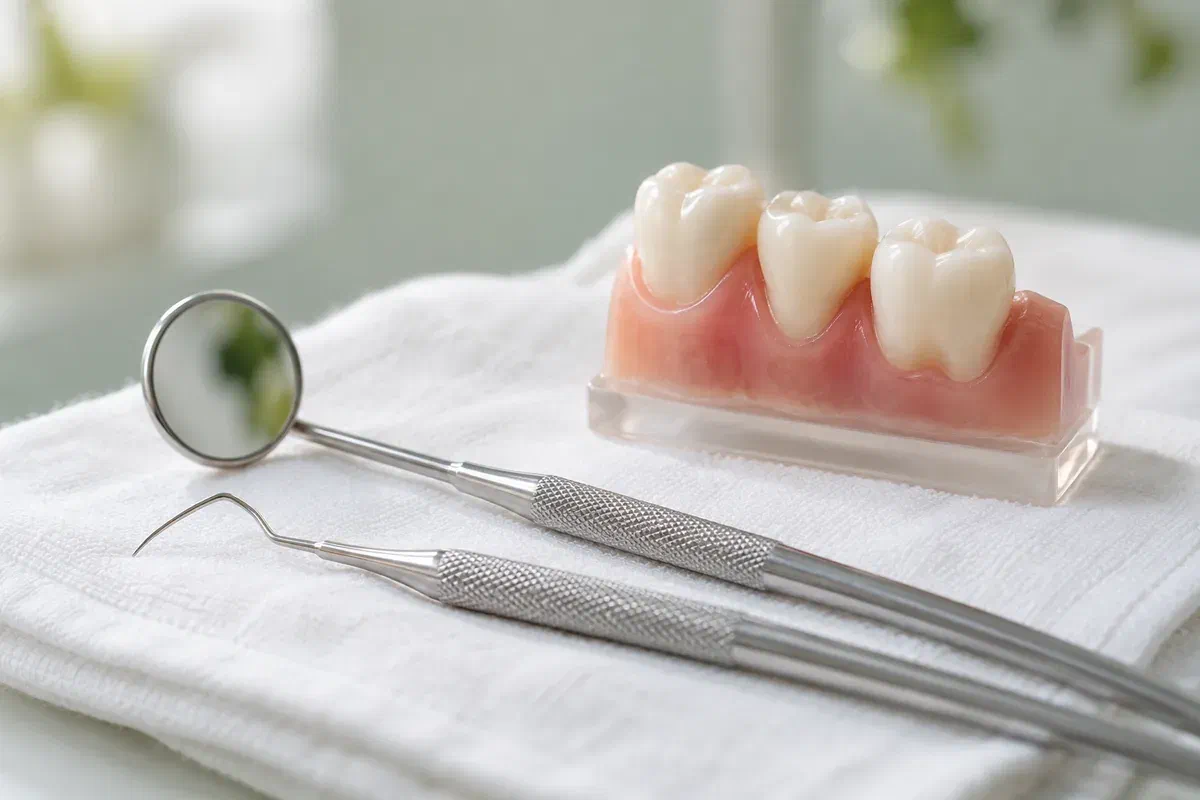
Illustrative periodontal cleaning instrument, mirror, and supported tooth model
Understanding the scope before you travel

Get the full assessment, then decide on the schedule

A treatment plan is built from several findings rather than any one number. Your experience at home is useful context, though gum support can be lost without discomfort, so the absence of pain does not settle the question.

Bleeding, puffiness, or hardened tartar at the gumline

Describe where you see bleeding and whether any area feels sore when you clean it. The examination tells superficial gingivitis apart from disease that reaches the deeper attachment. Ask how each finding supports the sessions being planned, so you know why the trip is necessary.

Deep pockets or bone loss recorded previously

Charts and X-rays from a Toronto office or a periodontist can save time and add history. Send or bring them ahead of your first visit if possible. Ask which teeth need treatment now and which can simply be monitored at regular checkups, since that shapes the number of trips.

Obstacles to cleaning certain areas at home

Tight teeth, sensitive roots, limited reach, or not knowing which aid to use all leave plaque behind. Mention them early. Advice that works for you reduces the risk of needing extra visits later, and it should never come across as blame.

For painful swelling, pus, a fever, or a tooth that abruptly starts to feel wrong, call promptly. If you cannot reach us quickly or symptoms are severe, seek urgent dental or medical care closer to home rather than waiting for your planned trip.

What you are travelling for

Quieter gums, and a firm answer at the review

The purpose of root planing is to clear deposits from affected roots so that gum inflammation can settle and periodontal disease is better controlled. Ask what improvement the clinician expects at each site, and be clear about the limits: bone that has gone may not return, and teeth in the same mouth can have different outlooks.

Treatment also gives the review something to measure against. After healing, the clinician repeats the relevant readings and compares them. Some areas may then be ready for routine maintenance; others might need more work or a periodontist’s input. A clear answer at that visit helps you plan the year ahead.

Root surfaces cleaned where brushing cannot go

Specialized instruments reach deposits beneath the gum. Ask which teeth are being treated and the reason for each, and whether grouping quadrants together is sensible for you. A longer sitting reflects the extent of disease, not a criticism of your cleaning.

Home care you can manage without frequent check-ins

Because visits may be spaced further apart, a solid routine matters. Ask for a hands-on demonstration around the treated teeth, and ask which aids suit each gap. Explain what you will realistically keep up, and how to adapt if the gums are tender for the first while.

One well-timed review that tells you a lot

After an appropriate healing period, new measurements are compared with the baseline. Ask what will be assessed and how it affects future scheduling. Feeling better is helpful, but the review is where stability is actually judged.

Making each visit count

What happens across your treatment visits

Tell us about previous cleanings that were hard to tolerate, sensitive roots, or concerns about freezing, especially if longer combined sessions are being considered. We agree on comfort measures and a pause signal before starting.

  1. Review the findings and agree on a session plan

    The clinician explains the diagnosis, the teeth involved, and possible ways to sequence the work. Share your health history, medicines, and previous gum care. If a filling or other repair is also due, ask whether it can be coordinated on the same trip.

  2. Settle comfort, then treat the planned areas

    Local anaesthetic is often used for the sections being cleaned. Ask what you will feel, and signal right away if anything is painful. Instrument choice, hand or ultrasonic, depends on the sites rather than on any particular brand or technology.

  3. Prepare for the journey home

    Before you leave, get guidance on cleaning the treated teeth, food while tender, and which symptoms need a call. If you are frozen, avoid hot drinks and chewing until feeling returns, and bring water for the drive. Check before using any new rinse or medicine.

  4. Return once for a thorough reassessment

    At the review, key readings are taken again and compared. Ask whether active treatment is complete, which teeth still need watching, and how often maintenance should be. Any referral should be explained along with where it might take place.

Between trips

Look after the treated gums from a distance

With visits spaced out, knowing what is normal matters even more. If tenderness, a gumline that looks different, or uncertainty about a product makes things harder, call us first; we can often advise by phone.

Follow the technique you were taught

Clean as demonstrated, gently at first if the clinician suggested it. Do not scrape under the gums yourself. If soreness makes you neglect a section, phone for advice rather than waiting until the next trip to mention it.

Watch for sensitivity or a changing gumline

As inflammation settles, more root may become visible and cold can feel sharp. Note what you notice and ask about comfort options. Severe, rising, or persistent pain needs assessment, and if you cannot get here promptly, a nearby dentist should see you.

Keep the review, and maintenance afterwards

A cleaner feel does not replace the follow-up exam. Bring a list of tricky spots or tools that are not working. Maintenance spacing can be planned around your travel and adjusted as your findings and health change.

Choosing the right stage

Is this active treatment, upkeep, or something more?

Ask which stage you are in: first-phase treatment, routine maintenance, or further assessment of an area that has not responded. Each one involves a different number of trips, which helps with long-range planning.

If the exam shows no deeper involvement

Routine prevention for gum inflammation

Gingivitis may settle with an ordinary hygiene appointment and sharper daily plaque removal, no root planing required. Ask which diagnosis fits. A more involved procedure should be chosen because the findings support it, not because it seems more thorough or is covered by a plan.

If root surfaces need active cleaning

Initial nonsurgical gum therapy

Root planing usually anchors this phase, combined with a home routine built for you and attention to smoking, diabetes, or other factors. Ask how the outcome will be measured, since that response sets the next stage and the travel it involves.

If certain sites need more than the first round

Additional care or a periodontist

Complex or slow-to-respond areas may need a specialist’s view. Ask what the referral should answer, and whether a periodontist nearer your home would be practical. Surgery, antibiotics, and adjuncts are individual decisions, not standard additions.

Questions about travelling for treatment

Gum care at a distance, explained for Etobicoke

If you have charts, X-rays, or an estimate from another office, bring them or send them ahead. These answers address common planning questions; your actual care depends on an examination.

(905) 876-4488
Can root planing be done in one long visit instead of several?
Sometimes, depending on how many sites are involved, your comfort, and clinical judgement. Some people manage a longer sitting well; others prefer shorter sessions. Discuss your travel and tolerance so the clinician can suggest a realistic plan.
Can you send my records to a periodontist closer to me?
With your consent, records can be shared with another provider. If a referral is recommended, ask whether a specialist nearer your home would suit you, and what information they will need.
What should I do if swelling starts on a weekend?
Call us first. If symptoms are severe, you feel unwell, or swelling is spreading, seek urgent dental or medical care nearby instead of waiting to travel. Mention your recent gum treatment to whoever sees you.
Is it safe to drive home after being frozen?
Local anaesthetic for dental treatment does not usually affect driving, but tell the team if you feel unwell or are given any other medication. Bring water, and avoid eating until feeling returns.
How long should I wait before the reassessment?
The interval depends on healing and the clinician’s judgement, so it is set for your case. Book it before you leave so the trip is planned. Coming too early may not give a useful result.
Can my regular hygiene visits happen nearer home afterwards?
That is possible, as long as whoever provides maintenance knows your periodontal history and findings. Ask for a summary to share, and keep a copy of your charts.
Booking from Etobicoke

A plan worth the drive

Send your questions, or your records from a Toronto office, to Milton Dental Clinic before the first trip, and we can talk through root planing and how to group your sessions. We will review the affected teeth and explain how treatment, review, and maintenance fit together.

Session planning and review timing depend on your individual periodontal findings.

Visit Milton Dental Clinic
Unit 1, 342 Bronte St. S, Milton, ON L9T 5B7
Get directions Clinic hours
Monday–Thursday
11am–7pm
Friday–Sunday
By appointment only

Areas we serve

  • Milton
  • Oakville
  • Mississauga
  • Georgetown
  • Halton Hills
  • Acton
  • Campbellville
  • Brampton
  • Burlington
  • Puslinch
  • Rockwood
  • Erin
  • Caledon
  • Etobicoke
  • Old Milton
  • Bronte Meadows
  • Timberlea
  • Dorset Park
  • Dempsey
  • Clarke
  • Beaty
  • Coates
  • Harrison
  • Scott
  • Willmott
  • Ford
  • Bowes
  • Cobden
  • Walker
  • Mountain View
  • Milton Heights
  • Hawthorne Village
  • Valley View
  • Fallingbrook
  • Nassagaweya
  • Trafalgar
  • Esquesing
  • Nelson
  • Brookville
  • Moffat
  • Glen Williams
  • Norval
  • Limehouse
  • Stewarttown
  • Ashgrove
  • Hornby
  • Silver Creek
  • Speyside
  • Scotch Block
  • North Oakville
  • River Oaks
  • Glen Abbey
  • West Oak Trails
  • Palermo
  • Bronte Creek
  • College Park
  • Joshua Creek
  • Uptown Core
  • Preserve
  • Iroquois Ridge
  • Lisgar
  • Meadowvale
  • Meadowvale Village
  • Churchill Meadows
  • Erin Mills
  • Central Erin Mills
  • Streetsville
  • East Credit
  • Creditview
  • Heartland
  • Sheridan
  • Mount Pleasant
  • Credit Valley
  • Huttonville
  • Churchville
  • Springbrook
  • Northwest Brampton
  • Bram West
  • Fletcher's Meadow
  • Fletcher's Creek South
  • Alton Village
  • Orchard
  • Millcroft
  • Headon Forest
  • Tansley
  • Brant Hills
  • Tyandaga
  • Kilbride
  • Lowville
  • Aberfoyle
  • Morriston
  • Arkell
  • Hillsburgh
  • Freelton
  • Carlisle
  • Waterdown
  • Flamborough
  • Mountsberg

How can we help?

Milton Dental Clinic

Have a question about your smile? Choose the option that works best for you.

For urgent dental concerns, please call.
Messages are reviewed during clinic hours.