

Illustrative discussion of gum treatment using a dental teaching model
Specialized Care

Scaling and Root Planing in Georgetown

Nervous about needles, scraping sounds, or a long appointment? Tell us. We explain the gum findings behind scaling and root planing, plan comfort steps and breaks with you in advance, and set out when the treated sites will be reviewed.

Comfort first, for Georgetown visitors

Nervous about it? Say so before we start.

For some people the hardest part of gum treatment is not the diagnosis but the thought of the appointment itself: the injection, the sound of instruments, lying back for a long stretch. Those worries are common and worth raising, because comfort can be planned much more easily before treatment than in the middle of it.

It also helps to know what the visit is for. Scaling and root planing clears calculus and the sticky bacterial layer from roots that periodontal disease has reached, usually including areas below the gum. The recommendation should rest on an assessment of pockets, bleeding, and bone levels, and it should come with a clear list of teeth and a plan to recheck them after healing.

When people from Georgetown tell us they are anxious, we slow the conversation down. At our Bronte Street office we explain each step, discuss freezing and breaks, and agree on how you can stop the clinician at any point. Understanding the plan often makes the chair feel less daunting.

Talk about comfort before treatment
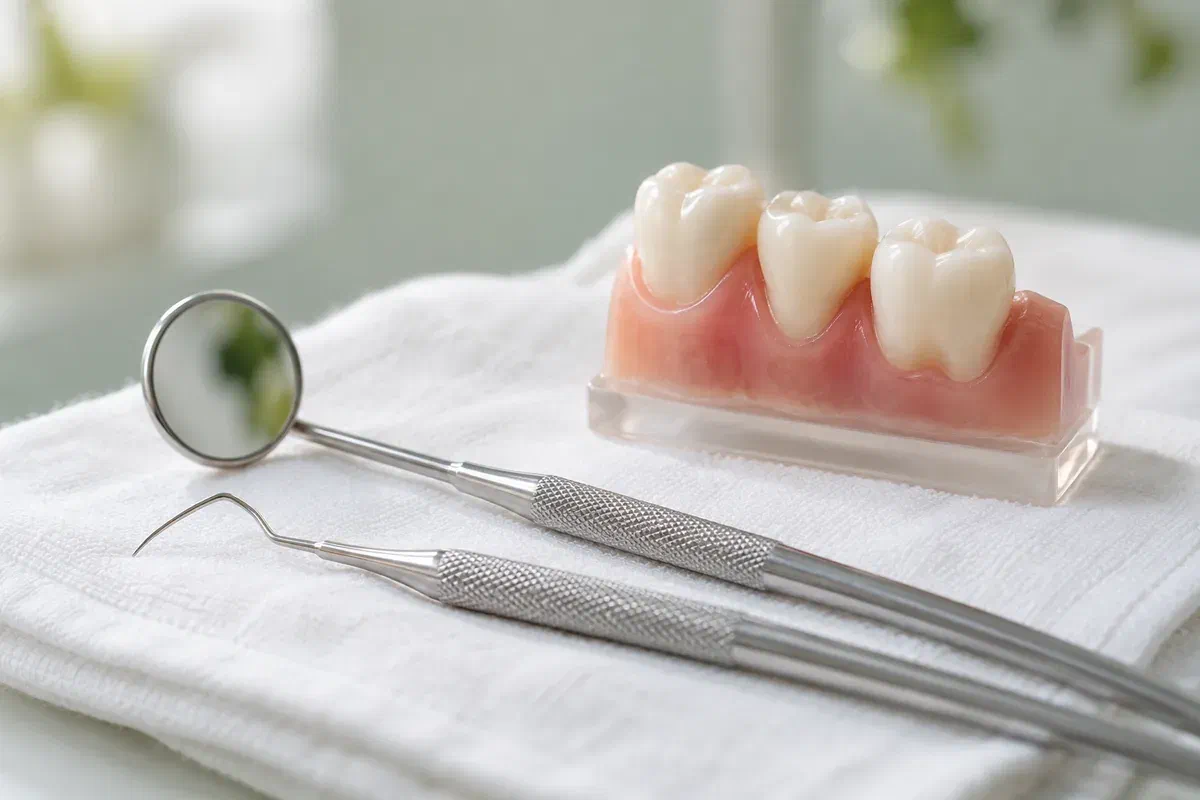
Illustrative periodontal cleaning instrument, mirror, and supported tooth model
Why treatment was suggested

The findings that make the visit worthwhile

Treatment is recommended because several findings point the same way, not because of one reading. Share what you have noticed, and remember that gum disease can advance with no pain at all, which is easy to miss if you avoid appointments.

Bleeding, tender, or swollen gums with buildup

If brushing makes your gums bleed or certain areas feel sore, tell the team where. Some people avoid those spots, which can make things worse. The exam shows whether the issue is surface inflammation or something deeper, and the plan should explain how each finding leads to the treatment advised.

Deeper pockets or bone changes noted earlier

If an earlier visit flagged pocket depths or bone loss and you put off treatment, that is not unusual. Bring any records you have. Comparing past and present helps the clinician decide which teeth need active care now and which can be watched.

Anxiety that has kept you away

Missed checkups, a bad experience years ago, or worry about being judged can all leave deposits to build up. You can say this openly. Planning should start from where you are now, with support for home care and visits paced in a way you can manage.

A swelling that throbs, any pus, a raised temperature, or a tooth that has changed overnight should not be left alone because the appointment feels intimidating. Call promptly; an acute problem may need attention sooner than planned treatment, and we will explain what that visit involves.

What getting through it achieves

Healthier gums, and fewer unknowns afterwards

Removing deposits from involved roots helps reduce inflammation and manage periodontal disease. Ask the clinician what change they expect at the treated teeth, and also about limits: attachment and bone already lost may not return, and not every tooth will respond in the same way.

Once the area has healed, the same sites are measured again. Some will be ready for routine maintenance; others may need further care or a specialist’s opinion. Knowing the result removes a lot of guesswork, which many anxious patients find reassuring in itself.

Careful work below the gum

Specialized instruments reach root surfaces that no brush can. Request a tooth-by-tooth outline of the plan, with the reason each one made the list and a rough idea of how long each section will take. Predictability tends to ease nerves, and a longer session is never a comment on your habits or a sign that something has gone wrong.

A home routine introduced gently

Ask for a calm, hands-on demonstration around the treated teeth. If gaps between teeth differ, you may need more than one aid. Choose what feels manageable, and ask what to do if the gums are tender and you are tempted to avoid them.

A review that shows real progress

After healing, new readings are compared with the starting chart. Ask what will be measured and what the result means for future visits. Seeing improvement on paper can help, though comfort alone does not confirm the gums are stable.

Your visit, at your pace

Plan the breaks before you need them

Mention needle worries, sensitive roots, a strong gag reflex, or past cleanings that went badly. We agree on comfort measures first and set a clear stop signal, such as raising your left hand, that you can use any time.

  1. Go over the findings and how the work is divided

    You will hear the diagnosis, which teeth need treatment, and whether shorter sessions would suit you better. Share your medical history, medicines, and earlier dental care. If another urgent issue needs attention, ask how it will be timed.

  2. Arrange freezing and start gently

    Local anaesthetic is often used, sometimes after a numbing gel is placed on the gum. Ask what you will feel, from pressure to vibration or water spray, and use your signal if anything hurts. Instruments are chosen for the clinical need, not for marketing appeal.

  3. Take a moment before you leave

    Ask how to look after the treated teeth over the next few days, what to eat, and which symptoms mean you should call. While numb, avoid hot drinks and chewing. Check before trying any extra rinse, medicine, or home gadget.

  4. Come back to see how the gums have responded

    The review retakes key measurements for comparison, and you can ask beforehand whether any freezing will be needed for it. You can ask if the active phase is over, where the clinician still has concerns, and why. The next interval or any referral should follow those findings and your own risk factors.

Once you are home

Gentle routines help the gums settle

You should know what is normal for the treated areas before you leave. If tenderness, a change in appearance, or confusion about a product is making the routine hard, call us; there is no such thing as a silly question.

Clean the treated teeth, softly

Follow the technique you practised, with lighter pressure for a while if advised. Avoid poking under the gums with a home tool. If you find yourself skipping an area because it feels sore, ring the team for a simpler approach.

Mention cold sensitivity or gum changes

As swelling goes down, more of the root may show, and cold drinks can feel sharp. These changes are worth discussing; ask about comfort options. Pain that is severe, increasing, or slow to settle should be reviewed.

Keep the reassessment

It can be tempting to skip a follow-up once the hard part is over. A fresher feeling, though, cannot replace the exam. Bring up spots you still find difficult, and expect maintenance intervals to be adjusted as findings change.

Finding the right level of care

Sometimes less is needed, sometimes more

Ask whether the plan is first-phase active treatment, routine maintenance, or further assessment of an area that has not settled. Knowing which stage you are in can make the next step feel less uncertain.

For inflammation that stays at the gum edge

A routine cleaning and home-care coaching

Gingivitis may settle with a regular hygiene visit and steadier daily plaque removal. Ask which diagnosis you have. A more involved procedure is justified only by the current findings; how complete it sounds, or what a benefit plan lists, should not decide it.

For roots that need active cleaning

Root planing within nonsurgical therapy

This first phase pairs root planing with a home routine designed for you and attention to factors like smoking. Ask how the response will be measured, because the review sets what happens next.

For sites still active after healing

Specialist input or extra treatment

A few areas may need more assessment or care, and a periodontist can advise on complex disease. Ask what question the referral should answer and how anxiety will be communicated to the specialist. Surgery, antibiotics, and adjuncts are decided individually.

Comfort questions from Georgetown

What nervous patients want to know

An estimate or earlier records are helpful to bring along. The answers here respond to worries nervous patients often share; the care that suits you depends on an examination.

(905) 876-4488
I’m scared of dental needles. What can help?
Tell the team before treatment. A numbing gel is often applied to the gum first, and the clinician can explain each step as it happens. Taking breaks and agreeing on a signal can also help. Ask what options suit your situation.
What does the ultrasonic instrument feel and sound like?
Most people notice a buzzing sound, vibration, and a fine water spray. With freezing, the main sensation is often pressure. If the sound bothers you, say so; the clinician can tell you when it will start and pause if needed.
Can I listen to music during the appointment?
Ask when booking or at the start of the visit. Many people find headphones helpful, as long as you can still respond to the clinician and use your stop signal. A familiar playlist can also give you a rough sense of time passing, which some people find calming.
What if the freezing does not seem to work?
Tell the clinician straight away. They can check the area and, where appropriate, give more anaesthetic or adjust the approach. You should not have to push through pain, and stopping to sort it out is a normal part of the visit.
Can we start with the least sensitive area?
Often the order can be discussed, depending on clinical priorities. Starting somewhere easier can help build confidence. Ask whether that sequence makes sense for your treatment plan.
Will this feel harder than a regular cleaning?
It can involve more time and work below the gum, which is why freezing is often used. Experiences vary. Talking through what to expect, and how to pause, usually makes the visit more manageable.
Booking from Georgetown

Start with a conversation, not the chair

Call Milton Dental Clinic if you have been advised to have scaling and root planing and feel uneasy about it. We can talk through your findings, comfort options, and how treatment and review fit together before anything begins.

The scope of treatment and timing of review depend on your own periodontal findings.

Visit Milton Dental Clinic
Unit 1, 342 Bronte St. S, Milton, ON L9T 5B7
Get directions Clinic hours
Monday–Thursday
11am–7pm
Friday–Sunday
By appointment only

Areas we serve

  • Milton
  • Oakville
  • Mississauga
  • Georgetown
  • Halton Hills
  • Acton
  • Campbellville
  • Brampton
  • Burlington
  • Puslinch
  • Rockwood
  • Erin
  • Caledon
  • Etobicoke
  • Old Milton
  • Bronte Meadows
  • Timberlea
  • Dorset Park
  • Dempsey
  • Clarke
  • Beaty
  • Coates
  • Harrison
  • Scott
  • Willmott
  • Ford
  • Bowes
  • Cobden
  • Walker
  • Mountain View
  • Milton Heights
  • Hawthorne Village
  • Valley View
  • Fallingbrook
  • Nassagaweya
  • Trafalgar
  • Esquesing
  • Nelson
  • Brookville
  • Moffat
  • Glen Williams
  • Norval
  • Limehouse
  • Stewarttown
  • Ashgrove
  • Hornby
  • Silver Creek
  • Speyside
  • Scotch Block
  • North Oakville
  • River Oaks
  • Glen Abbey
  • West Oak Trails
  • Palermo
  • Bronte Creek
  • College Park
  • Joshua Creek
  • Uptown Core
  • Preserve
  • Iroquois Ridge
  • Lisgar
  • Meadowvale
  • Meadowvale Village
  • Churchill Meadows
  • Erin Mills
  • Central Erin Mills
  • Streetsville
  • East Credit
  • Creditview
  • Heartland
  • Sheridan
  • Mount Pleasant
  • Credit Valley
  • Huttonville
  • Churchville
  • Springbrook
  • Northwest Brampton
  • Bram West
  • Fletcher's Meadow
  • Fletcher's Creek South
  • Alton Village
  • Orchard
  • Millcroft
  • Headon Forest
  • Tansley
  • Brant Hills
  • Tyandaga
  • Kilbride
  • Lowville
  • Aberfoyle
  • Morriston
  • Arkell
  • Hillsburgh
  • Freelton
  • Carlisle
  • Waterdown
  • Flamborough
  • Mountsberg

How can we help?

Milton Dental Clinic

Have a question about your smile? Choose the option that works best for you.

For urgent dental concerns, please call.
Messages are reviewed during clinic hours.