

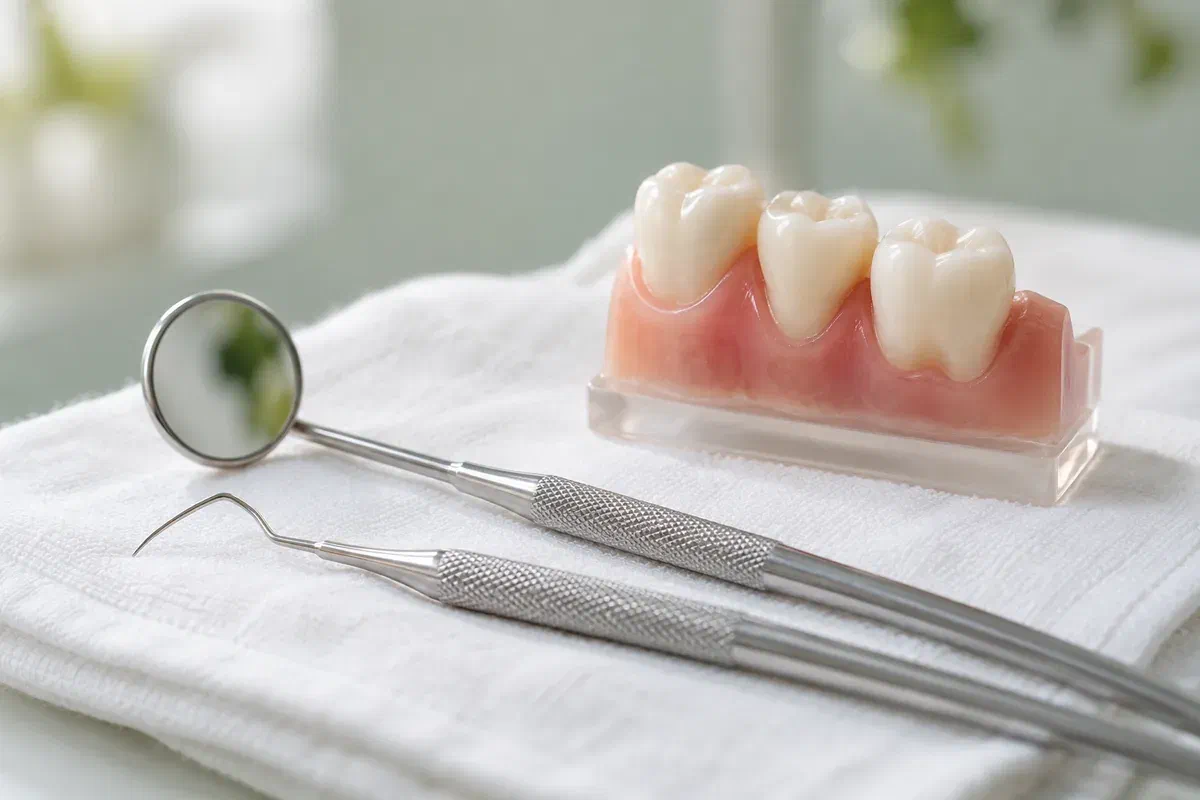
Illustrative discussion of gum treatment using a dental teaching model
Specialized Care

Scaling and Root Planing in Halton Hills

Your gums feel fine, yet the exam suggests root planing. That gap is common with periodontal disease. We show you the measurements and X-rays behind the advice, explain which teeth are involved and how comfort is handled, and set a clear review.

When nothing hurts, in Halton Hills or anywhere

Quiet gums can still be losing ground

It can feel strange to be told you need gum treatment when you have no pain, no swelling, and nothing obviously wrong in the mirror. Periodontal disease often works that way. The tissues and bone that support a tooth can be lost gradually, and the first evidence is frequently a measurement on a chart or a shadow on an X-ray rather than a symptom you would notice.

Scaling and root planing addresses that hidden part. The clinician removes tartar and bacterial deposits from root surfaces that have become involved, often well below the gumline, where neither brush nor floss can reach. It is a stage of periodontal treatment, so it should be tied to specific findings and followed by a planned review.

For households across Halton Hills, from Georgetown and Acton to Glen Williams and the smaller hamlets, we try to make the invisible visible. At our Bronte Street practice, we can show you the readings, point to the teeth involved, and explain what the treatment is meant to change before you decide.

Review the evidence behind your plan
Illustrative periodontal cleaning instrument, mirror, and supported tooth model
Evidence you cannot feel

Where the chart and the X-rays come in

Comfort is not a reliable guide to gum health. The clinician combines pocket depths, bleeding, gum position, and bone levels, and your own observations add context even when they seem minor.

Occasional bleeding, mild puffiness, or tartar

Small signs are easy to dismiss: a pink tinge on the brush, a gum edge that looks slightly rounded, a rough feeling behind the lower front teeth. Mention anything like this. The exam can show whether these signs reflect surface irritation or deeper involvement, and the plan should explain the difference.

Pocket depths and bone levels on record

Measurements taken around each tooth, compared with earlier charts and radiographs where available, show whether support has been lost and where. Ask to see the numbers that concern the clinician. Some sites will need active treatment; others may be stable enough to monitor.

Places where plaque quietly builds up

Back teeth, tight contacts, and areas behind crowded lower teeth are common hiding spots. Sensitivity or stiff hands can make them harder still. Planning should include help with exactly those places, in a way that suits you, with no blame attached.

If pain does arrive, in the form of a painful swelling, pus, fever, or a tooth that suddenly feels different, call promptly. An acute problem changes the urgency and may need a different kind of appointment.

Why treat something you cannot feel

Acting before symptoms appear

Clearing deposits from involved roots aims to reduce inflammation and help slow or control the disease. Waiting for symptoms often means waiting until more support has gone. Ask what the clinician hopes to achieve at each site and what treatment cannot do, since lost bone may not return and teeth can respond differently.

The other gain is clarity. Once the gums have had time to heal, the same sites are measured again. That comparison shows which areas have settled into a maintainable state and which may need more care or a periodontist’s opinion. You should come away knowing where each part of your mouth stands.

Treatment where the damage is happening

Specialized instruments reach the root surfaces beneath the gum where deposits sustain inflammation. Ask which teeth are included and why. Knowing the scope helps make sense of the time involved, and the length of a visit says nothing about your effort at home.

A routine aimed at the hidden areas

Ask the team to show you how to reach the back teeth and the spaces between them. Interdental brushes, floss, or a water flosser may each suit different gaps. Say what you will realistically use, and how to adjust if the gums feel tender for a while.

Numbers to compare at the review

Because the disease is often silent, measurements matter more than feelings. Ask which readings will be compared after healing and how the result shapes future visits. A mouth that feels the same as before can still show real improvement, or the reverse.

How treatment proceeds

From chart to cleaning to recheck

Even without pain now, tell us if earlier cleanings were uncomfortable, your roots are sensitive, or injections worry you. We plan comfort before starting and agree on a simple signal for stopping.

  1. See the findings and agree on the scope

    The clinician walks you through the diagnosis, the readings, and the teeth involved, along with how the work may be divided. Review your health history and medicines. If other dental needs exist, ask how they will be scheduled around the gum treatment.

  2. Make the treated areas comfortable, then clean

    Freezing is often used where the work goes deeper. Ask what pressure or vibration to expect, and signal if anything hurts. Whether hand or ultrasonic instruments are used depends on the sites; a device name is not the point of treatment.

  3. Learn what to do over the next few days

    Get clear guidance on cleaning the treated teeth, what to eat while they are tender, and which symptoms should prompt a call. While numb, avoid hot liquids and chewing. Ask before adding any rinse, medicine, or home instrument.

  4. Measure the response at reassessment

    At the follow-up, the clinician retakes the relevant readings and compares them with the starting chart. Ask whether active treatment is complete, which sites still concern them, and what maintenance interval or referral the results suggest.

After root planing

Feeling normal is not the finish line

Aftercare advice should explain what to expect at the treated sites. If tenderness, a change in the look of the gums, or doubts about a product get in the way, let the team know.

Keep cleaning as you were shown

Use the demonstrated technique and aids, lighter at first if the clinician advised it. Never try to clean under the gum with a home scaler or sharp tool. If tenderness discourages you from cleaning certain teeth, call to ask what to change.

Expect some change, and mention it

As inflammation fades, the gums may tighten and sit slightly lower, and some teeth may react to cold. Discuss what you notice and ask about comfort steps. Severe, increasing, or lasting discomfort should be checked rather than accepted as normal.

Return for the review even if all seems well

Since the disease was silent to begin with, feeling fine afterwards proves little. Keep the reassessment and later maintenance visits. Bring questions about hard-to-reach spots, and expect intervals to be revisited as findings and health change.

Which kind of care fits

Silent findings can point in different directions

Ask whether the recommendation is first-phase active treatment, regular maintenance, or a closer look at a site that has not responded. The answer explains why a plan may shift over time.

If the chart shows no deeper loss

Routine cleaning for surface inflammation

Some people have gingivitis without periodontitis, and a professional cleaning plus better daily habits may be enough. Ask which diagnosis applies to you. Root planing earns its place only when measurements and X-rays call for it; sounding more complete, or being listed on a benefits form, is not a clinical reason.

When readings show involved root surfaces

Nonsurgical periodontal treatment

Root planing usually forms the core of this phase, along with a home routine designed for you and attention to factors such as smoking or diabetes. Ask how success will be judged; the response determines the next step.

When some readings stay high after healing

Specialist assessment or further treatment

Areas that have not settled may need more care or a periodontist’s view, and a referral should come with a clear question attached. Find out what the specialist is being asked to decide and what information will be sent. Surgery, antibiotics, and adjunct devices are chosen on individual findings rather than offered to everyone by default.

Halton Hills questions about silent gum disease

If it does not hurt, why act now?

Bring older charts, X-rays, or a written estimate if you have them, even if they are a few years old. These answers cover concerns we often hear from people who feel well but have been told otherwise; your own care depends on a clinical examination.

(905) 876-4488
Nothing hurts. How can my gums need treatment?
Periodontal disease commonly progresses without pain. Measurements, bleeding when the gums are probed, and bone levels on X-rays can show loss of support long before you feel anything. Ask the clinician to show you the specific findings.
What could happen if I decide not to have root planing?
Untreated periodontitis may continue to progress, and over time teeth can loosen or be lost. How quickly that happens varies. Ask what the risks are for your sites, and what monitoring would involve if you choose to wait.
Can slightly loose teeth firm up after treatment?
In some cases, reduced inflammation can make a tooth feel steadier, but this is not guaranteed and depends on how much support remains. Ask the clinician what is realistic for each tooth that concerns you.
Do X-rays really show gum disease?
They show bone levels around the teeth, which helps reveal past loss of support. They do not show everything, so they are read alongside pocket measurements and gum findings. Ask to see the images that informed your plan.
Will root planing make my teeth sensitive?
Some people notice sensitivity to cold afterwards, often as inflammation settles and root surfaces are exposed. Discuss comfort options with the team. Sensitivity that is severe or not improving should be checked.
How often will I need cleanings after the active phase?
Maintenance intervals are set individually, based on the review findings, your risk factors, and how well the areas can be kept clean. They may be closer together than routine checkups at first and can change over time.
Halton Hills to Bronte Street

Look at the evidence together

Get in touch with Milton Dental Clinic if you have been advised to have scaling and root planing but feel fine, have records from another office, or are worried about comfort. We will show you the findings and explain how treatment and review fit together.

Treatment extent and review timing depend on your individual gum assessment.

Visit Milton Dental Clinic
Unit 1, 342 Bronte St. S, Milton, ON L9T 5B7
Get directions Clinic hours
Monday–Thursday
11am–7pm
Friday–Sunday
By appointment only

Areas we serve

  • Milton
  • Oakville
  • Mississauga
  • Georgetown
  • Halton Hills
  • Acton
  • Campbellville
  • Brampton
  • Burlington
  • Puslinch
  • Rockwood
  • Erin
  • Caledon
  • Etobicoke
  • Old Milton
  • Bronte Meadows
  • Timberlea
  • Dorset Park
  • Dempsey
  • Clarke
  • Beaty
  • Coates
  • Harrison
  • Scott
  • Willmott
  • Ford
  • Bowes
  • Cobden
  • Walker
  • Mountain View
  • Milton Heights
  • Hawthorne Village
  • Valley View
  • Fallingbrook
  • Nassagaweya
  • Trafalgar
  • Esquesing
  • Nelson
  • Brookville
  • Moffat
  • Glen Williams
  • Norval
  • Limehouse
  • Stewarttown
  • Ashgrove
  • Hornby
  • Silver Creek
  • Speyside
  • Scotch Block
  • North Oakville
  • River Oaks
  • Glen Abbey
  • West Oak Trails
  • Palermo
  • Bronte Creek
  • College Park
  • Joshua Creek
  • Uptown Core
  • Preserve
  • Iroquois Ridge
  • Lisgar
  • Meadowvale
  • Meadowvale Village
  • Churchill Meadows
  • Erin Mills
  • Central Erin Mills
  • Streetsville
  • East Credit
  • Creditview
  • Heartland
  • Sheridan
  • Mount Pleasant
  • Credit Valley
  • Huttonville
  • Churchville
  • Springbrook
  • Northwest Brampton
  • Bram West
  • Fletcher's Meadow
  • Fletcher's Creek South
  • Alton Village
  • Orchard
  • Millcroft
  • Headon Forest
  • Tansley
  • Brant Hills
  • Tyandaga
  • Kilbride
  • Lowville
  • Aberfoyle
  • Morriston
  • Arkell
  • Hillsburgh
  • Freelton
  • Carlisle
  • Waterdown
  • Flamborough
  • Mountsberg

How can we help?

Milton Dental Clinic

Have a question about your smile? Choose the option that works best for you.

For urgent dental concerns, please call.
Messages are reviewed during clinic hours.