

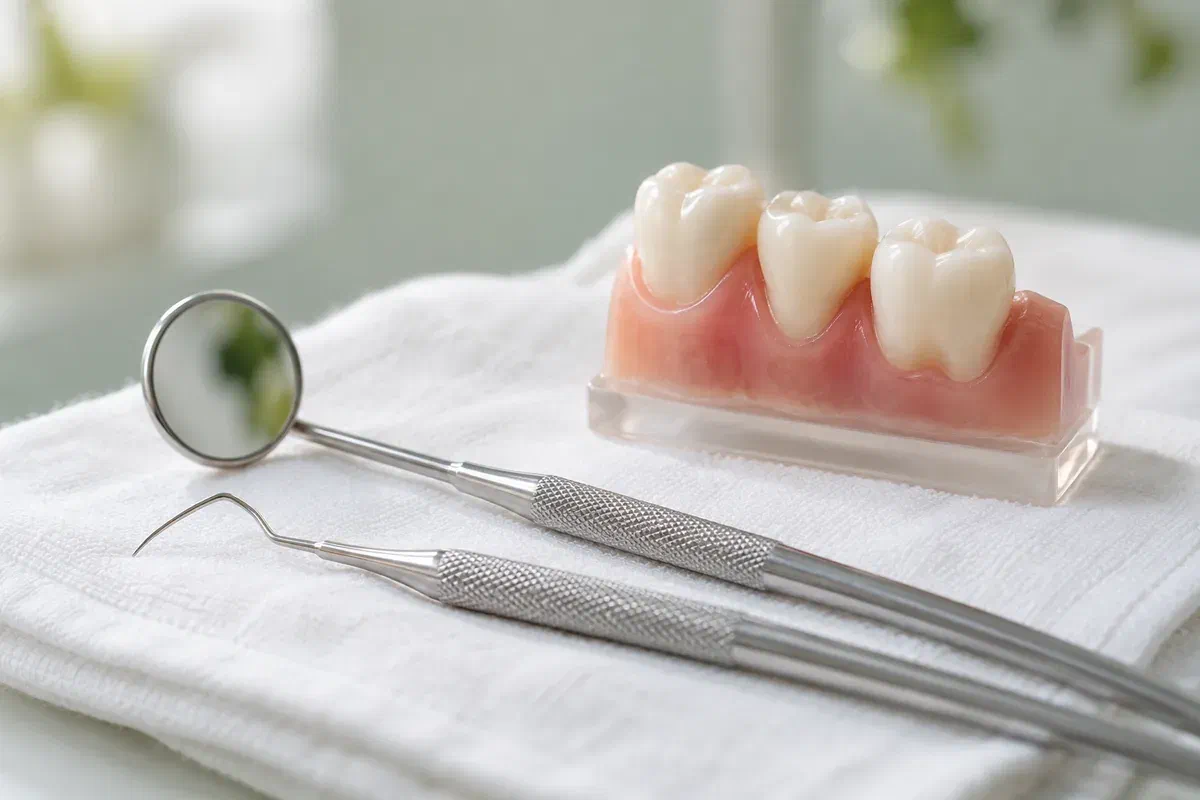
Illustrative discussion of gum treatment using a dental teaching model
Specialized Care

Scaling and Root Planing in Milton

Heard the words “root planing” or “quadrants” at a checkup and left unsure what was proposed? We can walk through your gum findings, the teeth involved, how comfort is handled, and when the result will be measured again.

Root planing, explained in Milton

A cleaning aimed below the gumline, where brushing cannot follow

Many people first hear about scaling and root planing at a routine visit, often with a short explanation and a treatment estimate. The term describes professional removal of hardened deposits and bacterial film from tooth and root surfaces that have become involved in gum disease, including areas under the gum when the findings call for it.

Because it sounds like an upgraded cleaning, it is easy to underestimate. In practice it is one stage of periodontal treatment and should rest on a proper assessment of the gums, the attachment around each tooth, and relevant X-rays. You are entitled to know which findings led to the advice, which teeth are included, and what happens once that first phase is done.

Here in Milton, our Bronte Street practice can go over a proposal you were given at another office or one that came up during your own checkup with us. We explain the chart, talk through comfort, and set out why a review after healing is part of the plan rather than an optional extra.

Talk through your gum treatment plan
Illustrative periodontal cleaning instrument, mirror, and supported tooth model
Why the team suggested it

One reading rarely tells the whole story

A recommendation should come from several findings considered together. What you have noticed at home matters, yet gums can lose support quietly, so a lack of soreness is not proof that everything below the surface is sound.

Gums that bleed, swell, or carry visible buildup

Mention where you see blood on the brush and whether flossing has started to sting. Mild, surface inflammation and deeper periodontal involvement can look similar at the sink but call for different care. The clinician can show how the buildup and tissue readings at each site connect to the treatment being suggested.

Earlier pocket readings or changes in the bone

Old charts, radiographs, or a letter from a periodontist can show how the picture has developed over the years. With that history, the team can point to the specific sites that need active work now and those that only need watching, instead of treating every tooth as if it were in the same condition.

Spots that are hard to keep clean at home

Crowded teeth, sore hands, sensitive roots, or simply not being sure which aid to use can all leave deposits behind. Say so openly. Good planning works around those obstacles with advice that suits you, rather than handing over a long list of products or implying that you have done something wrong.

Call promptly about a painful swelling, pus, a fever, or a tooth that suddenly feels different. Those signs should not wait for a booked cleaning, because the urgency and type of care may need to change.

What the first phase sets out to do

Calmer gums now, and a clear basis for the next decision

Removing deposits from the involved root surfaces is meant to reduce inflammation and help manage periodontal disease. It is fair to ask what change the clinician is hoping for at each treated site and where the limits lie. Lost bone and attachment do not necessarily return, and teeth in the same mouth may not share the same outlook.

Just as important, the treatment gives everyone a reference point. Once the tissues have had time to settle, the response is compared with the earlier readings. Some areas may move on to regular supportive care, and others may call for more treatment or a periodontist’s view. You should hear plainly which group each area falls into.

Careful work where home care cannot reach

Professional instruments can reach root surfaces and pockets that a brush cannot. Ask which teeth are in the plan and the reason for each. Seeing the scope laid out makes the number and length of visits easier to understand, and a longer appointment is not a judgement on how you look after your teeth.

Cleaning advice shaped to your own mouth

Ask to be shown how to clean around and between the treated teeth. Wide gaps, tight contacts, and bridges may each need a different aid. Say which tools you will actually use so the routine can be adjusted, and ask what to do if tender gums make it harder for a while.

A planned check on how things are going

After a suitable healing period, the clinician repeats the relevant measurements and compares them. Ask what will be looked at and how it shapes future visits. A comfortable, clean feeling is welcome, but it is not the same thing as stable gums, so the review needs real findings.

Inside the appointment

Agree on the plan and the stop signal before anything starts

Let the team know about past cleanings that were hard to sit through, sensitive roots, or worries about freezing. Comfort is easier to plan at the start, and a simple hand signal means you can ask for a break at any point.

  1. Go over the findings and how far treatment will extend

    You will hear the diagnosis, the areas involved, and how the work may be divided across visits. Share your health history, medications, and any earlier treatment. If a cavity, a cracked filling, or another urgent issue also needs attention, ask how it will be timed alongside the gum care.

  2. Settle on comfort measures, then begin

    Local anaesthetic is often used for the sections being treated. Ask what you are likely to feel, and speak up or signal if anything hurts. The clinician chooses hand or ultrasonic instruments to suit the sites, and the brand name of a device matters far less than the clinical aim.

  3. Learn how to look after the treated areas

    Before you go, find out how to brush, floss, and eat while the gums are tender, and which symptoms mean you should call. If you were frozen, be careful with hot drinks and chewing until feeling returns. Check before adding any rinse, medication, or home gadget.

  4. Come back to measure the response

    At the review, the gum readings are taken again and compared with the earlier chart. Ask whether active treatment is finished and which sites still concern the clinician. The next interval, or a referral, should be based on those results and your own risk factors.

The weeks after treatment

Steady habits at home and the review on the calendar

You should leave knowing what is normal for the areas that were treated. If tenderness, a change in how your gums look, or confusion about a product gets in the way of the routine, let the team know.

Stay with the routine you were shown

Use the technique and aids that were demonstrated, adjusting pressure if the clinician suggested it while the tissues heal. Never probe or scrape under the gums yourself. If bleeding or soreness makes you want to stop cleaning, call for advice instead of skipping areas or scrubbing harder.

Mention sensitivity or a new gum shape

As swelling goes down, gaps between teeth or parts of the root may show more, and cold drinks can feel sharp. Raise these changes so suitable comfort steps can be discussed. Pain that is severe, worsening, or lingering deserves a look rather than being written off as normal healing.

Keep the review and the visits that follow

Feeling fresher does not replace the follow-up exam. Bring up any spots you still cannot reach or tools that have not worked out. Ongoing visits are there to support your gums over time, and their spacing can shift as your findings, health, and routine change.

Matching care to the findings

Three levels of gum care, each with its own job

Ask whether you are being offered first-phase active treatment, routine maintenance, or a closer look at a site that has not settled. Knowing which one applies explains why your plan may look different from one year to the next.

When the exam points to a lighter approach

Routine prevention or care for local inflammation

Some people need a professional cleaning and better plaque control, not the full plan used for established periodontitis. Ask what your diagnosis is. Treatment should be chosen because the current findings support it, not because it sounds more thorough or happens to appear on a benefits form.

When root surfaces need active treatment

Nonsurgical periodontal therapy with a review

Scaling and root planing is often part of this first phase, along with a home routine built for you and attention to factors such as smoking or blood sugar. Ask how success will be judged. The results guide what comes next, since one round rarely settles every future gum need.

When some sites need a different approach

More treatment or a referral to a periodontist

A few areas may need further assessment or care after the first phase, and a gum specialist can help with more complex disease. Ask what the referral is meant to answer. Surgery, antibiotics, and extra devices are considered case by case, not added for everyone.

Common questions from around Milton

What people ask before booking root planing

If you have a written estimate or older gum charts, bring them along. The answers below cover planning questions we hear often, but the care that suits your gums depends on your own examination.

(905) 876-4488
Is “deep cleaning” the same thing as scaling and root planing?
The two phrases are often used for the same treatment, though offices word it differently. What matters is the purpose: cleaning involved root surfaces as part of periodontal care. Ask to see the findings and the list of teeth so you know exactly what the term refers to in your plan.
Why does the estimate list my mouth in quarters?
Treatment is often recorded by section, or quadrant, because the work and any freezing are planned area by area. Not every section necessarily needs the same care. Ask which quadrants are included, what was found in each, and whether any are being watched rather than treated.
How long will my mouth stay numb afterwards?
It varies with the anaesthetic used and the area treated, and the clinician can give you a better idea on the day. Until feeling returns, avoid hot drinks and take care not to bite your cheek, lip, or tongue. Plan soft foods for the first meal if chewing feels awkward.
Will my gums go back to how they looked years ago?
Often not entirely. Inflammation can settle, but bone and attachment that have been lost do not reliably grow back with cleaning. The aim is healthier, more stable tissue. Ask what improvement is realistic for your sites, and what options exist if some areas do not respond as hoped.
Can I split the work over several visits?
Often, yes, depending on how much treatment is needed and your clinical situation. Tell us how long you can comfortably sit, whether freezing on both sides at once bothers you, and how your week looks. We can then suggest a sequence that fits, without promising a set number of appointments.
Does feeling better mean the follow-up visit is unnecessary?
No. Less bleeding and fresher breath are good signs, but the review is where the treated sites are measured and compared. That visit decides whether you move on to maintenance or need more care, so keep it even if your mouth feels fine.
Gum treatment questions in Milton

Come with your questions about the plan

Call Milton Dental Clinic to talk about scaling and root planing, gum findings from another office, or worries about comfort. We will go over the areas involved and explain how the first treatment and the review connect.

The extent of treatment and the timing of reviews depend on your own periodontal findings.

Visit Milton Dental Clinic
Unit 1, 342 Bronte St. S, Milton, ON L9T 5B7
Get directions Clinic hours
Monday–Thursday
11am–7pm
Friday–Sunday
By appointment only

Areas we serve

  • Milton
  • Oakville
  • Mississauga
  • Georgetown
  • Halton Hills
  • Acton
  • Campbellville
  • Brampton
  • Burlington
  • Puslinch
  • Rockwood
  • Erin
  • Caledon
  • Etobicoke
  • Old Milton
  • Bronte Meadows
  • Timberlea
  • Dorset Park
  • Dempsey
  • Clarke
  • Beaty
  • Coates
  • Harrison
  • Scott
  • Willmott
  • Ford
  • Bowes
  • Cobden
  • Walker
  • Mountain View
  • Milton Heights
  • Hawthorne Village
  • Valley View
  • Fallingbrook
  • Nassagaweya
  • Trafalgar
  • Esquesing
  • Nelson
  • Brookville
  • Moffat
  • Glen Williams
  • Norval
  • Limehouse
  • Stewarttown
  • Ashgrove
  • Hornby
  • Silver Creek
  • Speyside
  • Scotch Block
  • North Oakville
  • River Oaks
  • Glen Abbey
  • West Oak Trails
  • Palermo
  • Bronte Creek
  • College Park
  • Joshua Creek
  • Uptown Core
  • Preserve
  • Iroquois Ridge
  • Lisgar
  • Meadowvale
  • Meadowvale Village
  • Churchill Meadows
  • Erin Mills
  • Central Erin Mills
  • Streetsville
  • East Credit
  • Creditview
  • Heartland
  • Sheridan
  • Mount Pleasant
  • Credit Valley
  • Huttonville
  • Churchville
  • Springbrook
  • Northwest Brampton
  • Bram West
  • Fletcher's Meadow
  • Fletcher's Creek South
  • Alton Village
  • Orchard
  • Millcroft
  • Headon Forest
  • Tansley
  • Brant Hills
  • Tyandaga
  • Kilbride
  • Lowville
  • Aberfoyle
  • Morriston
  • Arkell
  • Hillsburgh
  • Freelton
  • Carlisle
  • Waterdown
  • Flamborough
  • Mountsberg

How can we help?

Milton Dental Clinic

Have a question about your smile? Choose the option that works best for you.

For urgent dental concerns, please call.
Messages are reviewed during clinic hours.