

Illustrative discussion of gum treatment using a dental teaching model
Specialized Care

Scaling and Root Planing in Oakville

Holding a root planing proposal and not sure it fits? A second look can help. We review the gum findings behind it, the teeth it covers, how comfort is managed, and how healing will be measured, so you can decide with confidence.

A second opinion, for Oakville visitors

A plan in hand, and a few doubts

It is reasonable to pause when a hygiene visit ends with an estimate for scaling and root planing. The treatment involves cleaning calculus and bacterial biofilm from tooth and root surfaces affected by gum disease, often below the gum, and it should only be advised when a periodontal assessment supports it.

Wanting to understand that assessment is not distrust. A good second look asks the same questions any careful patient should: what diagnosis was made, which teeth are involved and how deep the pockets are, whether X-rays show bone changes, and what the plan is once the first round of treatment heals.

From Oakville, some people bring a printed chart; others only remember a few numbers. Either is a starting point. At our Bronte Street practice we can examine your gums, compare our findings with the proposal, and talk about comfort and follow-up so the decision feels like yours.

Request a second look at your plan
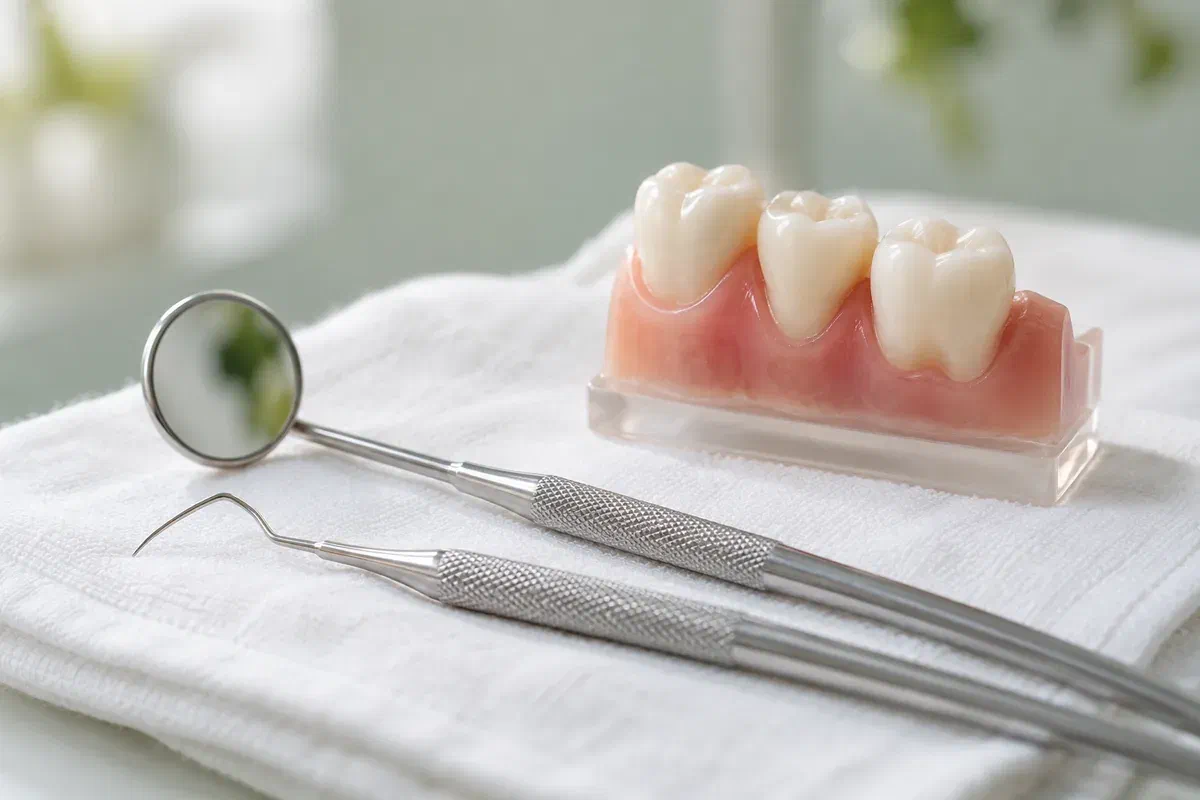
Illustrative periodontal cleaning instrument, mirror, and supported tooth model
What supports the advice

Findings that should line up before treatment begins

A sound recommendation draws on several kinds of evidence at once. Your own observations are useful, though it helps to know that comfortable gums can still have lost support beneath the surface.

Bleeding on probing, swelling, or tartar deposits

Point out where bleeding happens and whether brushing or flossing has become sore. A clinician can tell whether the inflammation sits at the gum margin or reaches deeper attachment. Ask how the deposits and readings at each site justify the particular care that has been proposed.

Pocket depths, attachment loss, or bone changes

These are the measurements a second opinion should check most closely. Bring any charts or radiographs you were given. Ask which teeth are flagged for active treatment, which are borderline, and which simply need monitoring, since a full-mouth plan is not automatic.

Areas you struggle to clean between visits

Tight contacts, gum recession, sensitivity, or uncertainty about floss can all leave plaque behind. Share what gets in your way. Any plan, whichever office carries it out, should include realistic home-care support rather than criticism or a product that does not suit your hands.

If you develop a painful swelling, pus, a fever, or a sudden change around a tooth while weighing your options, call right away. An acute problem should not wait for a decision about routine gum treatment.

Realistic expectations

What a first round of root planing can achieve

The intent is to disrupt deposits and reduce the inflammation driving periodontal disease. Ask what change the clinician expects at the treated teeth and where the limits are. Bone and attachment already lost may not return, and one tooth’s outlook can differ from another’s even in the same quadrant.

A second purpose is to establish a reference. After the tissues have healed, the treated sites are measured again and the response is compared. That comparison determines whether you move into regular maintenance, need further treatment, or would benefit from a periodontist. You deserve a clear account of the outcome.

Deposits removed where they do the most harm

Calculus on root surfaces below the gum is beyond the reach of brushing. Ask which teeth will be treated and the reason for each one. A defined scope also explains the number of visits, and a longer appointment is about the extent of disease, not a verdict on your habits.

A cleaning routine fitted to your spaces

Ask the team to show you how to reach the treated teeth and the gaps between them. Small interdental brushes suit some spaces, floss suits others. Mention what you will realistically use, and how to adapt if tender gums make the first days harder.

A clear benchmark for the review

With baseline readings recorded, the follow-up can show real change. Ask what will be compared and how the results influence the next step. Feeling fresher is welcome, yet it does not confirm periodontal stability on its own.

If you go ahead with treatment

Each step, laid out before it happens

Tell us about past cleanings that were difficult, sensitive roots, or worry about injections. Comfort is discussed before any instrument is picked up, and you can agree on a signal to stop the work.

  1. Confirm the diagnosis and the plan’s scope

    The clinician explains the findings, which teeth are included, and whether treatment will be split over visits. Share your health history, medicines, and any earlier periodontal care. If you also need a filling or other repair, ask how it will be coordinated with the gum work.

  2. Discuss freezing and start the cleaning

    Local anaesthetic may be used where the work is deeper. Ask what you might feel and signal if anything becomes painful. The choice between hand and ultrasonic instruments depends on the sites being cleaned; a branded technology is not the treatment goal in itself.

  3. Go home with clear aftercare

    Find out how to brush, floss, and eat while the tissues settle, and what should prompt a call. If you are numb, take care with hot food and drink. Ask before adding any rinse, antibiotic, or home tool you have read about.

  4. Reassess after healing

    At the review, the treated sites are measured and compared with your baseline. Ask whether active therapy is finished and which teeth still need attention. Your maintenance interval or a referral should reflect those findings and your personal risk factors.

Once treatment is done

Healing works best with a routine you can keep

Your instructions should cover what is normal for the treated areas. If soreness, a different-looking gumline, or confusion about products is getting in the way, call us for help.

Follow the cleaning plan you were given

Use the aids and technique you practised, with lighter pressure if the clinician suggested it at first. Never use a home scaler or pick beneath the gums. If bleeding or tenderness makes cleaning hard, ask for advice instead of skipping those teeth.

Raise sensitivity or gum changes early

Reduced swelling can expose more root surface or make gaps look larger, and cold may cause a twinge. Talk about what you notice and ask what comfort steps make sense. Severe, increasing, or long-lasting discomfort needs a review.

Book the reassessment and maintenance visits

A cleaner feel does not stand in for the follow-up exam. Bring a list of spots you cannot reach or tools that feel awkward. Maintenance appointments keep gum care going, and their spacing can be adjusted as your findings and health change.

Comparing your choices

Is root planing the right level of care?

Comparing plans often comes down to this: does the evidence point to active treatment, maintenance, or further investigation? Knowing which stage applies makes it easier to compare proposals fairly.

When findings suggest a lighter approach

Preventive cleaning or localized inflammation care

Gingivitis and early, localized inflammation may respond to professional cleaning and better plaque control without root planing. Ask which diagnosis fits your mouth. A procedure should match the findings, not be selected because it sounds more thorough or happens to be covered by a plan.

When root surfaces need active cleaning

Nonsurgical treatment followed by a review

For established periodontitis, root planing is usually part of the first phase, alongside a tailored home routine and attention to risk factors like smoking. Ask how the response will be judged, because the results determine what happens next.

When some sites need a different approach

Further care or a periodontist referral

Deeper or more complex areas may need a specialist’s assessment after the first phase. Ask what the referral should clarify. Surgery, antibiotics, and adjunct devices are decided case by case, and none is a standard add-on for every person.

Second-opinion questions

Before you say yes, or no

Bring your estimate, charts, and X-rays if you have them. The answers below address common questions people raise when reviewing a plan; your own care still depends on an examination.

(905) 876-4488
Is it okay to get a second opinion on a root planing estimate?
Yes. Asking for one is a normal part of making an informed decision. A second clinician will need to examine your gums, and records from the first office help. The goal is to understand the findings, not to find the cheapest or quickest answer.
Will a second exam repeat all the measurements?
Usually some or all of the gum measurements are taken again, because the clinician needs current information. Earlier charts and X-rays still help by showing change over time. Ask whether new images are actually needed or whether recent ones can be shared.
Two offices gave me different plans. How do I compare them?
Look at the diagnosis, the teeth included, how comfort is handled, and what follow-up is planned. Small differences in sequencing are common. Large differences in scope deserve a question: ask each clinician which findings drove their recommendation.
Is laser treatment better than conventional root planing?
The instrument matters less than the clinical goal of cleaning affected root surfaces and reducing inflammation. Some offices use lasers as an adjunct. Ask what any device is meant to add for your sites, and what evidence or findings support using it in your case.
Could my gums be monitored for now instead of treated?
For some sites, monitoring may be reasonable; for active disease, delaying can allow further loss of support. Ask which areas could safely be watched and which need treatment. The answer should rest on your measurements, bleeding, and X-rays.
Does root planing have to cover the whole mouth at once?
No. Treatment can be limited to the sites that need it and may be spread over more than one visit. Ask which areas are included and why, and discuss what scheduling suits your comfort and routine.
Coming in from Oakville

A clearer picture before you commit

Reach out to Milton Dental Clinic to review a root planing proposal, earlier gum records, or concerns about comfort. We will look at the affected teeth with you and explain how initial treatment and the review are meant to work together.

Treatment scope and follow-up timing are based on what your own gum examination shows.

Visit Milton Dental Clinic
Unit 1, 342 Bronte St. S, Milton, ON L9T 5B7
Get directions Clinic hours
Monday–Thursday
11am–7pm
Friday–Sunday
By appointment only

Areas we serve

  • Milton
  • Oakville
  • Mississauga
  • Georgetown
  • Halton Hills
  • Acton
  • Campbellville
  • Brampton
  • Burlington
  • Puslinch
  • Rockwood
  • Erin
  • Caledon
  • Etobicoke
  • Old Milton
  • Bronte Meadows
  • Timberlea
  • Dorset Park
  • Dempsey
  • Clarke
  • Beaty
  • Coates
  • Harrison
  • Scott
  • Willmott
  • Ford
  • Bowes
  • Cobden
  • Walker
  • Mountain View
  • Milton Heights
  • Hawthorne Village
  • Valley View
  • Fallingbrook
  • Nassagaweya
  • Trafalgar
  • Esquesing
  • Nelson
  • Brookville
  • Moffat
  • Glen Williams
  • Norval
  • Limehouse
  • Stewarttown
  • Ashgrove
  • Hornby
  • Silver Creek
  • Speyside
  • Scotch Block
  • North Oakville
  • River Oaks
  • Glen Abbey
  • West Oak Trails
  • Palermo
  • Bronte Creek
  • College Park
  • Joshua Creek
  • Uptown Core
  • Preserve
  • Iroquois Ridge
  • Lisgar
  • Meadowvale
  • Meadowvale Village
  • Churchill Meadows
  • Erin Mills
  • Central Erin Mills
  • Streetsville
  • East Credit
  • Creditview
  • Heartland
  • Sheridan
  • Mount Pleasant
  • Credit Valley
  • Huttonville
  • Churchville
  • Springbrook
  • Northwest Brampton
  • Bram West
  • Fletcher's Meadow
  • Fletcher's Creek South
  • Alton Village
  • Orchard
  • Millcroft
  • Headon Forest
  • Tansley
  • Brant Hills
  • Tyandaga
  • Kilbride
  • Lowville
  • Aberfoyle
  • Morriston
  • Arkell
  • Hillsburgh
  • Freelton
  • Carlisle
  • Waterdown
  • Flamborough
  • Mountsberg

How can we help?

Milton Dental Clinic

Have a question about your smile? Choose the option that works best for you.

For urgent dental concerns, please call.
Messages are reviewed during clinic hours.