

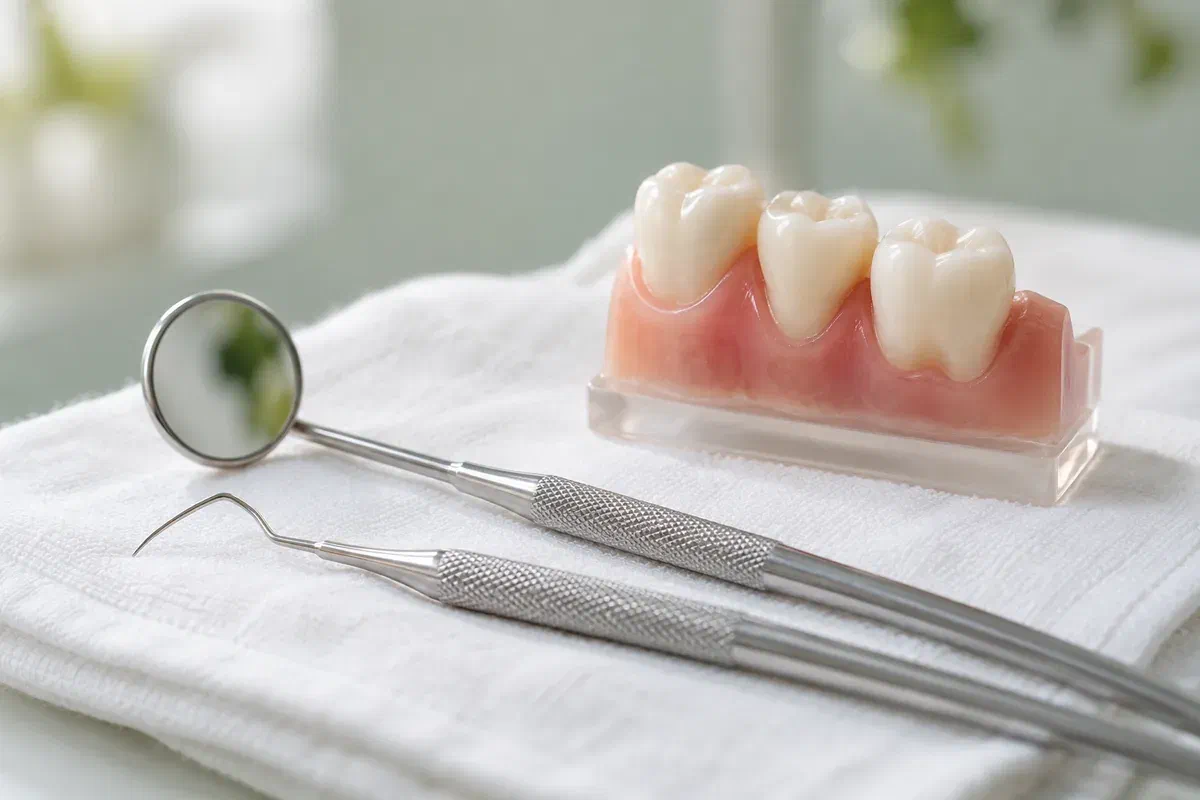
Illustrative discussion of gum treatment using a dental teaching model
Specialized Care

Scaling and Root Planing in Puslinch

Diabetes, heart medication, a joint replacement, or a mouth that is always dry can all shape gum care. We review your health history alongside the periodontal findings, explain where root planing fits, plan comfort, and set the timing of review.

Your health history matters, Puslinch

Gums do not exist apart from the rest of you

The medication list on your intake form is not a formality. Blood sugar control, heart conditions, recent surgery, and medicines that dry the mouth or affect bleeding can all influence how gum disease behaves and how treatment is planned. That is why a periodontal conversation often turns to your general health before it turns to instruments.

Scaling and root planing itself is the professional removal of calculus and bacterial deposits from roots involved in periodontal disease, frequently below the gum. It is recommended after an assessment of pockets, bleeding, and bone levels, and it is followed by a review once the tissues have healed. Your health history helps decide how, when, and sometimes in what setting it should happen.

For those making the trip from Puslinch, gathering the right information beforehand avoids rescheduling. At our Bronte Street practice, we go over your medical background with the periodontal findings, coordinate with your physician where needed, and talk through comfort and follow-up.

Discuss your health and gum plan
Illustrative periodontal cleaning instrument, mirror, and supported tooth model
Putting the findings in context

Mouth and medical history, read side by side

Pocket depths, bleeding, gum position, and X-rays are interpreted together, and your general health adds important context. Gum disease often causes no pain, so feeling well is not a reliable guide.

Bleeding or swollen gums and visible deposits

Tell the team where you notice bleeding and whether cleaning feels sore. Some medicines can make gums bleed more readily or change their appearance. The exam helps separate surface inflammation from deeper involvement, and the clinician can explain how the findings relate to the proposed care.

Pockets, bone loss, or a periodontal history

Earlier charts, X-rays, or a specialist summary help show whether the condition has changed, perhaps alongside changes in your health. Bring them if possible. Ask which teeth need active treatment now and which are being monitored.

Health issues that make daily cleaning harder

Arthritis, tremor, fatigue, low vision, or a dry mouth can all make plaque control more difficult. Say what affects you. Advice should be adapted to your abilities, with tools and techniques you can genuinely manage.

Swelling that hurts, discharge of pus, a raised temperature, or a tooth that abruptly feels wrong needs a prompt call, especially if you have diabetes, take medicines that suppress the immune system, or live with another condition that affects healing or infection risk. Do not wait for a routine appointment; the urgency and type of care may need to be reconsidered.

What treatment can and cannot do

Reducing inflammation with your whole health in view

Removing deposits from involved roots aims to calm inflammation and help control periodontal disease. Ask the clinician what change they expect at each site, and what limits apply. Bone and attachment already lost may not return, and conditions such as poorly controlled diabetes can affect how gums respond.

Treatment also sets a baseline for the reassessment. After healing, the same sites are measured again, and the results are read in light of your general health. Some areas may be ready for maintenance; others may need more care or a periodontist’s opinion.

Careful cleaning planned around your health

Specialized instruments reach root surfaces below the gum. Ask which teeth are included and whether your health history affects how the work is divided or timed. A longer session reflects clinical needs, not a judgement about your habits.

A routine that suits your abilities

Ask for a demonstration that takes your hands, eyesight, or energy into account. Larger-handled brushes, interdental brushes, or a water flosser may help. Mention what you can comfortably manage, and how to adjust if tender gums make cleaning harder.

A review that considers the whole picture

The follow-up compares new readings with the starting point. Ask what will be measured and how changes in your health might affect future intervals. Comfort is welcome, but stable gums are confirmed by examination.

Planning the treatment visit

Health review first, then comfort, then care

Mention your medical conditions, medicines, allergies, and any past reactions to local anaesthetic, along with sensitive roots or earlier difficult visits. We agree on comfort and a pause signal before starting.

  1. Confirm the diagnosis and update your health record

    The clinician explains the findings and the teeth involved, and reviews your medical history and medication list. If your physician needs to be consulted, for example about blood thinners or a heart condition, that can be arranged before treatment.

  2. Choose suitable comfort measures and begin

    The type and amount of local anaesthetic can depend on your health, which is one more reason the medication list matters. Ask what sensations are likely, such as pressure or vibration, and use your signal the moment anything hurts. Instruments are chosen for the clinical need; a technology name is not the aim of treatment.

  3. Plan aftercare with your medicines in mind

    Ask how to clean the treated teeth, what to eat while tender, and which symptoms need a call. If you take medicines that affect bleeding or blood sugar, ask whether anything special applies. Avoid adding rinses or products without checking first.

  4. Return for reassessment

    The review repeats key measurements and compares them with the baseline. Ask whether active treatment is complete, which sites still need watching, and how your general health factors into the maintenance interval or any referral.

Recovering well

Steady home care, and keep us updated

Your instructions should explain what to expect at the treated areas. If tenderness, a change in the gums, or confusion about a product makes things difficult, call us, and let us know about any change in your health or medicines.

Follow the cleaning routine you practised

Use the technique and aids that were demonstrated, gently at first if advised. Do not try to clean under the gums with a home tool. If soreness, stiff joints, or limited mobility makes certain areas hard, ask about alternatives such as a brush with a thicker handle or a powered brush, rather than leaving those teeth until the next visit.

Report sensitivity or gum changes

As swelling eases, more root may be exposed and cold can be uncomfortable. Mention these changes. Pain that is severe, increasing, or lasting should be checked, particularly if you have a condition that affects healing.

Keep the review and tell us about health changes

A new diagnosis, a change in medication, or a hospital stay can all be relevant to your gums. Keep the reassessment and maintenance visits, and bring an updated medication list each time. Feeling comfortable is encouraging, but only the follow-up measurements show whether the treated sites are holding steady, and intervals may change as your health does.

Choosing the level of care

Health history can change which path makes sense

Ask whether the plan is initial active therapy, ongoing upkeep, or further investigation of an area that has not settled. Your general health may influence the pace and setting of each stage.

When findings show surface inflammation only

Routine cleaning and plaque-control support

Gingivitis may improve with a regular cleaning and better daily plaque removal. Ask which diagnosis you have. A more involved procedure should be justified by the current findings rather than chosen because it sounds more complete or appears on a benefits form.

When periodontitis needs active treatment

Nonsurgical therapy with root planing

Root planing is usually combined with a personalized home routine and attention to risk factors such as smoking and blood sugar. Ask how your response will be measured, and how your health will be considered in that judgement.

When complex findings or health needs call for it

Referral or further treatment

Some areas, or some medical situations, may be better managed with a periodontist’s input. Ask what the referral should clarify. Surgery, antibiotics, and adjuncts are individual decisions, not standard extras.

Health questions from Puslinch

How your medical history affects gum treatment

Bring your medication list, any recent medical updates, and older dental records if you have them. These answers address common questions; your care depends on your own assessment and, where needed, input from your physician.

(905) 876-4488
Does diabetes affect gum disease and its treatment?
Diabetes, especially when blood sugar is not well controlled, is associated with a higher risk of periodontal disease and can affect healing. Tell the team about your diagnosis and recent control. Managing both conditions together is often helpful.
I had a joint replacement. Do I need antibiotics before root planing?
Most people do not, but some medical situations call for discussion. Tell the team about joint replacements, heart conditions, or other relevant history, and follow advice from your physician or surgeon. Do not start antibiotics on your own.
Can medicines that dry my mouth affect my gums?
A dry mouth can make plaque harder to control and increase the risk of some dental problems, since saliva helps rinse and protect the teeth. Mention any medicines that seem to dry your mouth, and ask about practical ways to manage it. Do not stop a prescribed medicine without speaking to the prescriber.
Should my family doctor know about my gum treatment?
It can help in some situations, for example if you have diabetes or take medicines that affect bleeding. Ask the team whether coordination is advisable, and keep your doctor informed of dental treatment as you normally would.
Is gum disease linked to heart disease?
Research has found associations between periodontal disease and some general health conditions, but treating the gums is not a proven way to prevent heart disease. Gum treatment is recommended for the health of your mouth and teeth.
What health information should I bring to the first visit?
An up-to-date medication list, including supplements, any allergies, recent surgeries or hospital stays, and contact details for your physician. Earlier dental records or X-rays are useful too.
Coming in from Puslinch

Gum care that takes your whole health into account

If root planing has been suggested and you have health conditions or medicines to consider, Milton Dental Clinic can go through them with you, along with records from another office and any comfort concerns. We will review your findings and explain how treatment, review, and your general health connect.

Treatment plans and review intervals depend on your periodontal findings and medical history.

Visit Milton Dental Clinic
Unit 1, 342 Bronte St. S, Milton, ON L9T 5B7
Get directions Clinic hours
Monday–Thursday
11am–7pm
Friday–Sunday
By appointment only

Areas we serve

  • Milton
  • Oakville
  • Mississauga
  • Georgetown
  • Halton Hills
  • Acton
  • Campbellville
  • Brampton
  • Burlington
  • Puslinch
  • Rockwood
  • Erin
  • Caledon
  • Etobicoke
  • Old Milton
  • Bronte Meadows
  • Timberlea
  • Dorset Park
  • Dempsey
  • Clarke
  • Beaty
  • Coates
  • Harrison
  • Scott
  • Willmott
  • Ford
  • Bowes
  • Cobden
  • Walker
  • Mountain View
  • Milton Heights
  • Hawthorne Village
  • Valley View
  • Fallingbrook
  • Nassagaweya
  • Trafalgar
  • Esquesing
  • Nelson
  • Brookville
  • Moffat
  • Glen Williams
  • Norval
  • Limehouse
  • Stewarttown
  • Ashgrove
  • Hornby
  • Silver Creek
  • Speyside
  • Scotch Block
  • North Oakville
  • River Oaks
  • Glen Abbey
  • West Oak Trails
  • Palermo
  • Bronte Creek
  • College Park
  • Joshua Creek
  • Uptown Core
  • Preserve
  • Iroquois Ridge
  • Lisgar
  • Meadowvale
  • Meadowvale Village
  • Churchill Meadows
  • Erin Mills
  • Central Erin Mills
  • Streetsville
  • East Credit
  • Creditview
  • Heartland
  • Sheridan
  • Mount Pleasant
  • Credit Valley
  • Huttonville
  • Churchville
  • Springbrook
  • Northwest Brampton
  • Bram West
  • Fletcher's Meadow
  • Fletcher's Creek South
  • Alton Village
  • Orchard
  • Millcroft
  • Headon Forest
  • Tansley
  • Brant Hills
  • Tyandaga
  • Kilbride
  • Lowville
  • Aberfoyle
  • Morriston
  • Arkell
  • Hillsburgh
  • Freelton
  • Carlisle
  • Waterdown
  • Flamborough
  • Mountsberg

How can we help?

Milton Dental Clinic

Have a question about your smile? Choose the option that works best for you.

For urgent dental concerns, please call.
Messages are reviewed during clinic hours.