

Illustrative patient describing a painful dental concern to a clinician
Specialized Care

Severe Dental Pain Treatment in Campbellville

A toothache that roared and then went quiet still deserves an explanation. Phone (905) 876-4488 to tell us how the pain has behaved and discuss when to come in. Breathing or swallowing problems, spreading swelling, or feeling very sick need emergency care straight away.

Campbellville · after the worst has passed

The pain is gone. Is the problem?

On a rural property there is always something that needs doing, and a dental appointment is easy to push aside once a tooth stops hurting. You booked it during a miserable night; now the ache has faded and the drive feels optional. That moment of relief is worth pausing on, because pain that disappears does not always mean the cause has.

Severe pain can come from decay that has reached the nerve, an infection, a cracked tooth, a gum problem, healing after treatment or a source outside the teeth. Some of these quieten for a while and return, sometimes with swelling. An examination looks for what produced the pain in the first place, so treatment can address that rather than guessing at extraction or antibiotics.

From Campbellville or elsewhere in Nassagaweya, ring (905) 876-4488 before you head into town, whether the pain is raging or has just eased. Timing depends on what you tell us and which appointments are open. If we can’t be reached and you need dental care immediately, use another available emergency dental provider. Email and online requests aren’t suitable for anything urgent.

Request a follow-up that can wait
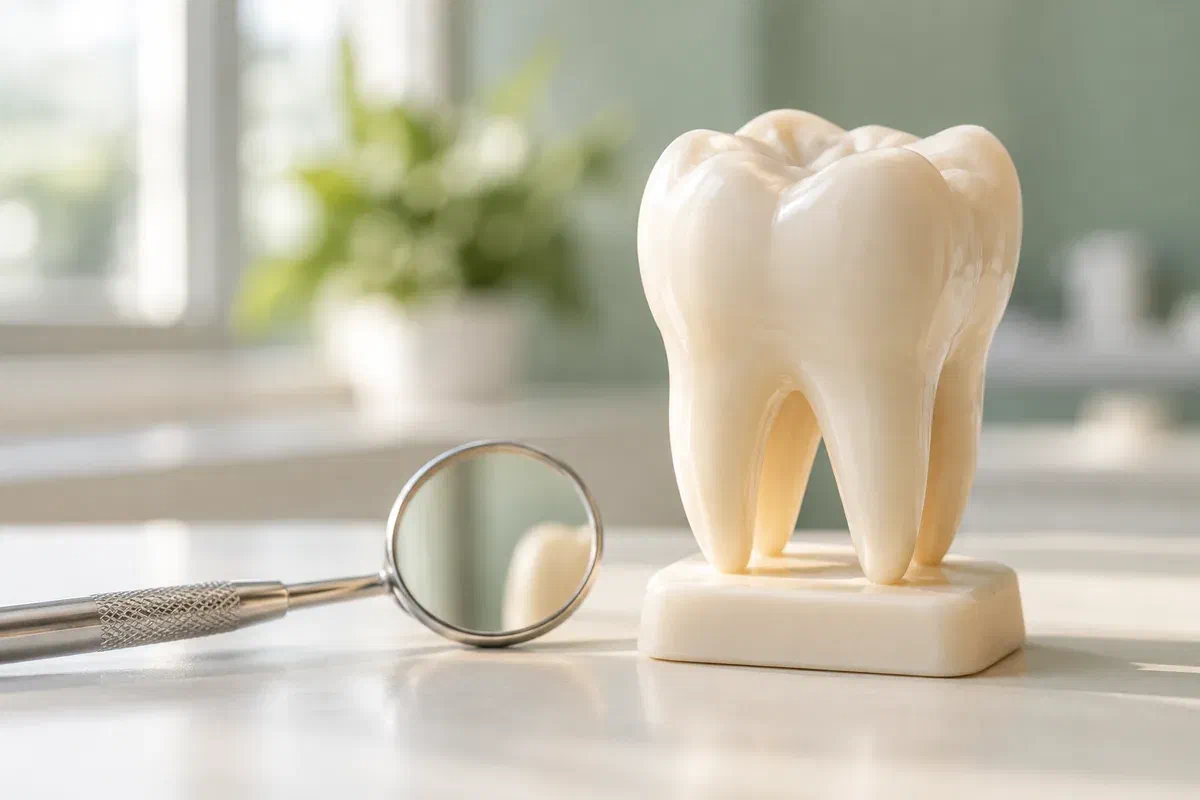
Illustrative molar teaching model and mirror representing a dental assessment
How has it behaved?

The history of the pain is as useful as its peak

You don’t need to work out the diagnosis. Start with whatever concerns you most right now, then tell us how the pain began, how it peaked, what changed and whether you had recent dental work or an injury.

Intense pain that faded, or flares that come and go

Tell us how bad it was at its worst, how long it lasted and what eased it. Did it start on its own, or with chewing, cold or heat? Is there still a dull ache or tenderness when you bite? Avoid poking at the tooth to see if the pain comes back.

Swelling, a fever, or difficulty opening

Mention these right away, even if the pain itself has stopped. Tell us whether swelling is getting bigger or you feel unwell. These signs can raise the urgency and change where you should be seen. A tooth going quiet while the face swells is a reason to act quickly.

Recent dental work, an extraction or an injury

Give the date and type of procedure or accident, and whether things had been improving before the pain arrived. Bring any instructions you were given and the name of the treating clinic. That helps the dentist tell normal healing from something that needs another look.

Call 911 if breathing or swallowing becomes hard, swelling spreads quickly near the throat or an eye, or bleeding won’t stop. Pain in the jaw together with chest discomfort, breathlessness, sweating, nausea or dizziness may be a heart attack. Treat it as an emergency, not a sore tooth that can wait for town.

Why keep the appointment

Quiet isn’t the same as fixed

When pain has eased, an assessment can feel like a formality. It isn’t. The dentist can tell you what they find, which signs support their view and whether further tests or another opinion would help. Knowing the cause now, on a calmer day, is often easier than working it out during the next flare at night.

A visit also clarifies whether anything needs doing straight away, or whether monitoring and a later appointment are reasonable. Some problems call for prompt treatment even without pain. Ask what was found, what has been done, what remains and what should bring you back sooner.

An answer while you’re comfortable enough to listen

Your account of the pain, the examination and appropriate tests are weighed together. Mention if the pain shifted between teeth or seemed to come from the jaw. If the source can’t be confirmed yet, the dentist should say so and suggest how to keep an eye on it.

Options considered without the pressure of pain

Ask what each realistic choice involves, how it deals with the cause and what it cannot do. Discuss keeping the tooth where possible, and what removing it would mean. Decisions made on a calmer day often feel clearer.

A plan that fits rural life

Find out what to expect, any temporary limits and who to call if pain returns. Ask whether further visits can be grouped to save trips, and whether a specialist is needed. Keep written instructions somewhere you’ll find them if symptoms come back.

What to expect

Warning signs first, then a look at what’s behind the pain

Tell us about health conditions, pregnancy, allergies and the medicines you rely on, including over-the-counter remedies and supplements. That information shapes the assessment and any advice on pain relief.

  1. A conversation about how it has gone

    You describe the onset, the peak, what eased it and whether swelling or fever appeared. The team considers whether a dental visit is right or medical care is needed first. If the pain returns or worsens before your appointment, call back instead of waiting it out.

  2. An examination even if it doesn’t hurt today

    The dentist examines the teeth and gums, tests the area and takes suitable X-rays where needed. A tooth can show signs of trouble without hurting on the day. Ask what the findings mean and what remains uncertain.

  3. A decision about treatment now or later

    Recommendations depend on the diagnosis, the tooth’s condition and your health. Ask about the purpose, risks and what can be done at this visit, and whether delaying is reasonable. If medicine is suggested, its role should be explained next to treatment of the cause.

  4. Follow-up that works for you

    Confirm whether more treatment is needed and how future appointments might be scheduled together. Get directions for any temporary filling and medicines. Know who to contact if the pain comes back, swelling develops or anything changes.

Back home on the farm or the back road

Don’t let a quiet tooth fall off the list

Your next steps depend on the diagnosis and anything already done. If you’re still waiting to be seen, a pharmacist or dentist can suggest short-term relief suitable for your health and medicines.

Keep to the dose on the label

Use pain relievers only as labelled or advised by your dentist, and check before combining products that may share an ingredient. Don’t take extra when the pain flares, borrow a prescription, or put aspirin on the gum.

Leave the area alone

Don’t pierce a swelling, file the tooth or try to drain anything. Eat and clean as advised, and avoid testing your bite. Call if eating, drinking or brushing becomes difficult, or if the tooth starts to hurt again.

Finish the treatment even when it’s quiet

Let the dentist know how symptoms have changed and keep your next appointment. A tooth that stops hurting can still have decay, a crack or infection. Ask the team before cancelling care because the pain has gone.

What treatment could involve

How a tooth is treated depends on its condition, not on yesterday’s pain

Ask why a proposed option fits your diagnosis and how the tooth may fare years from now. The choice should reflect how healthy it is, the alternatives and what further care may follow.

If the problem is local and treatable

Repair or adjustment

A broken filling, a high bite or another fixable issue may be managed with a repair or adjustment. Ask whether the result is temporary or permanent and how to care for the tooth. A visible defect should still be compared with your pain history.

If the nerve or tooth structure guides the choice

Root canal treatment or extraction

Either may come up depending on the diagnosis. Ask if the tooth can be rebuilt, what further work would be needed and the implications of each choice. Severe pain in the past doesn’t mean the tooth must go, and it doesn’t make either treatment automatic.

If the source is unclear or complex

Monitoring, further tests or a specialist

When findings don’t explain the pain, more evaluation or a referral may help. Ask how symptoms will be monitored in the meantime and how soon the next step should happen. Avoid irreversible work on a tooth without a clear reason.

Patient information: American Dental Association — treating dental causes rather than routinely prescribing antibiotics

Campbellville questions about pain that comes and goes

Should you still come in?

Call about severe or returning pain so we can discuss urgency and timing. These answers offer general information; your own care depends on what an examination finds.

(905) 876-4488
Why would a really bad toothache suddenly stop?
Pain can ease for several reasons, and not all of them mean the problem has resolved. Sometimes a nerve that was inflamed changes, and the underlying cause remains. Tell the dentist about the change so they can examine the tooth.
Can I cancel my appointment now that the pain has eased?
Talk to the team first. Pain can return, sometimes with swelling, if the cause hasn’t been treated. Mention anything else that has changed and keep the assessment unless the dentist suggests a different plan.
Can several dental appointments be booked close together to save trips?
Often it is possible to plan follow-up visits with travel in mind, depending on the treatment needed and availability. Ask the team when you book so they can suggest a sensible schedule.
What signs mean the problem is coming back?
Returning pain, tenderness when biting, swelling, a bad taste or fever are all worth reporting. Swelling that spreads, or trouble breathing or swallowing, needs emergency care rather than a dental callback.
Is an antibiotic enough if the pain went away?
Antibiotics don’t treat most dental causes of pain on their own, and they aren’t routinely needed. Whether one is appropriate depends on the diagnosis, any spreading infection and your health.
Can the dentist tell anything if my tooth doesn’t hurt during the visit?
Yes. Examination, tests on the tooth and suitable X-rays can show signs of a problem even on a pain-free day. Describing how the pain behaved earlier also helps the dentist interpret what they find.
Calling from Campbellville

Even on a good day, a quick call helps

Phone (905) 876-4488 before driving to Milton Dental Clinic. Tell us how the pain has behaved, whether there is any swelling and about recent dental work or injuries. If we can’t be reached and you need urgent dental care, turn to another emergency dental provider.

Email and our online form are for questions that aren’t urgent. For a medical emergency, call 911.

Visit Milton Dental Clinic
Unit 1, 342 Bronte St. S, Milton, ON L9T 5B7
Get directions Clinic hours
Monday–Thursday
11am–7pm
Friday–Sunday
By appointment only

Areas we serve

  • Milton
  • Oakville
  • Mississauga
  • Georgetown
  • Halton Hills
  • Acton
  • Campbellville
  • Brampton
  • Burlington
  • Puslinch
  • Rockwood
  • Erin
  • Caledon
  • Etobicoke
  • Old Milton
  • Bronte Meadows
  • Timberlea
  • Dorset Park
  • Dempsey
  • Clarke
  • Beaty
  • Coates
  • Harrison
  • Scott
  • Willmott
  • Ford
  • Bowes
  • Cobden
  • Walker
  • Mountain View
  • Milton Heights
  • Hawthorne Village
  • Valley View
  • Fallingbrook
  • Nassagaweya
  • Trafalgar
  • Esquesing
  • Nelson
  • Brookville
  • Moffat
  • Glen Williams
  • Norval
  • Limehouse
  • Stewarttown
  • Ashgrove
  • Hornby
  • Silver Creek
  • Speyside
  • Scotch Block
  • North Oakville
  • River Oaks
  • Glen Abbey
  • West Oak Trails
  • Palermo
  • Bronte Creek
  • College Park
  • Joshua Creek
  • Uptown Core
  • Preserve
  • Iroquois Ridge
  • Lisgar
  • Meadowvale
  • Meadowvale Village
  • Churchill Meadows
  • Erin Mills
  • Central Erin Mills
  • Streetsville
  • East Credit
  • Creditview
  • Heartland
  • Sheridan
  • Mount Pleasant
  • Credit Valley
  • Huttonville
  • Churchville
  • Springbrook
  • Northwest Brampton
  • Bram West
  • Fletcher's Meadow
  • Fletcher's Creek South
  • Alton Village
  • Orchard
  • Millcroft
  • Headon Forest
  • Tansley
  • Brant Hills
  • Tyandaga
  • Kilbride
  • Lowville
  • Aberfoyle
  • Morriston
  • Arkell
  • Hillsburgh
  • Freelton
  • Carlisle
  • Waterdown
  • Flamborough
  • Mountsberg

How can we help?

Milton Dental Clinic

Have a question about your smile? Choose the option that works best for you.

For urgent dental concerns, please call.
Messages are reviewed during clinic hours.