

Illustrative patient describing a painful dental concern to a clinician
Specialized Care

Severe Dental Pain Treatment in Halton Hills

A painful tooth that starts to swell needs a quick, honest look at how serious it is. Phone (905) 876-4488 to tell us what you see in the mirror. Swelling that spreads, a struggle to breathe or swallow, or feeling feverish and very ill means emergency care before anything else.

Halton Hills · when the face starts to swell

A sore tooth and a cheek that looks different

You notice it in the bathroom mirror, or someone at breakfast mentions it: one side of your face looks fuller than the other. Combined with a tooth that has been aching, that sight is alarming, and it should change how quickly you act. Swelling, fever and trouble opening your mouth tell the team far more about urgency than the pain alone.

Swelling near a painful tooth can be linked to infection, but the same discomfort can also come from gum problems, a cracked tooth, an inflamed nerve, a wisdom tooth, or healing after recent treatment. Sometimes the source sits outside the teeth. Only an examination can sort this out, and the right response is treatment aimed at the cause rather than an assumption that pills or extraction will fix it.

Wherever you are in Halton Hills, from Georgetown and Acton to Glen Williams or the hamlets, call (905) 876-4488 before driving in. When you can be seen depends on your symptoms and the openings we have. If no one can take your call and dental care cannot wait, turn to another emergency dental provider. Please keep urgent matters off email and the website form.

Book a non-urgent follow-up appointment
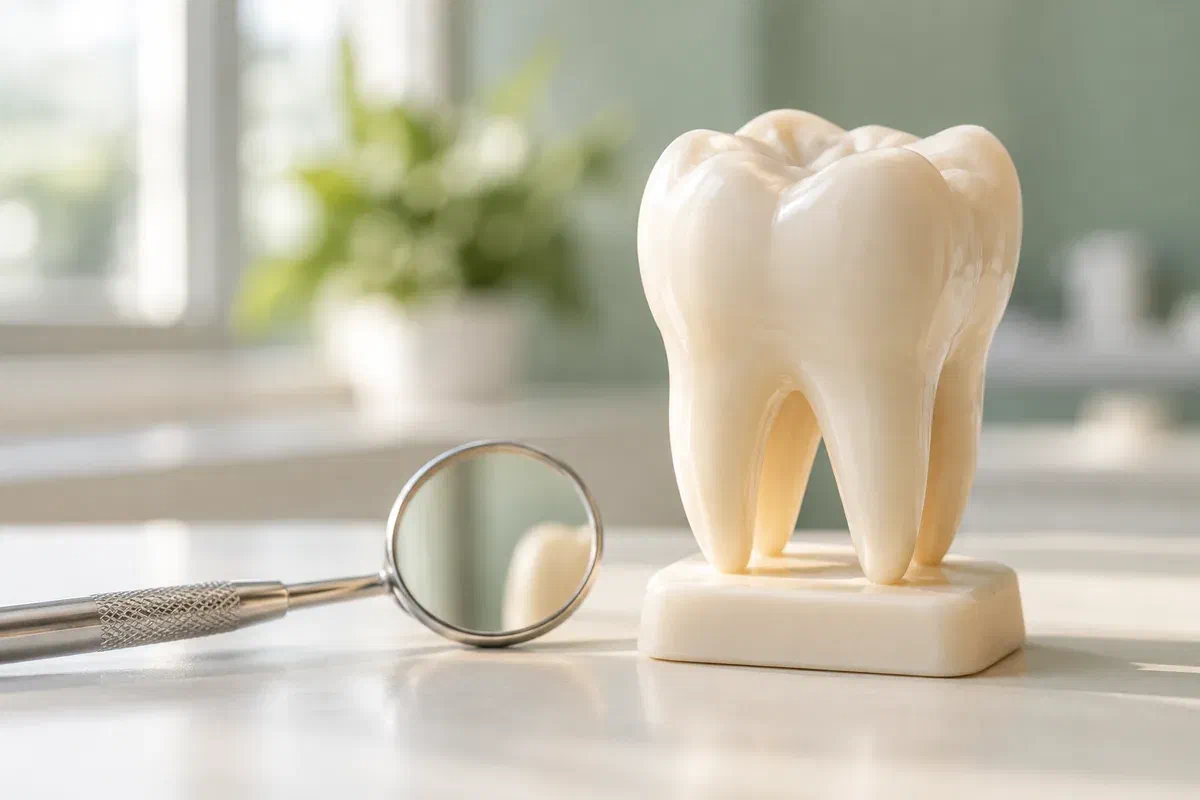
Illustrative molar teaching model and mirror representing a dental assessment
Reading the warning signs

Which changes matter most?

A diagnosis isn’t your job. Open with the most frightening symptom, then let us know when it began, whether it is spreading, and whether you have had dental treatment or an injury lately.

Throbbing that won’t settle or keeps you from eating

Is the pain constant, or does it flare with chewing, cold or heat? How long does it last, and has it changed since yesterday? Mention what you’ve tried for relief and whether it worked. Give the tooth a rest instead of checking it again and again.

Swelling, a temperature, or limited opening

These are the details to lead with. Tell us where the swelling is, whether it is getting larger, and whether you feel feverish or unwell. They can move you from a routine booking to urgent care in another setting. A toothache that fades while swelling increases is a reason to call, not to wait.

Symptoms after recent dental work or an injury

Say when the procedure or accident took place and whether you were recovering well before things changed. Bring aftercare sheets and the treating clinic’s name. The dentist needs to know whether this is ordinary healing or a complication.

Phone 911 for breathing or swallowing difficulty, swelling that is spreading rapidly under the jaw, toward the throat or around the eye, or bleeding that won’t stop. Jaw pain combined with chest tightness, breathlessness, sweating, nausea or faintness may be a heart emergency rather than a dental one.

What an urgent visit is for

Treat the cause, with your agreement

Swelling and pain together can make it feel as though there is no time to think. There is still time to ask what the dentist sees, what evidence supports their conclusion, and whether imaging, further testing or a specialist opinion would help. A clear diagnosis matters, because the source of swelling is not always the tooth that hurts most.

It also helps to separate controlling the problem from completing treatment. A first appointment may focus on bringing things under control, with definitive care planned for later, or a suitable lasting procedure may be possible straight away. Ask what was accomplished, what still needs doing, and how you will be reassessed if the swelling or pain does not settle.

A diagnosis linked to the findings

Your story, the examination and any appropriate tests are interpreted together. Mention if swelling has moved or several teeth feel sore. Where the source is still uncertain, it should be named as uncertain and investigated further.

Choices made with you, not for you

Ask how each option deals with the problem, what it involves and its limits. Talk about whether the tooth can be kept and what taking it out would mean. A swollen face does not cancel your right to ask questions.

Clear guidance after the visit

Find out what improvement should look like and how quickly, any temporary limits, and who to call if swelling or pain changes. Ask whether a follow-up is booked or a specialist is involved. Instructions on paper are easier to follow when you feel unwell.

The order things happen in

Is it urgent? What is causing it? What now?

Let us know about medical conditions, pregnancy, allergies and all your medicines, including over-the-counter products. Some conditions and medicines change how swelling and pain are managed, so these details matter.

  1. Deciding how urgent it is

    On the phone and at the visit, you describe the onset, the swelling, any fever and how you feel overall. The team considers whether you should be seen here or need emergency medical care first. If swelling increases while you wait, call again or seek emergency help.

  2. Finding the source

    The dentist examines the swollen area, the teeth and gums nearby and any previous dental work, using tests and suitable X-rays. Mention pain in the ear, throat or face. Ask what has been found and what is still unclear before treatment is aimed at a single tooth.

  3. Agreeing on a first step

    The recommendation depends on the diagnosis, the tooth’s condition and your general health. Discuss what it is meant to achieve, the main risks and what can be done today. If medicine is recommended, its role should be explained along with treatment of the source.

  4. Arranging what comes next

    Confirm whether more treatment is planned and get clear written steps for the coming days. Check how and when to take any medicine. Know exactly who to contact if swelling spreads, fever develops or the pain becomes hard to control.

The next few days

Watch the swelling as closely as the pain

Your next steps depend on the diagnosis and any treatment already started. If you haven’t been assessed yet, a dentist or pharmacist can suggest short-term relief that is safe with your health and medicines.

Take medicines exactly as directed

Follow label instructions or your dentist’s advice and ask before mixing products that may contain the same ingredient. Don’t increase doses because the pain is intense, use a prescription meant for someone else, or hold aspirin against the gum.

Never try to drain swelling yourself

Piercing, squeezing or cutting a swollen area at home can make things worse. Avoid filing the tooth too. Eat soft foods and clean gently as advised, and contact us if swallowing, eating or drinking becomes difficult.

Complete the treatment when it settles

Report how things have changed and attend your review. Swelling and pain going down do not prove the underlying cause has been dealt with. Ask the team before cancelling further care because you feel better.

Treatment after diagnosis

Even a swollen, painful tooth may be repairable

Ask why a recommendation suits the diagnosis and how it will affect the tooth over time. The decision depends on how sound it is, the alternatives and any care still needed.

If the findings support restorative work

Local repair or adjustment

A failing filling or another treatable tooth problem may be repaired or adjusted. Ask if the work is temporary or final and how to protect the tooth afterwards. A visible defect still needs to be connected to the swelling and pain history first.

If the nerve or remaining tooth determines the approach

Root canal treatment or extraction

These may be discussed depending on the diagnosis. Ask whether the tooth can be restored, what would be needed afterward and what each path involves. Swelling and severe pain don’t mean a tooth is automatically lost, or that a specific treatment is required.

If the source or complexity calls for it

Further assessment or a referral

Swelling or pain that doesn’t fit a dental finding may need more evaluation, sometimes by a specialist or physician. Ask about the plan and urgency in the meantime, and avoid irreversible treatment without a clear reason.

Patient information: American Dental Association — treating dental causes rather than routinely prescribing antibiotics

Halton Hills questions about pain and swelling

When swelling is part of the picture

Call about severe or worsening symptoms so we can discuss urgency and timing. These answers give general guidance; your own care depends on an examination and its findings.

(905) 876-4488
How do I know if facial swelling is an emergency?
Swelling that spreads quickly, reaches toward the eye or neck, or comes with trouble breathing or swallowing needs 911 or an emergency department. Fever and feeling very unwell also raise the urgency. Call us for swelling that is milder so we can discuss timing.
Should I put ice or heat on a swollen cheek?
Some people find a cold compress on the outside of the cheek soothing. Ask before using heat on swelling, and don’t use either as a reason to delay assessment. Avoid putting anything directly on the gum.
Does swelling mean I need antibiotics?
Not necessarily. Many dental causes of swelling and pain need treatment of the tooth or gums. Whether an antibiotic is appropriate depends on the diagnosis, how far infection has spread and your health. Ask what any proposed treatment will address.
My tooth hurts less but my jaw is more swollen. Is that better?
Not necessarily. Less pain with more swelling can mean the problem is worsening. Call to describe the change, and seek emergency care if breathing, swallowing or opening your mouth becomes difficult.
Can a wisdom tooth cause this much pain and swelling?
It can, but so can other problems. The dentist examines the area and may take X-rays to find the source. Mention whether opening your mouth is difficult or the swelling is near the back of the jaw.
Can I take extra pain medicine while I wait to be seen?
Stay within the label or your clinician’s directions. Extra doses can cause harm and won’t treat the cause. A pharmacist can advise on safe choices, and if pain or swelling worsens, contact an urgent provider.
Calling from Halton Hills

Tell us about the swelling first

Phone (905) 876-4488 before setting out for Milton Dental Clinic. Describe the pain, where any swelling is and whether you’ve had recent dental work or an injury. If we can’t be reached and you need immediate care, contact another emergency dental provider.

Email and the online form aren’t for urgent problems. For a medical emergency, call 911.

Visit Milton Dental Clinic
Unit 1, 342 Bronte St. S, Milton, ON L9T 5B7
Get directions Clinic hours
Monday–Thursday
11am–7pm
Friday–Sunday
By appointment only

Areas we serve

  • Milton
  • Oakville
  • Mississauga
  • Georgetown
  • Halton Hills
  • Acton
  • Campbellville
  • Brampton
  • Burlington
  • Puslinch
  • Rockwood
  • Erin
  • Caledon
  • Etobicoke
  • Old Milton
  • Bronte Meadows
  • Timberlea
  • Dorset Park
  • Dempsey
  • Clarke
  • Beaty
  • Coates
  • Harrison
  • Scott
  • Willmott
  • Ford
  • Bowes
  • Cobden
  • Walker
  • Mountain View
  • Milton Heights
  • Hawthorne Village
  • Valley View
  • Fallingbrook
  • Nassagaweya
  • Trafalgar
  • Esquesing
  • Nelson
  • Brookville
  • Moffat
  • Glen Williams
  • Norval
  • Limehouse
  • Stewarttown
  • Ashgrove
  • Hornby
  • Silver Creek
  • Speyside
  • Scotch Block
  • North Oakville
  • River Oaks
  • Glen Abbey
  • West Oak Trails
  • Palermo
  • Bronte Creek
  • College Park
  • Joshua Creek
  • Uptown Core
  • Preserve
  • Iroquois Ridge
  • Lisgar
  • Meadowvale
  • Meadowvale Village
  • Churchill Meadows
  • Erin Mills
  • Central Erin Mills
  • Streetsville
  • East Credit
  • Creditview
  • Heartland
  • Sheridan
  • Mount Pleasant
  • Credit Valley
  • Huttonville
  • Churchville
  • Springbrook
  • Northwest Brampton
  • Bram West
  • Fletcher's Meadow
  • Fletcher's Creek South
  • Alton Village
  • Orchard
  • Millcroft
  • Headon Forest
  • Tansley
  • Brant Hills
  • Tyandaga
  • Kilbride
  • Lowville
  • Aberfoyle
  • Morriston
  • Arkell
  • Hillsburgh
  • Freelton
  • Carlisle
  • Waterdown
  • Flamborough
  • Mountsberg

How can we help?

Milton Dental Clinic

Have a question about your smile? Choose the option that works best for you.

For urgent dental concerns, please call.
Messages are reviewed during clinic hours.