
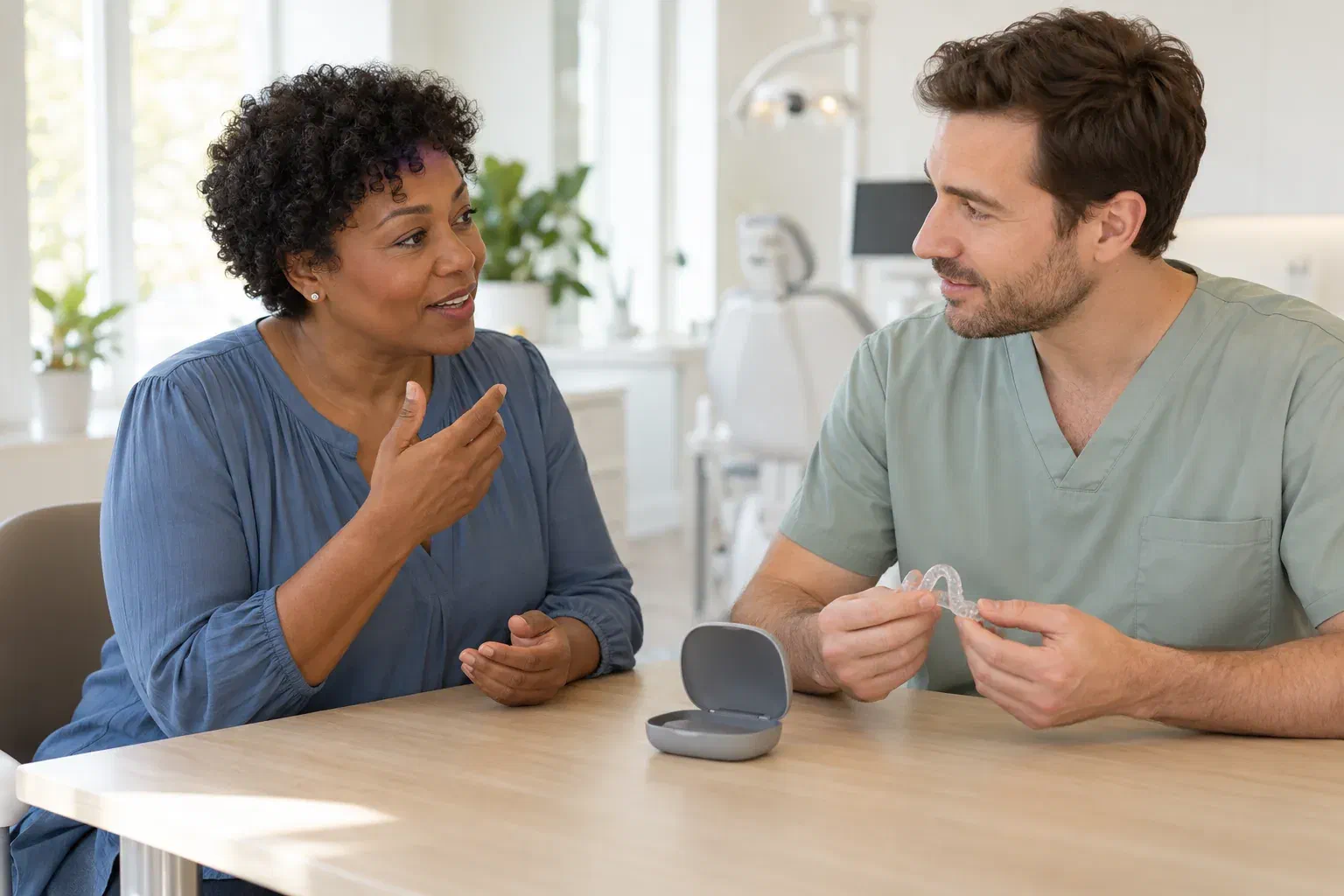
Illustrative discussion about sleep-appliance comfort and fit
Specialized Care

Sleep Appliance Adjustments

A sleep appliance that feels uncomfortable or different needs a review of the device and your mouth. Discuss adjustments in Milton within your prescribed sleep-care plan, including fit, jaw comfort, settings, and the follow-up needed after a change.

A closer look at sleep-appliance adjustments

Find out what has changed before changing the appliance.

A sleep-appliance adjustment may concern the way the device fits, a contact point that irritates the mouth, or a prescribed change in jaw position. These are different issues. The clinician needs to understand the device, the original plan, and the symptoms before deciding whether an adjustment is appropriate and what it should accomplish.

More advancement is not automatically better, and a tighter appliance is not automatically more effective. The treatment position must balance the intended sleep-related benefit with what your teeth, tissues, and jaw can tolerate. A comfortable fit is important, but it does not by itself confirm that sleep apnea is adequately controlled.

At Milton Dental Clinic, bring the appliance, its case, and any written instructions or adjustment record. Tell us who supplied it and what has changed since the last review. We can discuss assessment and whether the original provider or another qualified clinician needs to be involved before the device is altered.

Discuss a sleep-appliance adjustment review
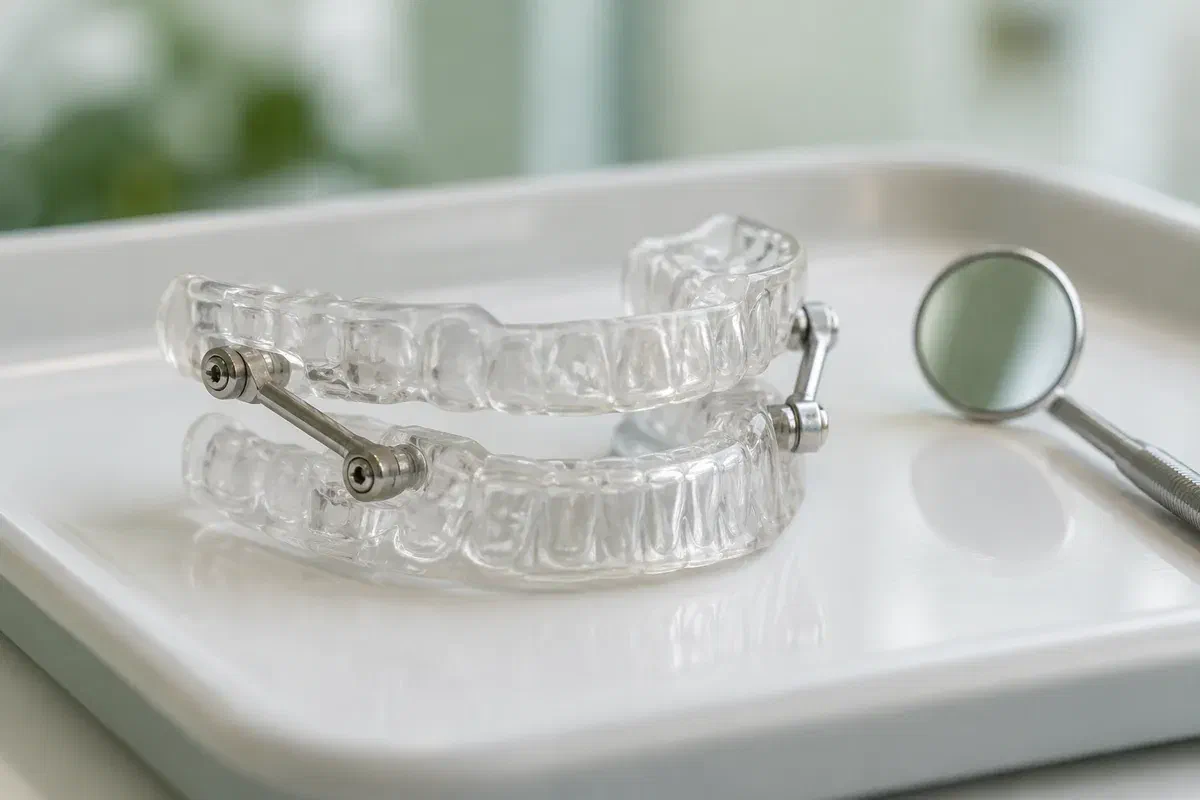
Illustrative connected oral sleep appliance beside a dental mirror
Changes worth describing clearly

Comfort, fit, and sleep symptoms provide different pieces of information.

Explain the timing of the problem and any recent dental treatment or device change. Do not try to recreate pain or force the appliance into place to demonstrate the concern before your visit.

A pressure point or sore area inside the mouth

Tell the clinician where the appliance rubs and whether the area remains sore after removal. Mention a new filling, crown, or other dental change. The assessment should consider both the contact point and the condition of the tooth or tissue, rather than assume that filing the device is the only answer.

Jaw discomfort or a different-feeling bite

Describe whether discomfort occurs during wear, on waking, or later in the day, and whether the teeth return to their usual contact. Persistent pain, locking, or a bite change deserves review. Do not keep advancing the device to push through symptoms or assume discomfort proves that treatment is working.

Returning snoring or uncertainty about the current setting

Bring your adjustment log and explain any return of sleep symptoms. Report uncertainty about the mechanism or last setting instead of guessing. The dental and medical providers may need to review different parts of the problem, including whether further assessment of treatment effectiveness is appropriate.

Do not wear an appliance that is broken, has loose parts, causes significant pain, or cannot be seated safely. Contact the treating provider promptly and ask the sleep-care team about an interim treatment plan if use must pause.

What an adjustment review can clarify

Give each change a purpose and a way to judge its result.

The review should identify what needs attention before a component is altered. Ask whether the issue is fit, tissue contact, jaw position, damage, or a dental condition that needs separate treatment. An adjustment is most useful when the reason is clear and the planned response can be checked at follow-up.

It is also a chance to revisit the instructions. If the original plan was hard to follow, explain which part became uncertain. Ask the clinician to demonstrate the relevant mechanism and provide a written summary of any authorized change. You should not have to reconstruct the setting from memory once you get home.

Patient information: AADSM — identifying an appropriate therapeutic appliance position

A comparison with the intended starting point

The clinician can review available records, settings, and changes since fitting. Ask what information is still needed if the device was supplied elsewhere. A clear history helps distinguish a new problem from an earlier issue that was never fully resolved or documented.

A focused response to the cause of discomfort

A pressure area, a loose fit, and jaw pain do not necessarily require the same intervention. Ask how the findings support the proposed approach. If the problem involves a tooth or the jaw rather than the device alone, the next step may involve additional dental assessment.

A defined review after the adjustment

Ask what you should observe, which changes should trigger contact, and when the result will be checked. The plan should account for comfort and continued sleep care. A modification that feels better at the chair still needs appropriate follow-up during real use.

How an adjustment appointment works

Review the appliance and the mouth before agreeing on a change.

Bring all parts of the device and the instructions you currently follow. If you have already changed a setting or tried a repair, tell the clinician exactly what you did so the current condition can be understood.

  1. Review the concern and the prescribed care plan

    Explain the symptoms, how often the device is worn, and when the issue began. Review recent dental work, sleep-care updates, and any instructions from the original provider. Ask whether the available records are sufficient or whether coordination is needed before treatment proceeds.

  2. Inspect fit, components, and relevant oral findings

    The clinician checks the device and assesses the affected teeth, tissues, bite, and jaw as appropriate. Ask whether wear or damage changes the options. A mechanism that still moves is not proof that the appliance is safe, correctly positioned, or suitable for continued adjustment.

  3. Explain and carry out an appropriate authorized change

    If an adjustment is suitable, discuss its purpose and the instructions that follow. Some changes require the original provider or laboratory. Do not assume every design can be modified at the visit. Confirm whether the therapeutic setting has changed or only a contact or fit issue has been addressed.

  4. Document the plan and coordinate follow-up

    Ask for clear instructions about wear, any prescribed progression, and what to do if symptoms return. Confirm the next dental review and whether the medical sleep provider needs an update. Treatment-effectiveness assessment remains separate from checking that the device feels comfortable.

After the appliance has been reviewed

Follow the new instructions without adding extra changes of your own.

An adjustment plan should be specific to your device and circumstances. If something is unclear, ask before altering a mechanism, substituting parts, or moving beyond the prescribed setting.

Keep a simple record of the authorized changes

Note the setting or instruction supplied by the clinician and the date it was changed. Record meaningful symptoms without repeatedly testing the device. Bring that information to review so the team can understand the response rather than relying on a vague recollection of several different positions.

Report persistent pain or a changed bite

Tell the provider if discomfort continues, chewing feels different, or the appliance cannot be used as advised. Do not force it or continue advancing through pain. Ask for an interim plan if wear is paused, including coordination with the medical provider responsible for your sleep condition.

Continue the agreed dental and medical follow-up

A quieter night is useful to report, but it is not the only measure of treatment. Keep appointments to assess oral effects and the medical plan for checking sleep-related benefit. Tell both providers about significant changes that may affect the overall approach.

Choosing the response to a fit or setting concern

A review may lead to adjustment, different dental care, or a wider treatment discussion.

Ask which option addresses the finding and what remains to be reviewed afterwards. The goal is appropriate care within the prescribed plan, not simply moving the device until it feels different.

When the device and tissues support a localized change

A targeted fit or comfort modification

A qualified provider may be able to address a contact point or another specific fit issue. Ask what is being modified and whether it affects the therapeutic position. The device should be checked again after the change, with instructions for reporting continued irritation or an unexpected new problem.

When advancement is part of the agreed plan

A prescribed change in the treatment position

Some appliances permit gradual changes under professional direction. The pace and endpoint are individualized. Ask how the response will be evaluated and when to stop progressing and contact the provider. Increasing the setting on your own is not a substitute for reviewing persistent symptoms or effectiveness.

When adjustment alone does not address the concern

Repair, replacement, or review of another treatment pathway

Damage, changing dental conditions, or intolerance may require a different approach. Ask whether the original manufacturer, a qualified dental provider, or the medical sleep team needs to be involved. If appliance use is interrupted, clarify how the sleep condition will be managed in the meantime.

Patient information: AADSM — professional management of oral-appliance side effects

Questions about changing a sleep appliance

Understand the difference between a comfort adjustment and a treatment-setting change.

Bring your device and current instructions to the review. The appropriate action depends on the design, the clinical findings, and the medical plan that the appliance is intended to support.

(905) 876-4488
Does advancing my sleep appliance further always improve its effect?
No. The appropriate position is individualized and must account for tolerance and treatment response. More advancement can add problems without providing the intended benefit. Follow the prescribed plan and ask the treating provider how the setting will be evaluated instead of increasing it independently.
Is smoothing a rubbing edge the same as changing my sleep-appliance setting?
No. A contact modification and a change in jaw position have different purposes. Ask which is being proposed and whether it affects the treatment setting. Both require an understanding of the device and your mouth; do not assume a small-looking alteration is safe to make at home.
What should I do if I no longer know the last prescribed appliance setting?
Contact the treating provider and bring the device and any records you have. Do not guess, reset it using another person’s instructions, or make repeated trial changes. The provider may need to compare the mechanism with the treatment record before advising how to proceed.
Can a new crown explain why my sleep appliance suddenly feels tight?
A change in tooth shape can affect appliance fit, but it needs assessment rather than assumption. Tell the clinician about the crown and bring the device. Do not force it over the restoration or alter it yourself; coordinated review can determine whether adjustment or another approach is appropriate.
Should I keep advancing the appliance if my jaw starts to hurt?
No. Contact the treating provider about the pain and pause further advancement until you receive advice. Significant pain or unsafe fit may require stopping use and arranging prompt review. Ask the sleep-care team about appropriate interim treatment if the appliance cannot be worn.
Does an adjustment appointment replace a sleep test to check treatment effectiveness?
No. Dental review assesses the device and its effects on the mouth, while the medical plan determines how sleep-apnea control is evaluated. Ask whether the change needs to be communicated to the sleep provider and how any recommended effectiveness assessment will be arranged.
Arrange an appliance review in Milton

Bring the device and explain what feels different.

Contact Milton Dental Clinic about a sleep-appliance fit or adjustment concern. Tell us the device type, supplying provider, and current symptoms so we can discuss assessment, useful records, and appropriate coordination.

Device changes should remain within an agreed dental and medical treatment plan.

Visit Milton Dental Clinic
Unit 1, 342 Bronte St. S, Milton, ON L9T 5B7
Get directions Clinic hours
Monday–Thursday
11am–7pm
Friday–Sunday
By appointment only

How can we help?

Milton Dental Clinic

Have a question about your smile? Choose the option that works best for you.

For urgent dental concerns, please call.
Messages are reviewed during clinic hours.