
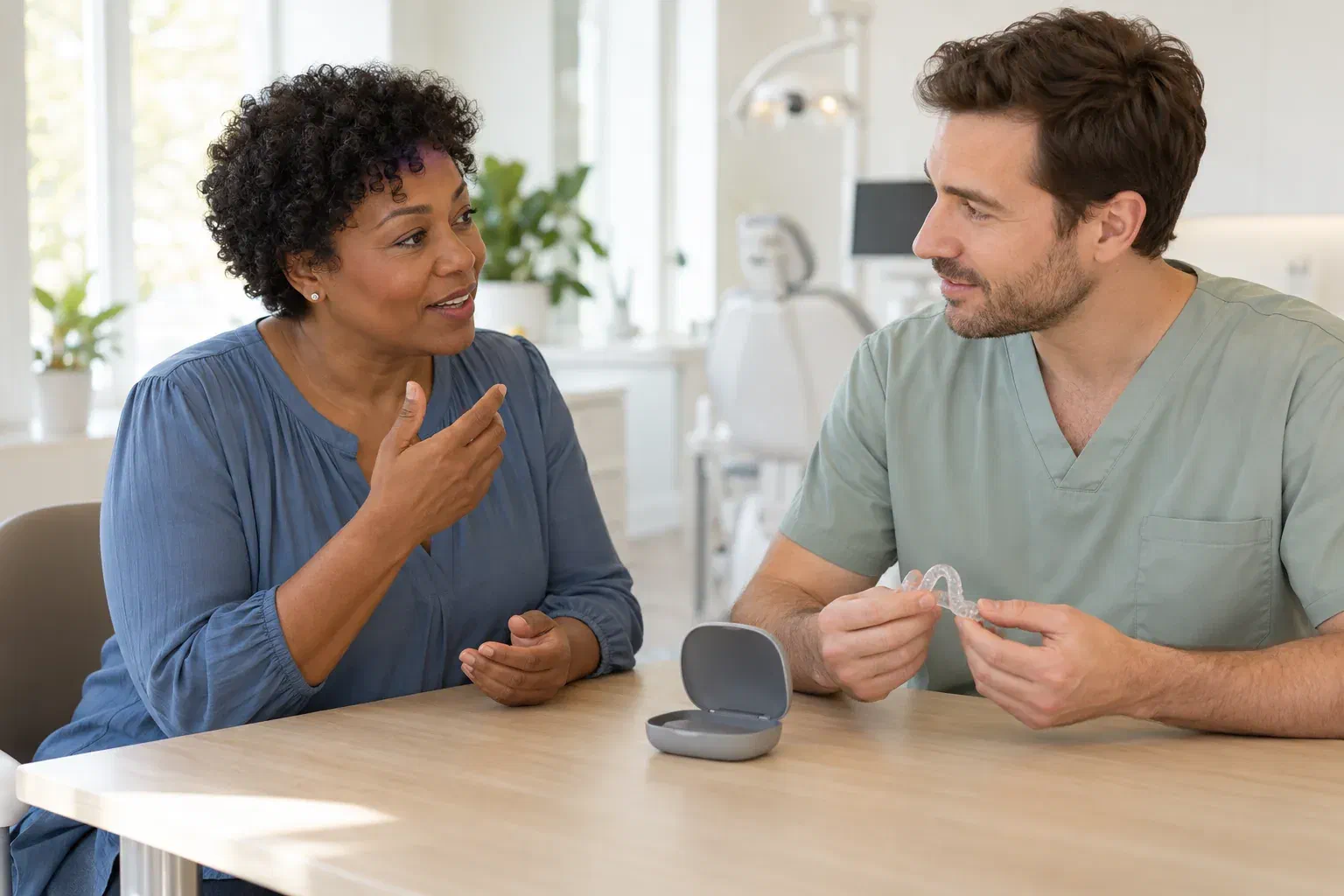
Illustrative discussion about sleep-appliance comfort and fit
Specialized Care

Sleep Appliance Adjustments in Georgetown

Lost count of the turns on your sleep appliance, or not sure which way the key goes? From Georgetown, bring the device and whatever notes you have for a review of the mechanism, the fit, and your jaw, and leave with the setting written down.

Settings and mechanisms, explained for Georgetown wearers

Which way did you turn it last time?

Adjustable sleep appliances often come with a small key, a set of instructions, and a schedule that seemed simple at the fitting. Weeks later, the paper is missing and nobody in the house remembers whether it was three turns or four. That uncertainty is a reason to pause, not to guess. A careful review can establish where the device sits now and whether any discomfort comes from the fit, a single pressure point, or the jaw position itself.

When in doubt, people tend to add a turn. It is worth knowing that a more advanced setting is not automatically a better one. Going too far can strain the jaw or teeth without improving sleep, and a firmer grip does not mean stronger treatment. The right position is the one that serves your physician’s goal while your mouth tolerates it. Feeling fine in the morning is good news, though it cannot confirm on its own that sleep apnea is managed.

Come with the appliance, its case, the key or tool if there is one, and any notes, however incomplete. Tell us which provider made it and what has changed lately. Together we can talk about an assessment and whether the clinician who supplied it should be contacted to compare records before the mechanism is moved again.

Book a check of your appliance setting
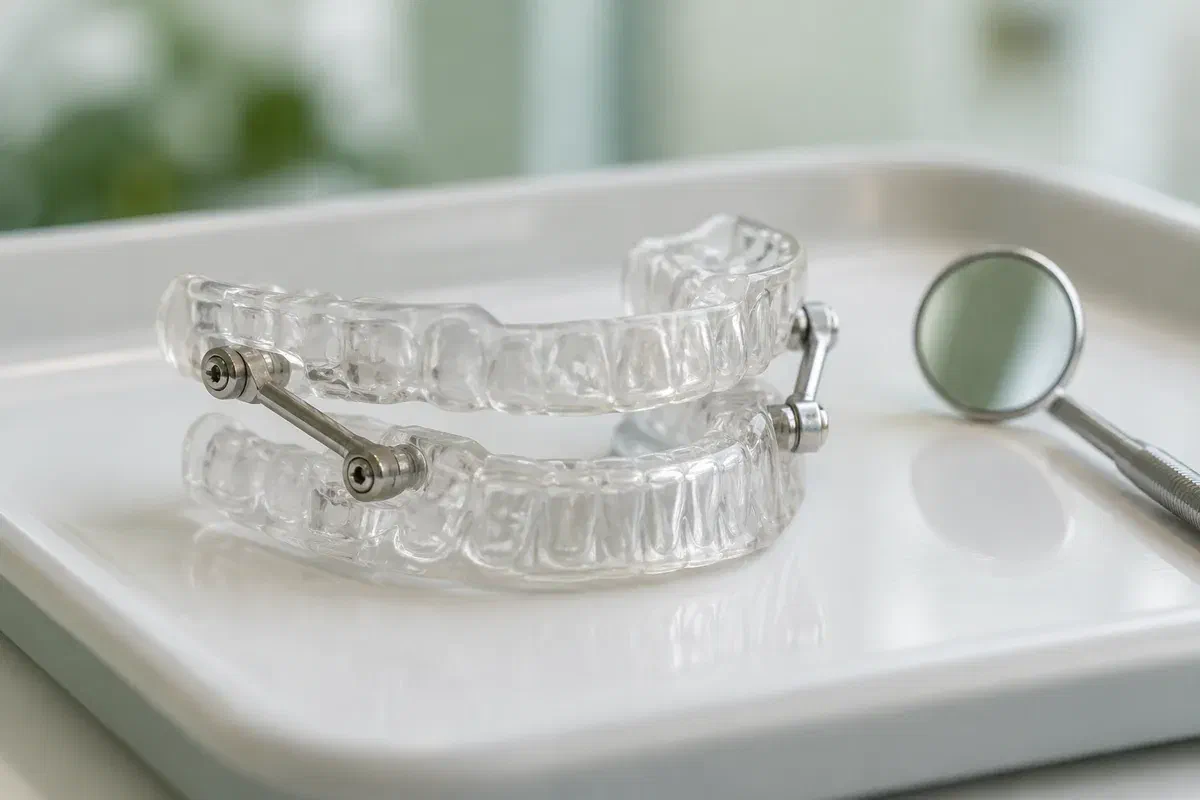
Illustrative connected oral sleep appliance beside a dental mirror
What to tell us

Uncertain setting, sore spot, or stiff jaw: each needs its own look.

Share the timeline and any recent dental work or changes you made. Please do not keep turning the mechanism or force the device in to show us what is going on.

A place where the device digs in

Show the spot and mention whether tenderness continues after you take the appliance out. Tell us about any new filling or crown. Both the device edge and the underlying tooth or gum are considered, since filing the appliance may not be the answer.

Discomfort in the jaw or a bite that will not settle

Describe when it starts and whether your back teeth meet normally again after removal. Lasting pain, a catching jaw, or a bite that stays different is a reason to stop advancing and arrange review. Soreness is not evidence that the setting is working.

Losing track of turns or the schedule

Bring any written log, even a partial one, and describe how you have been sleeping. Saying you are unsure is far more useful than estimating. Your dentist may need to compare the mechanism with records, and your physician may want to look at effectiveness.

If the appliance is cracked, a screw or connector has come loose, it causes real pain, or it will not seat safely, stop wearing it. Call the managing provider soon and check with your sleep physician about what to do overnight until it is sorted.

The value of a setting review

Replace the guesswork with a written record.

A review establishes the current state of the appliance before anyone changes it. From there the clinician can tell whether the issue is fit, tissue contact, jaw position, wear in the mechanism, or a tooth that needs separate care. Once the cause is identified, any change can be measured against it at your next visit.

It is also an opportunity to learn the device properly. Ask for a slow demonstration: which direction advances, what each turn means, and how to tell where it sits. Leaving with the approved setting in writing means the next schedule step does not depend on memory or a lost sheet.

Patient information: AADSM — identifying an appropriate therapeutic appliance position

Matching the device to its records

Where records exist, the clinician compares them with the mechanism as it is today. If the appliance came from another office, ask whether it can share the fitting notes. That match shows whether the device has drifted or was set this way on purpose.

Treating the specific cause

Rubbing, looseness, and jaw pain rarely share one remedy. Ask how the exam findings support the proposal. A tooth or jaw concern may need dental assessment before the setting is touched again.

Knowing what success looks like

Agree on what you should notice, what should make you call, and when the change will be reviewed. An adjustment that seems right in the chair still needs to be judged over several ordinary nights.

What to expect in the chair

We start with the mechanism, then move to your mouth.

Bring the full appliance, any key or tool, and the instructions you have. If you have turned, loosened, or repaired anything, describe exactly what you did and roughly when.

  1. Piece together the setting history

    You explain your symptoms, how often you wear the device, and what changes were made and when. The clinician asks about dental work, your physician’s plan, and the supplier’s schedule. Ask whether the original office should be contacted for records.

  2. Check the device, the teeth, and the jaw

    The mechanism and the appliance body are inspected, and the relevant teeth, gums, bite, and jaw are examined. Ask whether wear limits further change. A key that still turns does not prove the device is intact or positioned correctly.

  3. Make a suitable, authorized change if indicated

    If adjusting is appropriate, the purpose and next steps are explained. Some designs must return to the original provider or a lab. Ask clearly whether the treatment setting was altered or only a fit or contact problem.

  4. Write down the setting and the plan

    Leave with the current setting recorded, guidance on any further steps in the schedule, and a list of symptoms that warrant a call. Book your next dental check and agree whether your physician needs an update. Sleep apnea control is assessed separately from comfort.

Keeping track at home

Follow the written schedule, not your instincts.

Your instructions are tailored to your appliance. When something is unclear, call before turning the key, changing parts, or moving beyond the prescribed setting.

Keep the log somewhere you will find it

Record each authorized change and its date, with a short note if a night stands out. Tape it inside the case lid or keep a photo on your phone. Avoid testing the device over and over.

Stop and call if pain or bite changes appear

Reach the provider if soreness persists, chewing feels different, or the appliance cannot be worn as instructed. Do not push through pain with another turn. If wear needs to stop for a while, ask for an interim arrangement involving your physician.

Stay on both dental and medical schedules

Your dentist tracks effects on teeth and jaw; your physician decides how the sleep benefit is confirmed. Quieter nights are worth reporting but do not replace that check. Keep both informed of meaningful changes.

Where things can go from here

Three possible outcomes, each with a reason

Ask which outcome fits what was found and what remains to check. The point is sound care within your plan, not turning the mechanism until something feels different.

When a localized change is supported

A fit or comfort refinement

A rubbing area or similar fit concern can sometimes be eased by a qualified clinician without touching the setting. Ask what will be changed and whether the jaw position is affected. A recheck and guidance on reporting new irritation should follow.

When progression is part of the plan

A confirmed step in the advancement schedule

Many adjustable designs move in small, directed steps with a pace and endpoint chosen for you. Ask how your response will be judged and when to stop. Adding turns on your own does not replace a review of symptoms or effectiveness.

When the mechanism or the plan is the problem

Repair, replacement, or a rethink

A worn mechanism, dental changes, or ongoing intolerance may need a different response. Ask whether the manufacturer, the original provider, or your sleep physician should be part of the decision, and what your overnight treatment will be if the device is out of use.

Patient information: AADSM — professional management of oral-appliance side effects

Georgetown questions about settings

Keys, turns, and knowing when to stop

Bring the device, the key or tool, and your instructions. The right step depends on its design, the exam, and your medical plan.

(905) 876-4488
Can the clinic tell what setting my appliance is at now?
Often the mechanism can be inspected and compared with any records, though the exact approach depends on the design. Bring the device and all paperwork. If records are missing, the original provider may need to be contacted.
I may have turned the key the wrong way. Is that a problem?
Stop turning it and arrange a review. Do not try to undo it by guessing. The clinician can check the mechanism and advise you on the next step.
How do I keep track of adjustments at home?
Write down each authorized change with its date, ideally in one place you keep with the appliance. A photo of the written note on your phone is a useful backup.
If my jaw is sore after a turn, should I keep to the schedule?
No. Pause and contact the treating provider. Significant pain or an unsafe fit may mean stopping wear until review, and your physician can advise on interim treatment.
Can one family member adjust another’s appliance using the same instructions?
No. Each appliance and plan is individual. Use only the instructions written for your own device, and ask the provider if you are uncertain.
Once my setting is right, does my physician still need to check things?
Yes. A dental review covers the device and your mouth, and your physician decides how sleep apnea control is evaluated. Ask whether the setting change should be reported.
Book a setting review from Georgetown

Bring the key, the notes, and your questions.

Contact Milton Dental Clinic if you are unsure about your appliance’s setting or how its mechanism works. Let us know the device type, who supplied it, and what you are noticing, and we can arrange an assessment and coordinate with your other providers.

Adjustments should follow the dental and medical plan you have agreed on.

Visit Milton Dental Clinic
Unit 1, 342 Bronte St. S, Milton, ON L9T 5B7
Get directions Clinic hours
Monday–Thursday
11am–7pm
Friday–Sunday
By appointment only

Areas we serve

  • Milton
  • Oakville
  • Mississauga
  • Georgetown
  • Halton Hills
  • Acton
  • Campbellville
  • Brampton
  • Burlington
  • Puslinch
  • Rockwood
  • Erin
  • Caledon
  • Etobicoke
  • Old Milton
  • Bronte Meadows
  • Timberlea
  • Dorset Park
  • Dempsey
  • Clarke
  • Beaty
  • Coates
  • Harrison
  • Scott
  • Willmott
  • Ford
  • Bowes
  • Cobden
  • Walker
  • Mountain View
  • Milton Heights
  • Hawthorne Village
  • Valley View
  • Fallingbrook
  • Nassagaweya
  • Trafalgar
  • Esquesing
  • Nelson
  • Brookville
  • Moffat
  • Glen Williams
  • Norval
  • Limehouse
  • Stewarttown
  • Ashgrove
  • Hornby
  • Silver Creek
  • Speyside
  • Scotch Block
  • North Oakville
  • River Oaks
  • Glen Abbey
  • West Oak Trails
  • Palermo
  • Bronte Creek
  • College Park
  • Joshua Creek
  • Uptown Core
  • Preserve
  • Iroquois Ridge
  • Lisgar
  • Meadowvale
  • Meadowvale Village
  • Churchill Meadows
  • Erin Mills
  • Central Erin Mills
  • Streetsville
  • East Credit
  • Creditview
  • Heartland
  • Sheridan
  • Mount Pleasant
  • Credit Valley
  • Huttonville
  • Churchville
  • Springbrook
  • Northwest Brampton
  • Bram West
  • Fletcher's Meadow
  • Fletcher's Creek South
  • Alton Village
  • Orchard
  • Millcroft
  • Headon Forest
  • Tansley
  • Brant Hills
  • Tyandaga
  • Kilbride
  • Lowville
  • Aberfoyle
  • Morriston
  • Arkell
  • Hillsburgh
  • Freelton
  • Carlisle
  • Waterdown
  • Flamborough
  • Mountsberg

How can we help?

Milton Dental Clinic

Have a question about your smile? Choose the option that works best for you.

For urgent dental concerns, please call.
Messages are reviewed during clinic hours.